


Projects
MSמשה סנה, פ"ת
- Type
- Apartment block
- Scale
- Large
- Status
- Under construction
- Year
- 2022-

This project is owned by Architect Niki Fein, Steiner Architecture is helping him in the processes of planning,…
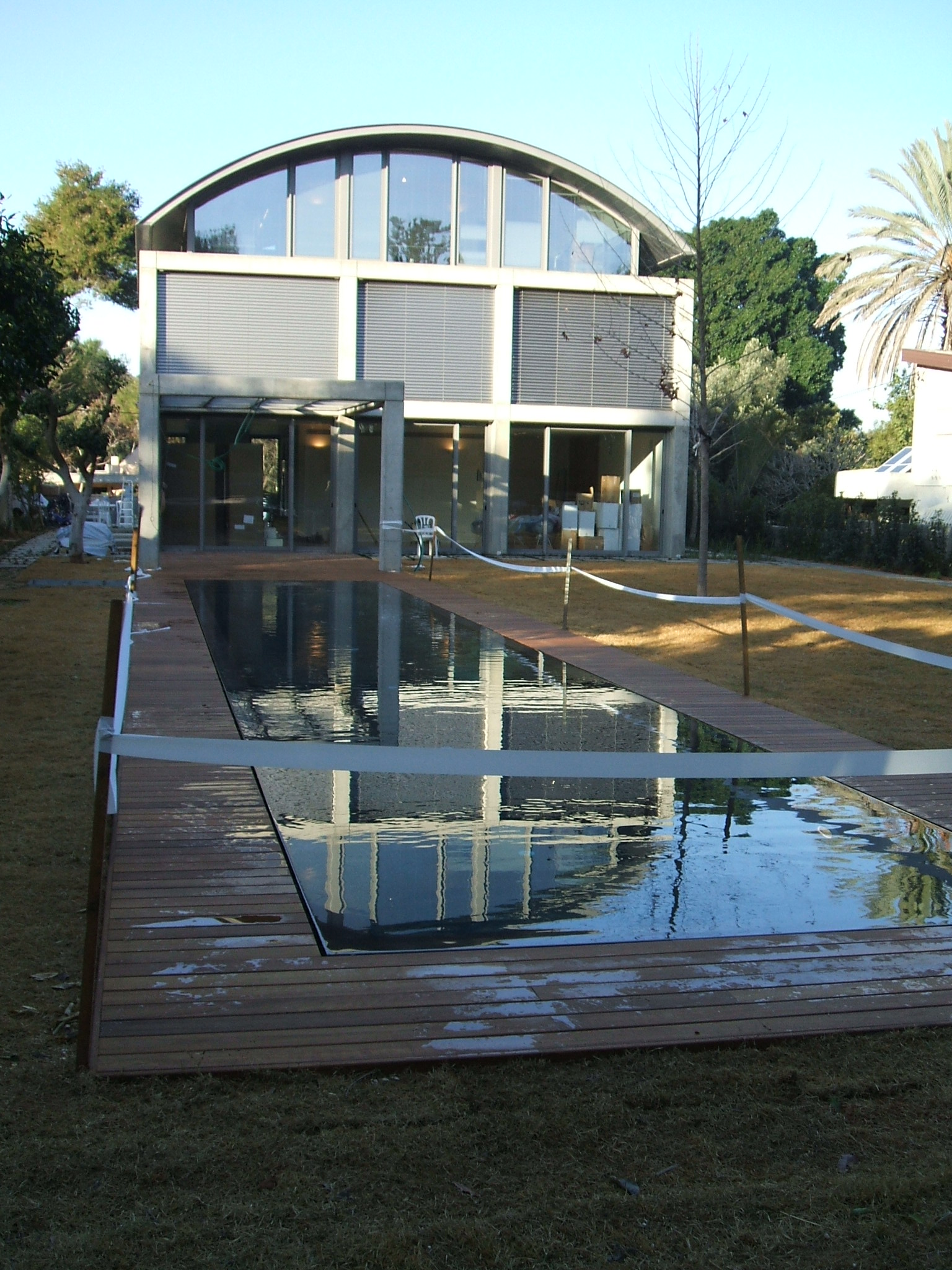
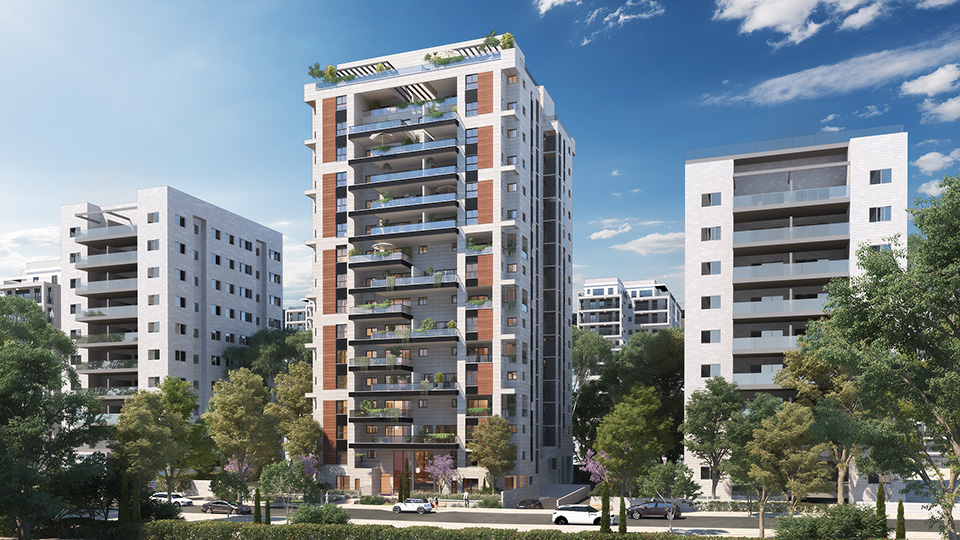
This project is owned by Architect Niki Fein, Steiner Architecture is helping him in the processes of planning, licensing and building. The project is a 16-story building with 58 residential units. The variety of apartments includes 3, 4 and 5 rooms, penthouses, garden apartments, of which 6 two-story apartments. All apartments have balconies, some hanging and some above the apartment on the floor below. The apartments come in various sizes and specifications, at the request of the municipality and the client. In the center of a typical floor is a core containing elevators, stairs, storage rooms, systems and garbage disposal. A project of this size requires coordination between many consultants while meeting tight deadlines. All of this is done within the framework of a complex process of obtaining a building permit that includes obtaining approvals from many bodies and authorities.
IKIK
- Type
- Renovation
- Scale
- Medium
- Status
- Built
- Year
- 2022
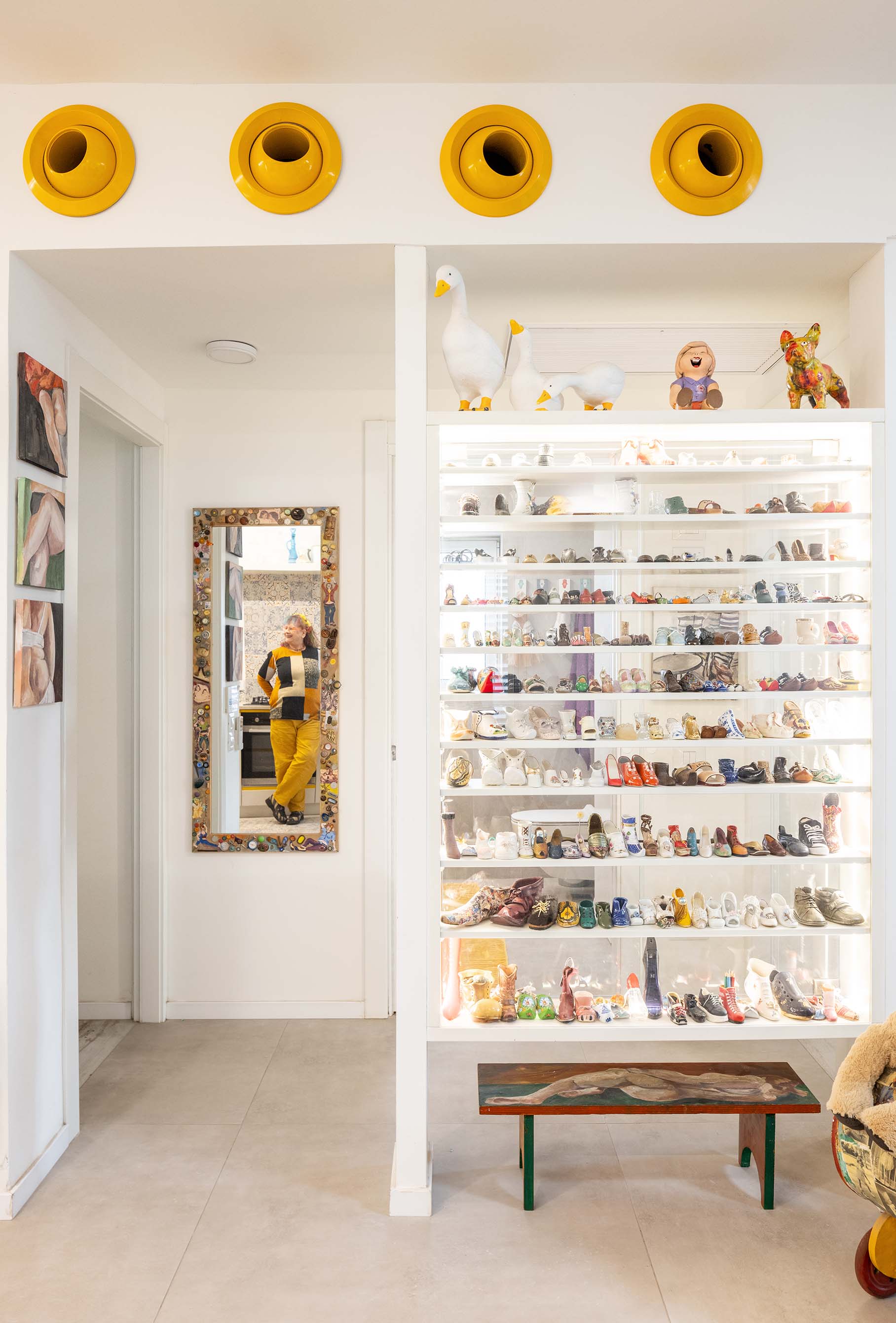
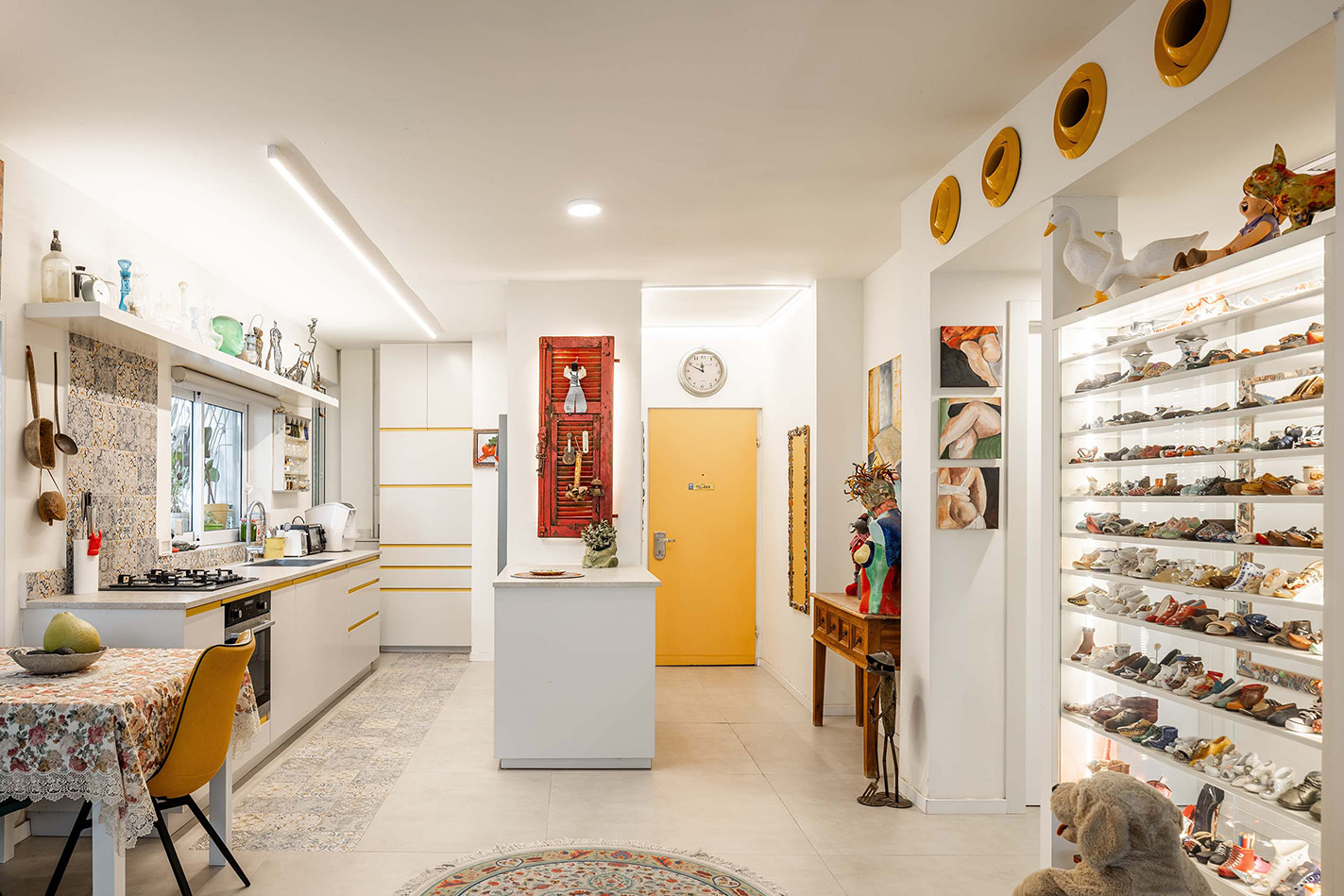
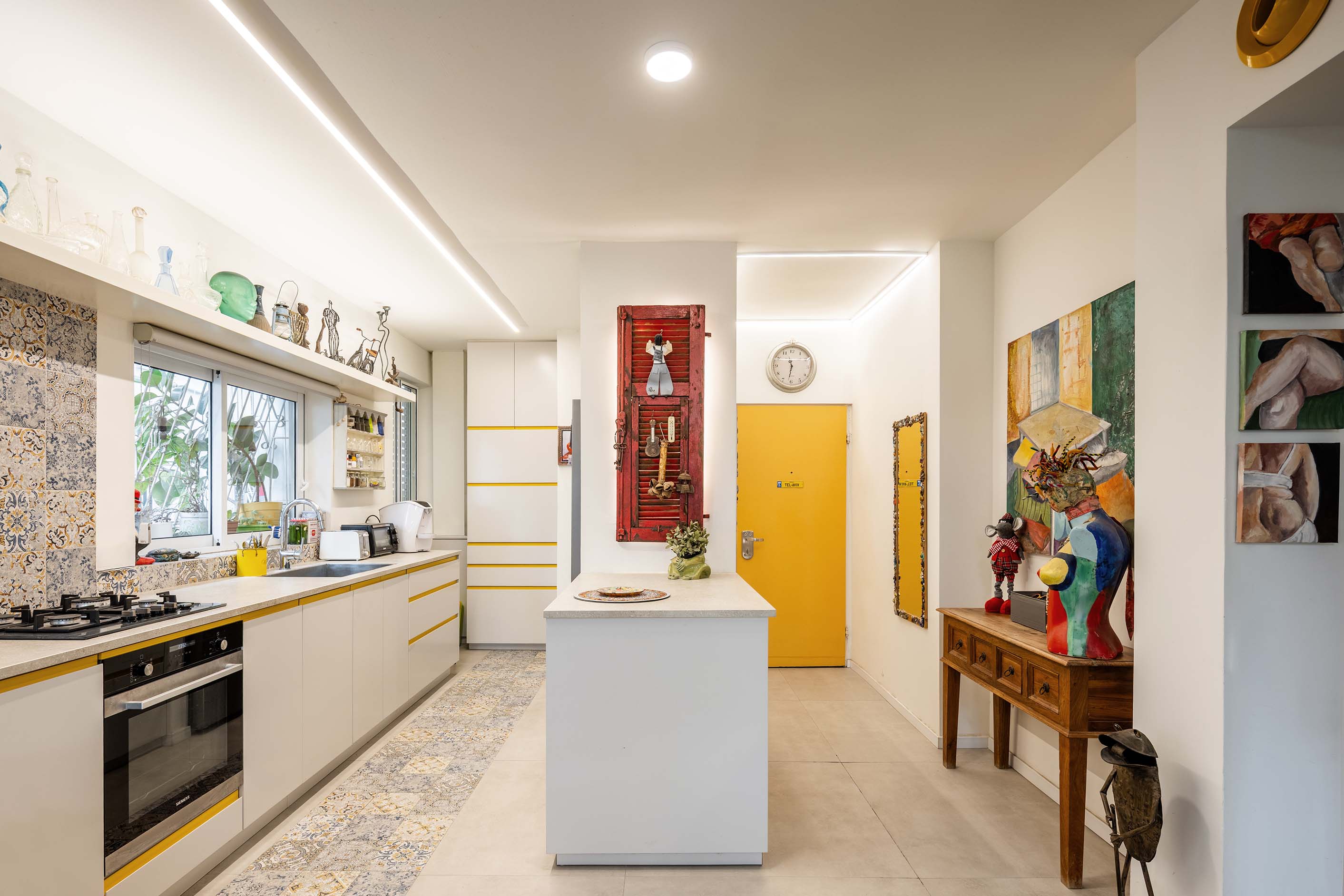
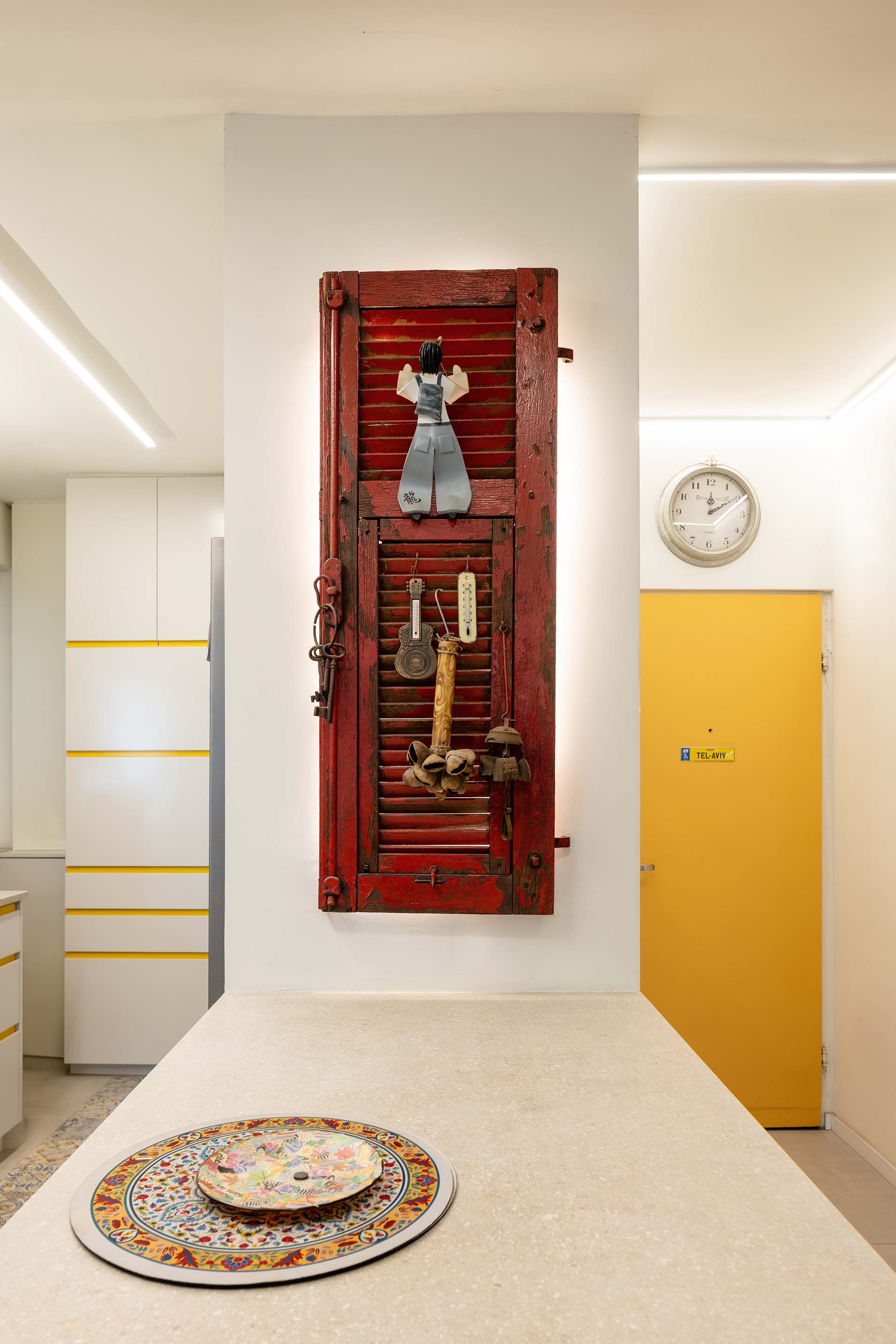
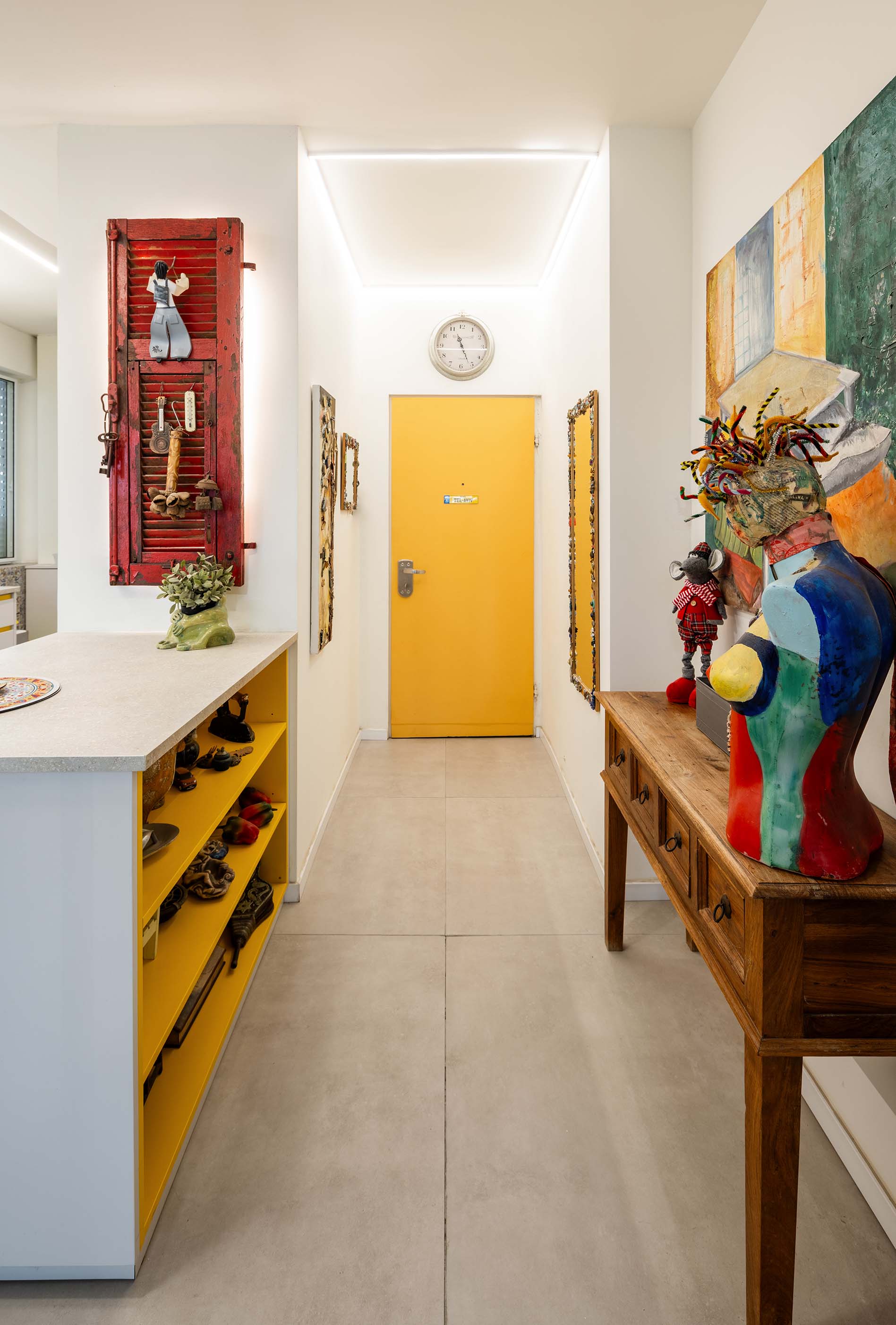
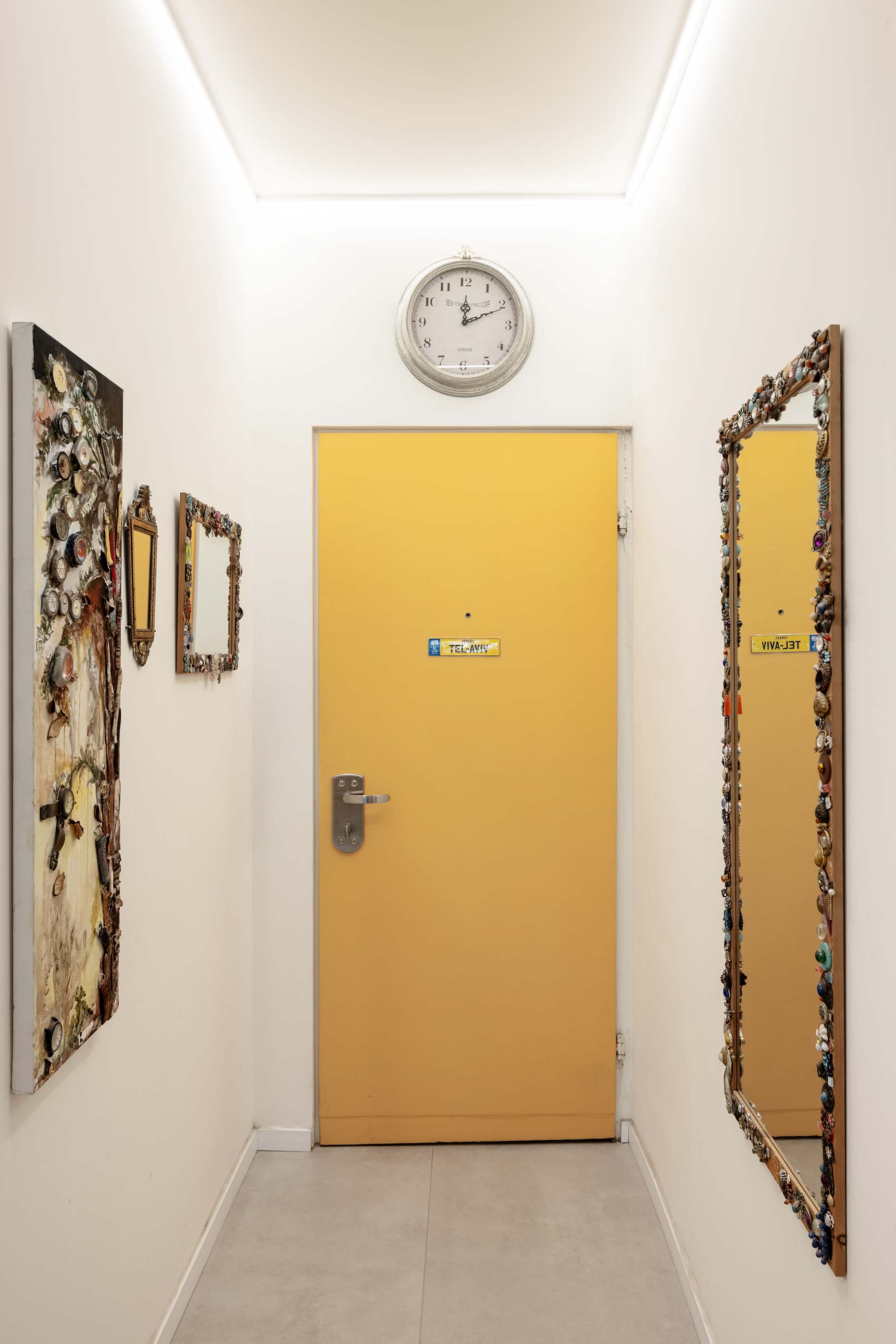
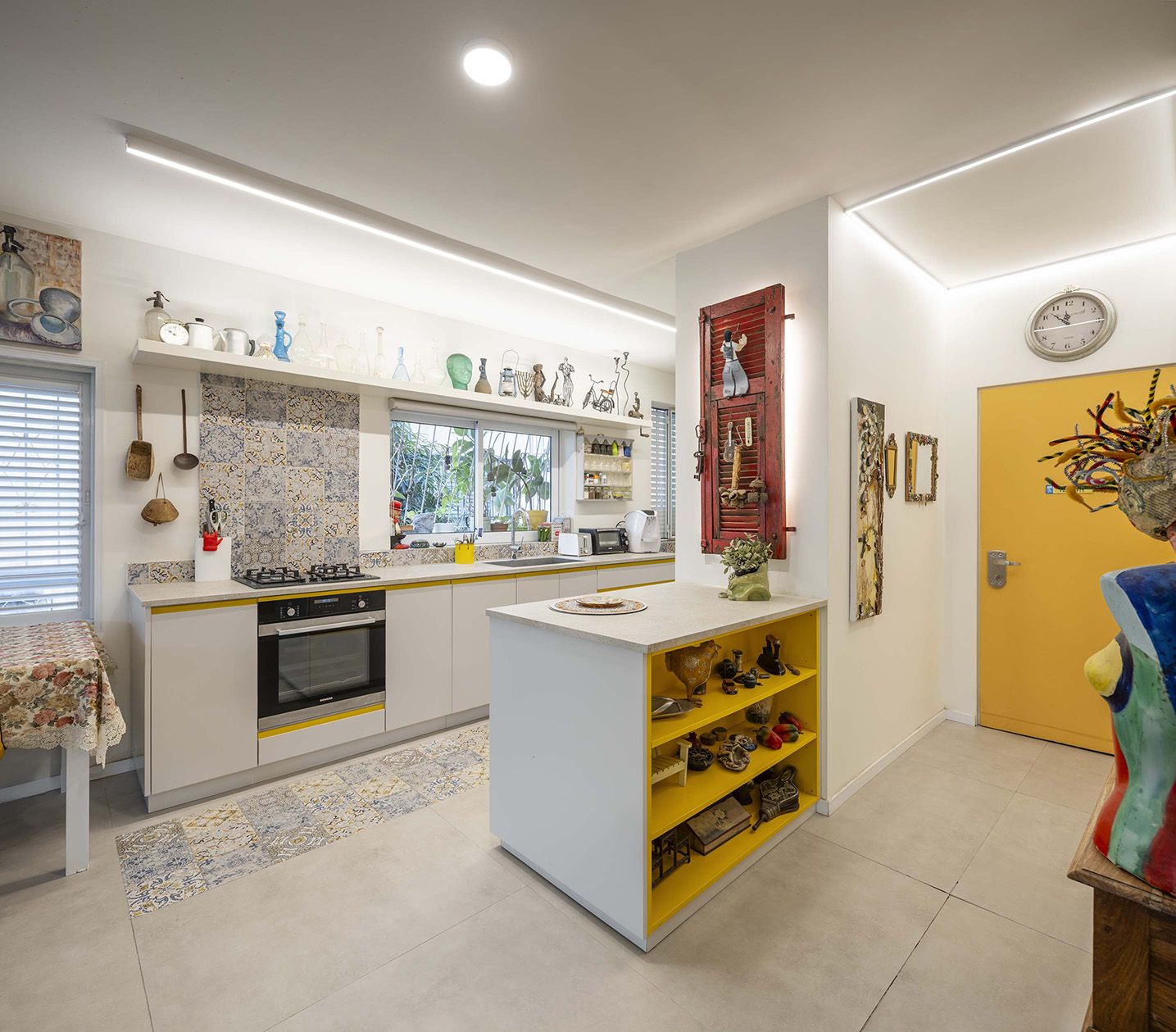
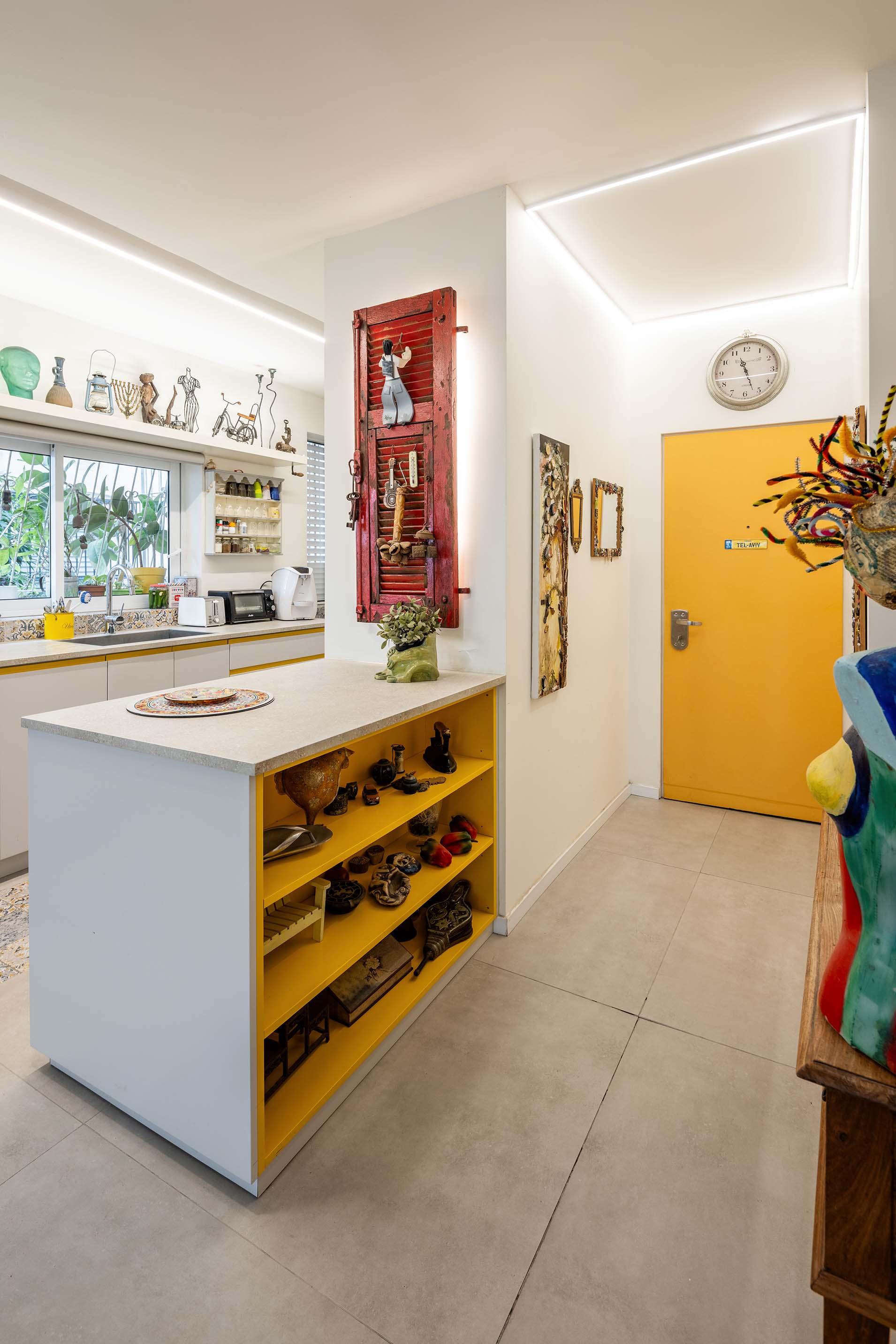
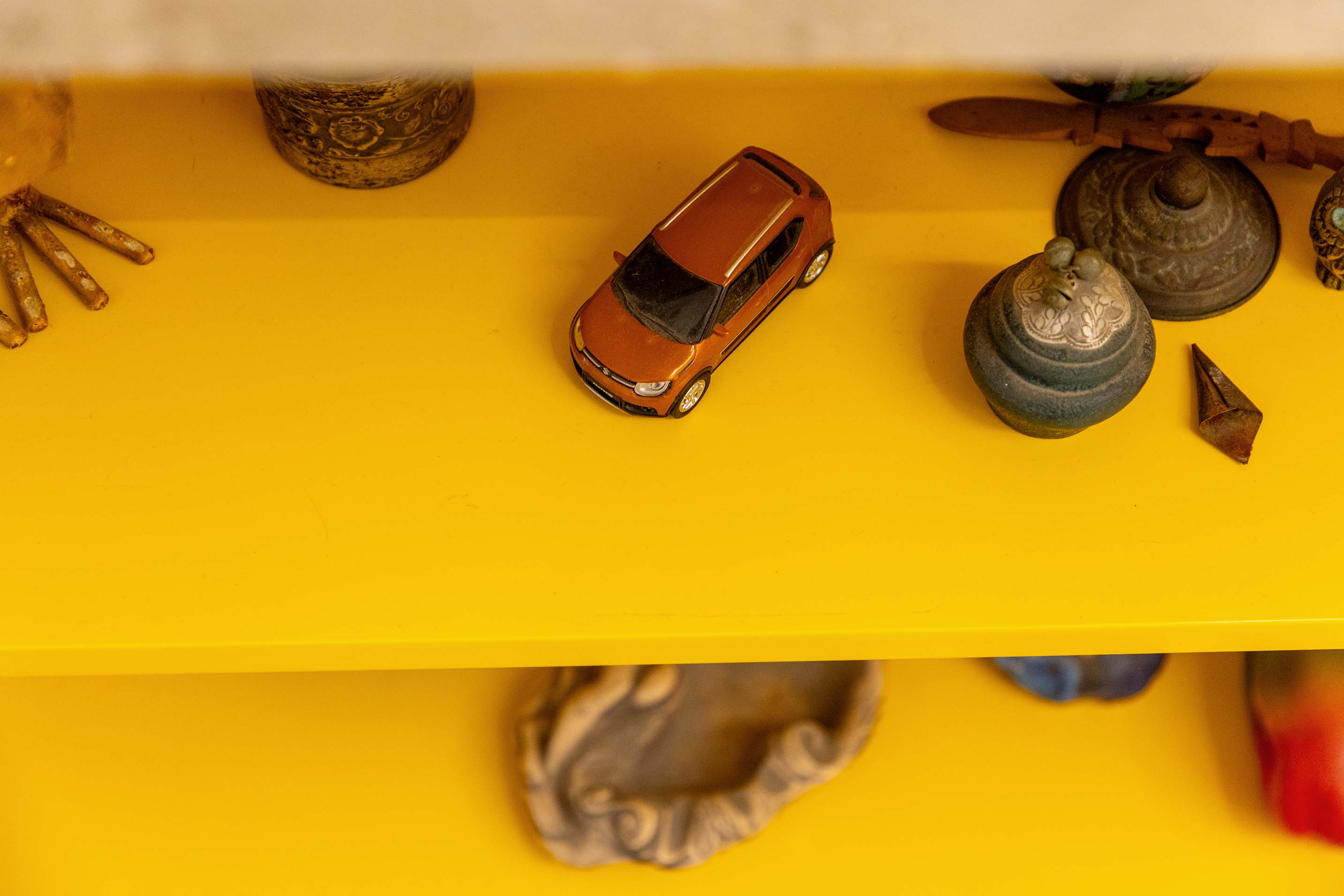
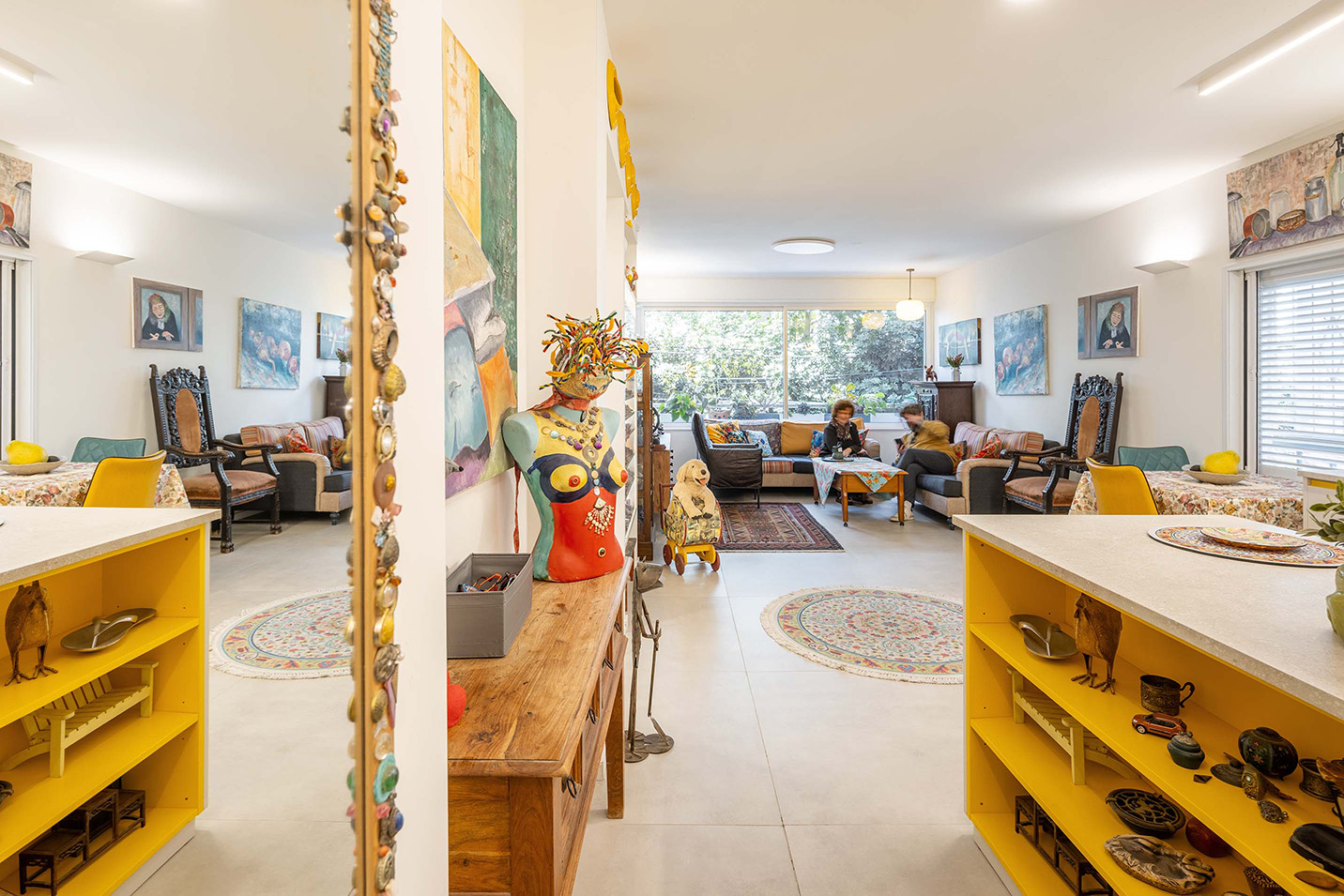
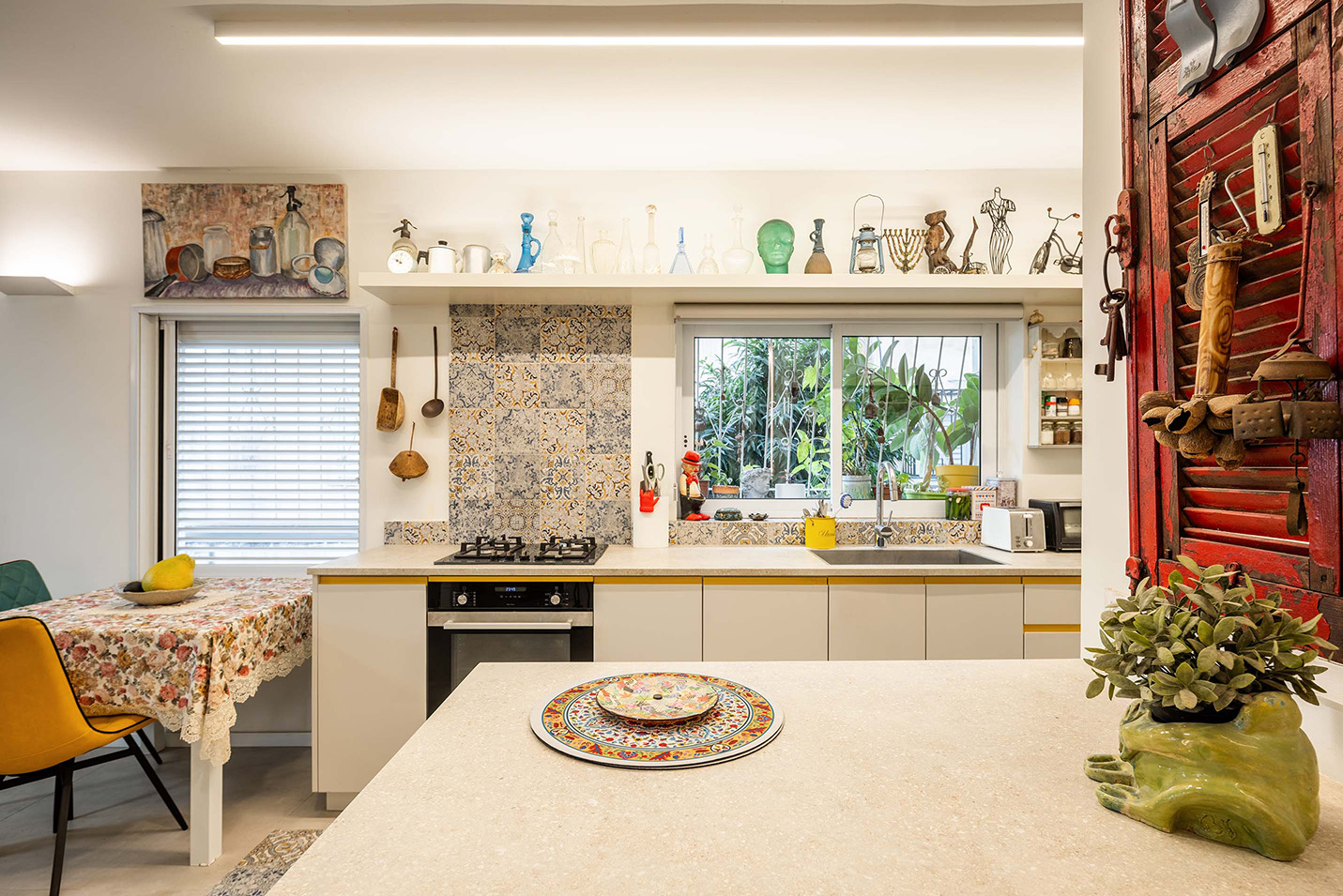
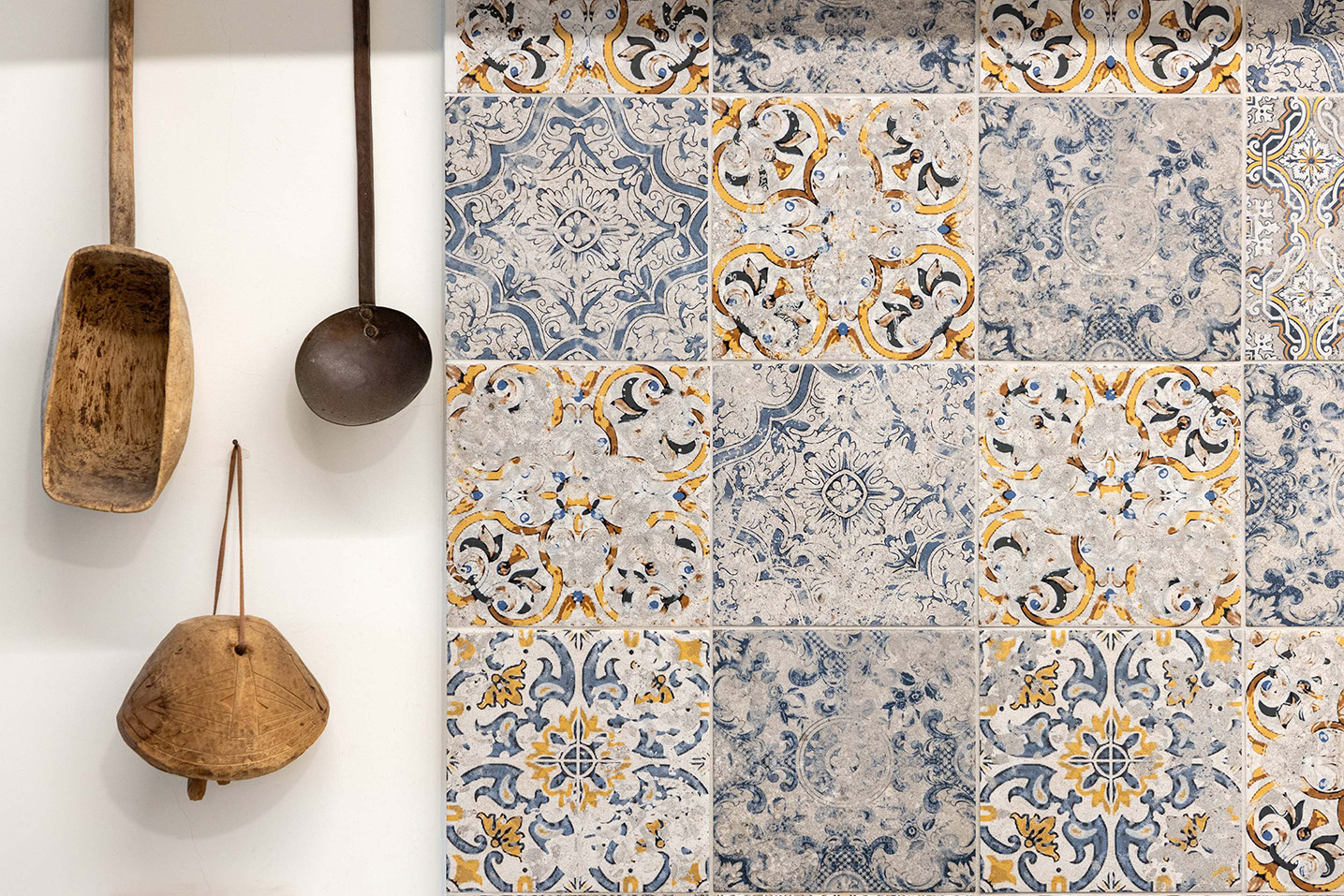
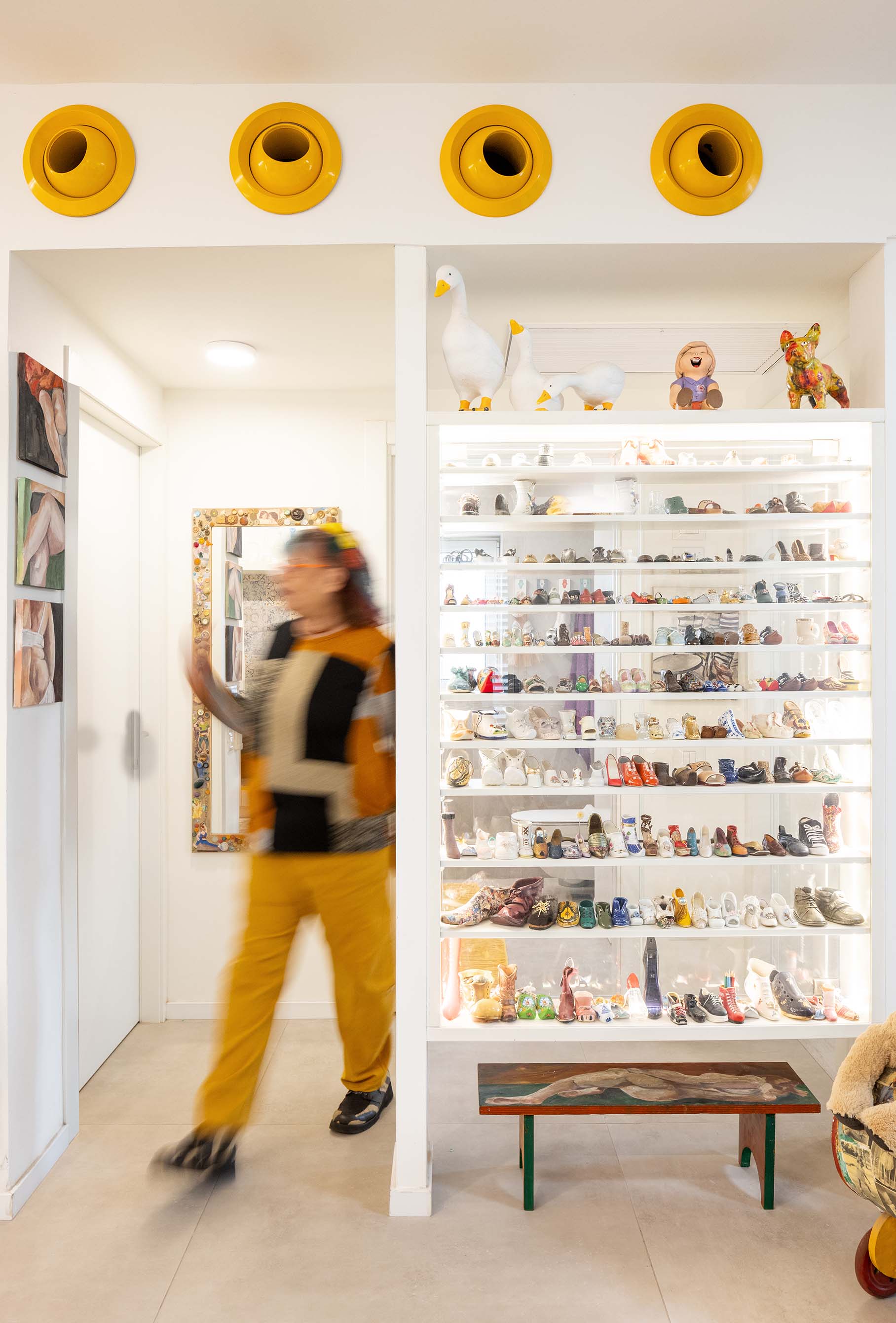
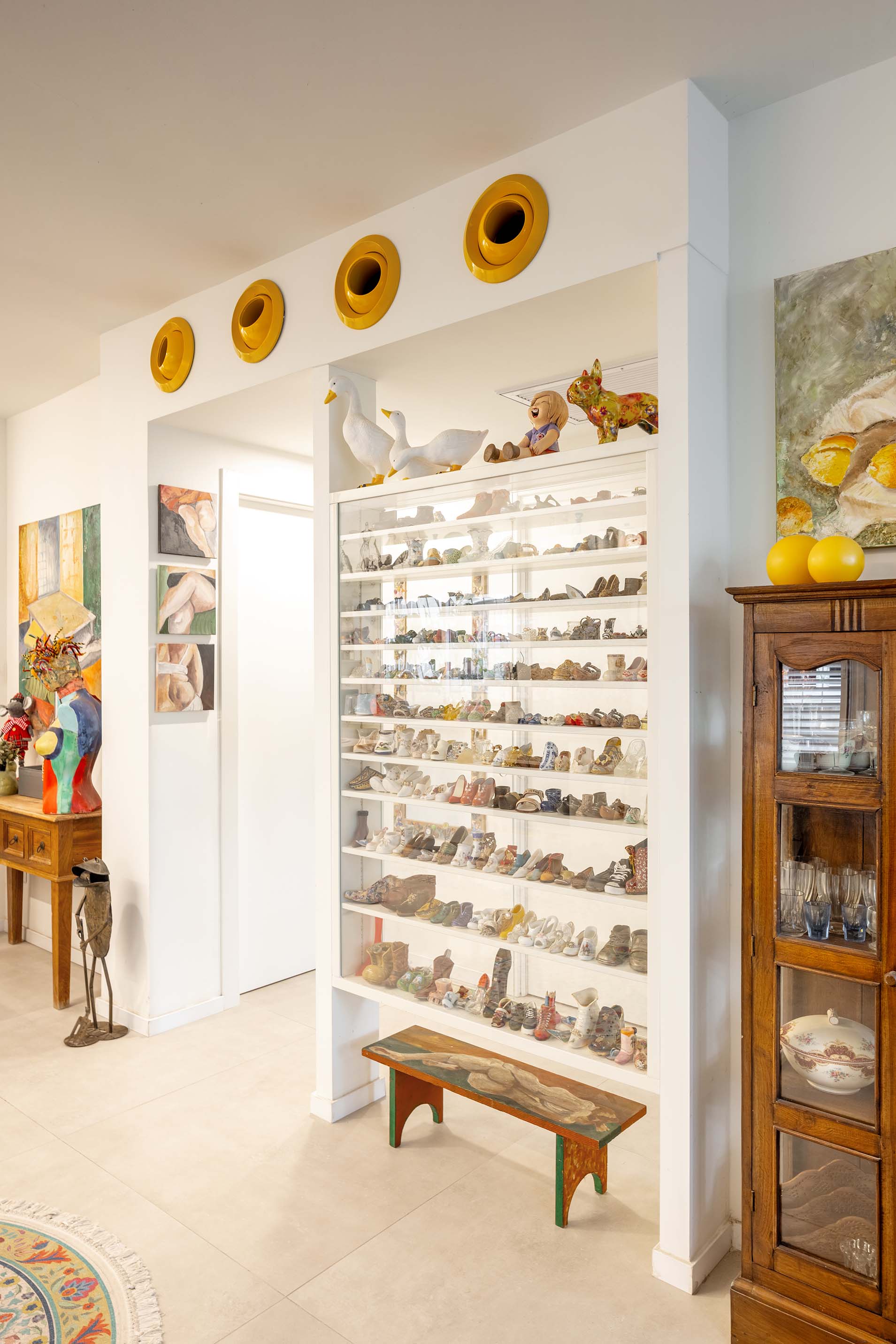
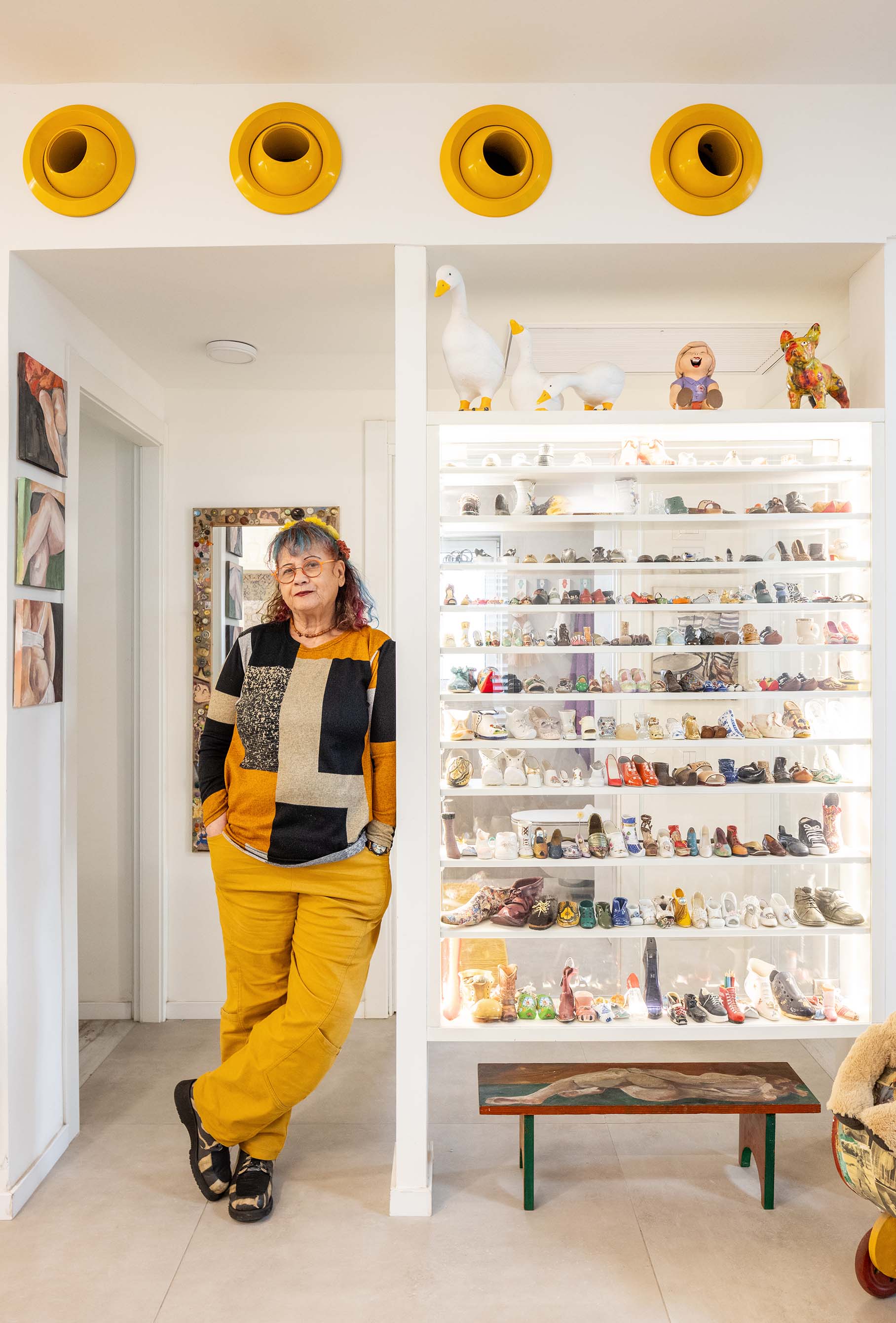
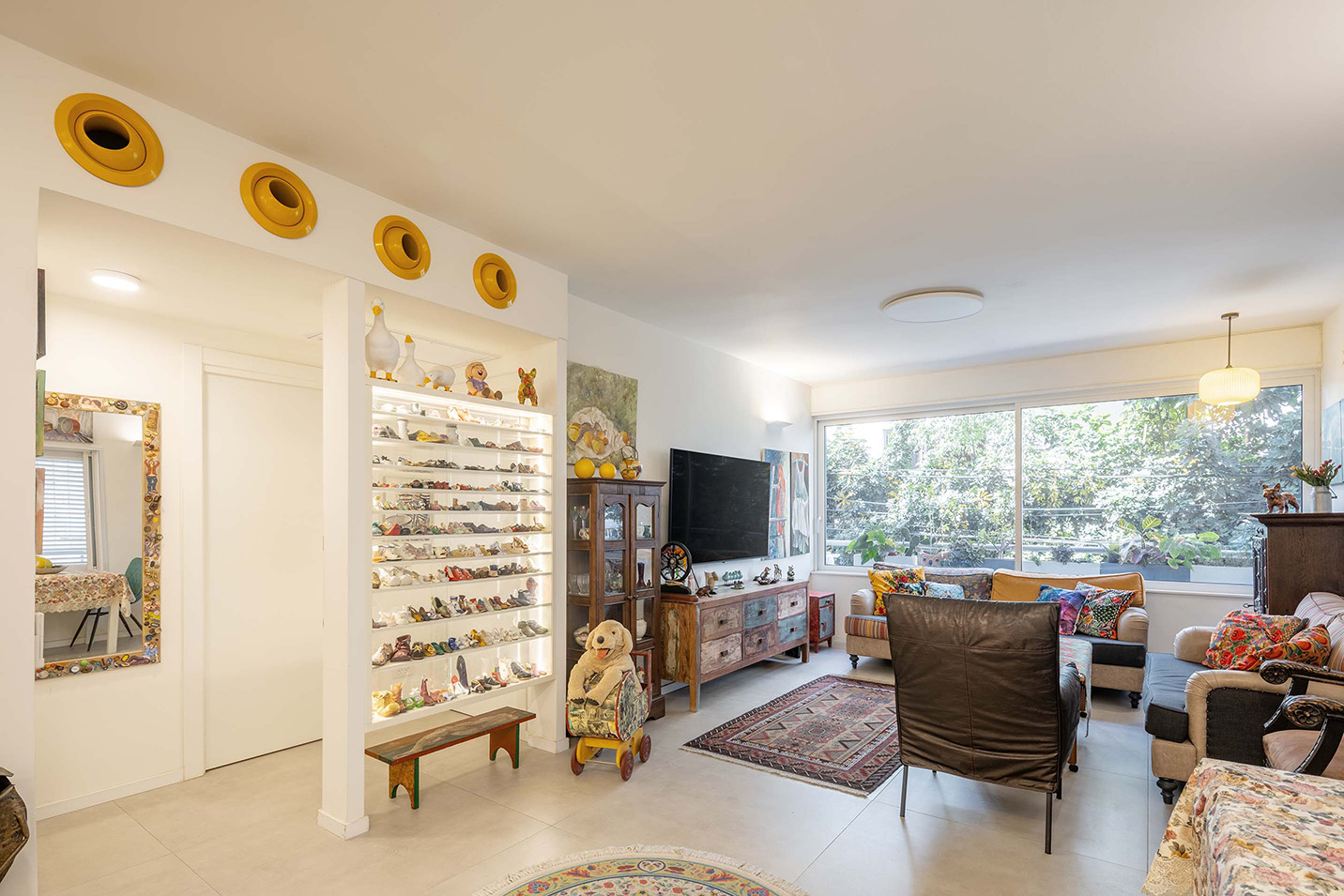
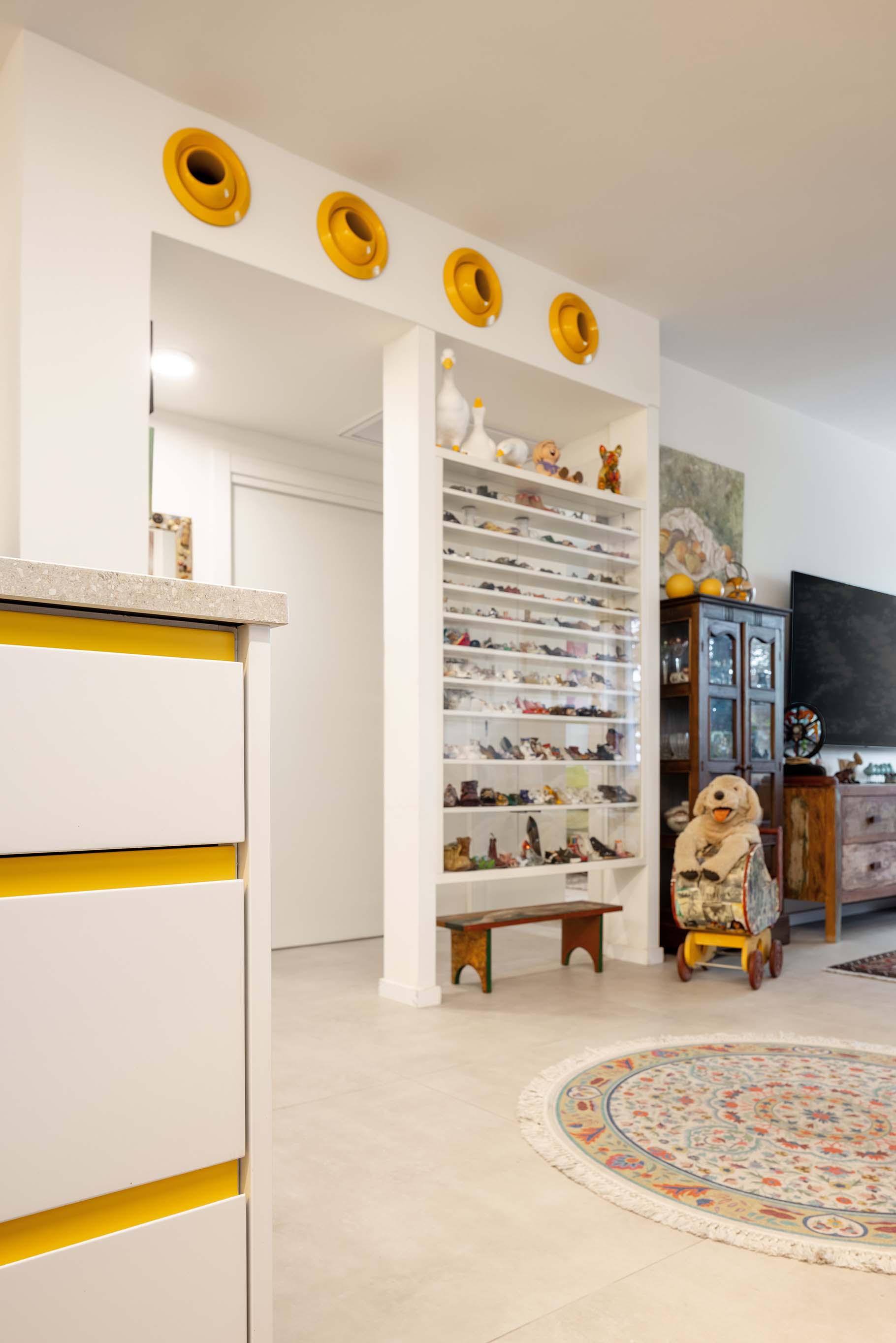
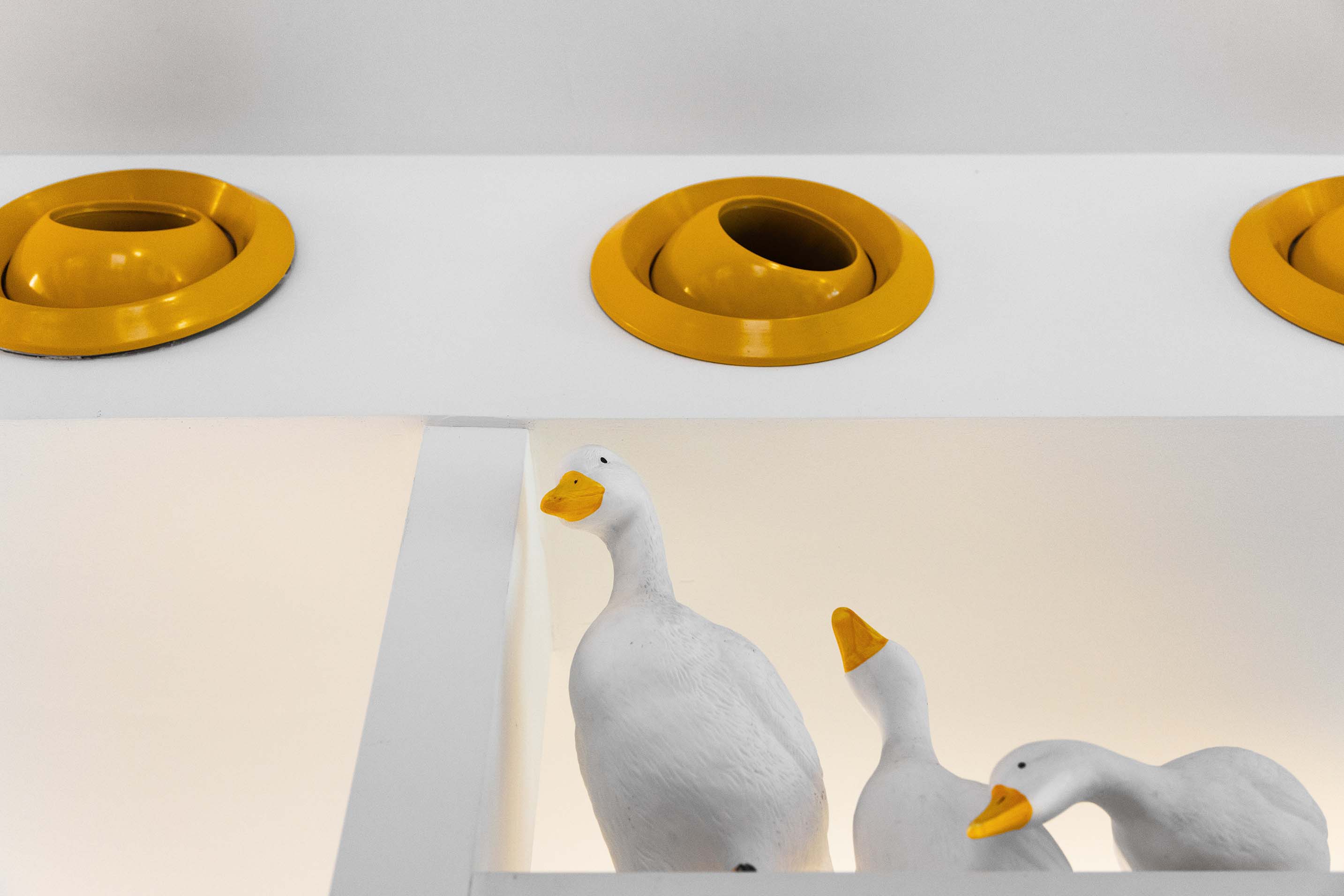
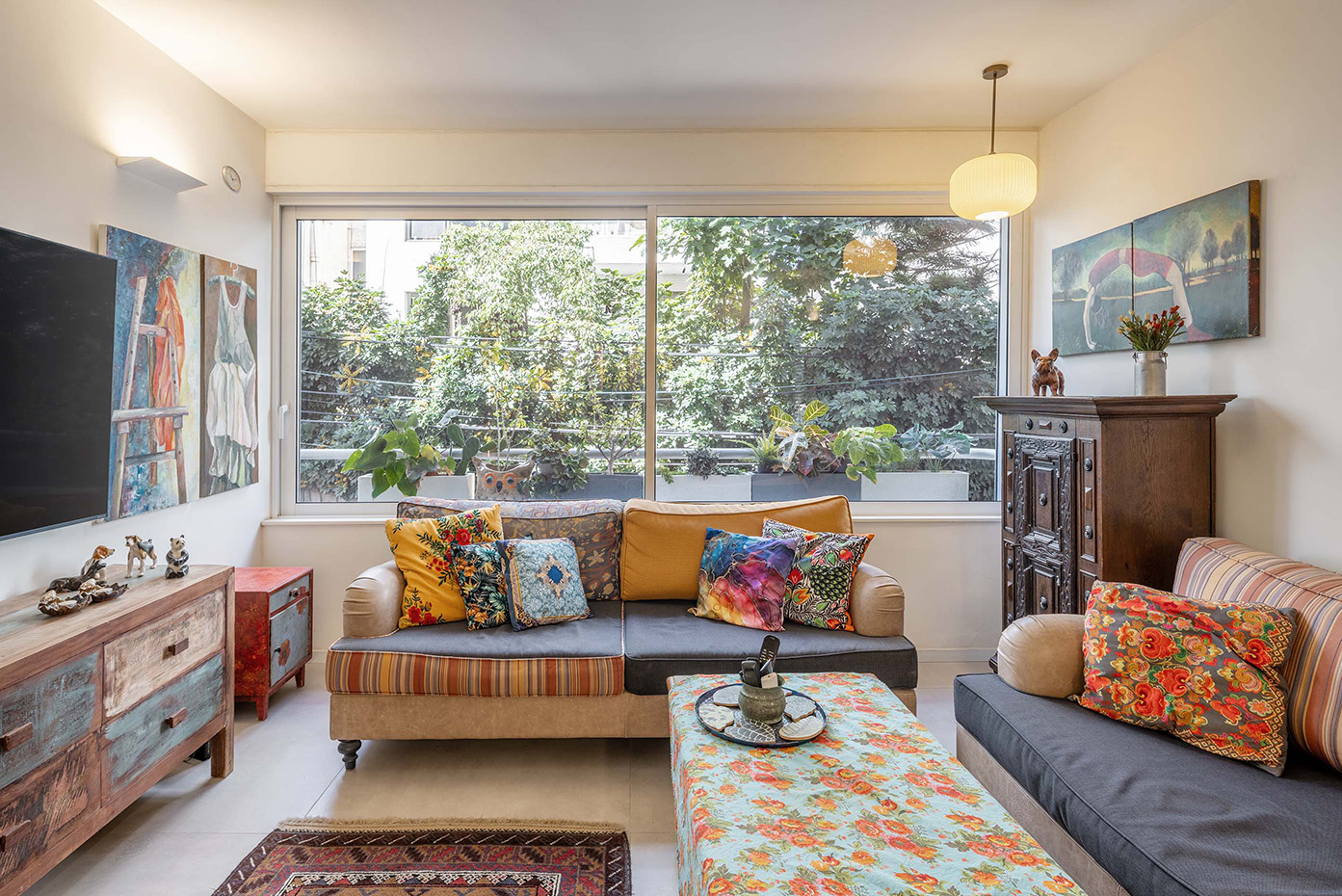
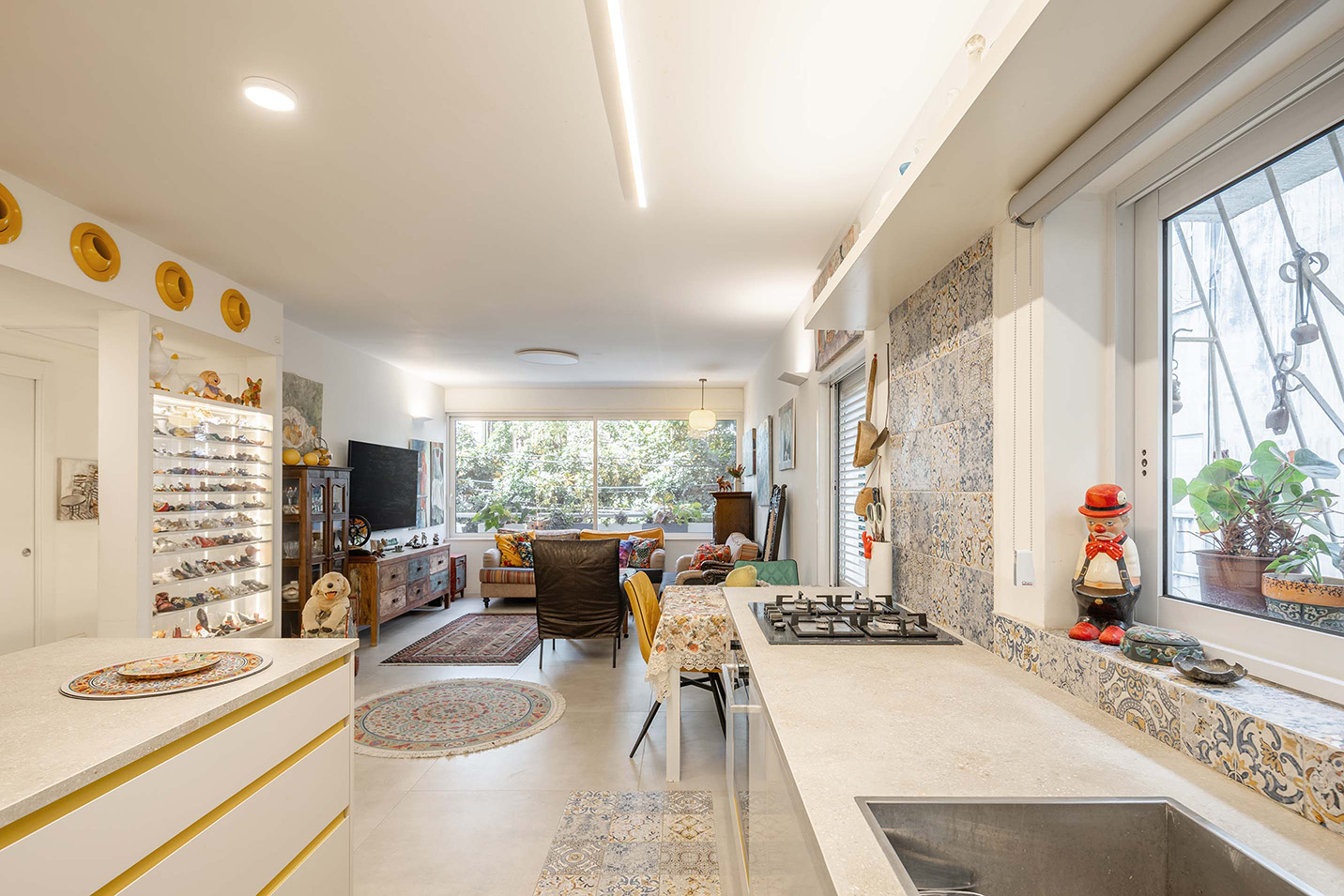
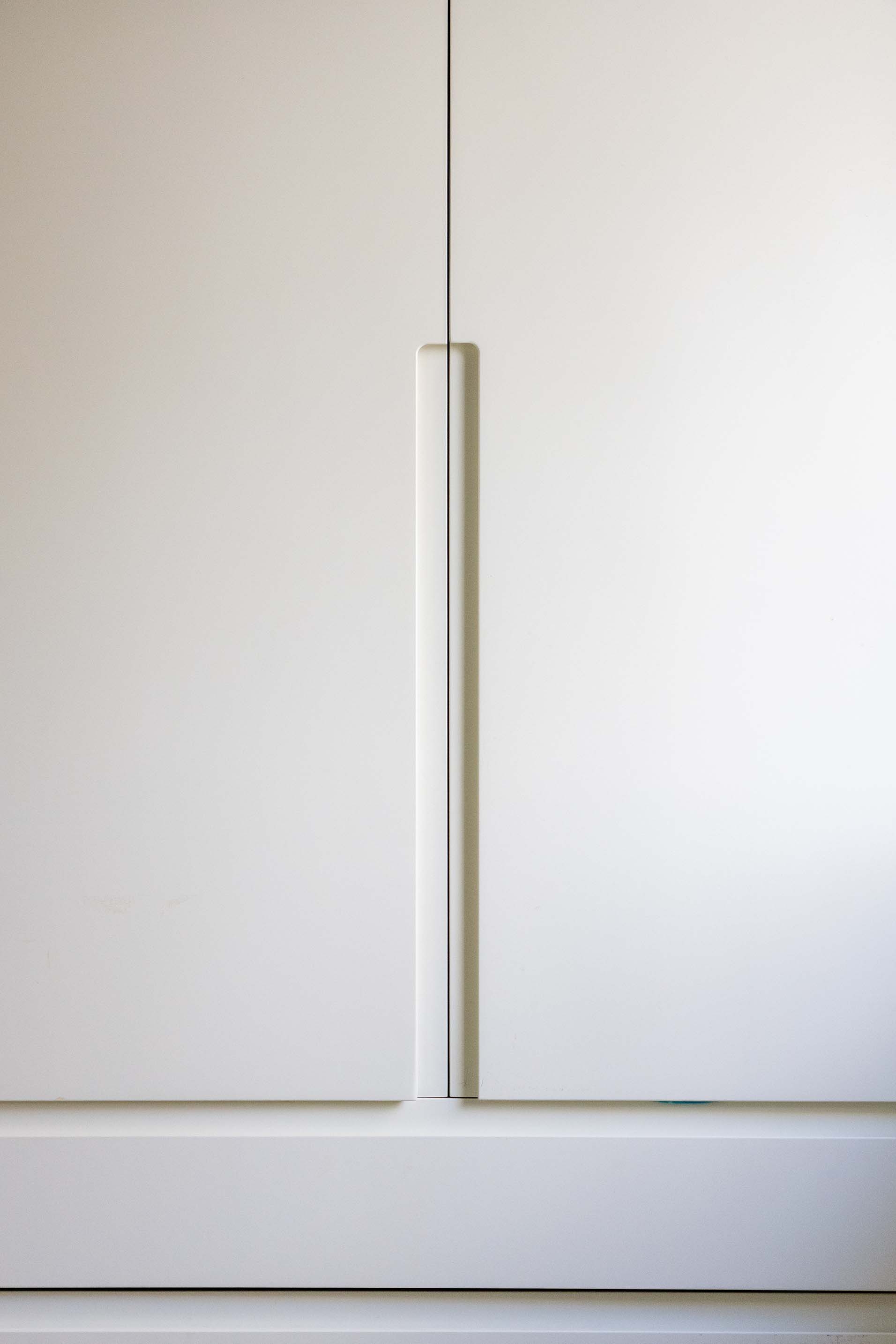
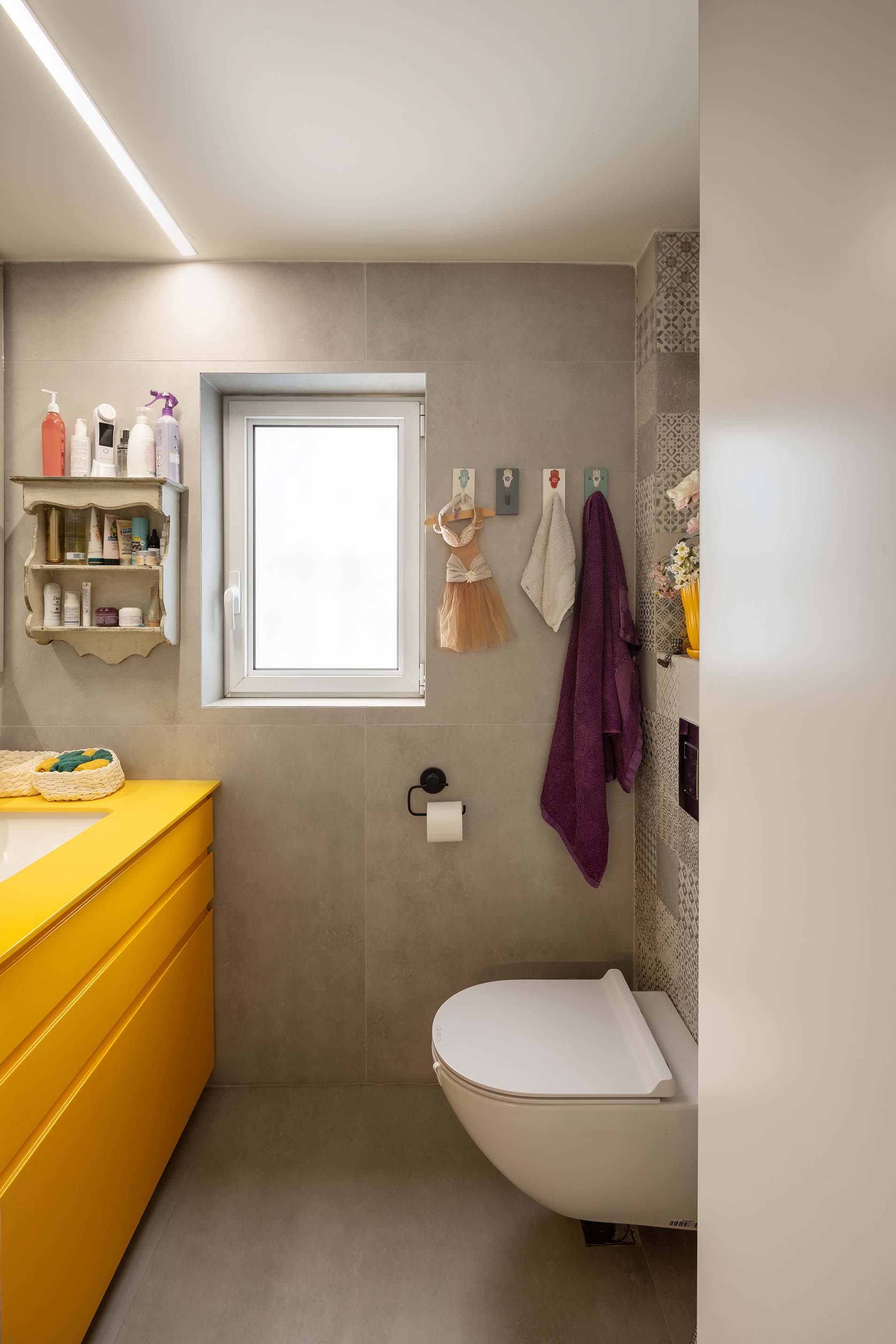
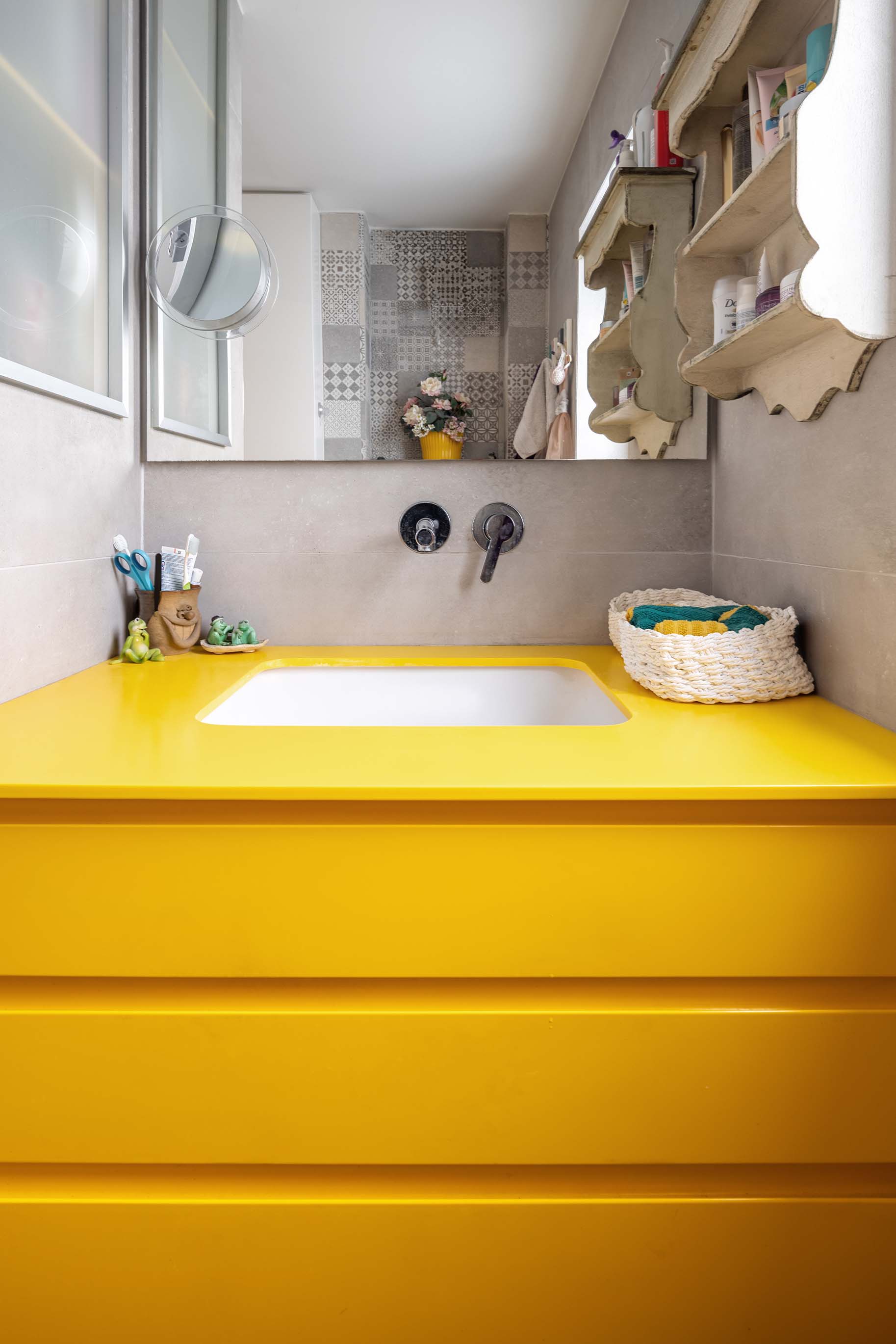
The main challenge in taking on this project was to take into consideration the creative personality of the…
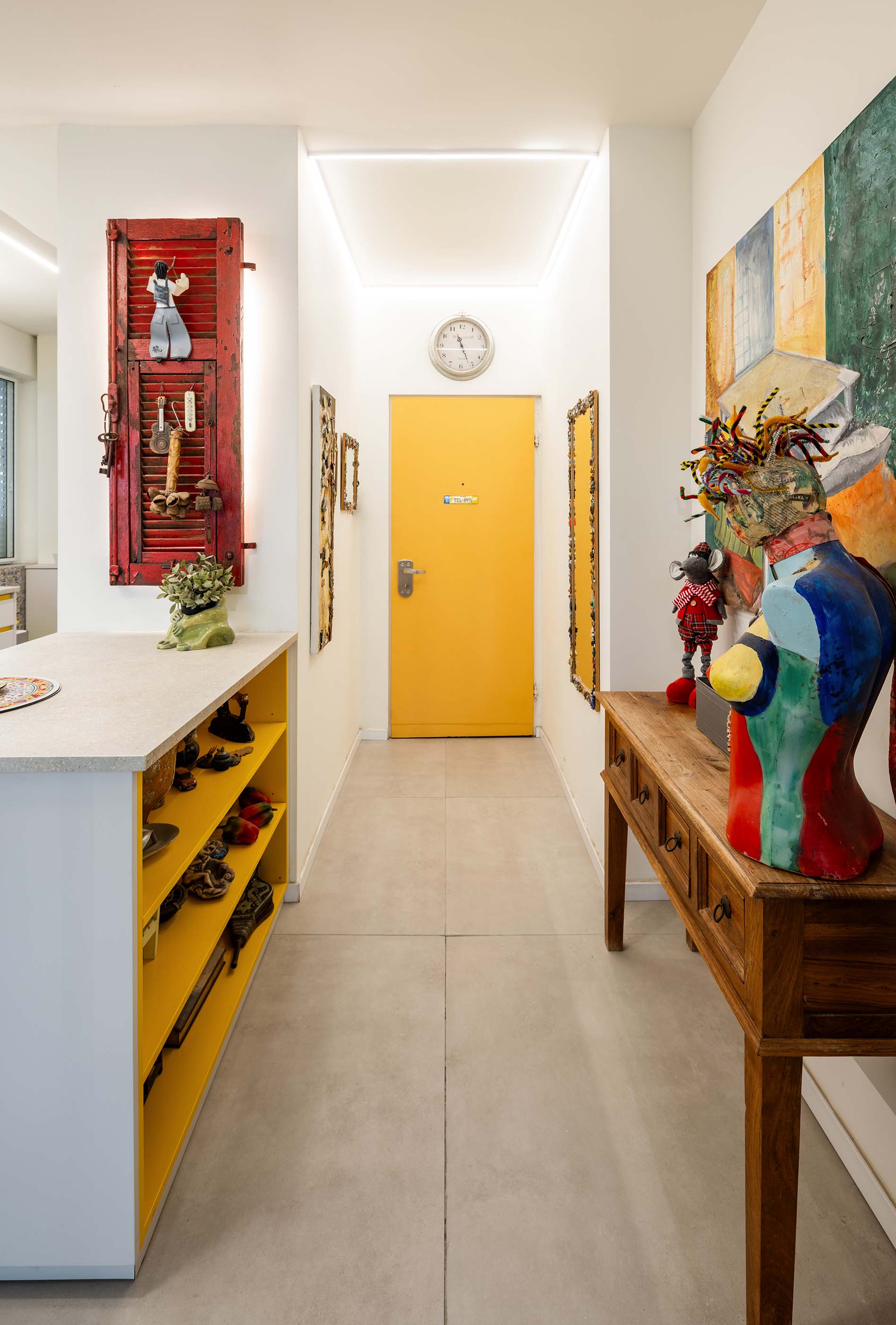
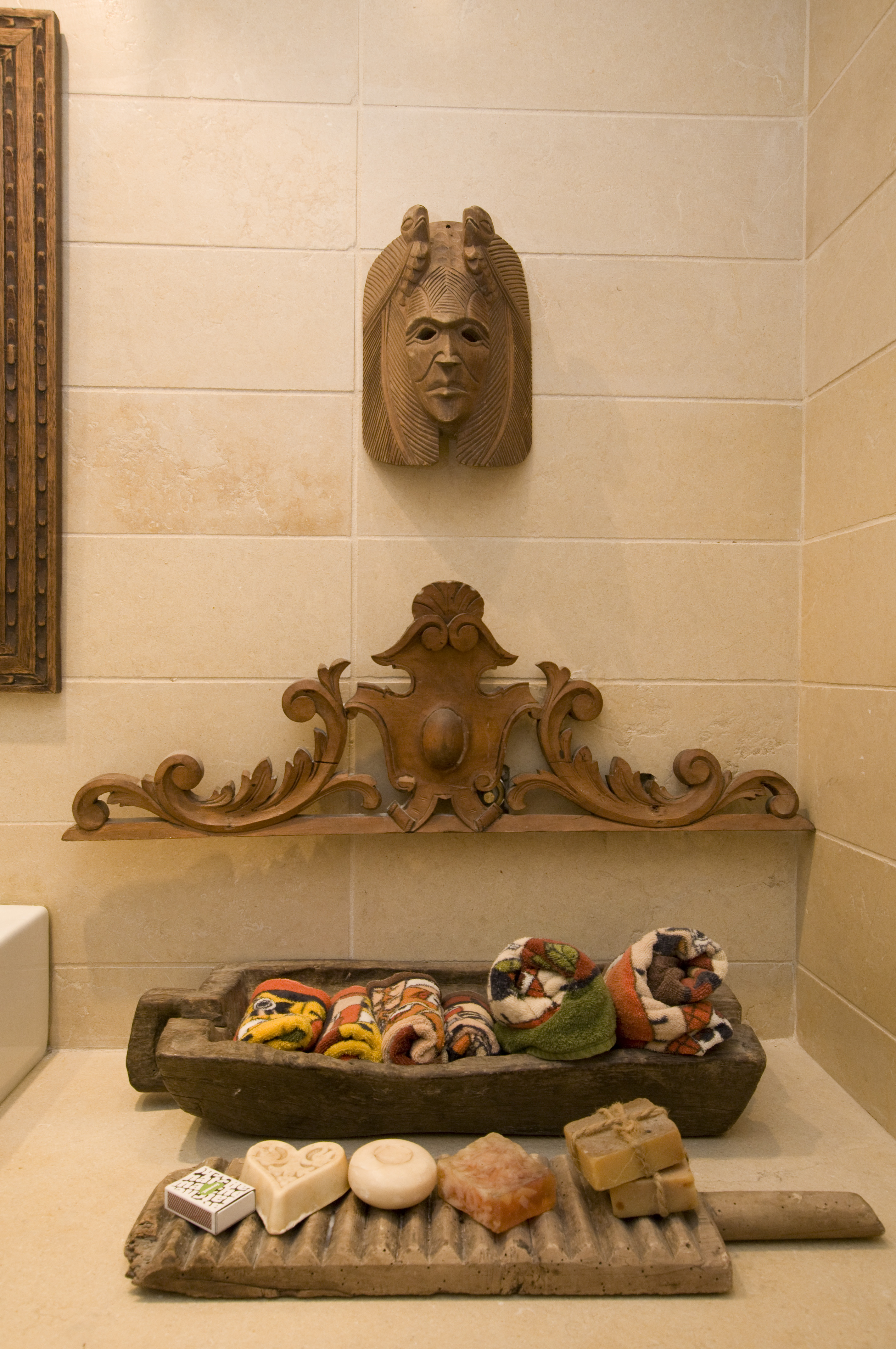
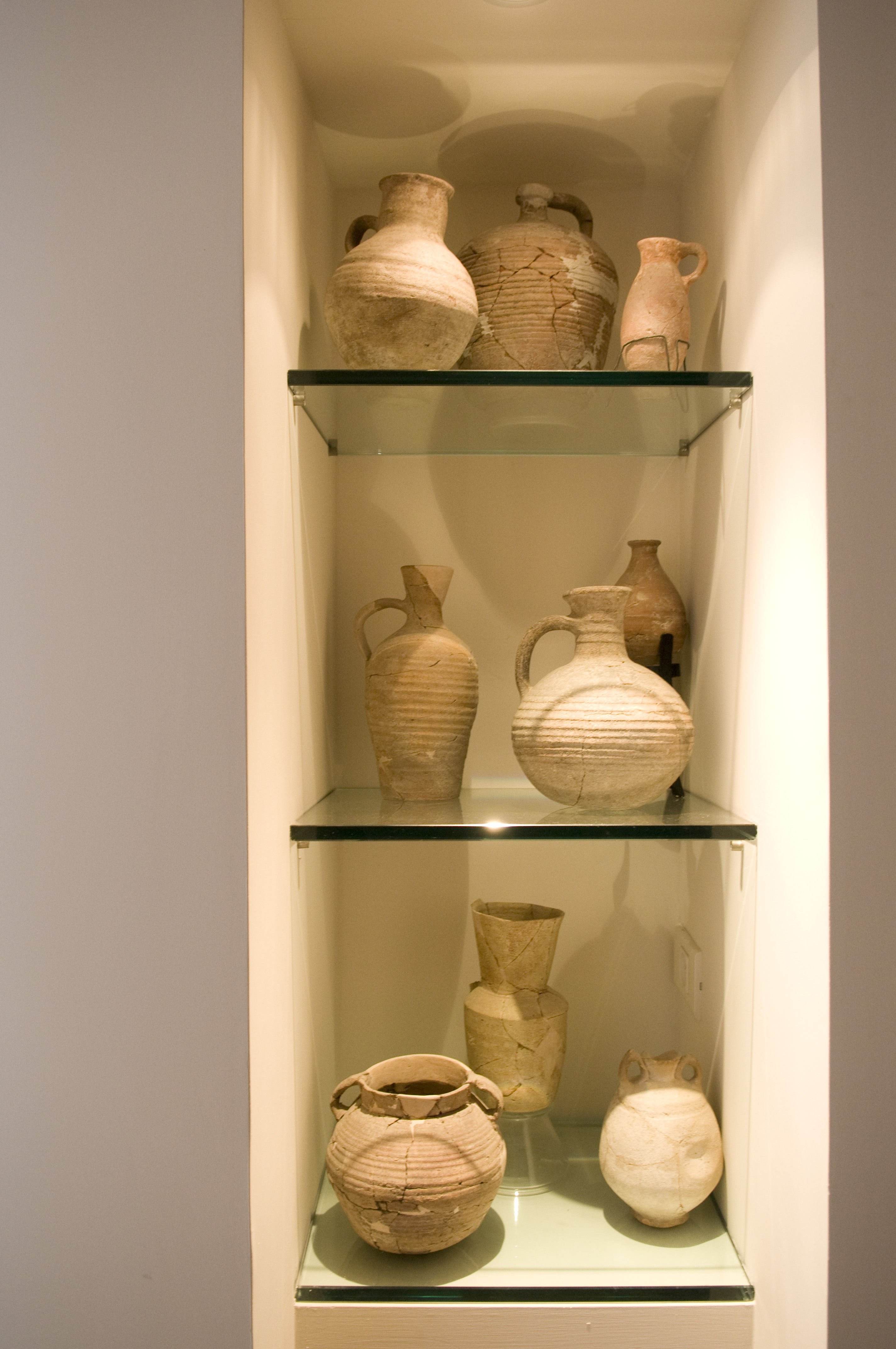
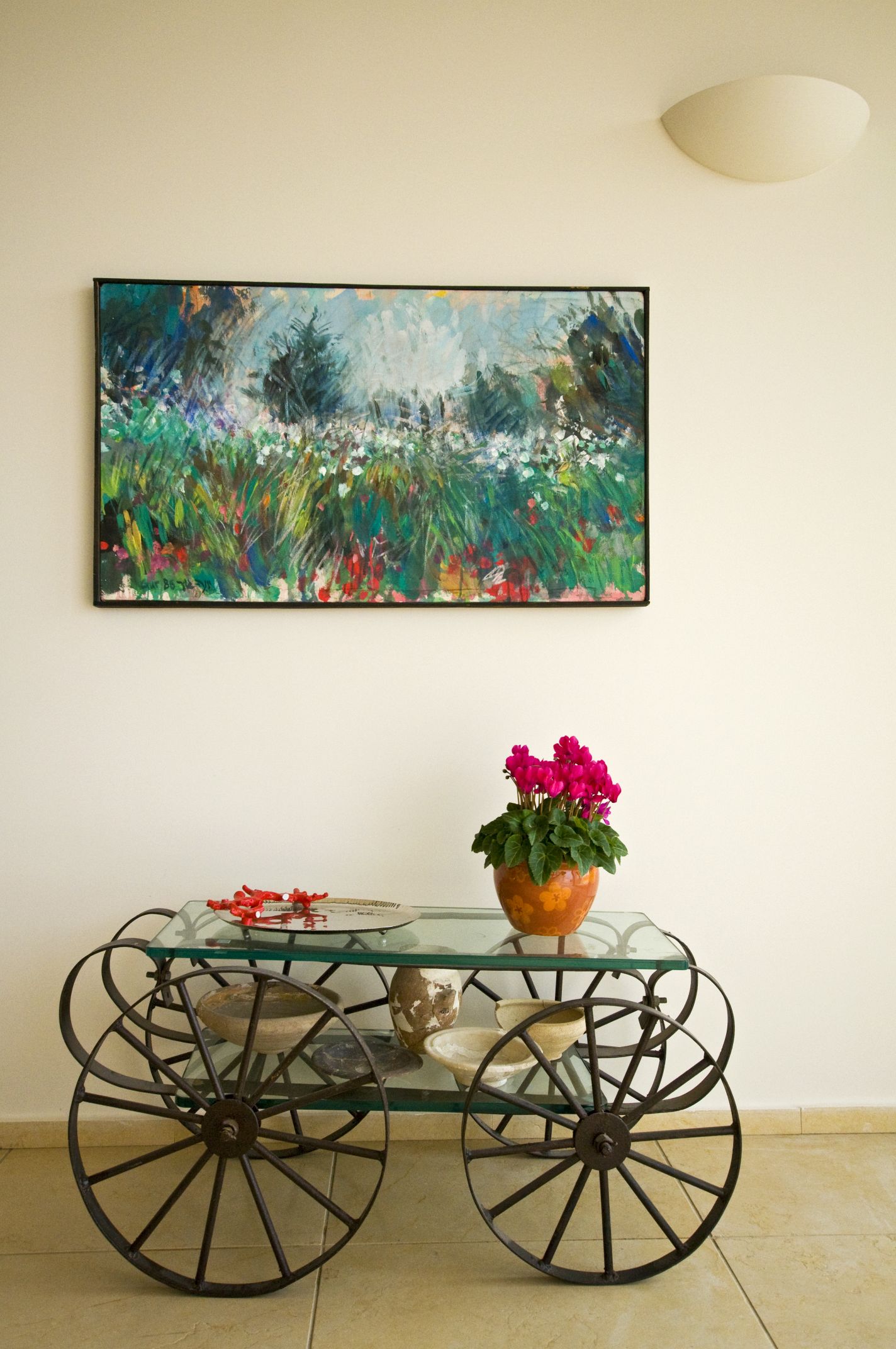
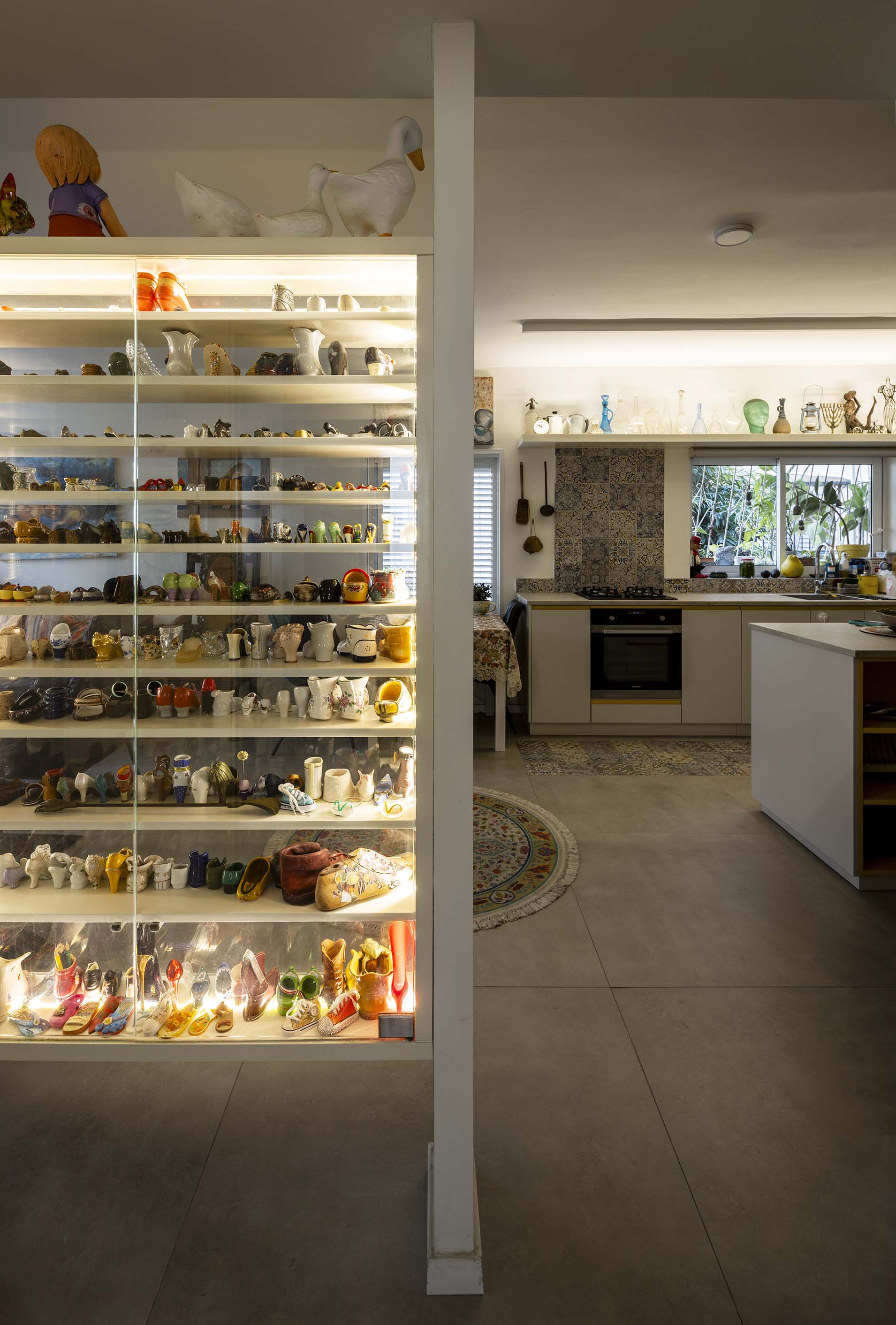
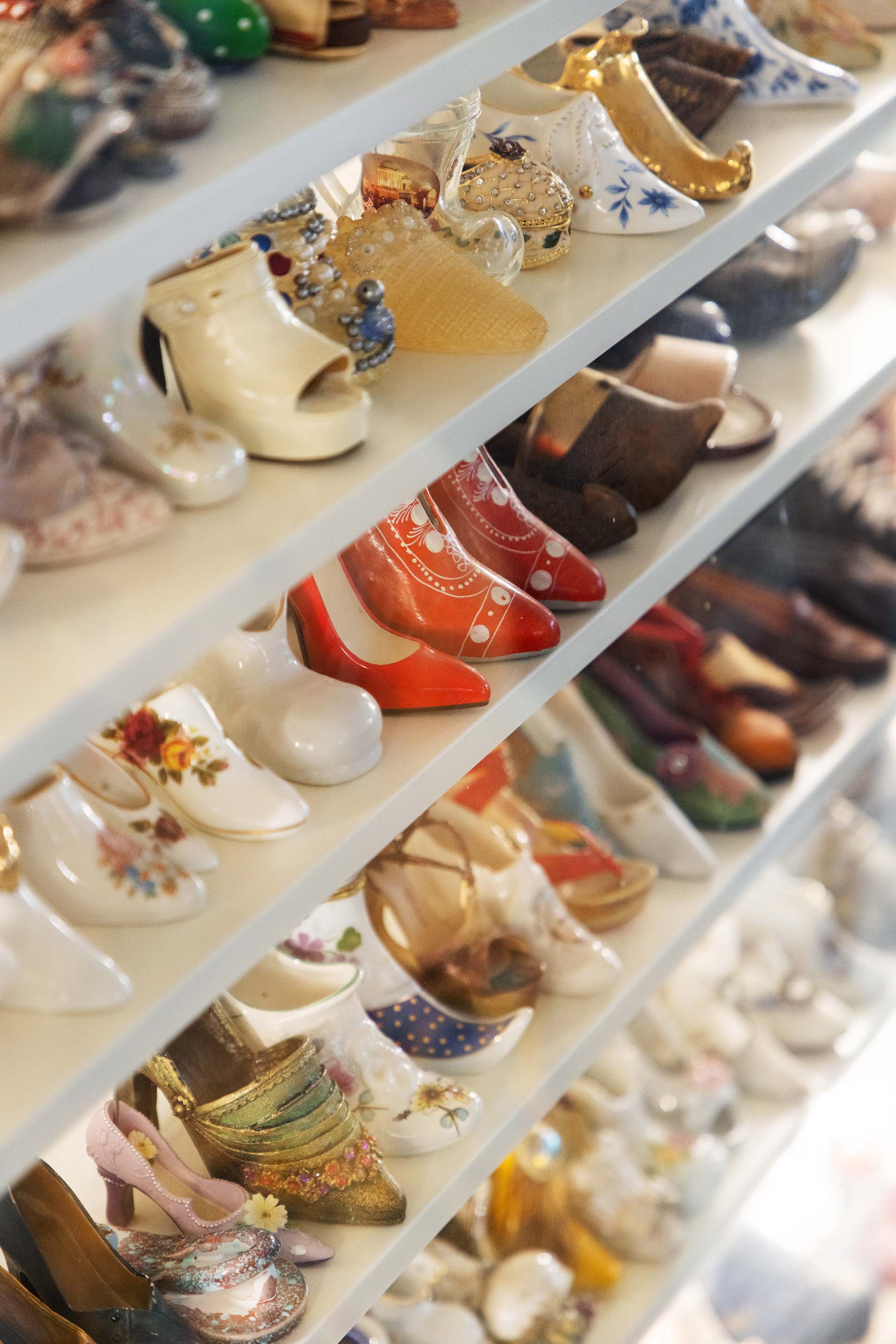
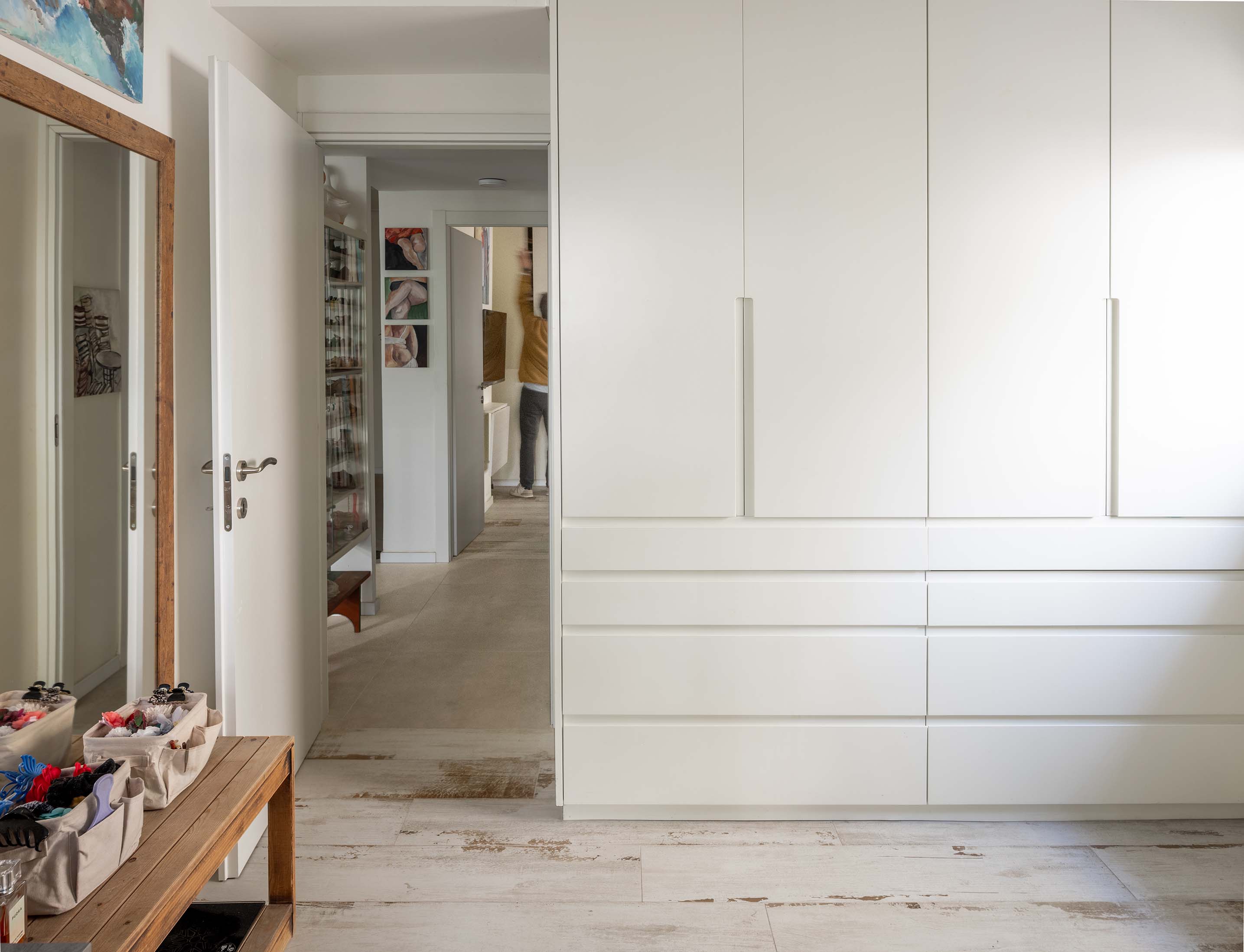
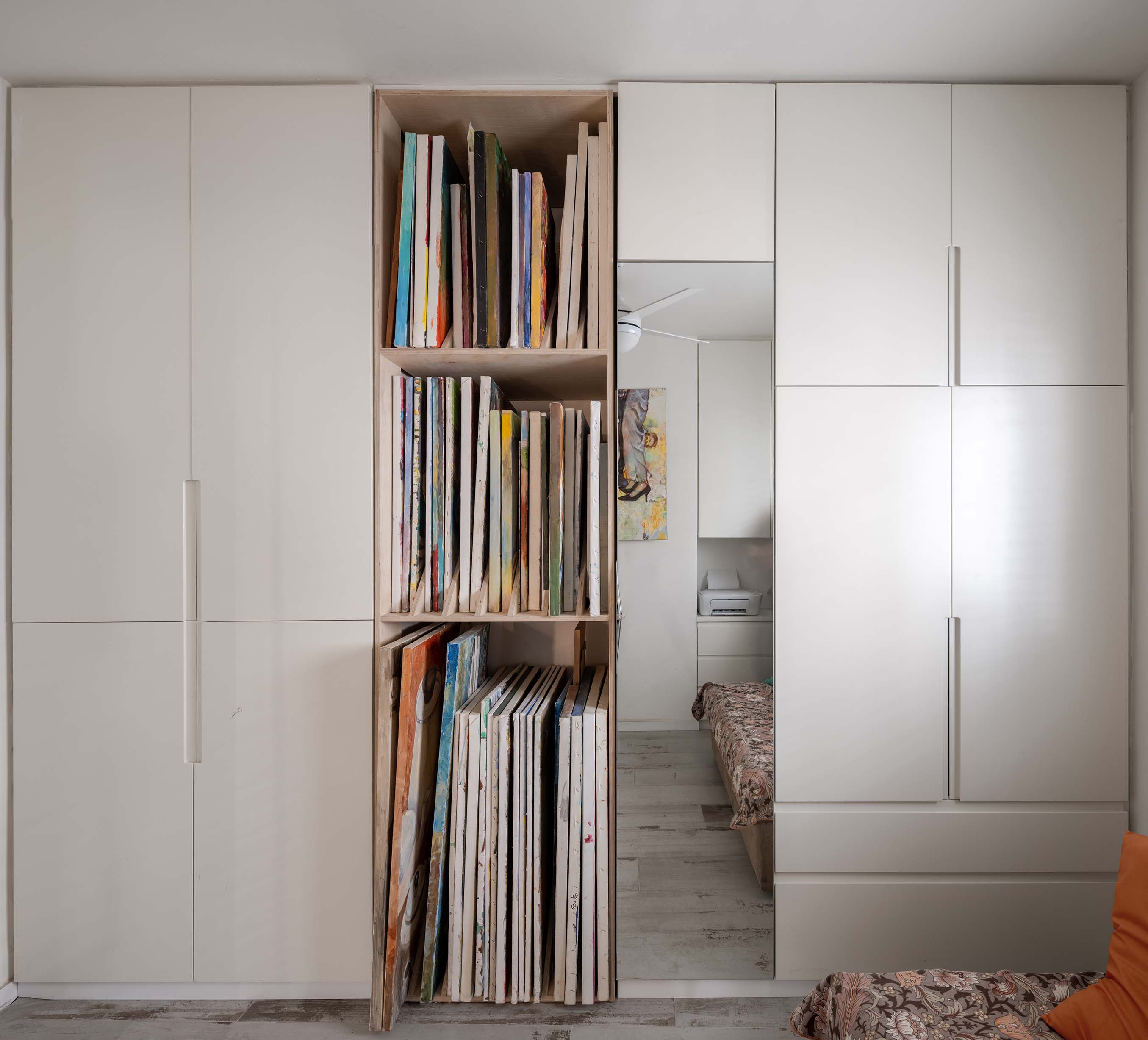
The main challenge in taking on this project was to take into consideration the creative personality of the artist who owns this apartment together with her collection of items that give her joy and add color to her environment. With the owner’s collaboration, we needed to carefully curate the pieces and the places they occupy in the space without appearing to clutter the environment nor interfere with the functions necessary to provide a living home.
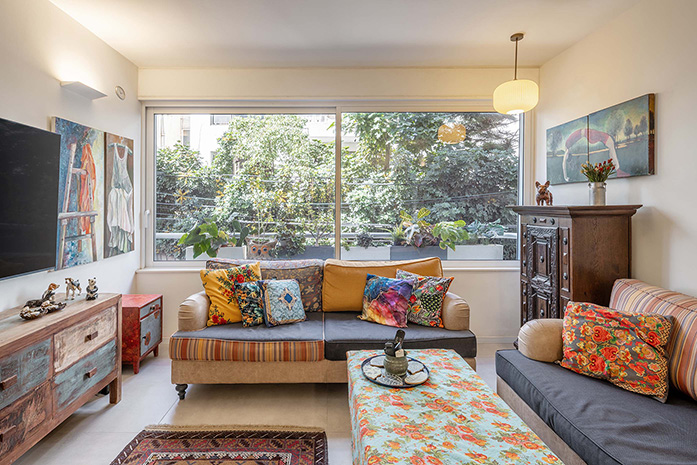
The result is a well organized space that displays the artist’s paintings and showcases her collections. The true test of the success is her claim to the transformed apartment, making it her own. For us it is a testament of a special approach to interior design, integrating a very particular character together with our personal guidance and touch.
O7MOctober 7th memorial
- Type
- Civic
- Scale
- Small
- Status
- Planning competition
- Year
- 2025
On October 7th, 2023, the Jewish Simchat Torah holiday, Hamas terrorists crossed the border between the Gaza…
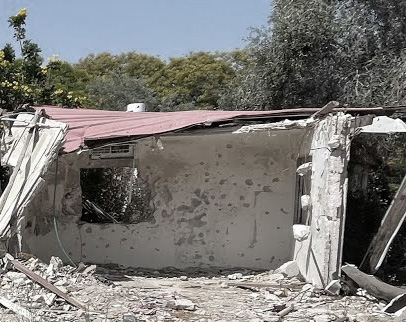
On October 7th, 2023, the Jewish Simchat Torah holiday, Hamas terrorists crossed the border between the Gaza strip and the state of Israel and commenced the worst attack on jewish people since the holocaust. More than 1,200 people have lost their lives and more than 200 were kidnapped to the tunnels of Hamas in the strip. These people were mostly civilians sleeping in their beds, partying in nature, jogging on the roads and doing whatever it is that free people do on their day off. That is what happened on October 7th - parts of the state of Israel were occupied by a foreign power. And thus, the Israeli personal and national sense of security was broken irreversibly. One of the outcomes of that nightmare of a day is a new code word in the IDF's vocabulary - "Breached circle". This is a development of the milder "Open circle", in which a single or small number of terrorists have made it into a settlement and started a killing spree. In this new scenario, the "Breached circle" indicates that a community is being completely overrun by terrorists and is, for all intended purposes, occupied by the enemy.
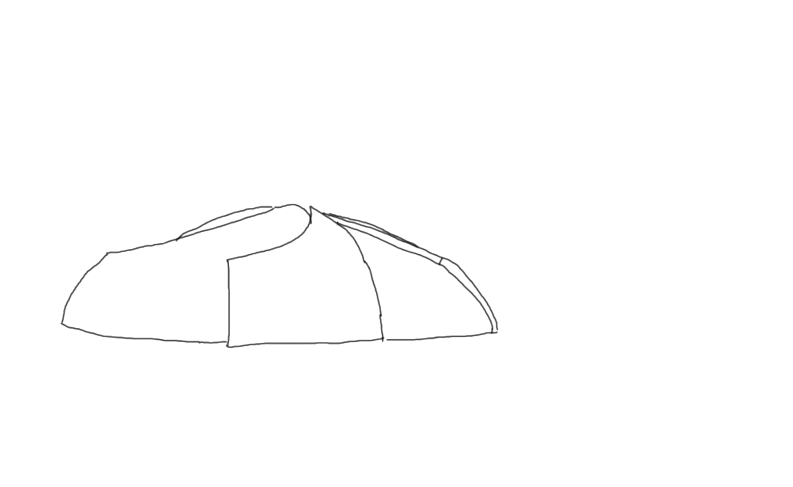
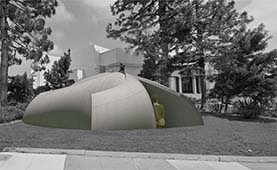
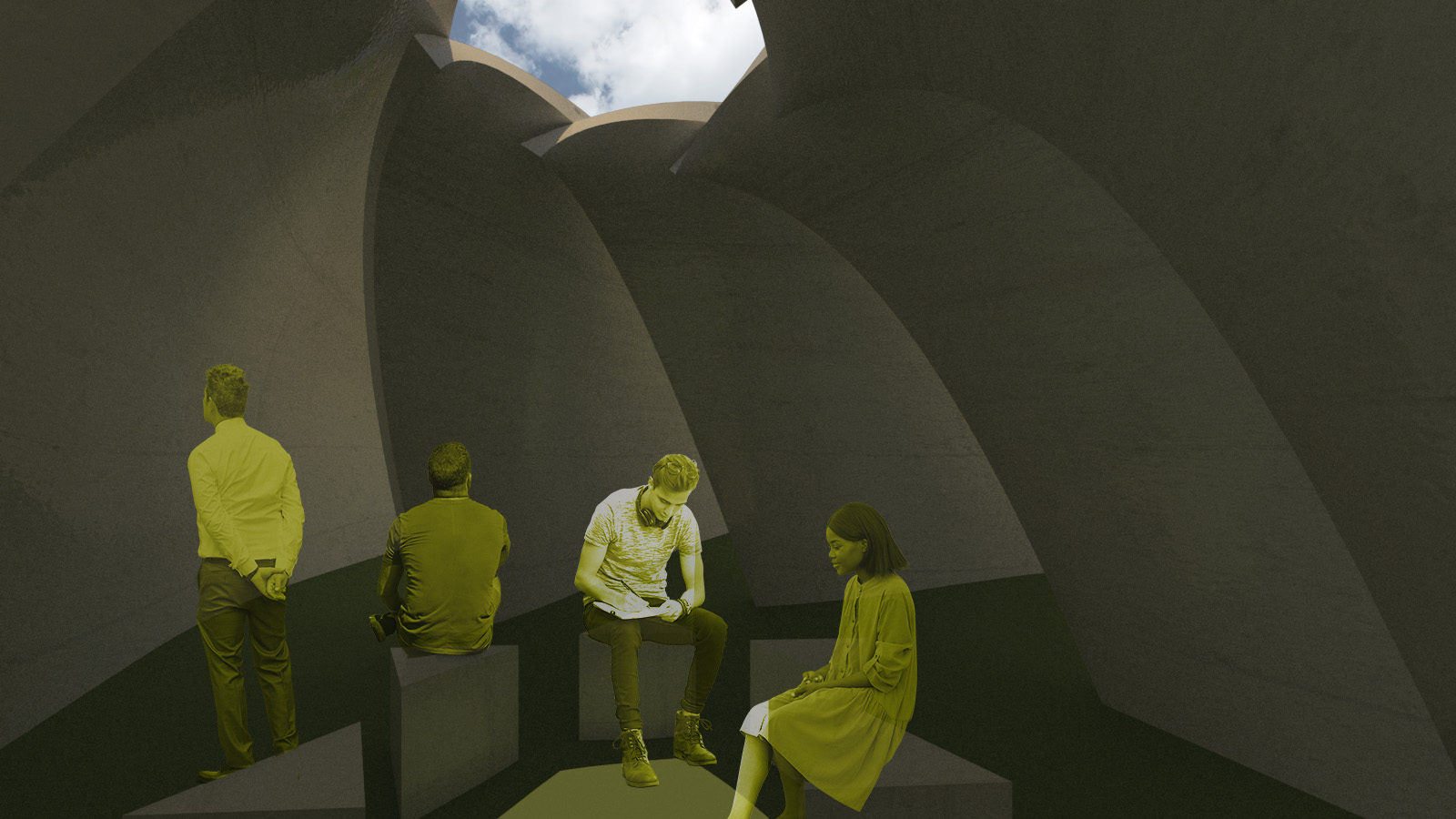
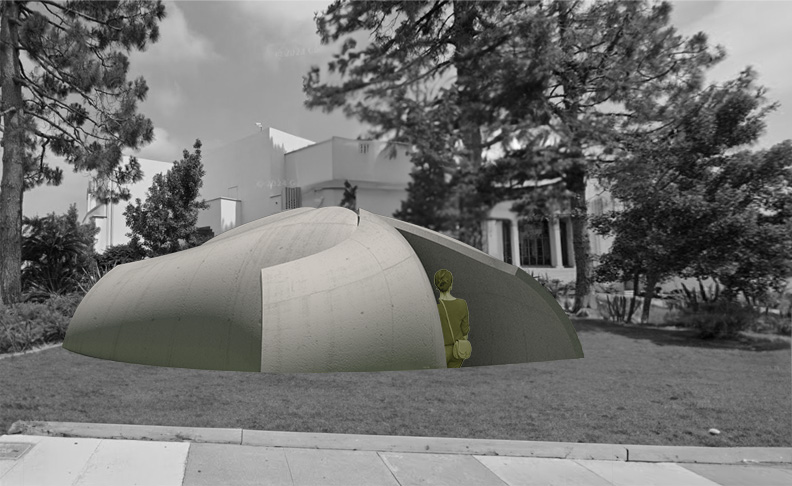
It is this code word, "Breached Circle", that inspires the idea for this entry. The shape of the plan evokes a memory of a circle, a circle that used to be whole, a circle that is now broken, breached. This circle is divided into 6 parts which meet at the top of the space of reflection to create a hexagonal oculus. Together with 6 triangular seats, this makes for a 3-dimensional, spatial Star of David, signifying that this atrocity happened to the Jewish people.

Top plan
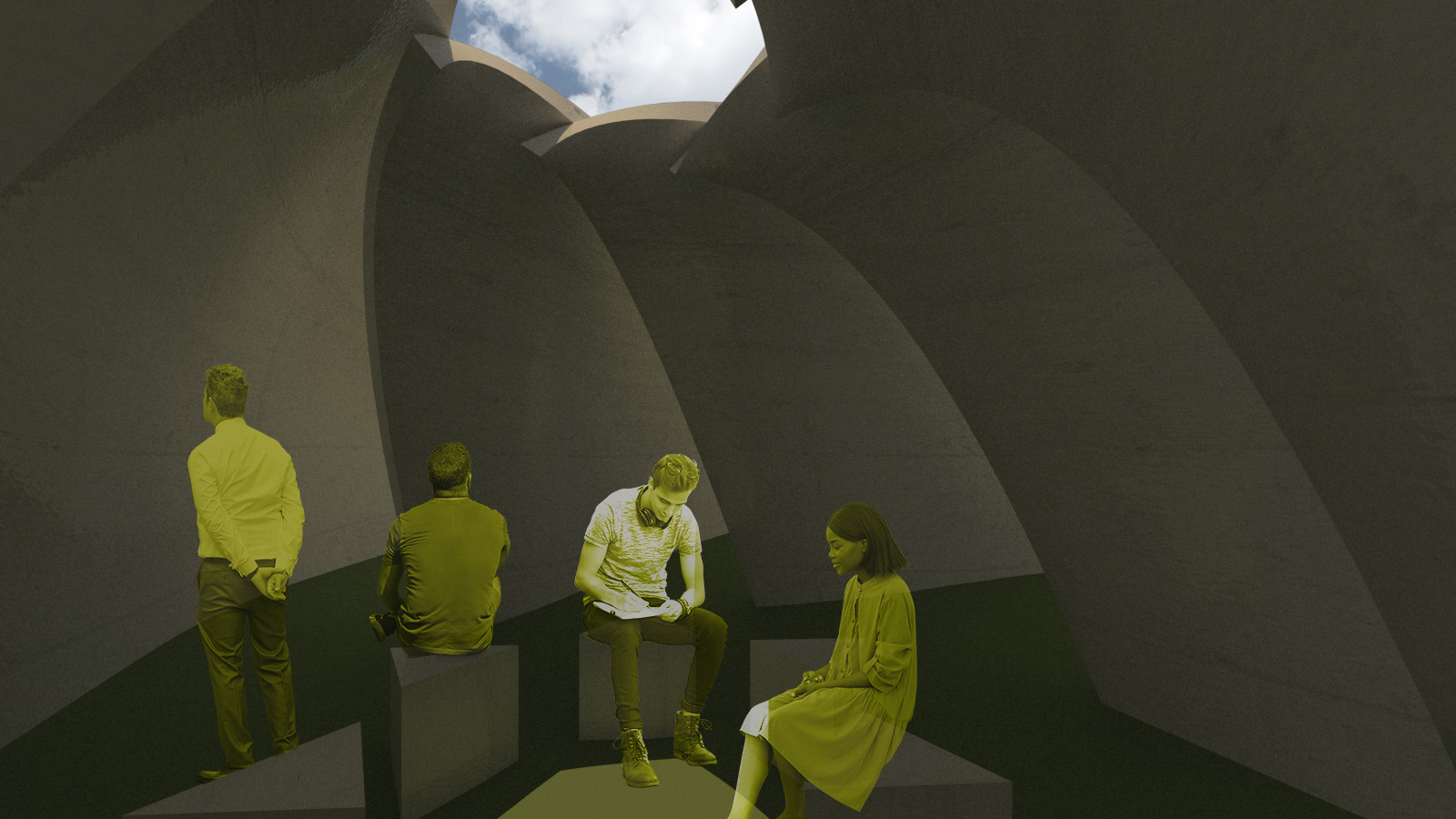
The space of reflection is a space with a concentric orientation surrounded by concrete walls that envelope it on all sides. The space and the sitting arrangement in it are centered around the hexagonal oculus. This is meaningful, as the light that shines through the top of the space, with contrast to the darkened space itself, draws the eye and creates the atmosphere necessary for contemplation. The space of reflection is detached from the loud and busy street life, providing a safe and quiet place to consider the meaning of events, remember loved ones lost, think about what it is to be a free person in the world or just reflect on your day.

Inside plan
As you go down the path to the space of reflection it is getting narrower and the sky is blocked by the curving wall that accompanies your walk. This entrance is evoking a sense of unease, claustrophobia and dread. It is reminiscent of the way that the hostages of Hamas were forced to go through on the way to the underground terror tunnels of the Gaza strip. Once you get to the space of reflection, alone or in a group, you are encouraged, by the proportions of the space itself, to have a moment of silence by yourself, to reflect and to contemplate. Exiting the monument, you'd go through a reverse process, going out from darkness to light and life. This is important, as hope of a better future is something that the people of Israel have always had in their hearts and will continue to have (this is evident by the Israeli national anthem, aptly named "the Hope"). It signifies, and makes palpable, that there's always light and hope at the end of the tunnel.

Section
The choice to use concrete derives from its significance on the day of the attack, as it is the building material of the so-called "safe rooms", which are ubiquitous in Israel. On October 7th, some of these rooms (which are designed to guard from missile attacks) were able to keep the occupants safe and locked in, while others were tragically breached, burned or bombed. As you descend to the space of reflection you are accompanied by a concrete wall that begins in a smooth texture but gradually gets more and more cracked and broken. This enhances the feeling of transition from a state of safety and confidence to a situation in which something is wrong. At the same time, the properties of concrete create an atmosphere that support a reflective state of mind.

Scheme of descending textured wall
FMSFMS
- Type
- Renovation
- Scale
- Medium
- Status
- Built
- Year
- 2009

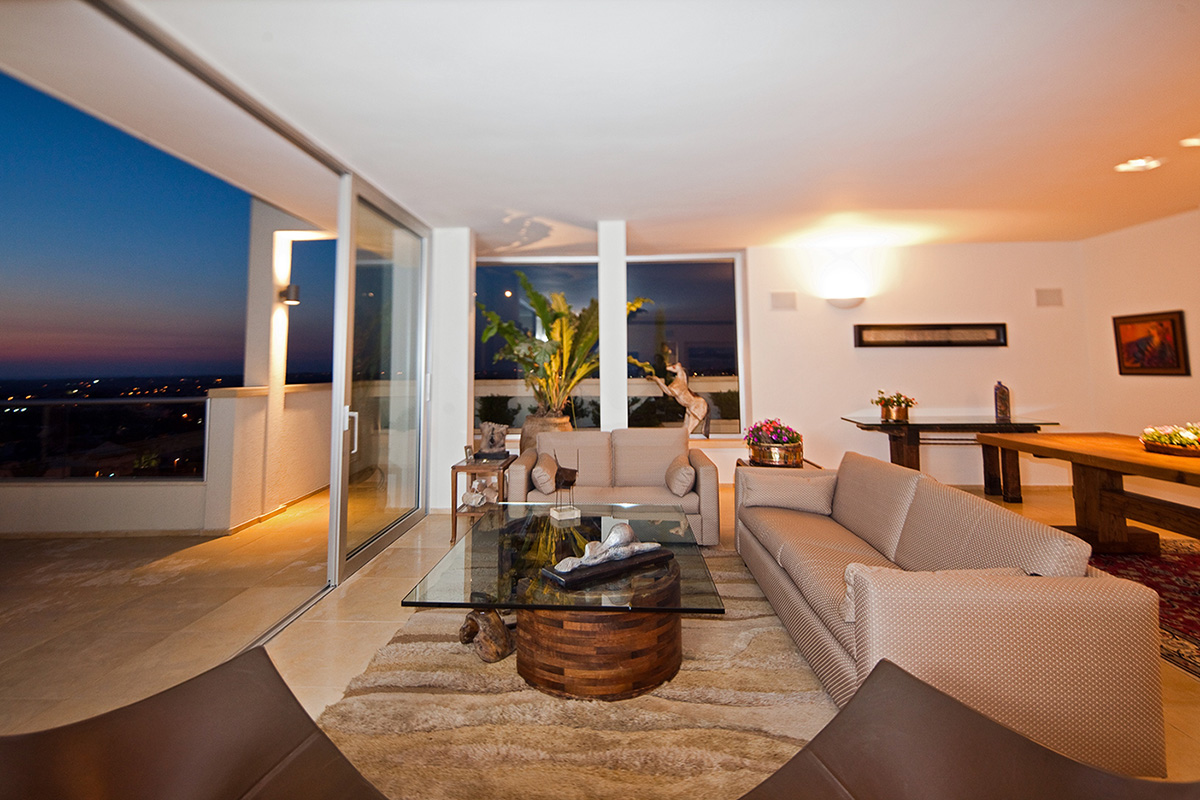
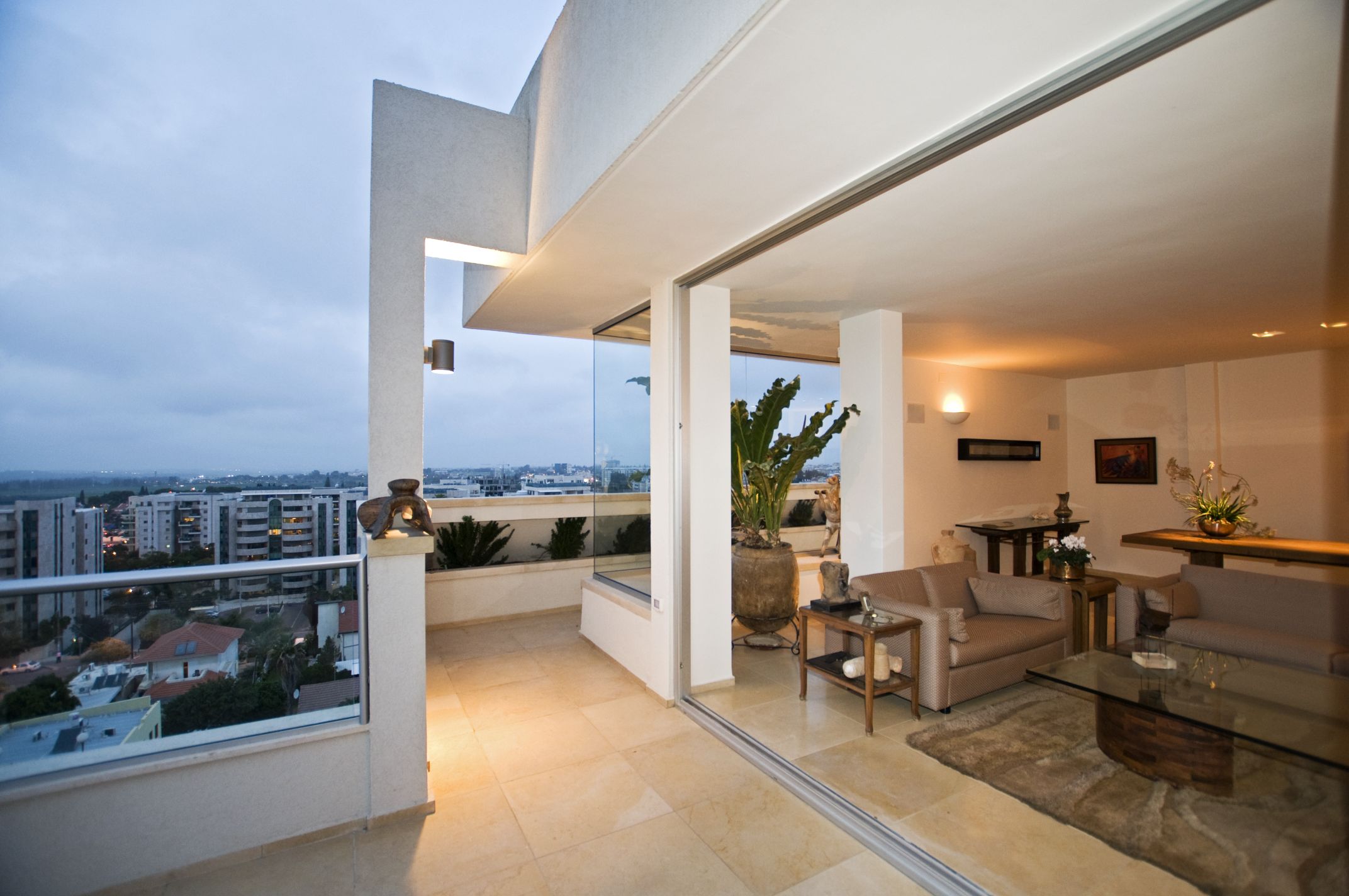
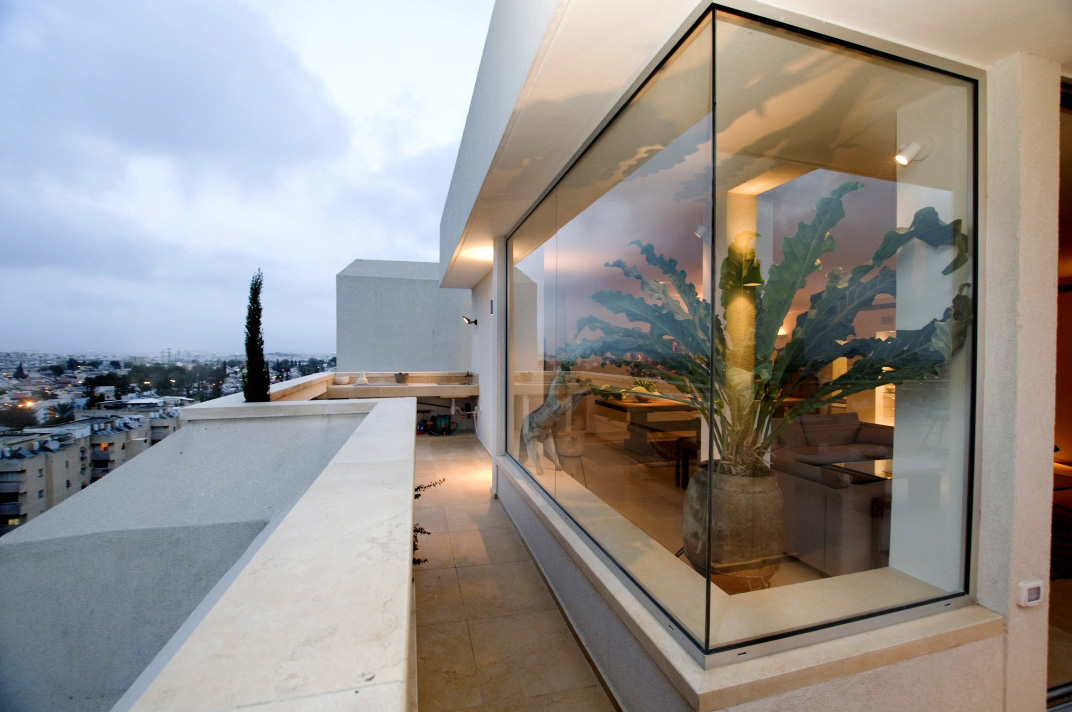
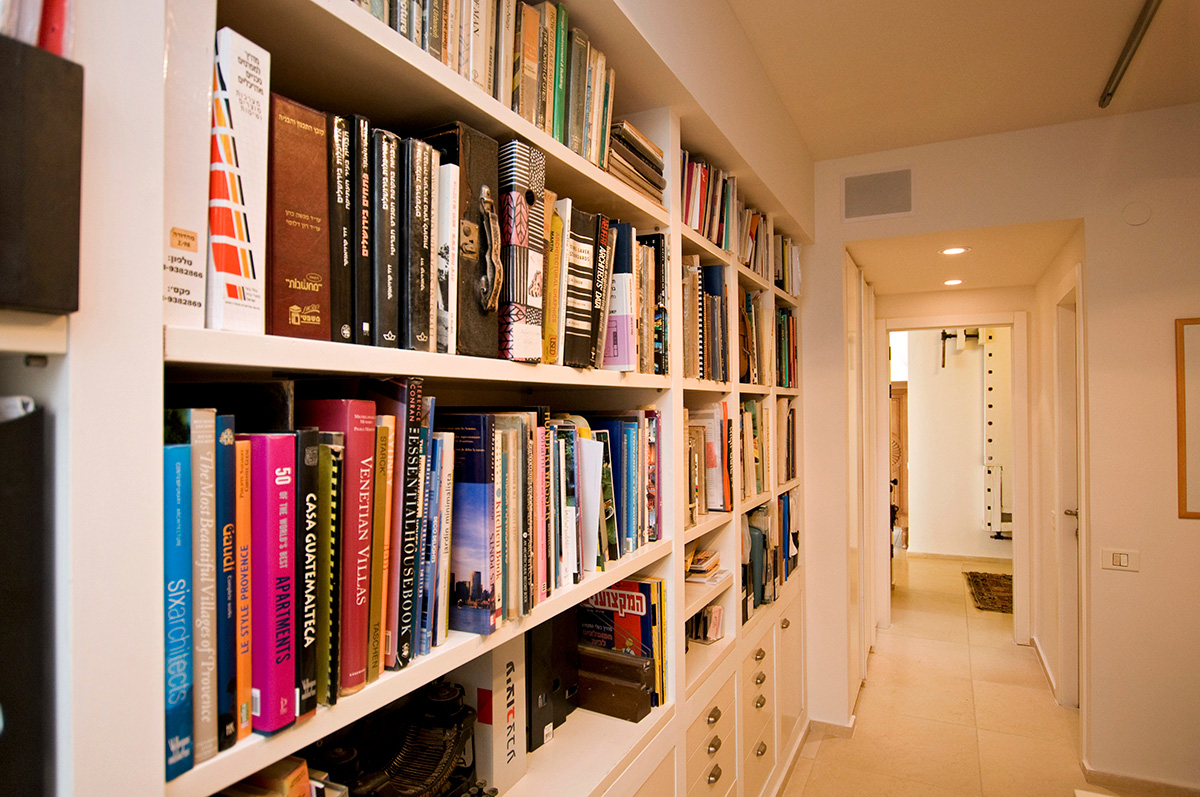
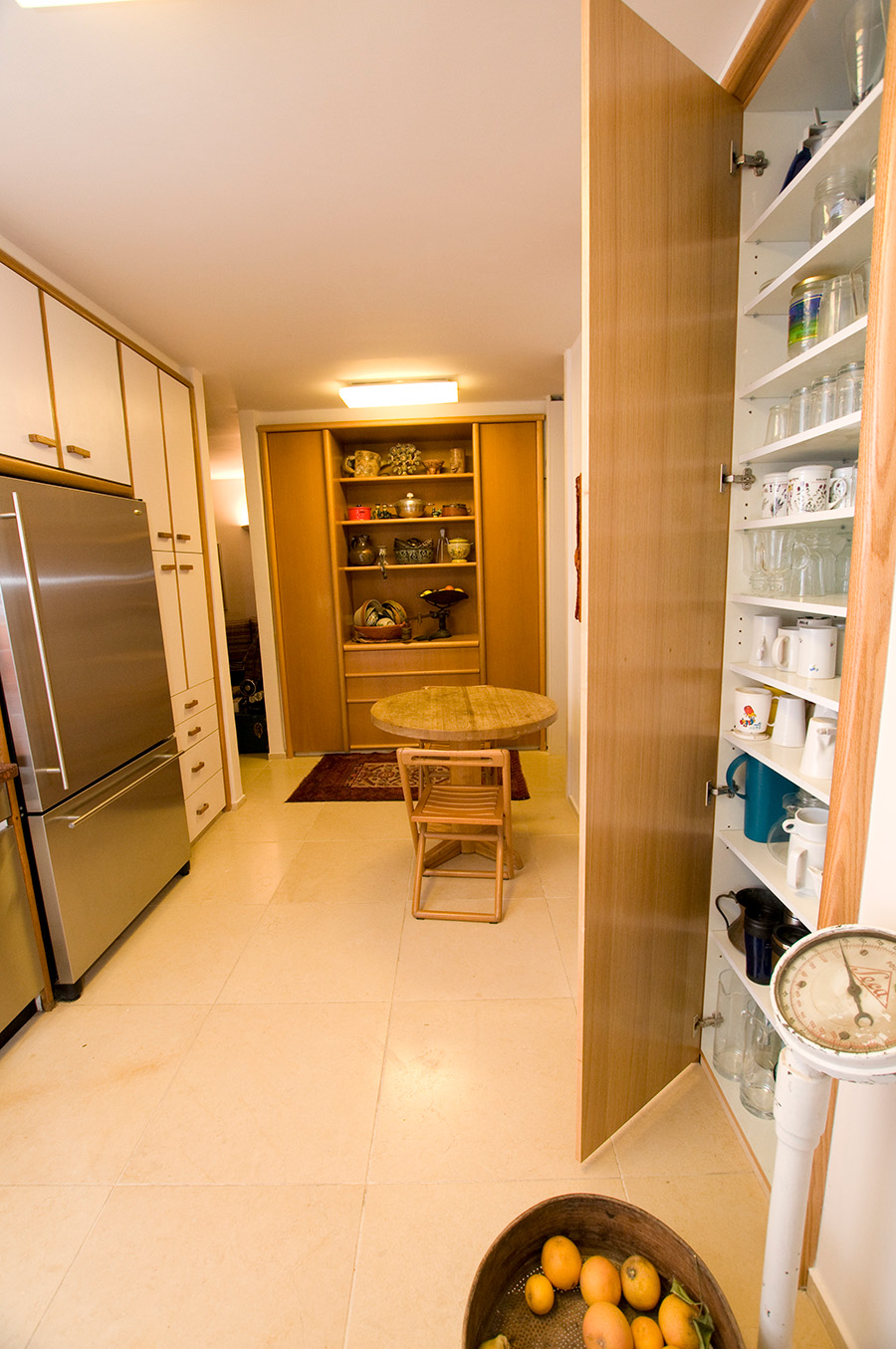
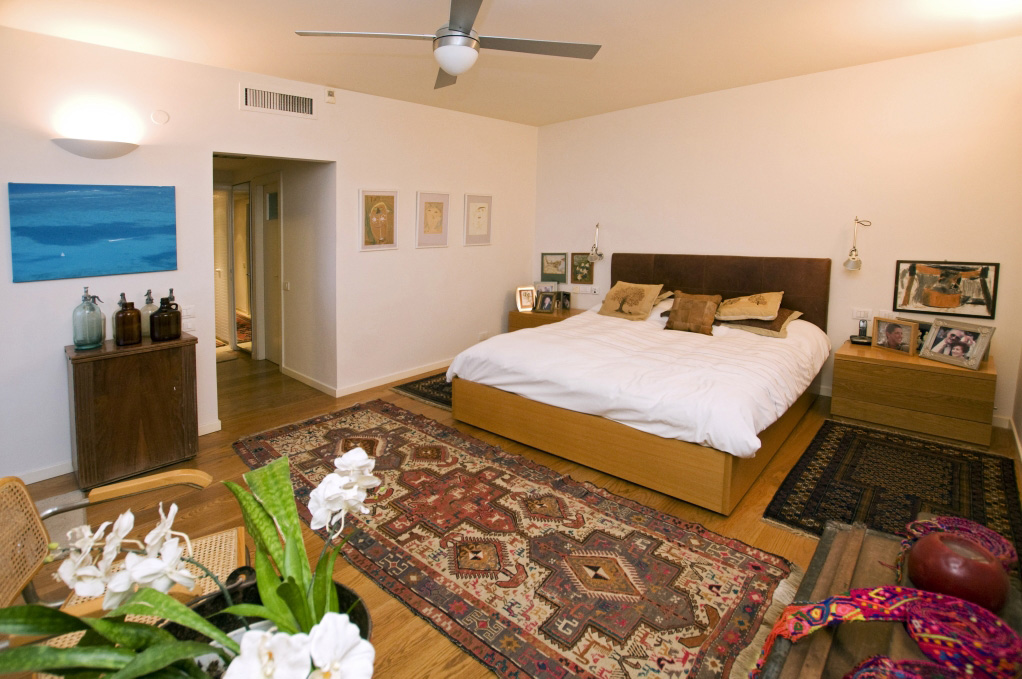
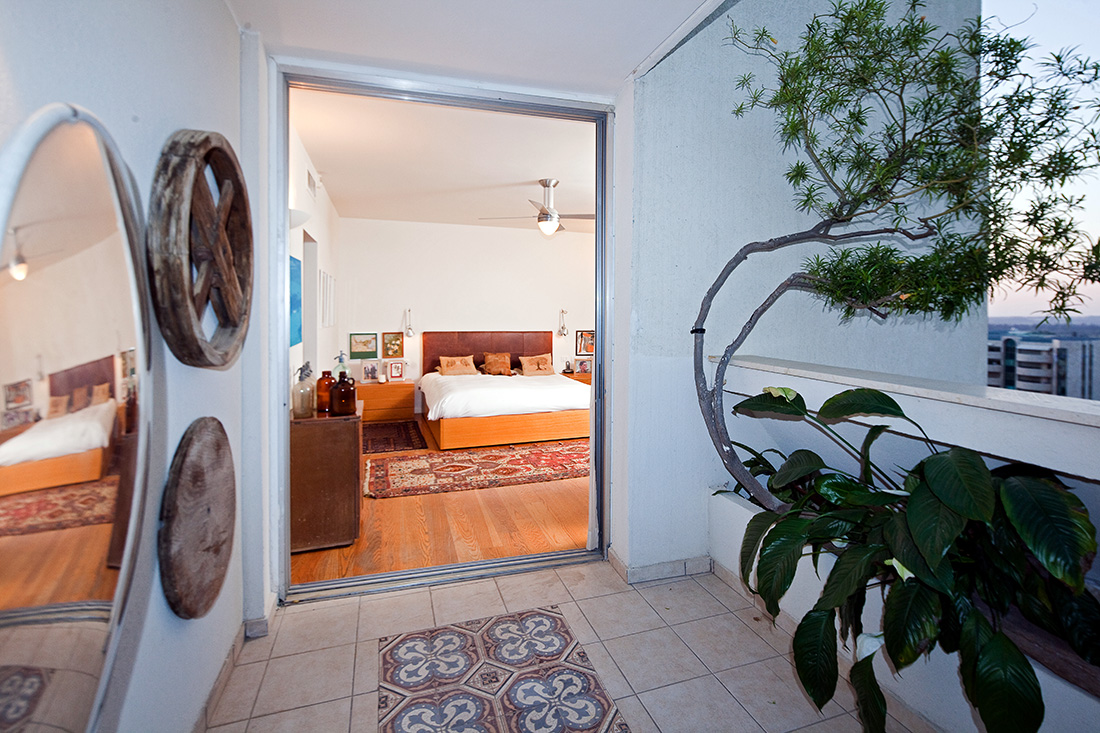
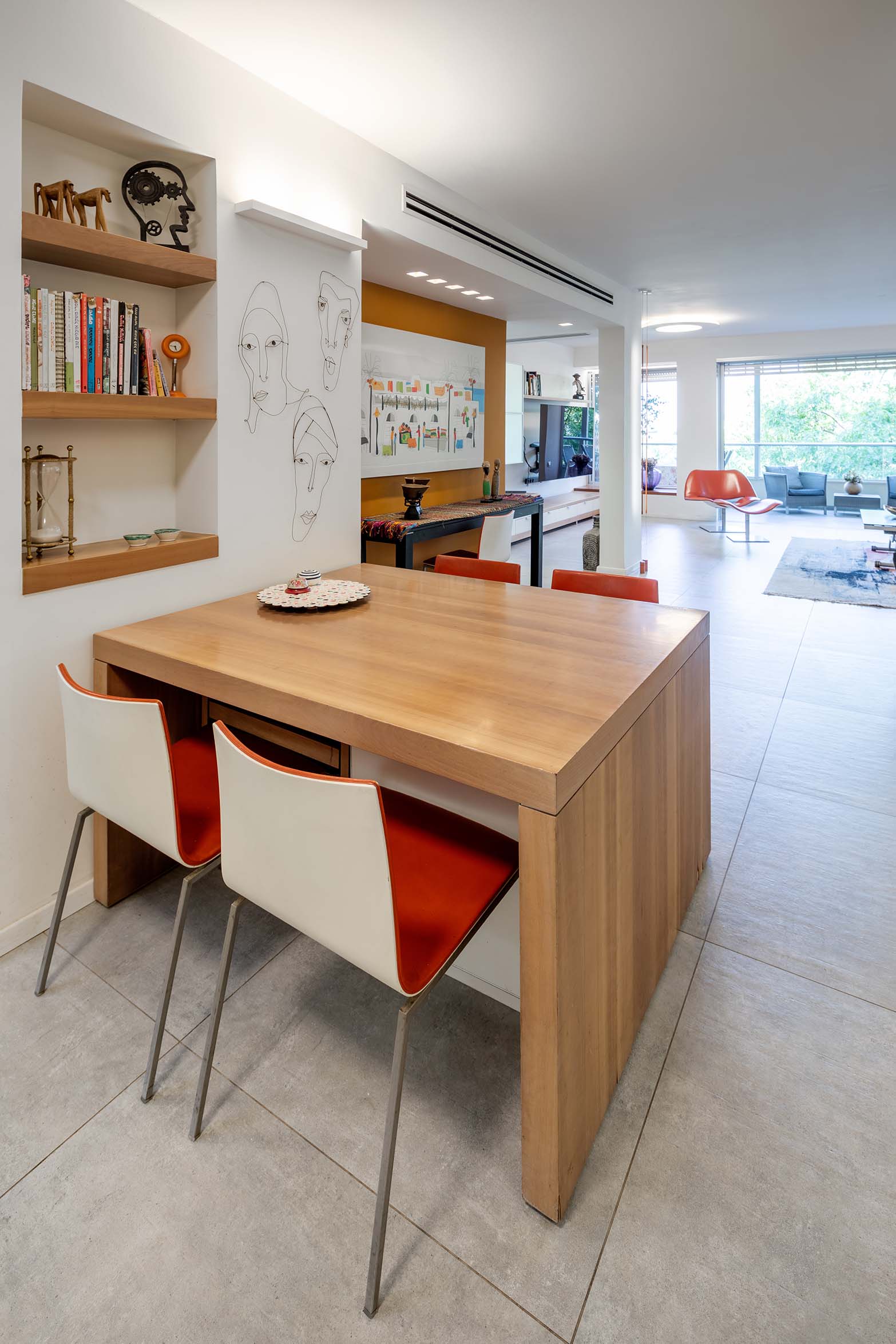
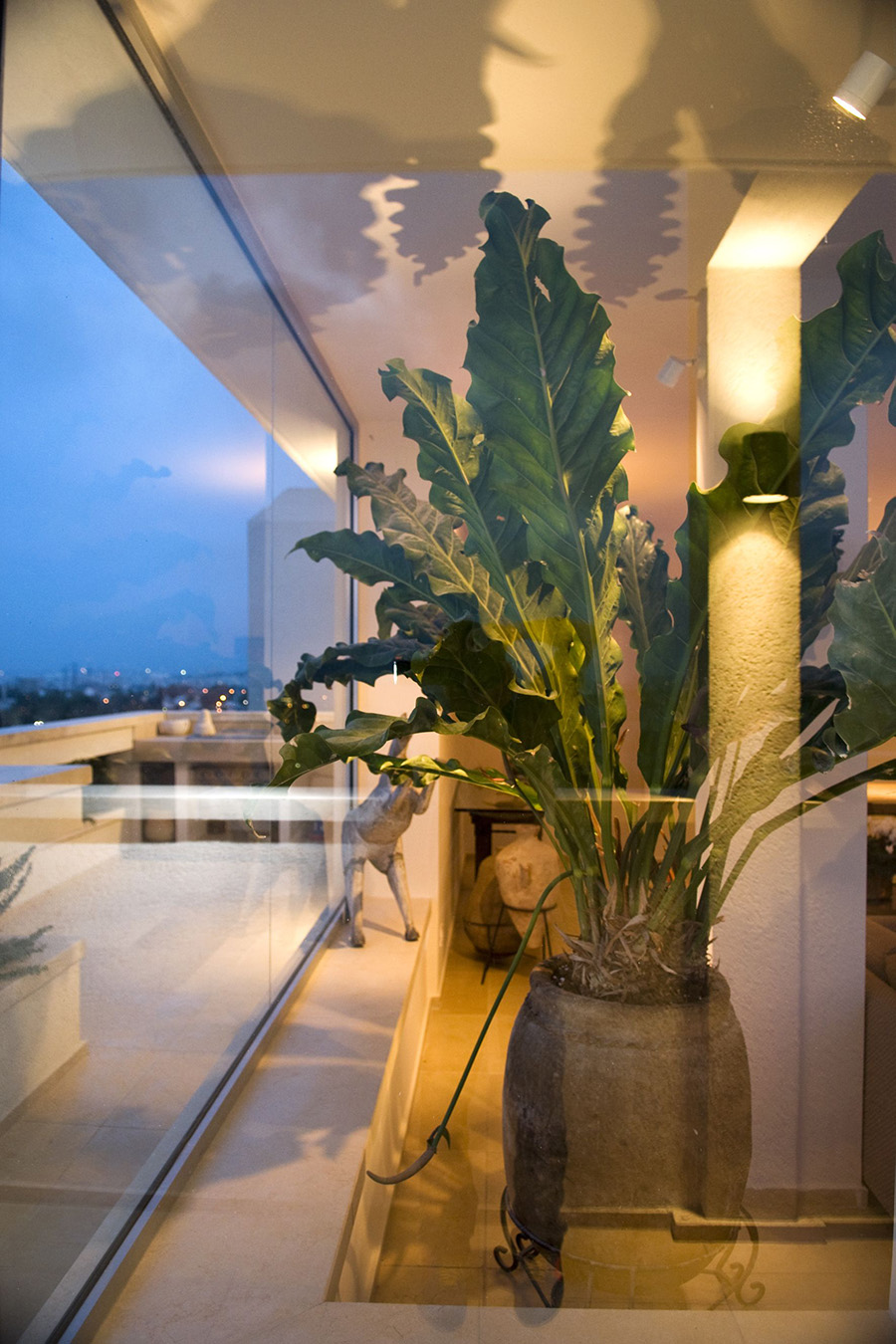
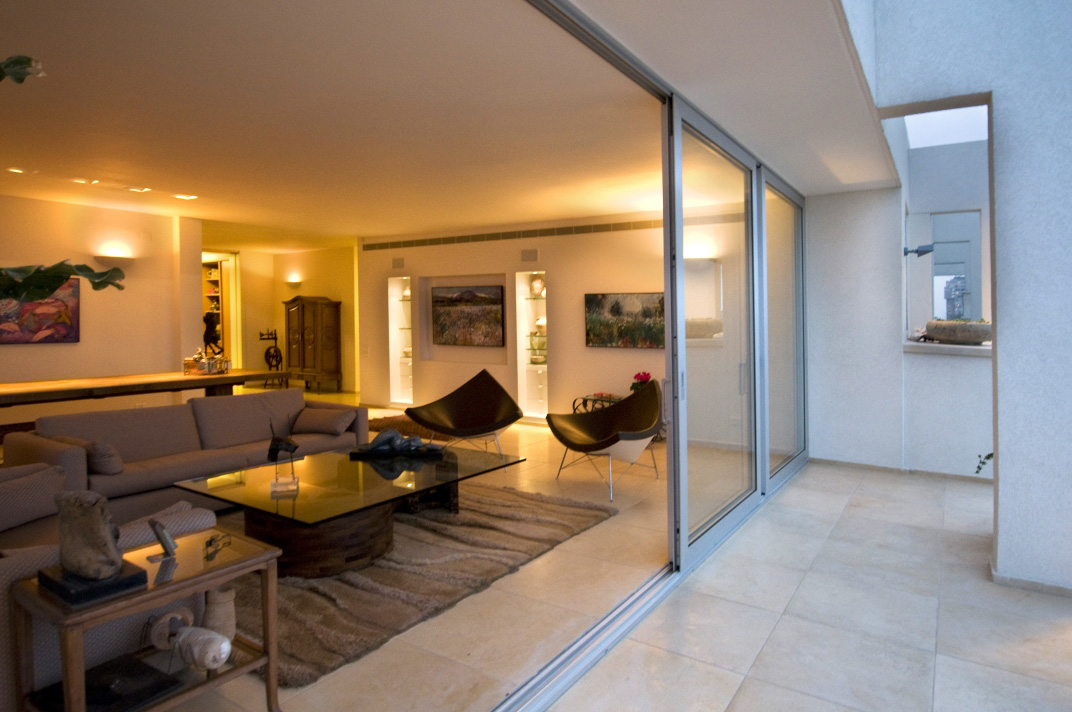
A penthouse belonging to Frida and Meir Steiner, the founding architects of Steiner Architecture. The penthouse…
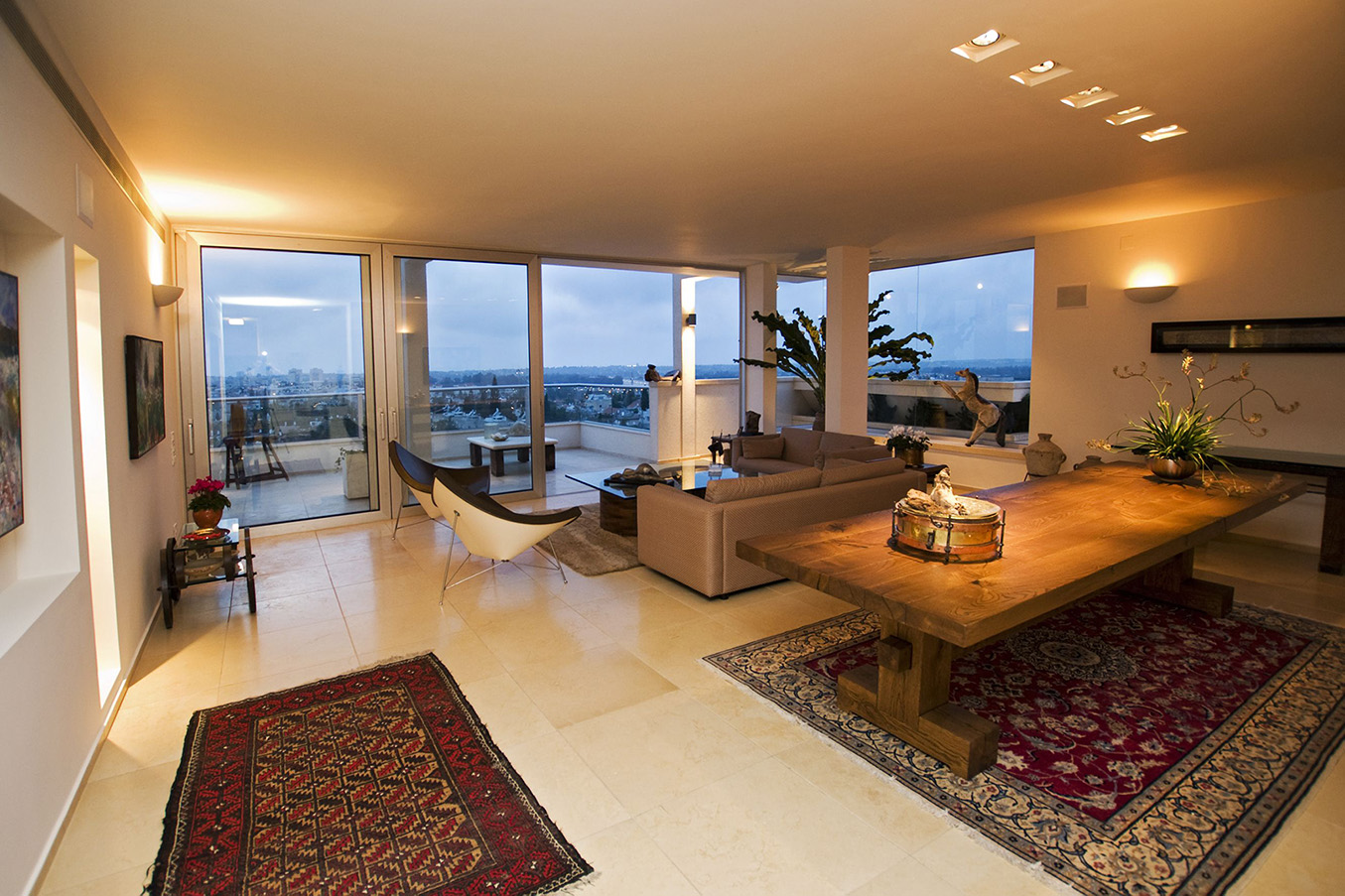
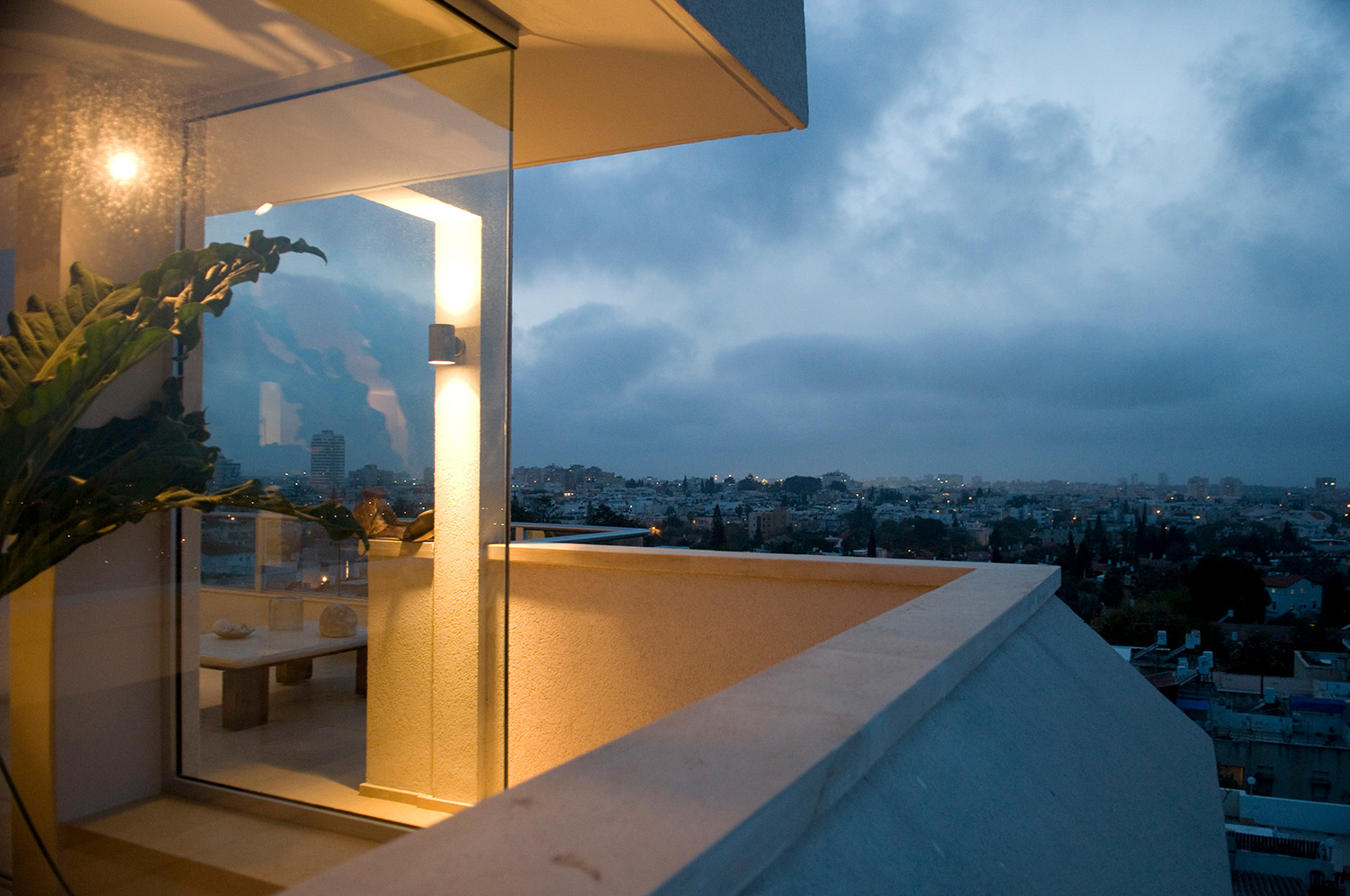
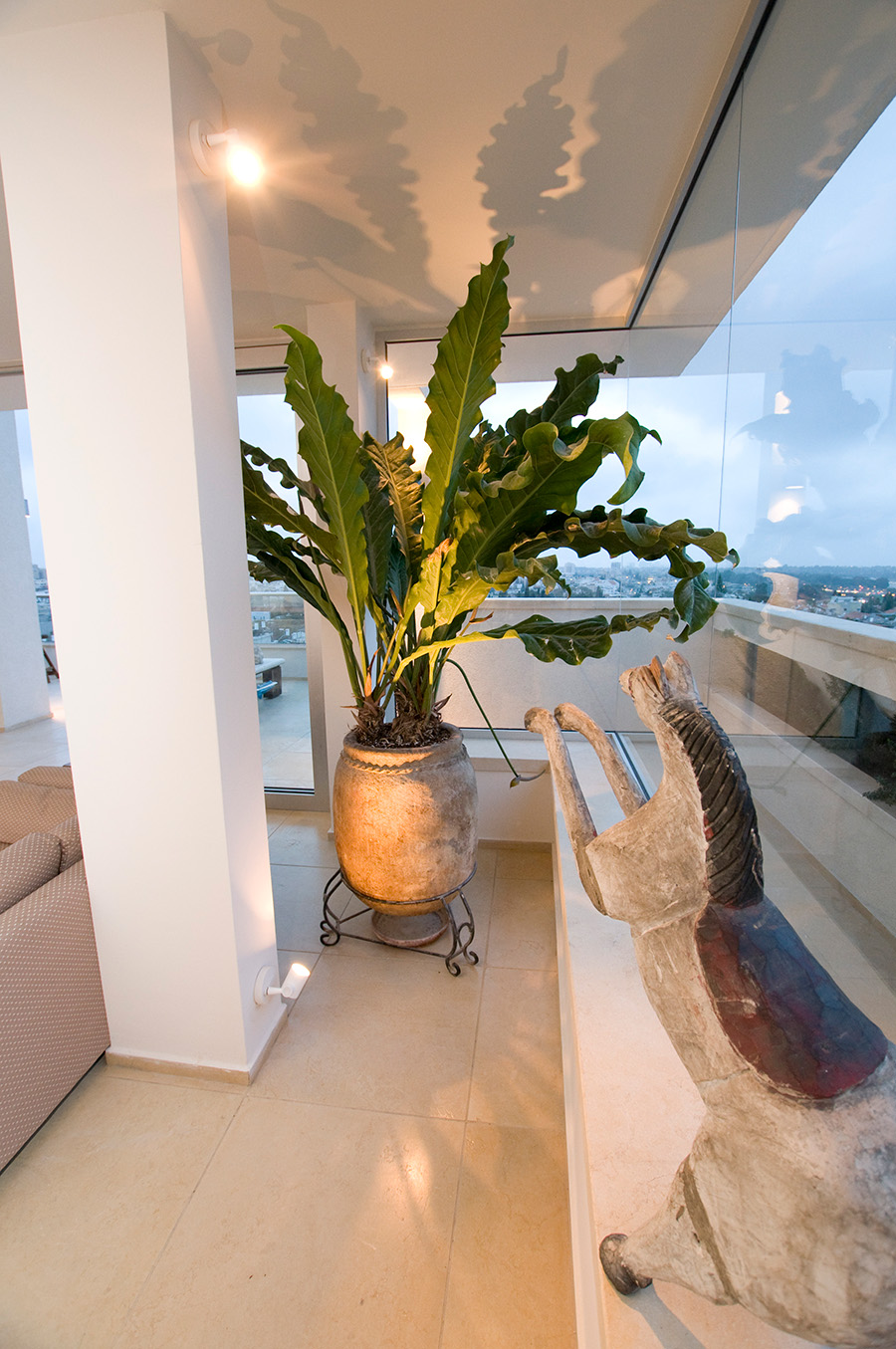
A penthouse belonging to Frida and Meir Steiner, the founding architects of Steiner Architecture. The penthouse underwent a dramatic transformation for two reasons. First, the building in which it is located underwent a major renovation that included adding balconies on all floors. The impact of this move on the penthouse is reflected in the enlargement of the existing balconies. The second reason for the apartment's transformation is a change in functional needs, as the family's children left home as adults. The additional rooms became work studios for the couple, a guest room and a wardrobe. The public spaces were expanded and the hospitality became more significant and successful.

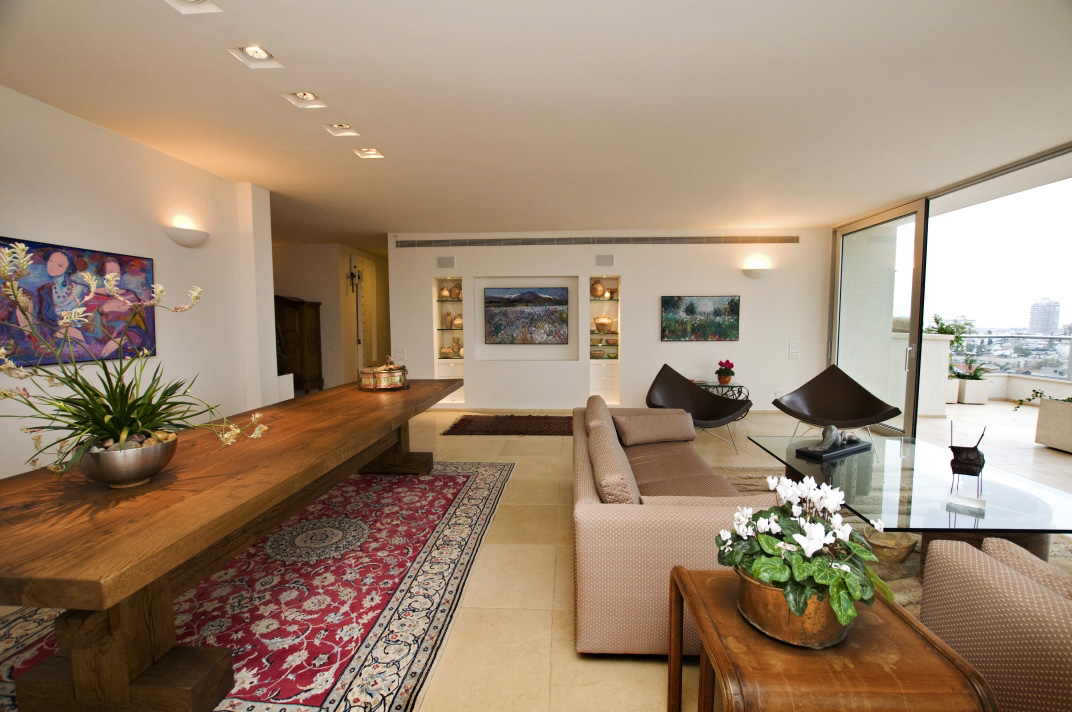
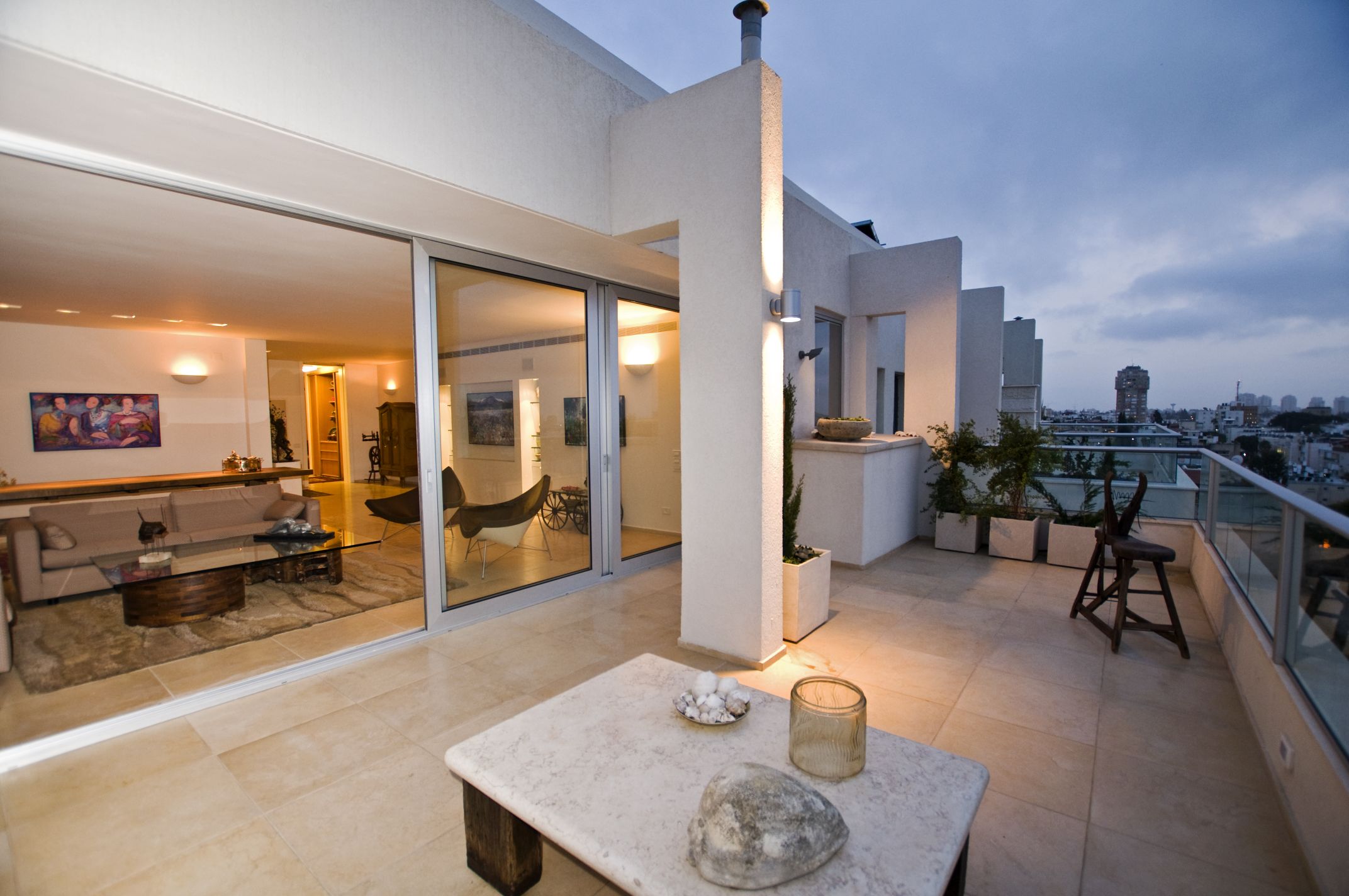
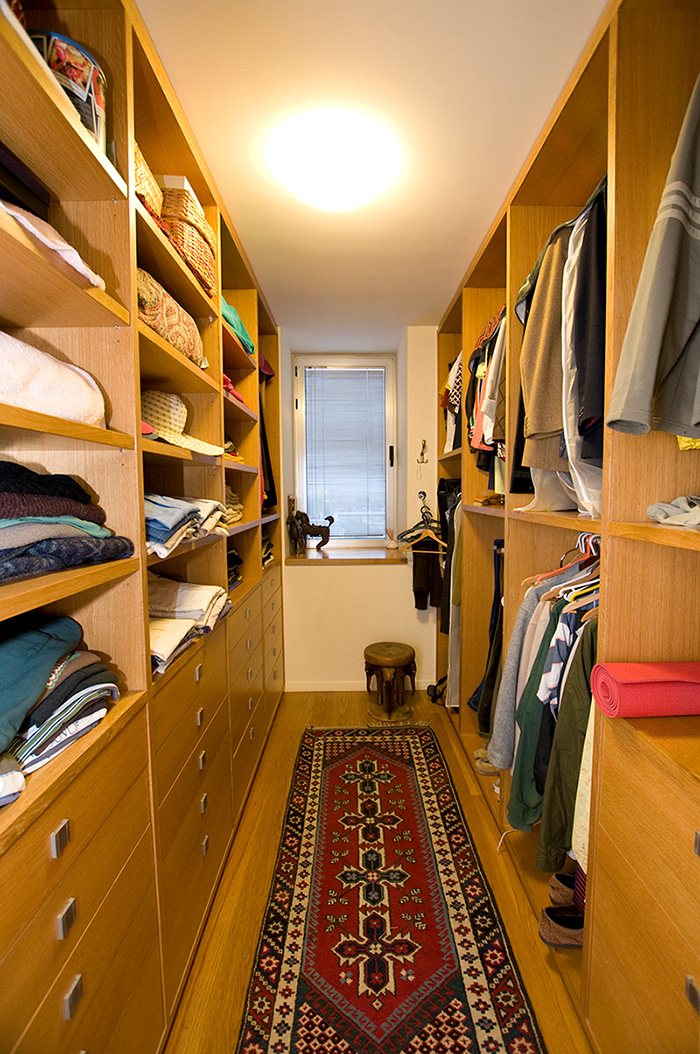
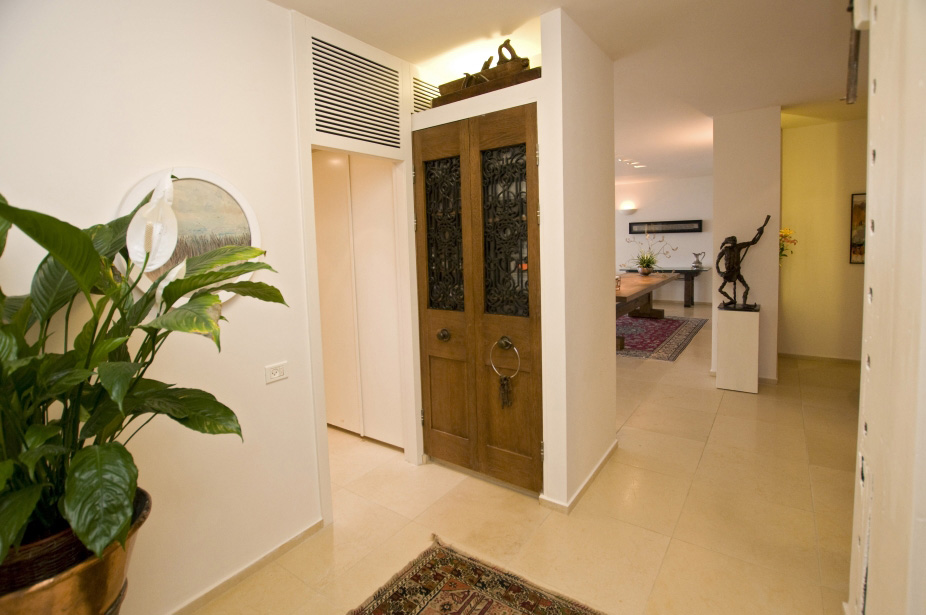
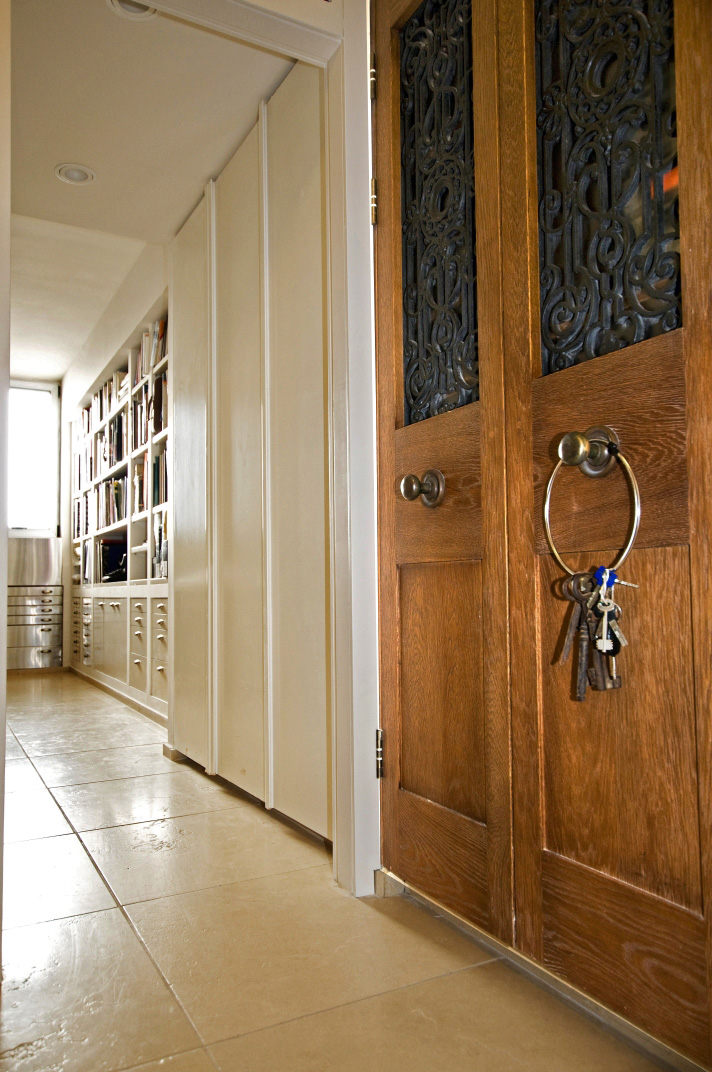
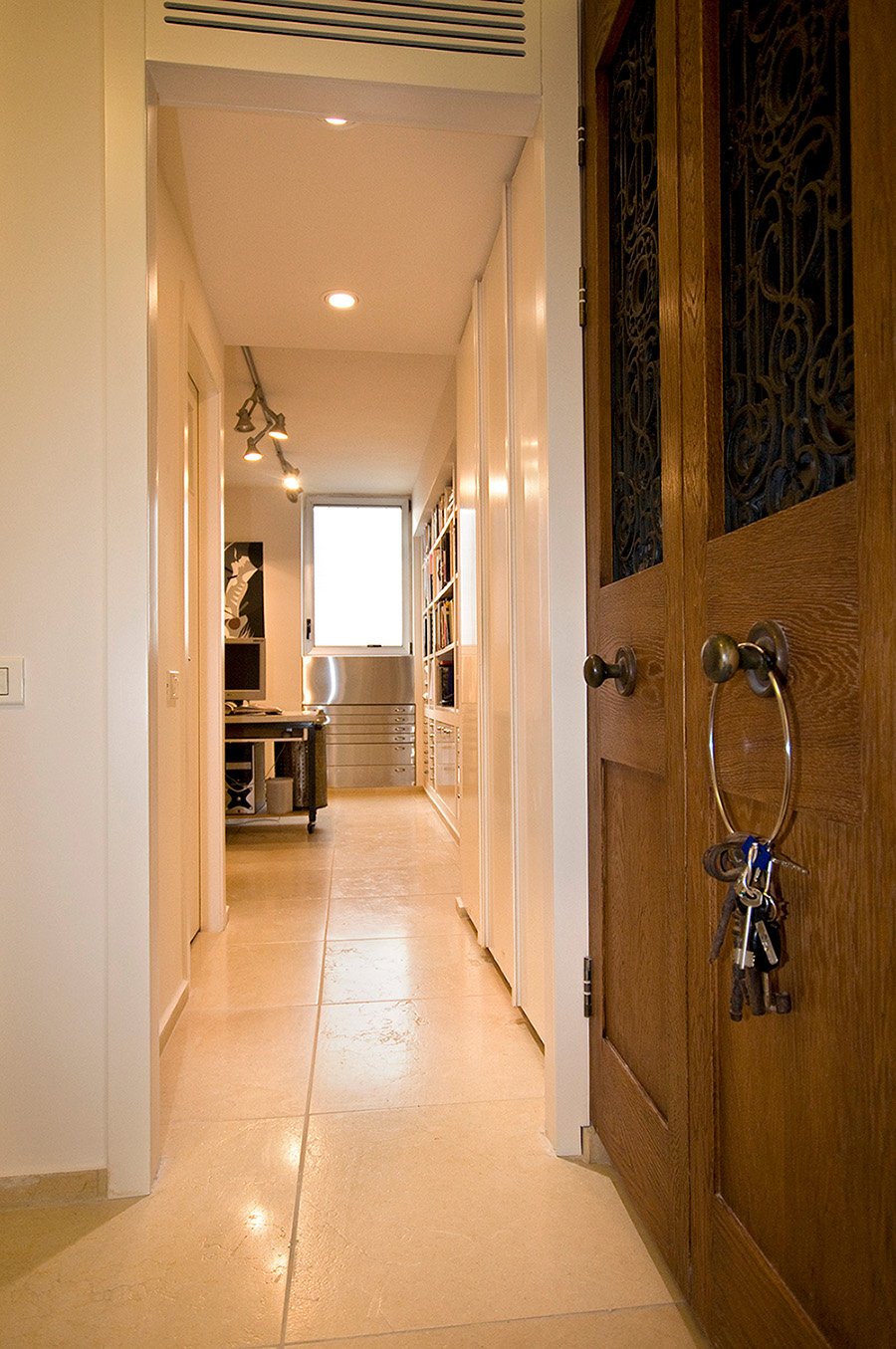
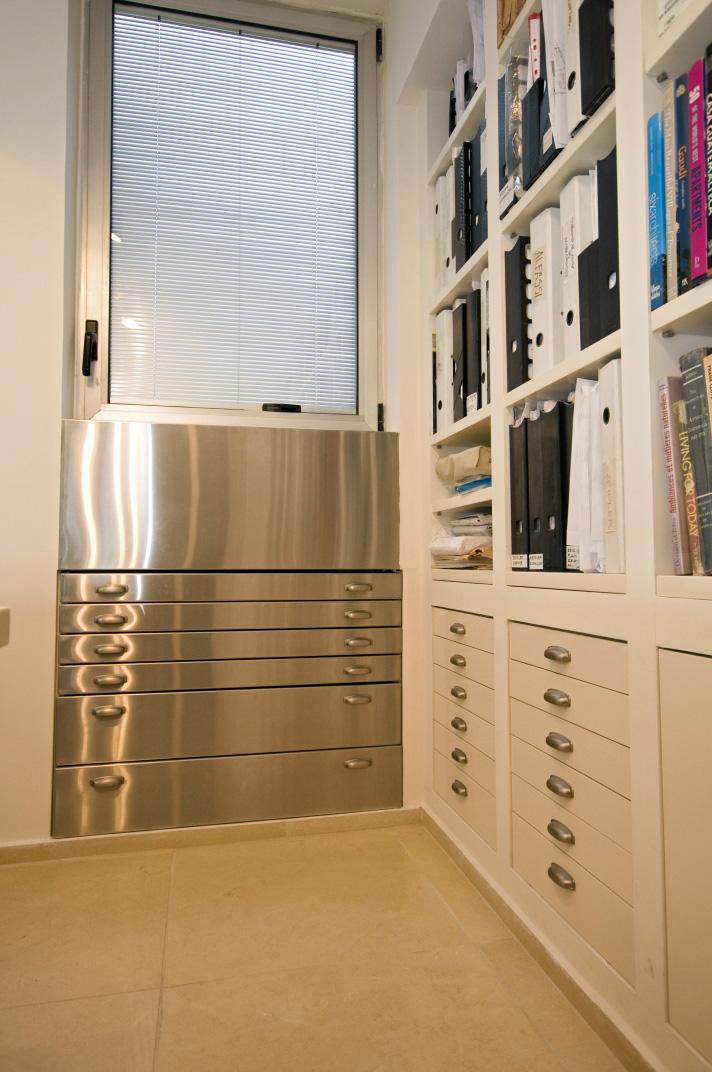
The renovation was taken advantage of to introduce new materials and change deteriorated elements like windows, bathrooms, floors, lighting, plumbing and air conditioning. As a result of the new design, with the enlargement of the windows, the spectacular views were allowed to stand out as an important feature of this apartment.
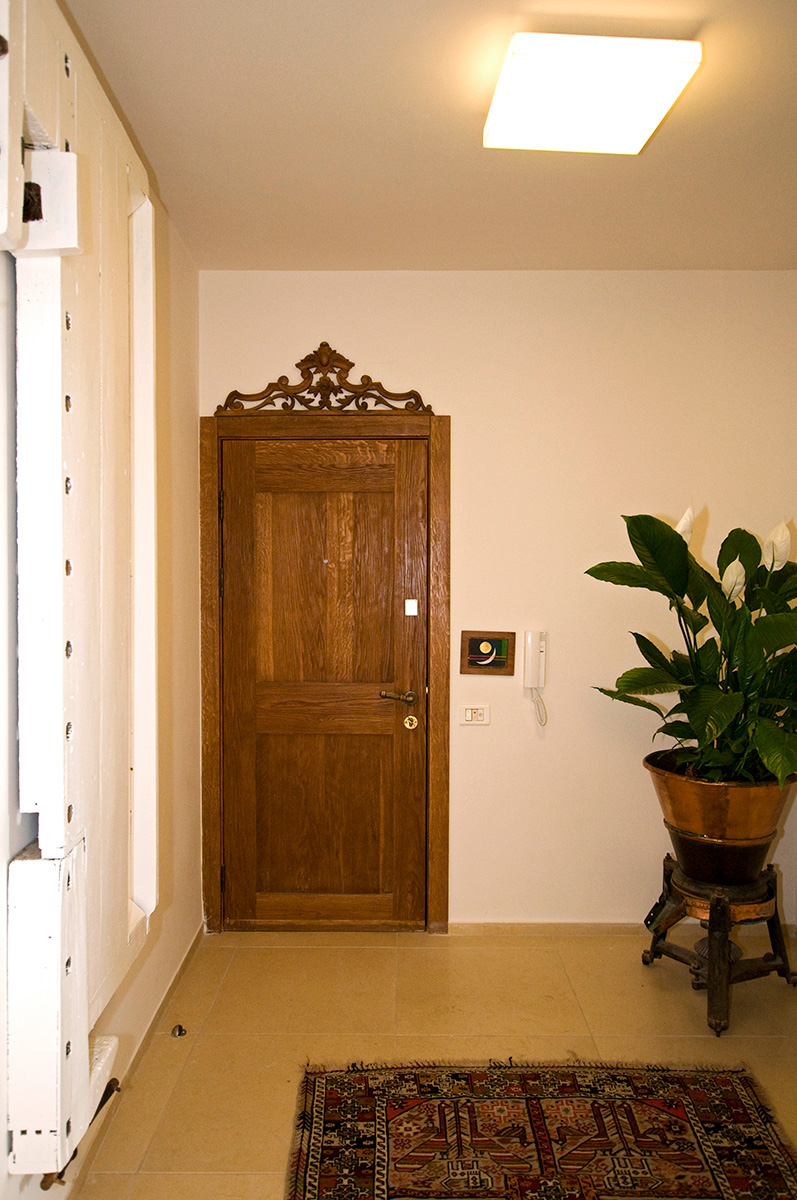
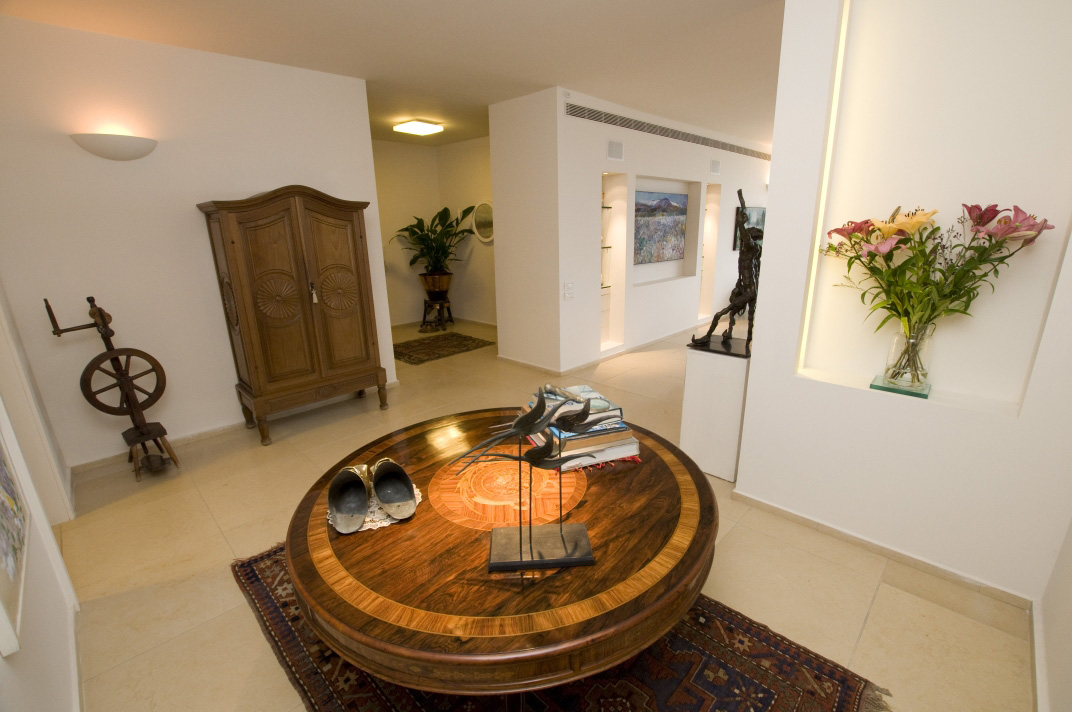
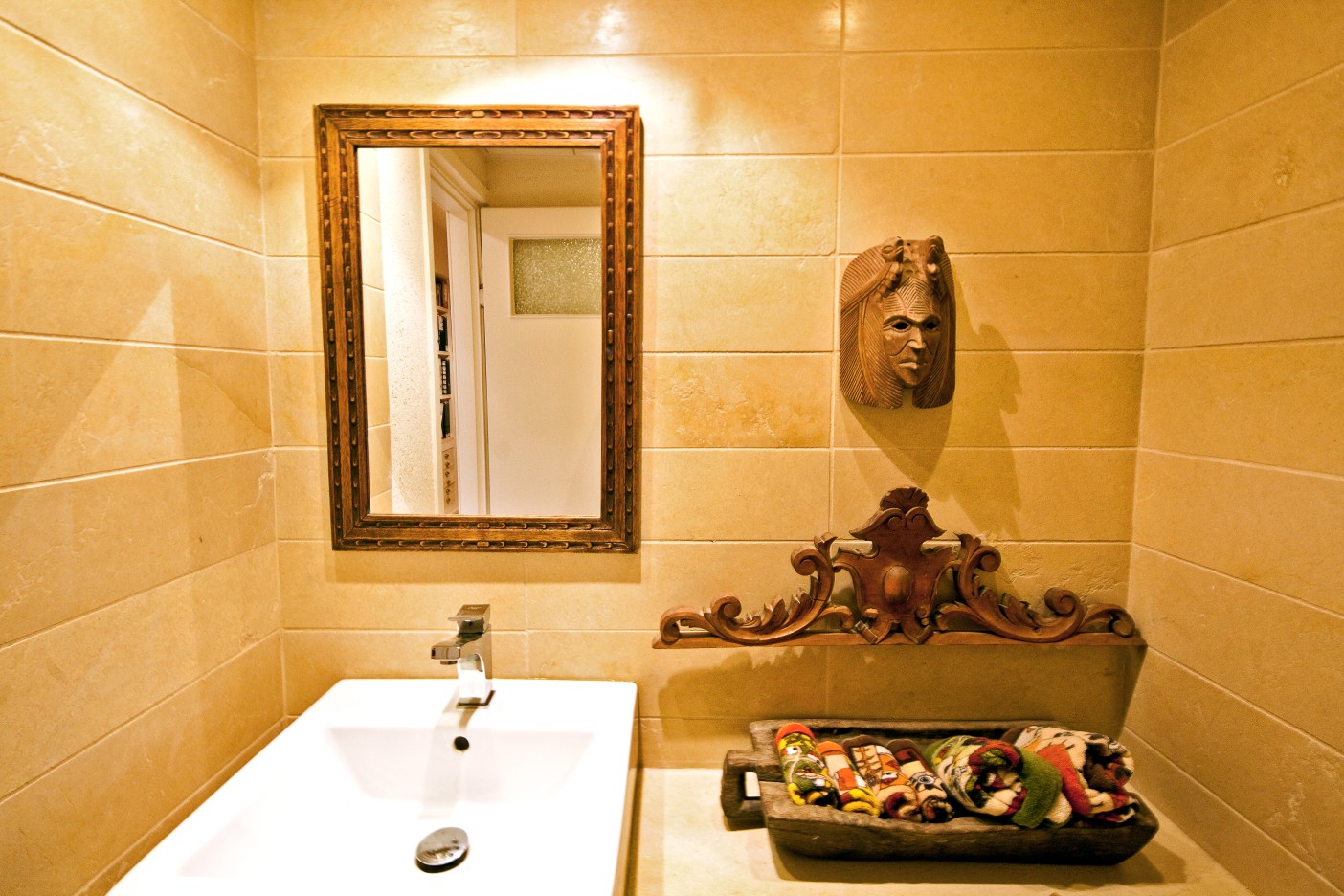
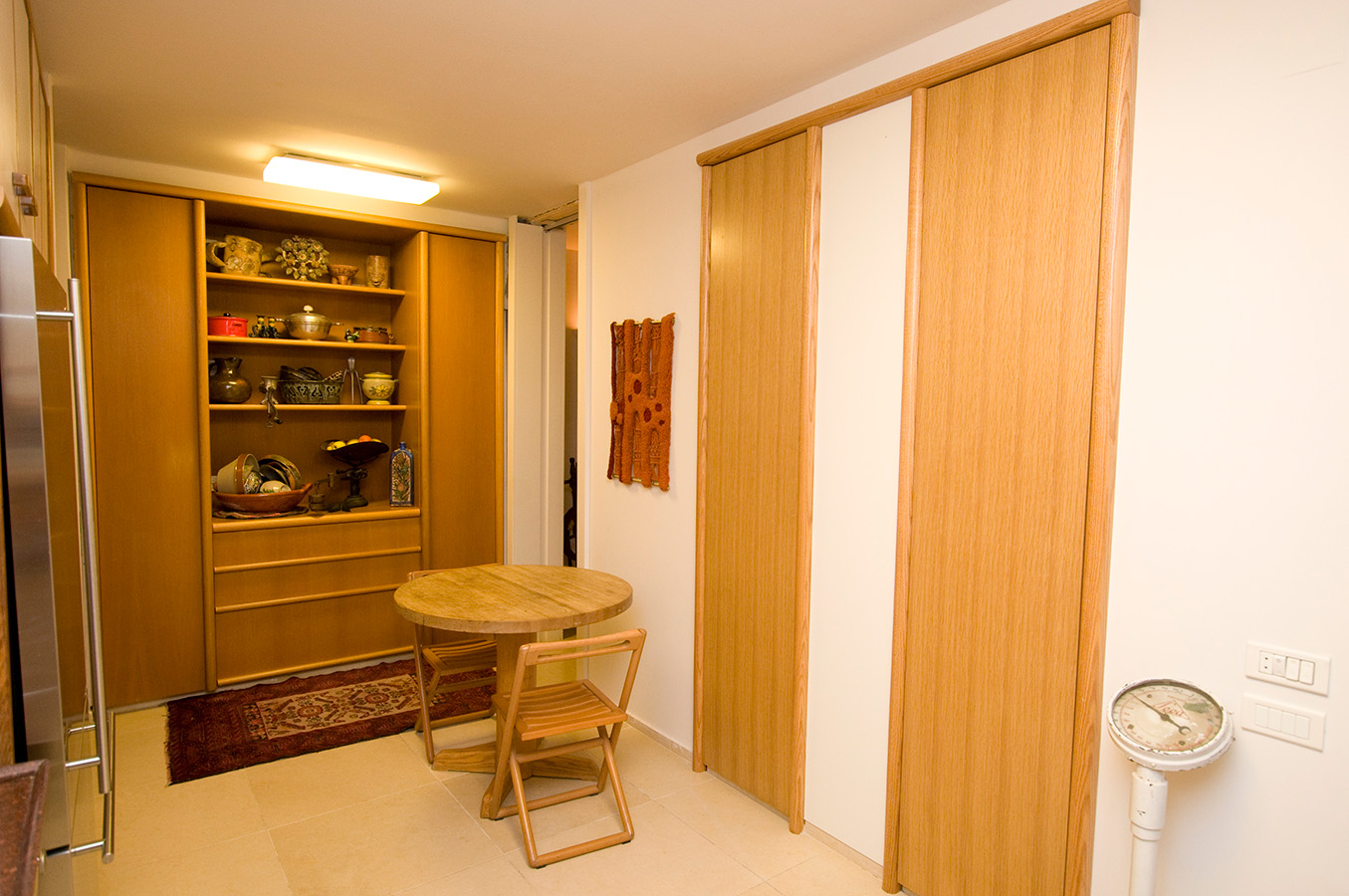
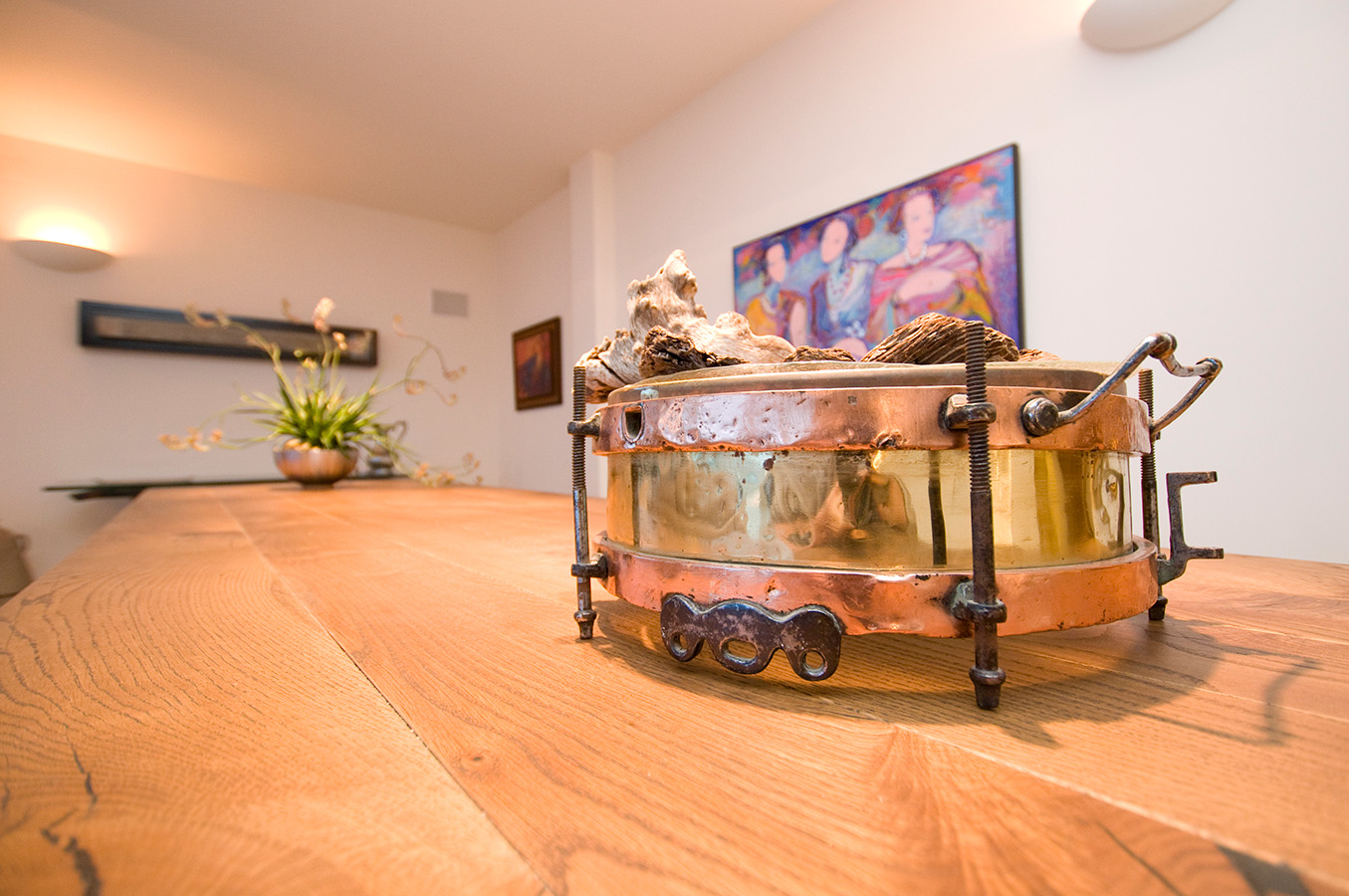
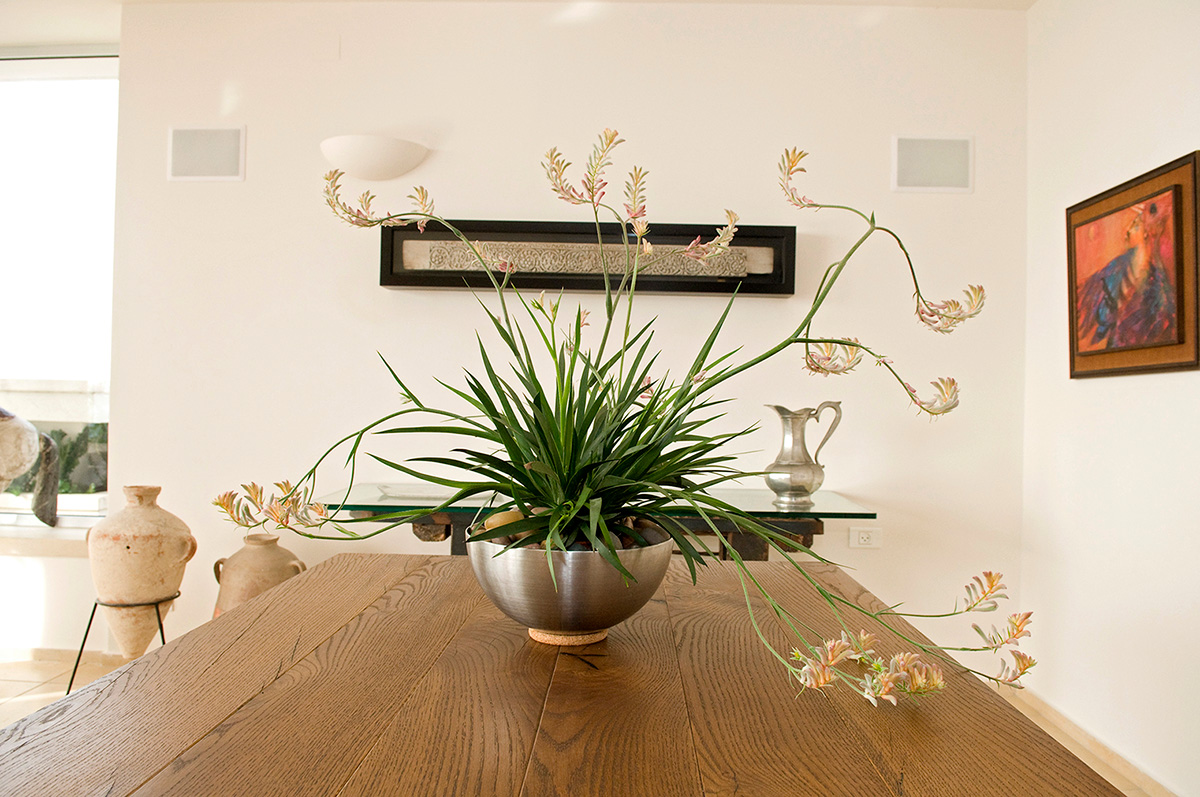
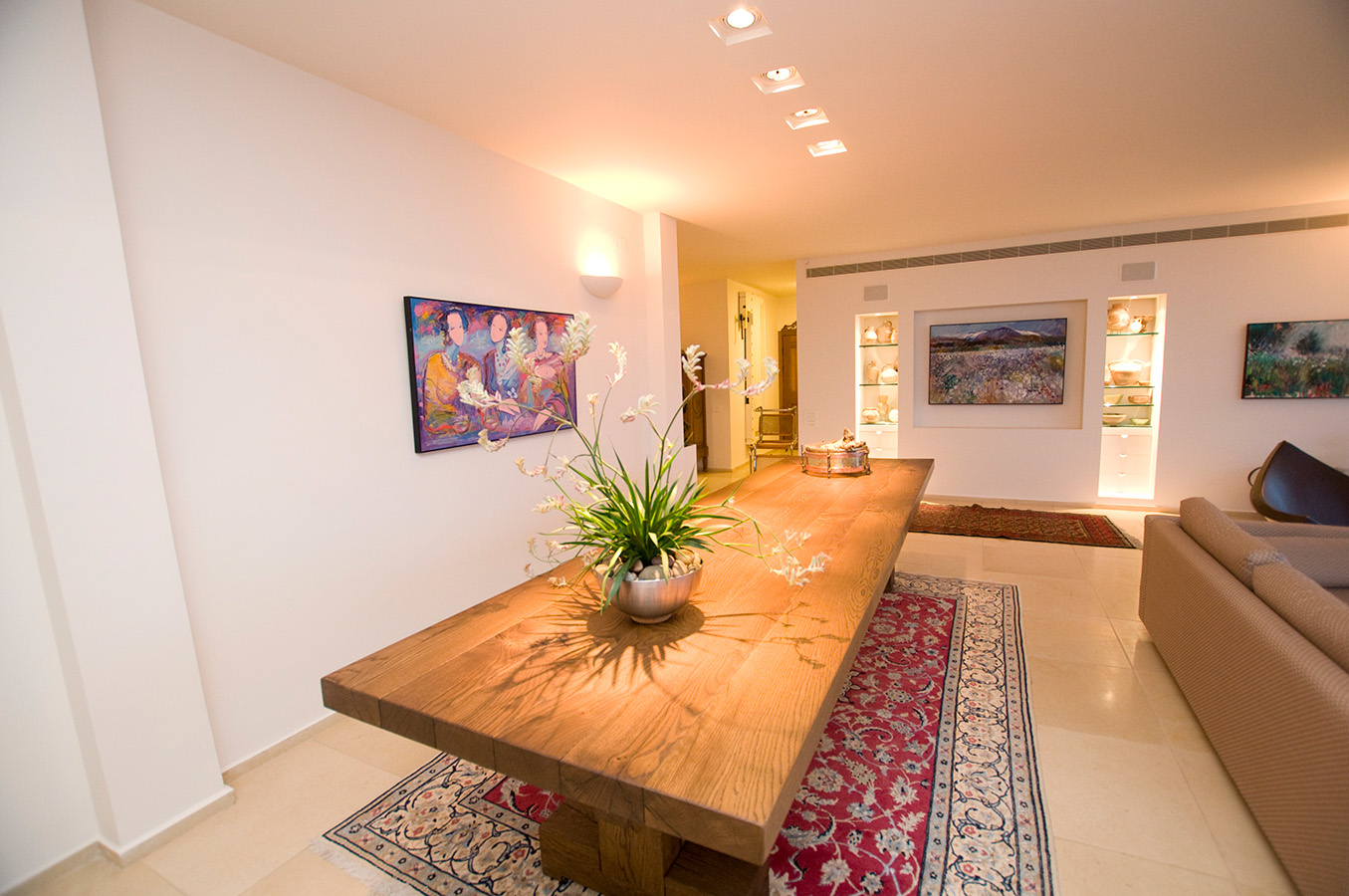
Special emphasis was placed on the carpentry work in the house, including a luxurious knight's table, cabinets, and bookcases designed for maximum comfort and visual harmony with the rooms in which they are located.
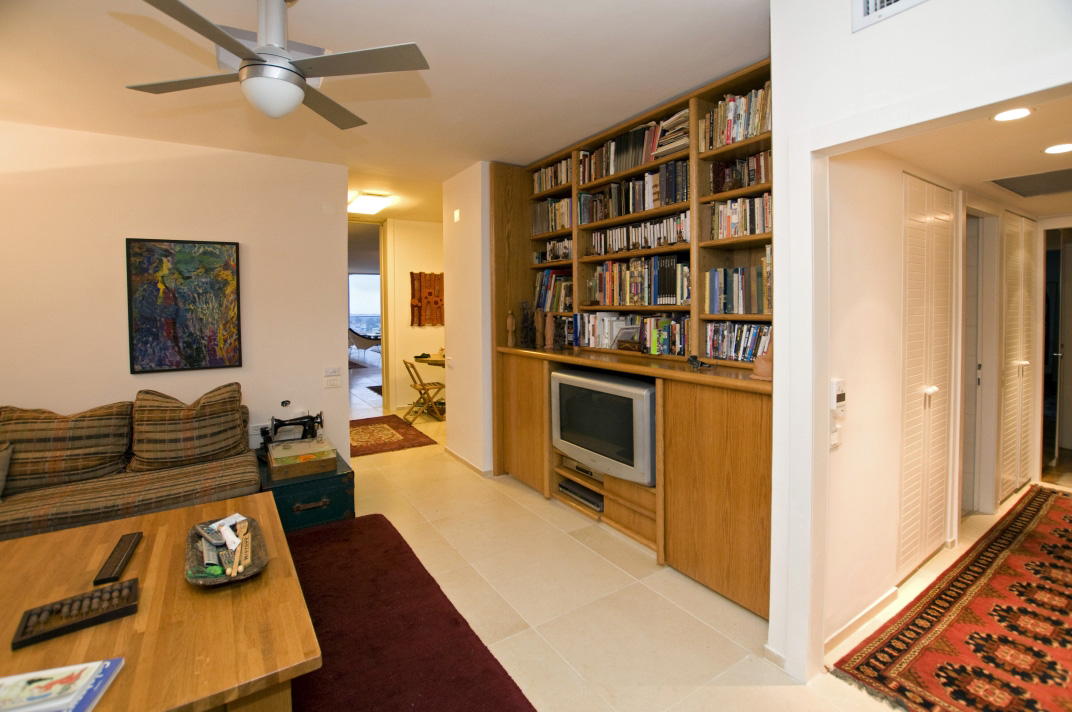
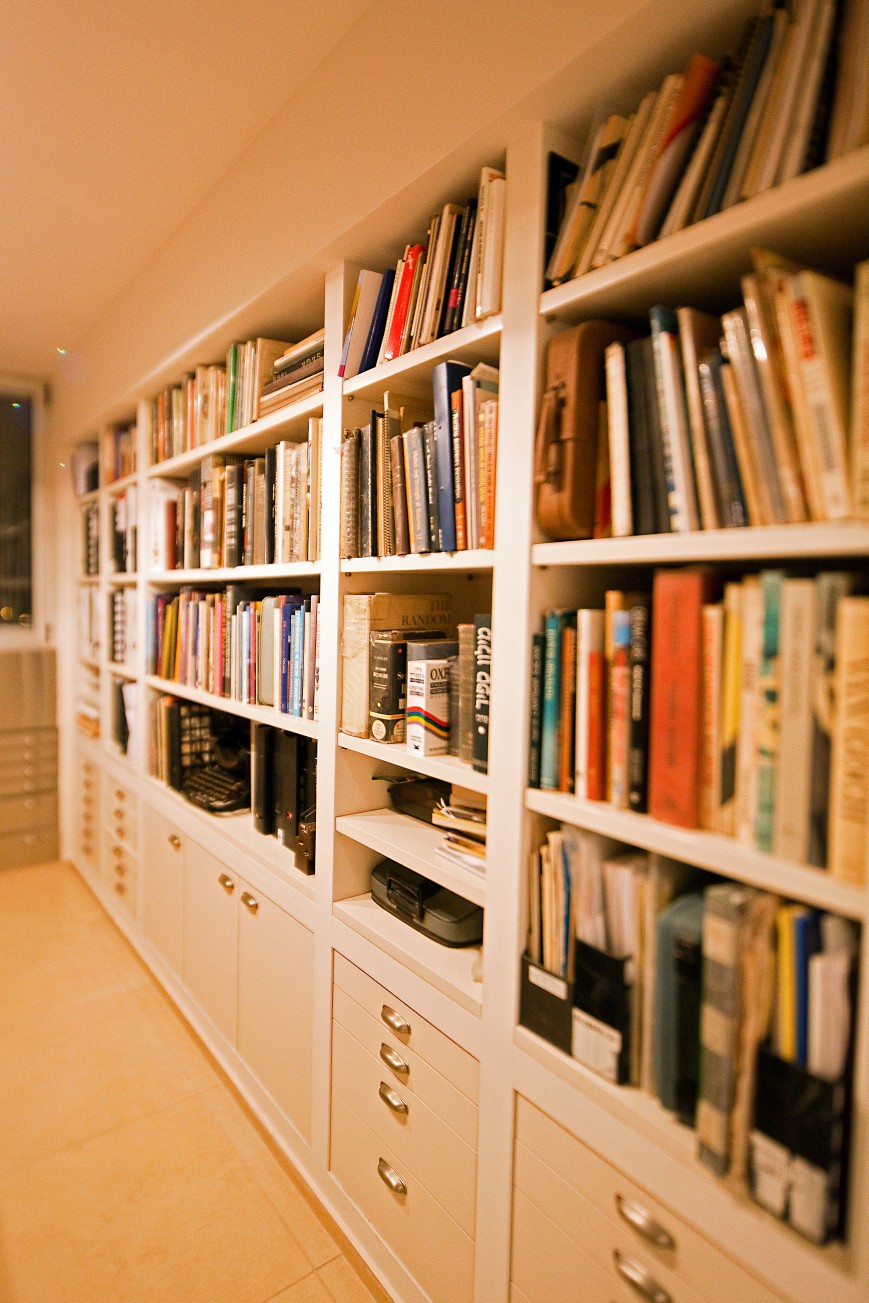
Attention to detail, along with general thinking about the design, in this project, as in the other projects of Steiner Architecture, resulted in spectacular results.
ONTONT
- Type
- Private home
- Scale
- Medium
- Status
- Built
- Year
- 2023
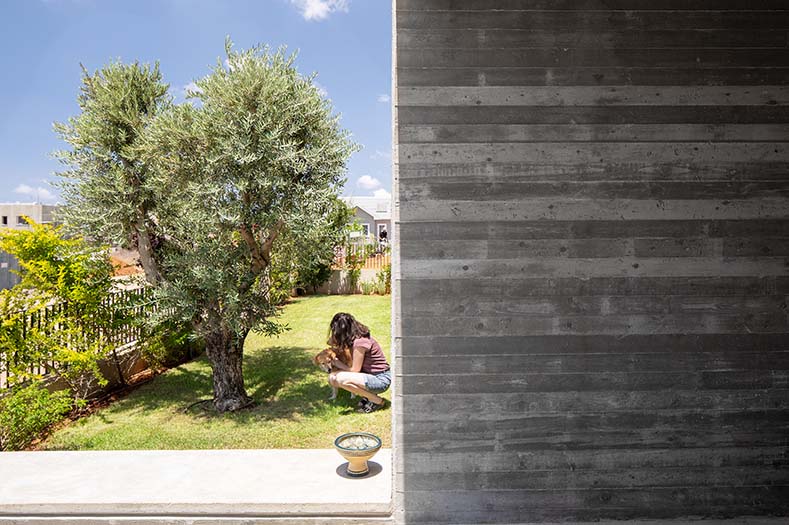
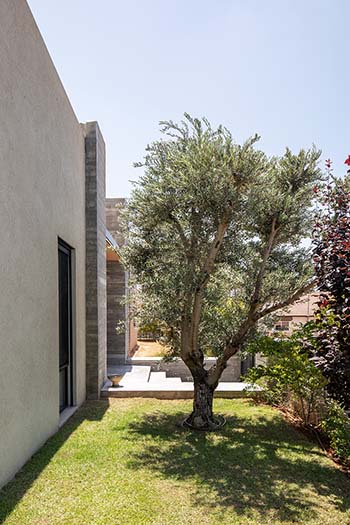
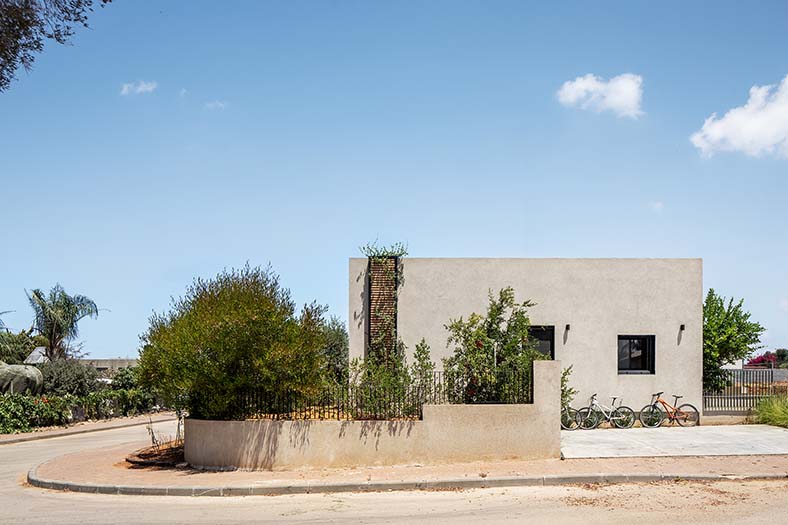
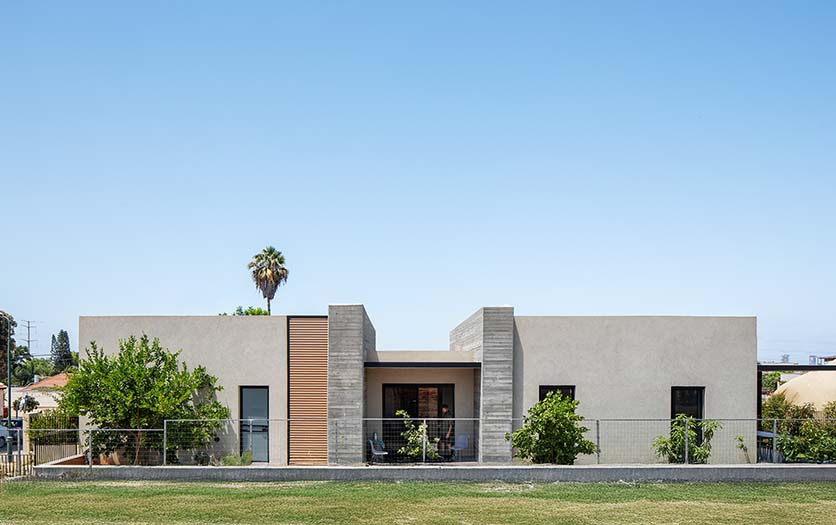
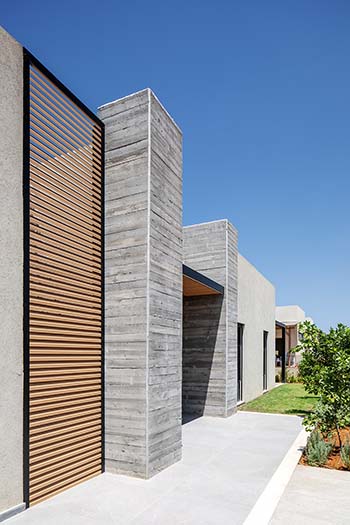
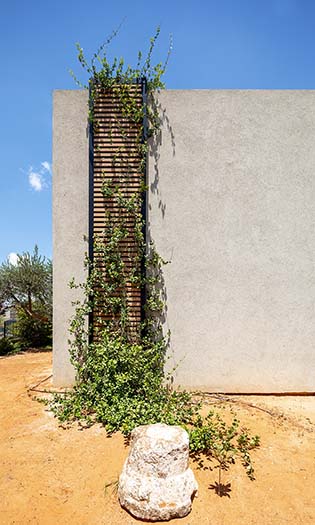
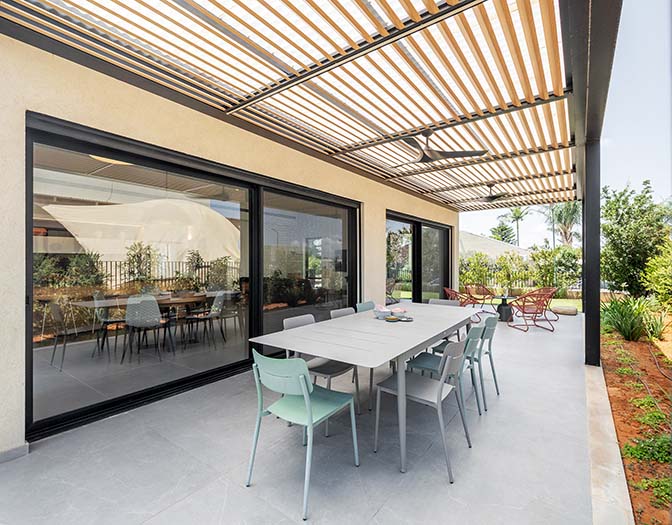
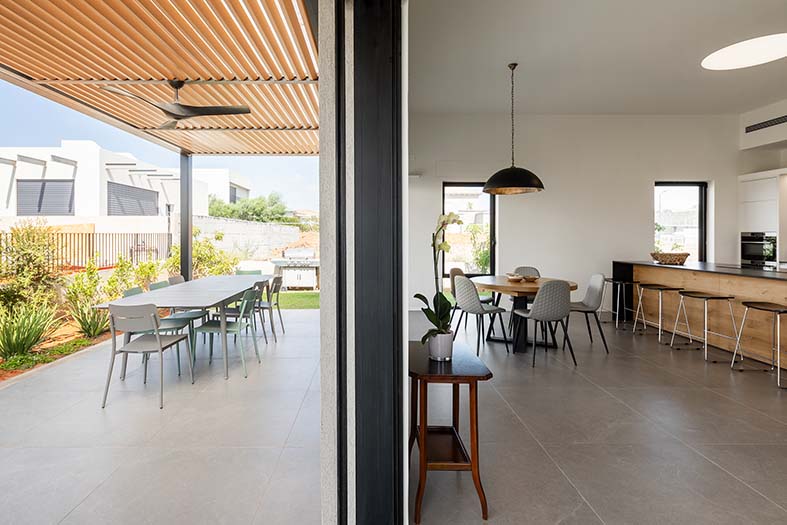
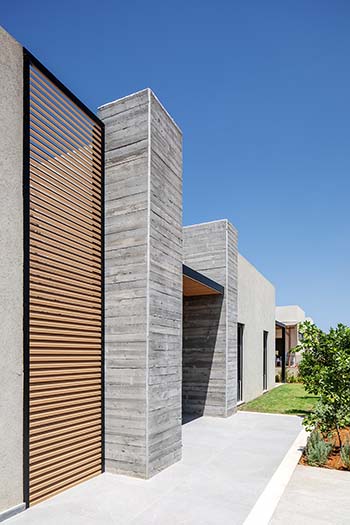
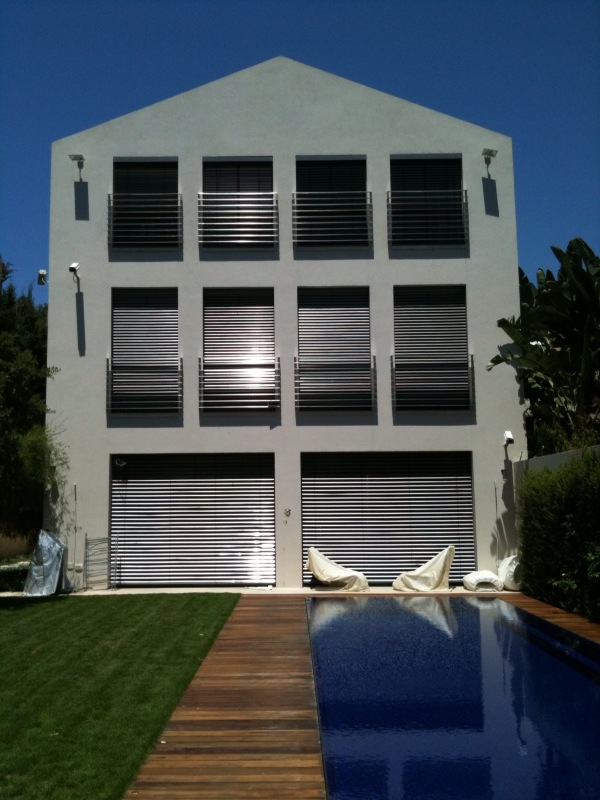
A one family home in a rural setting. The design was conceived as a home for a couple with two growing…
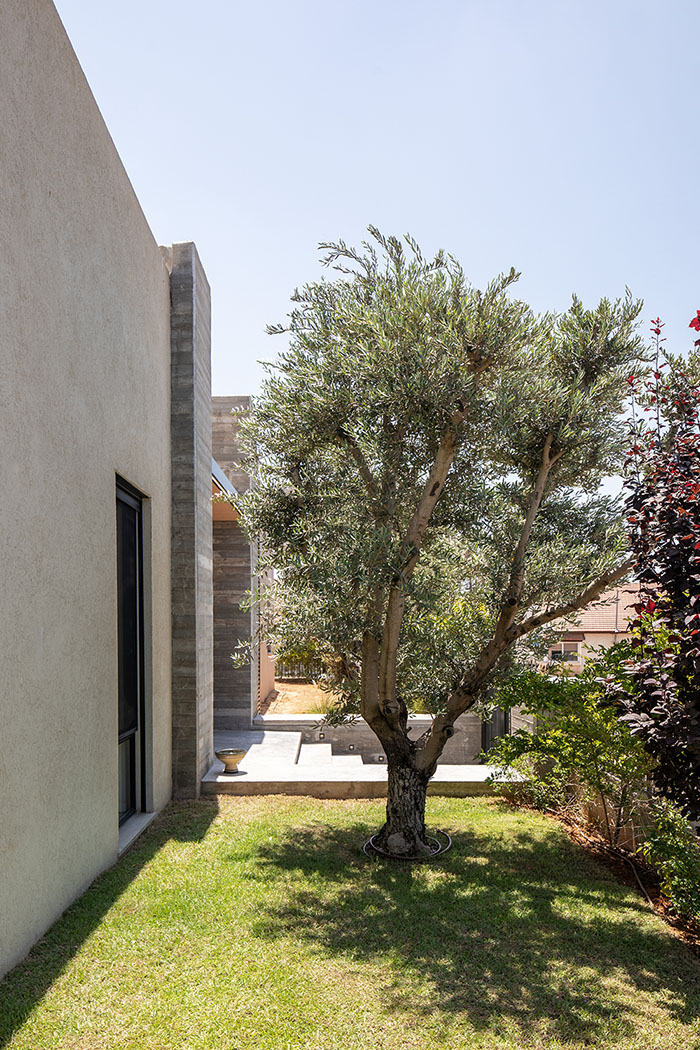
A one family home in a rural setting.
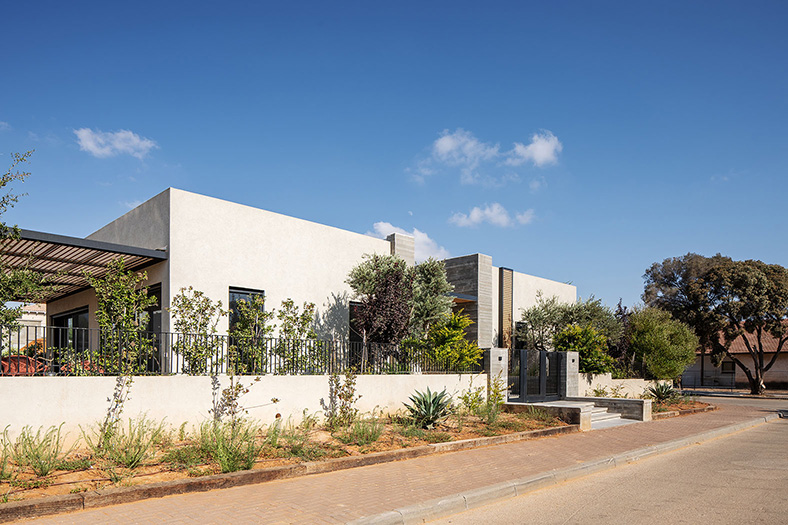
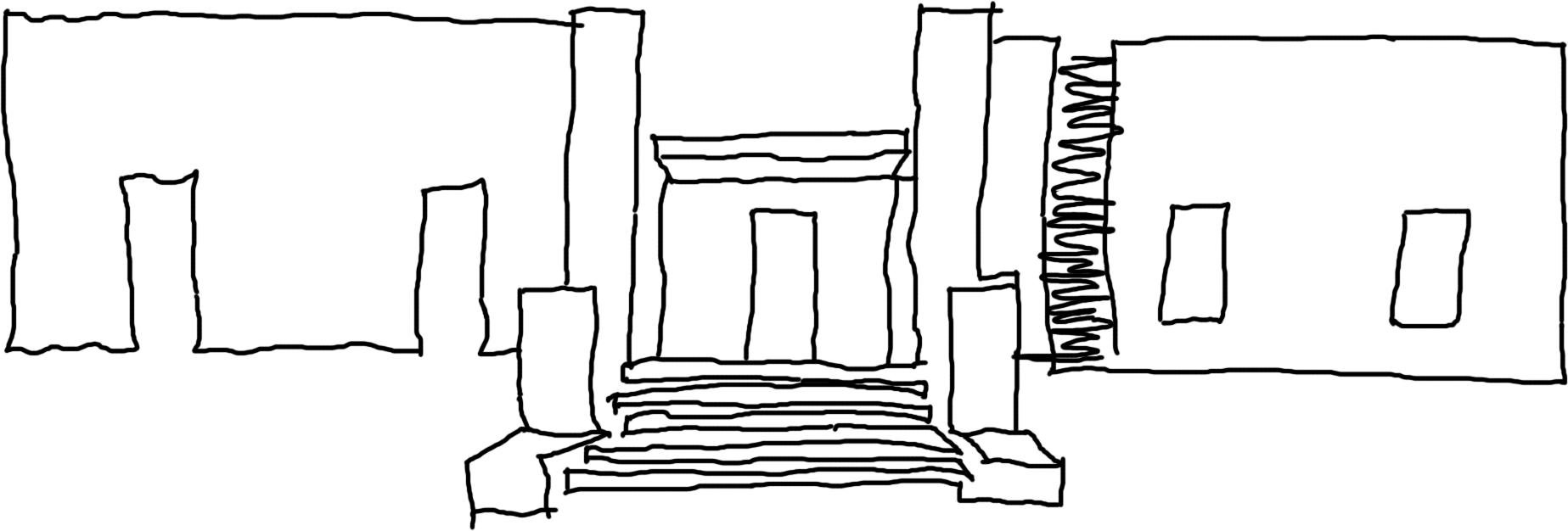
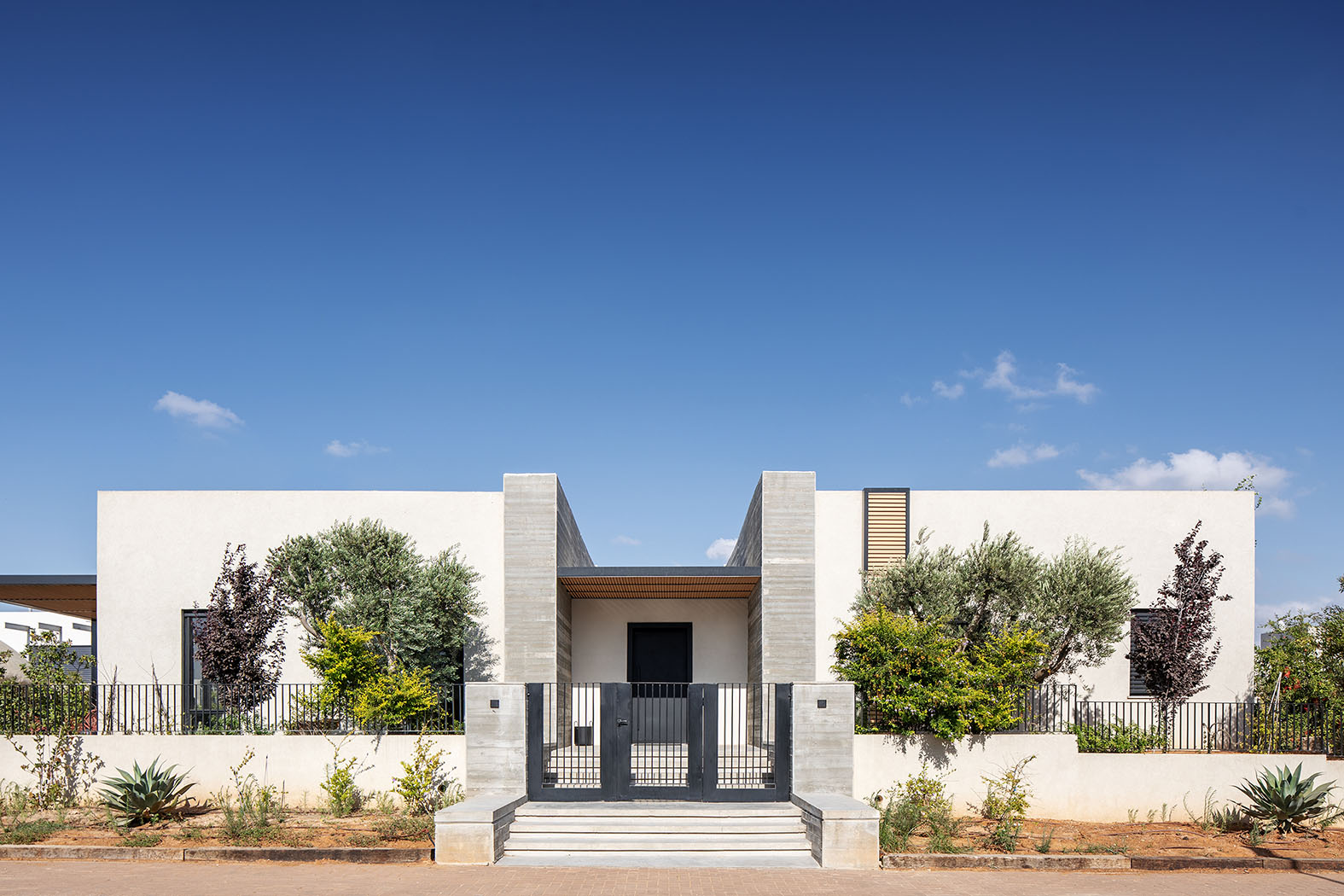
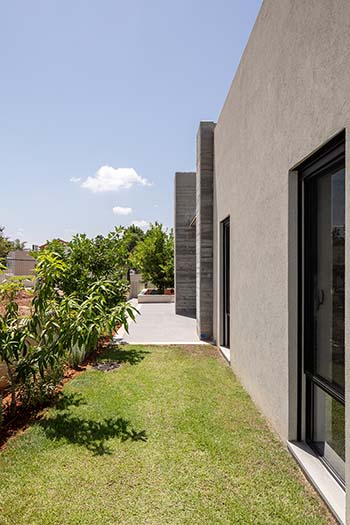
The design was conceived as a home for a couple with two growing children. The floor plan, in its simplicity, evolves as a spacious environment set up in an elevated garden that separates the home from the rest of the area and simultaneously invites people in.

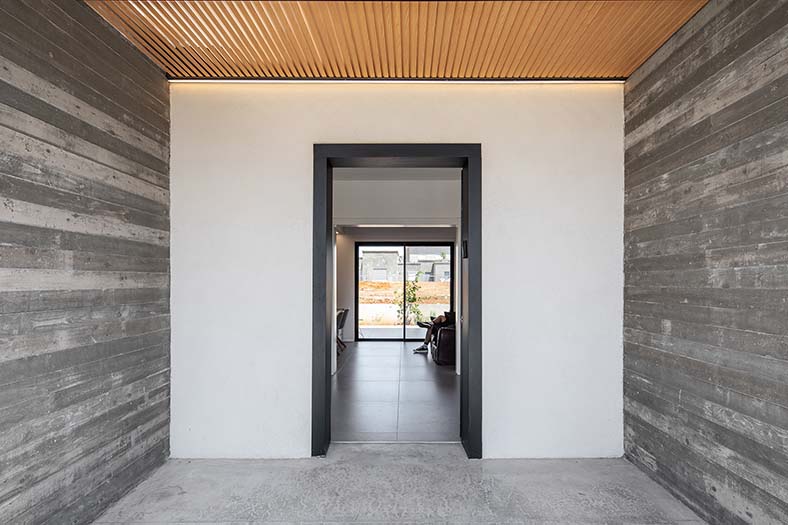
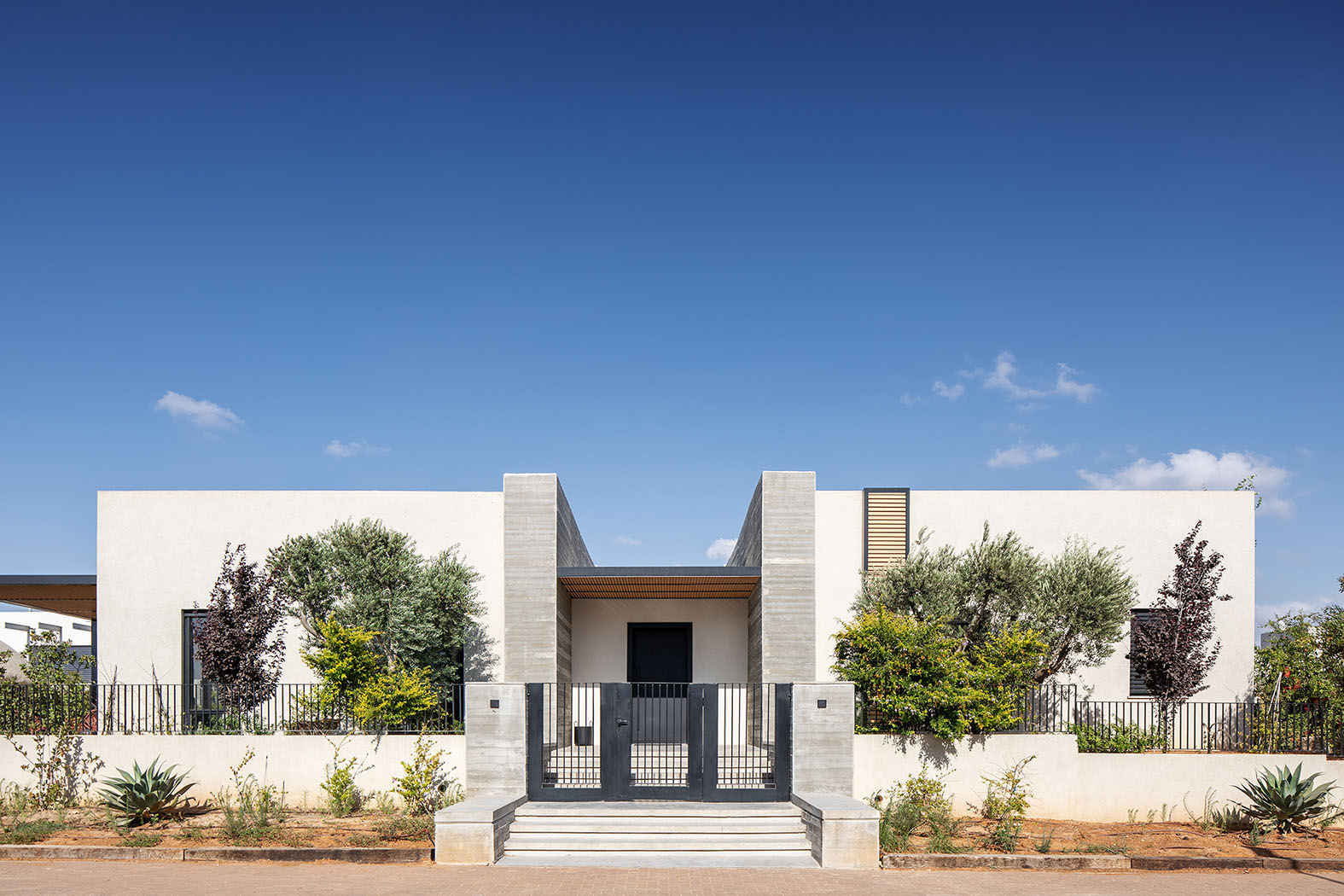
The entrance is an iconic silhouette, making a big impression on people who come across it, whether as guests, passers-by or residents. Once in, the division of the house into 2 wings makes orientation very intuitive and comfortable.
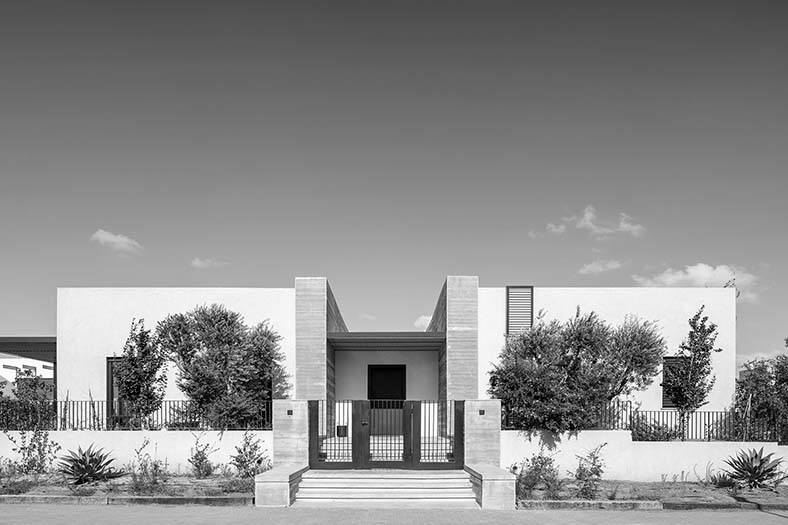
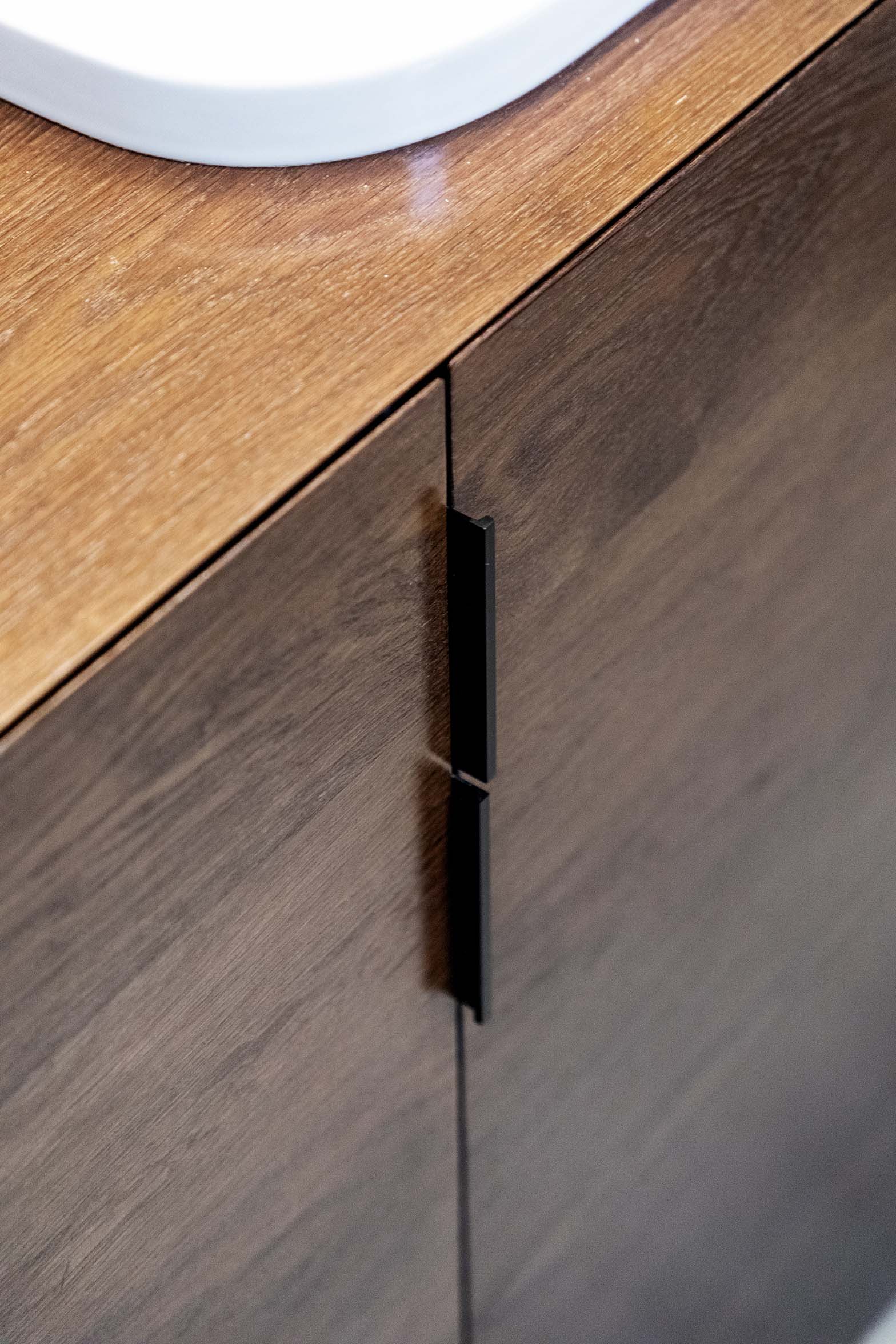
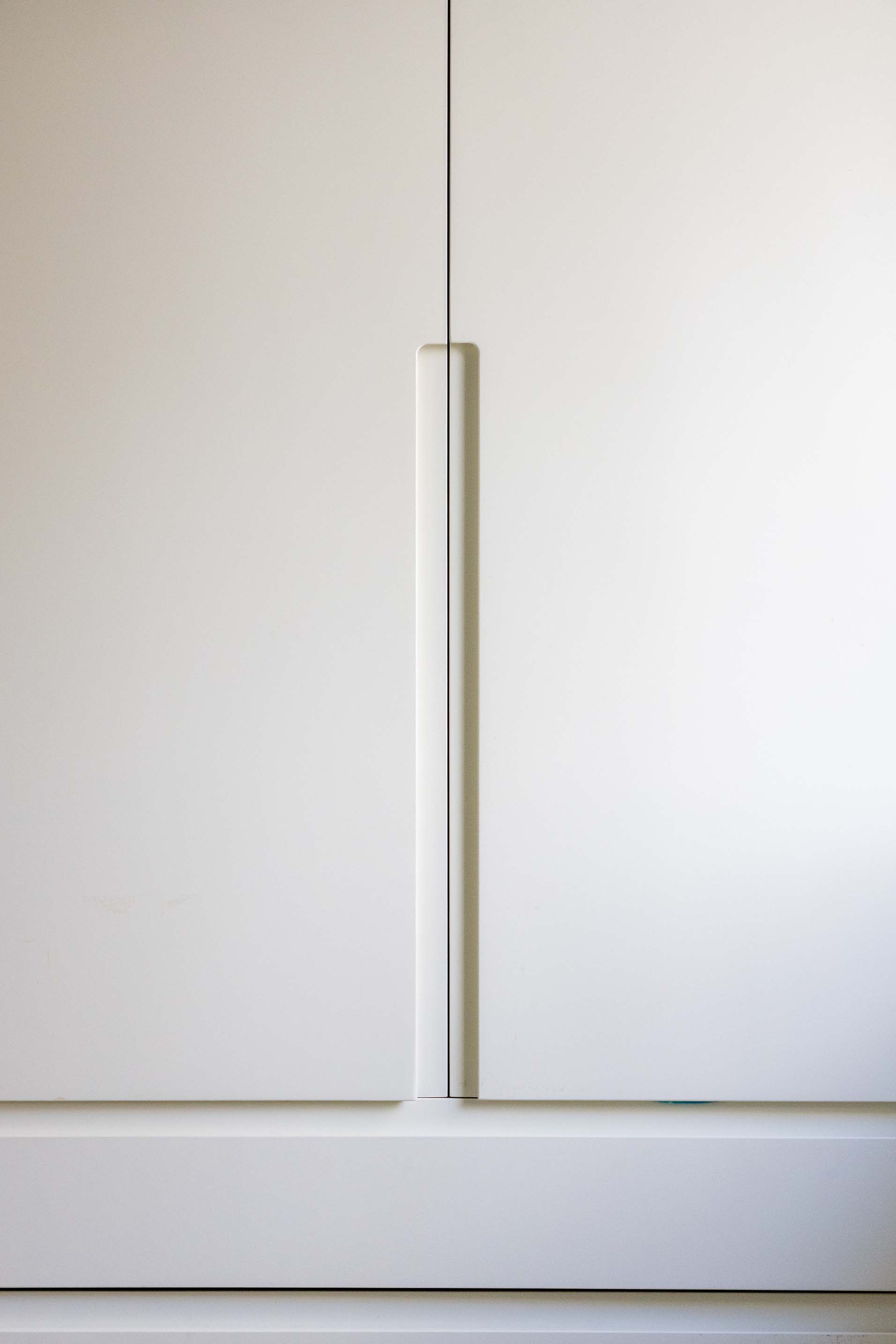
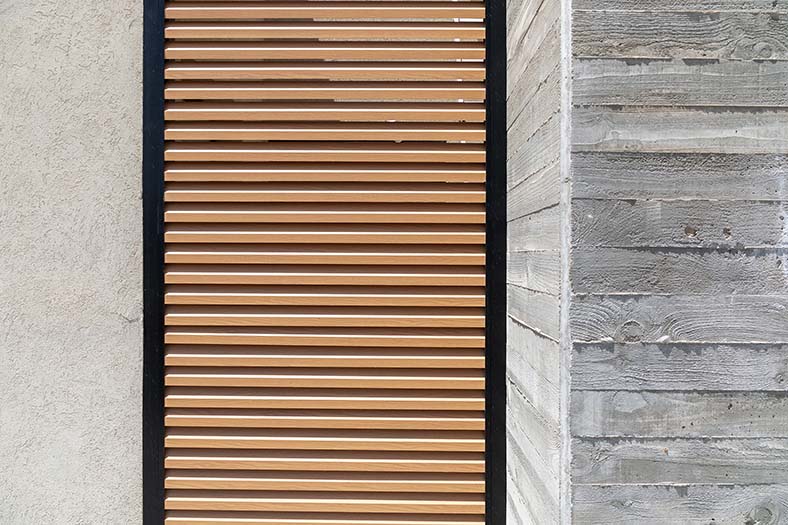
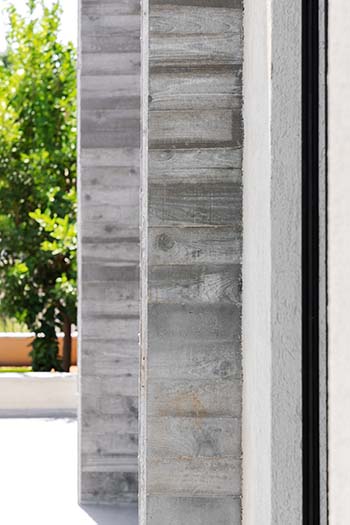
The building is a flow of spaces used for the specific purposes of the family. Each one admits natural light and accommodates the necessary elements for its use. The Architecture serves as the backdrop for the owners’ personality. The scope of our work included custom made kitchen, bathroom cabinets and closets all detailed to perfection. The materials have a neutral palette of colors so that the personal input will stand out and enhance the spaces.
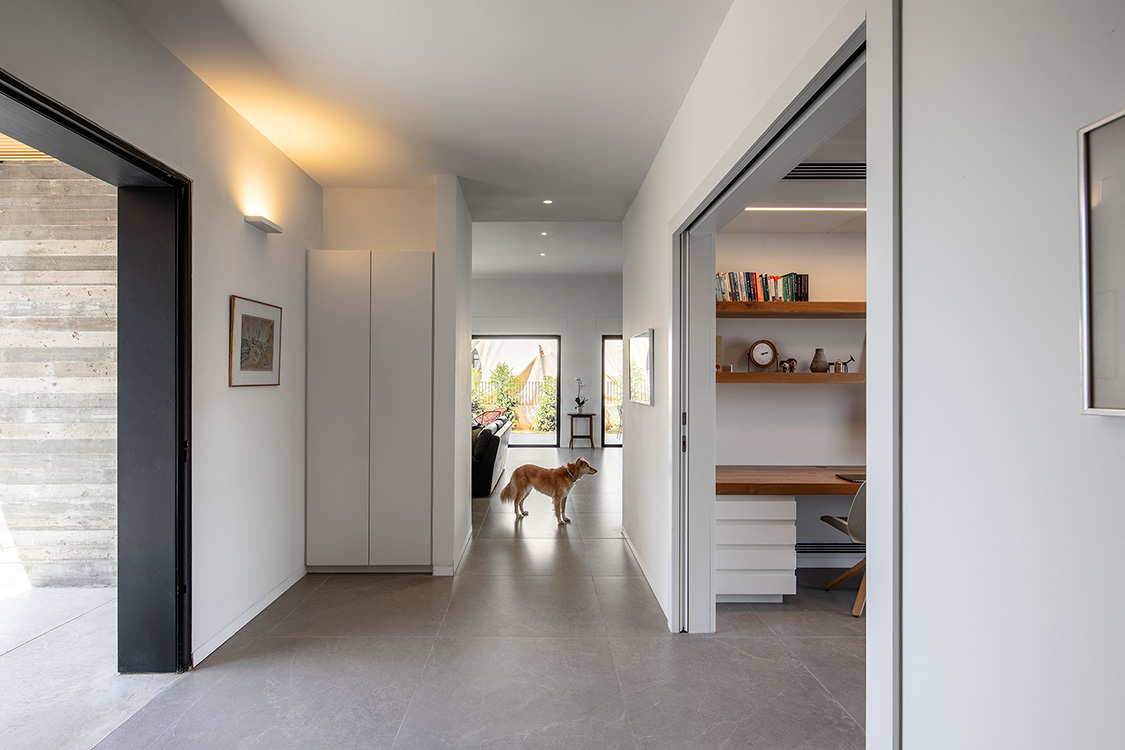
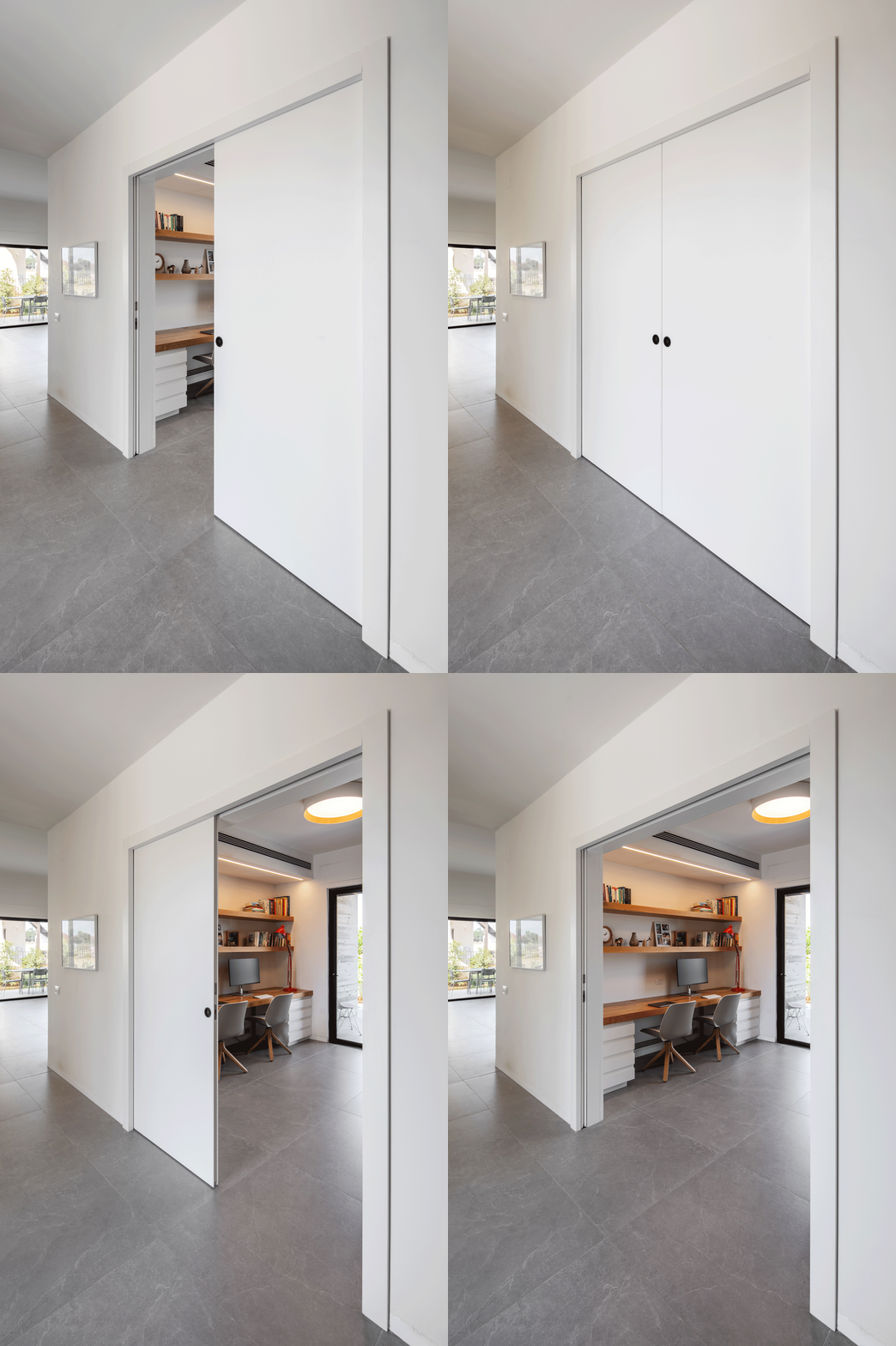
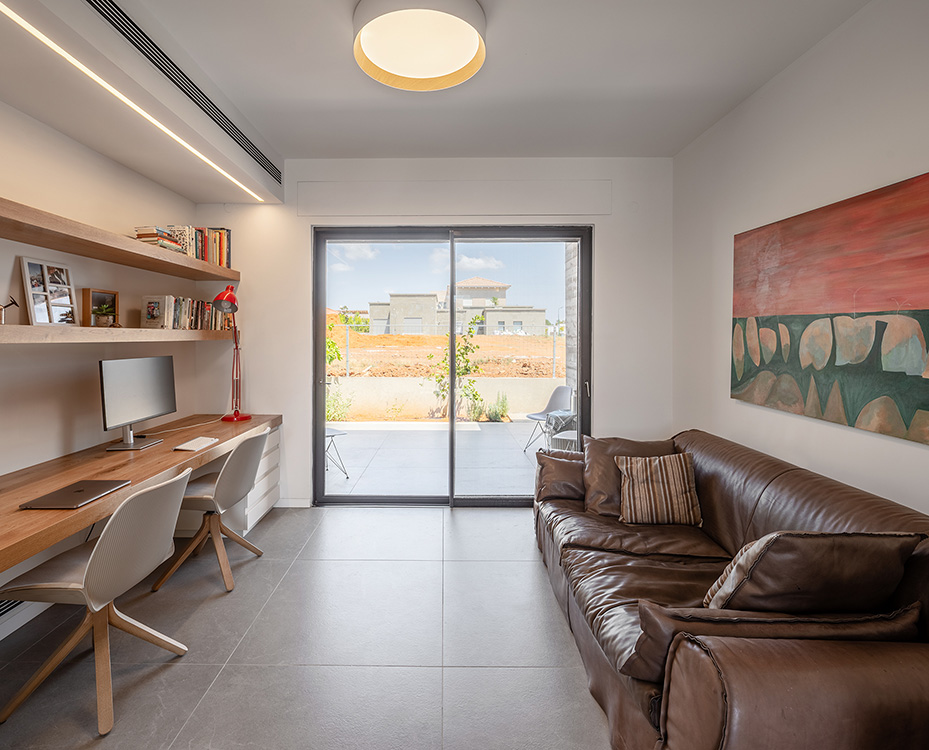
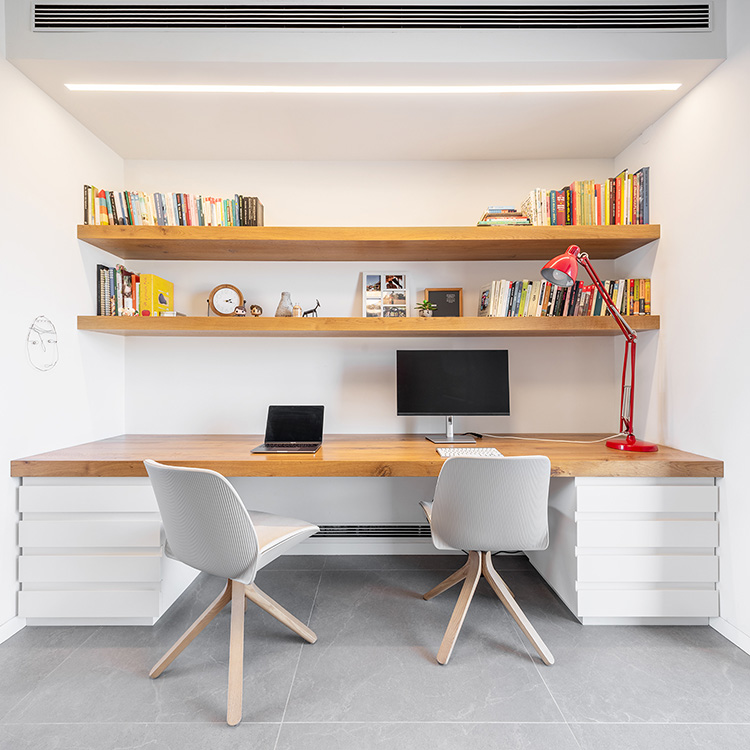
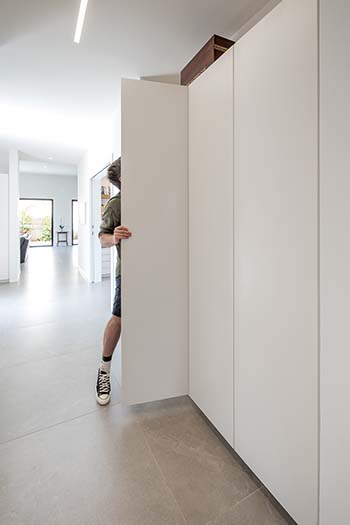
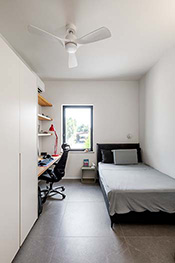
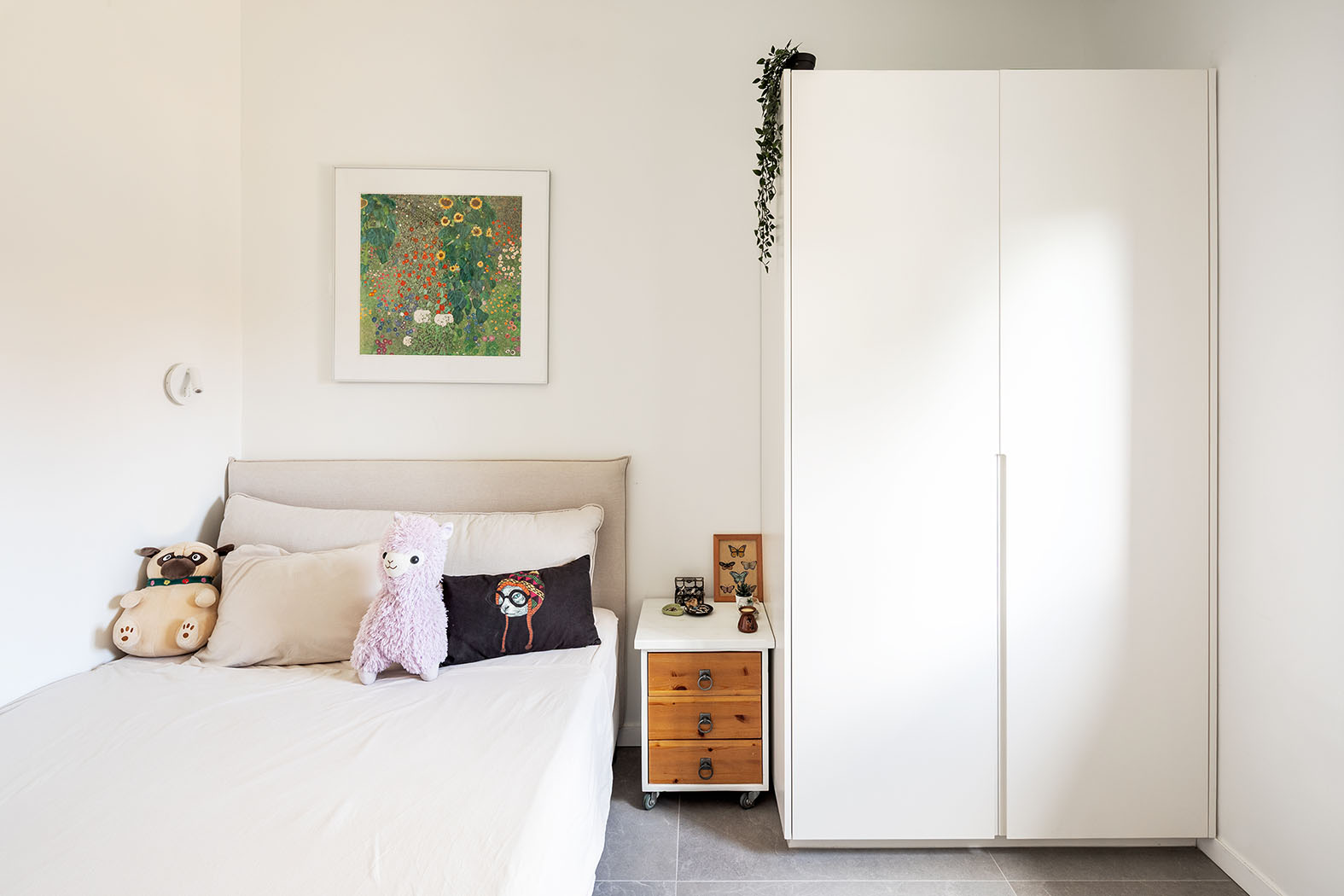
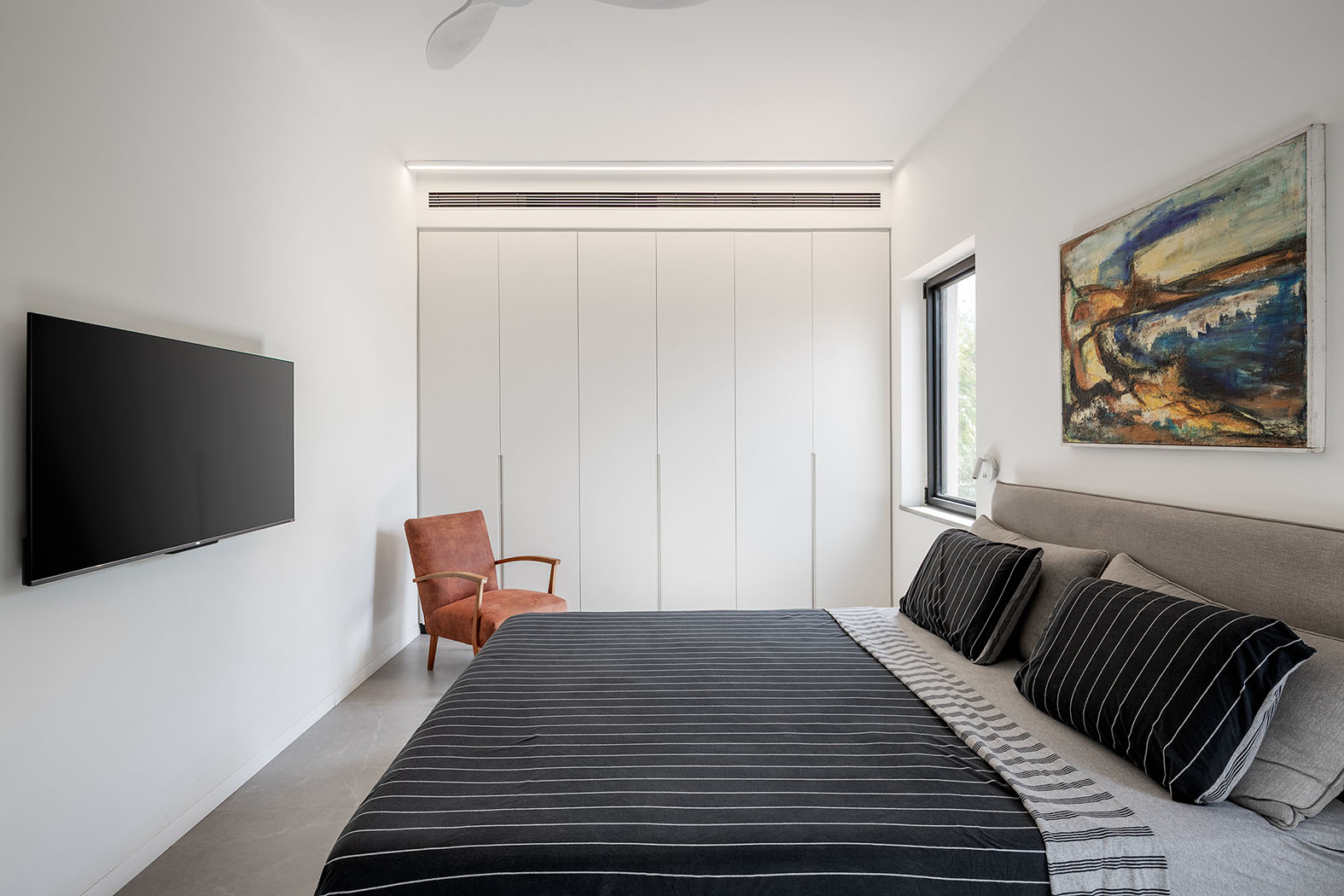
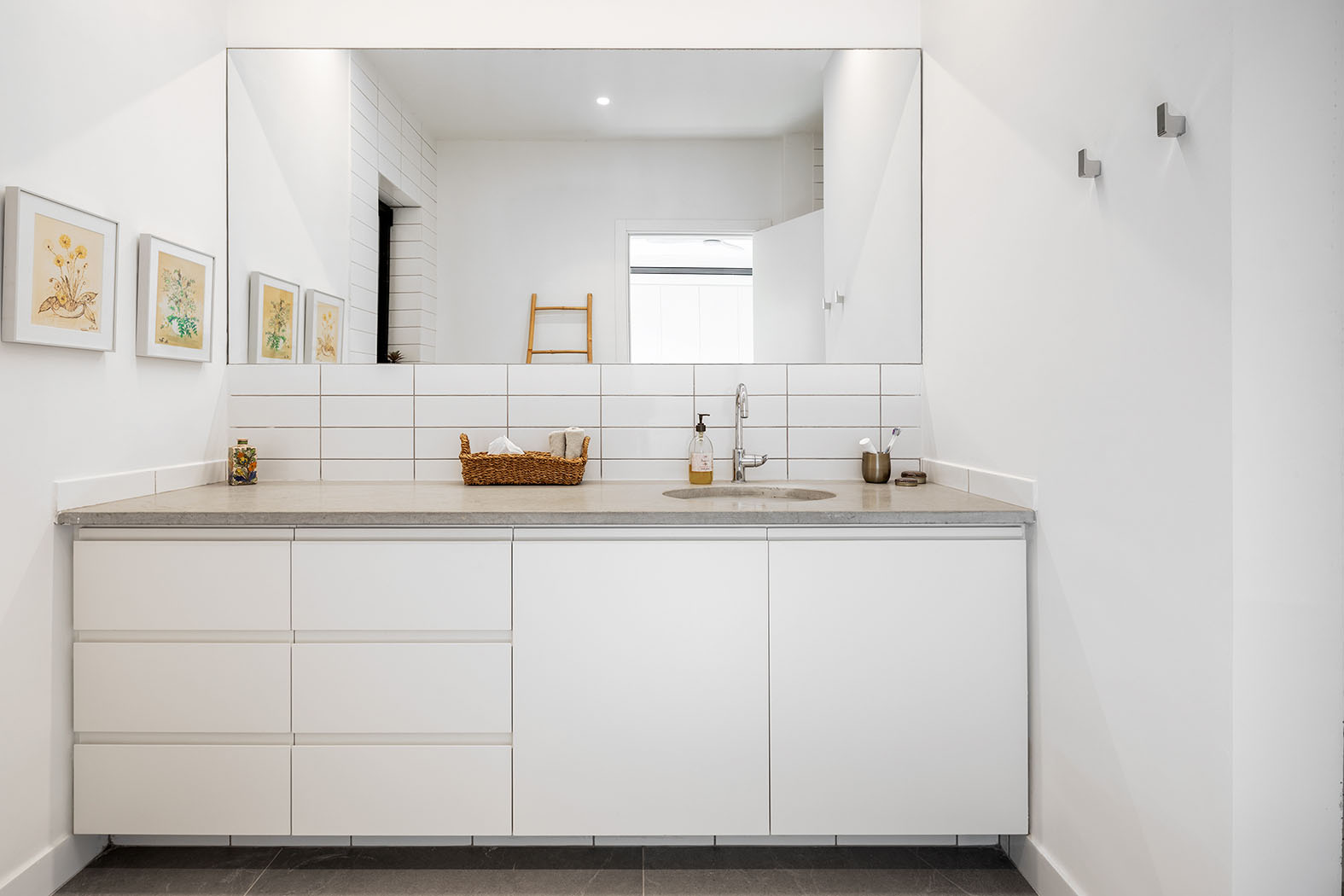
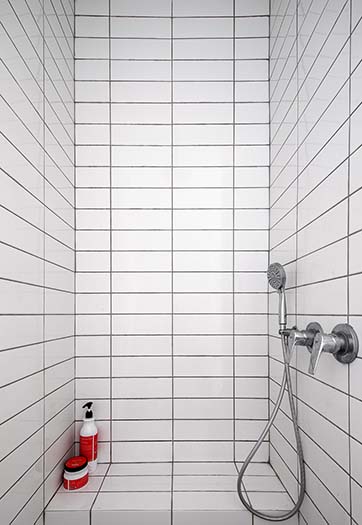
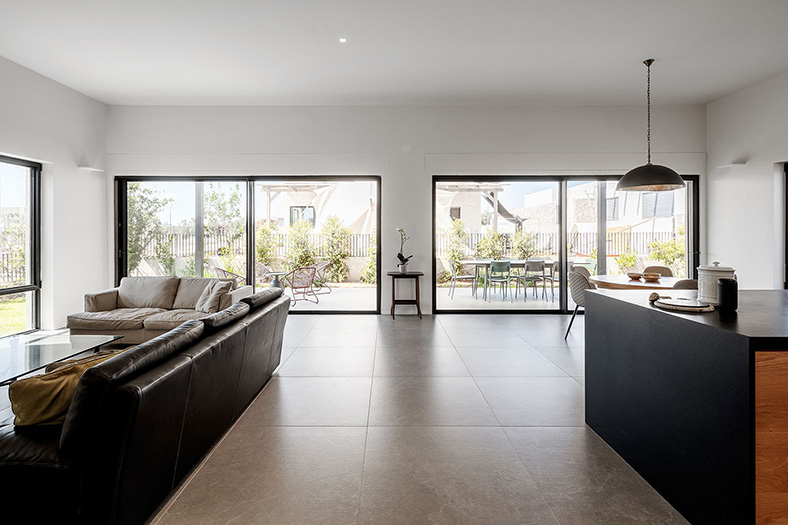
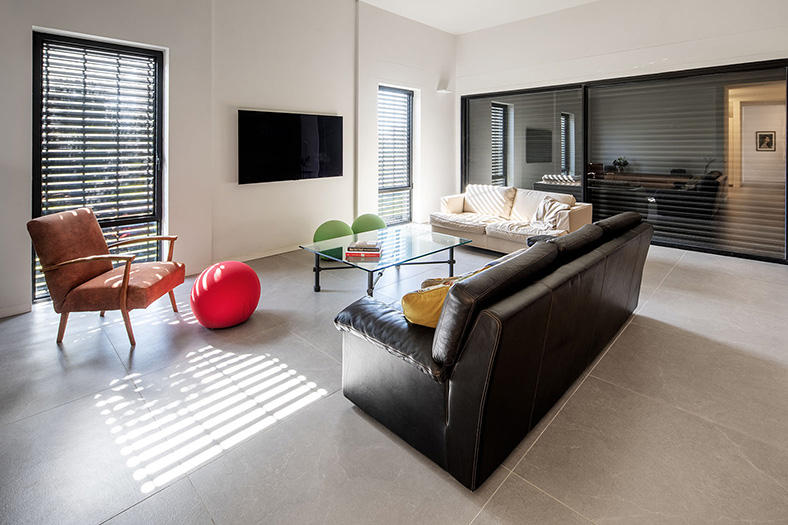
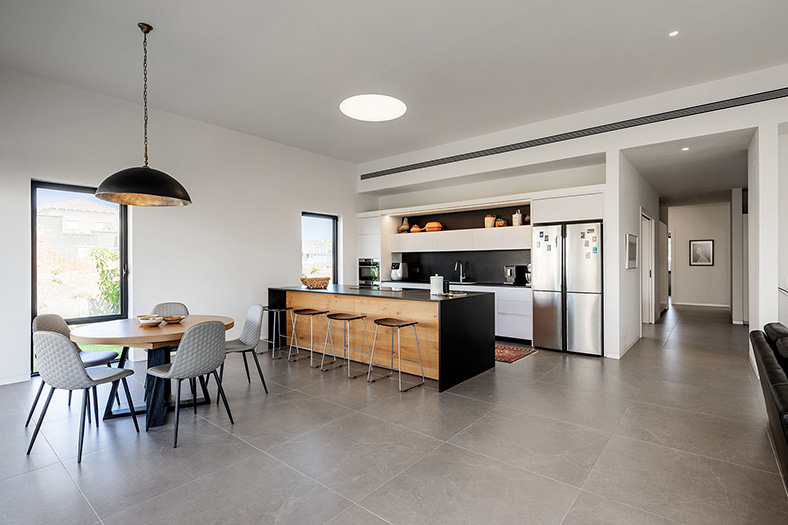
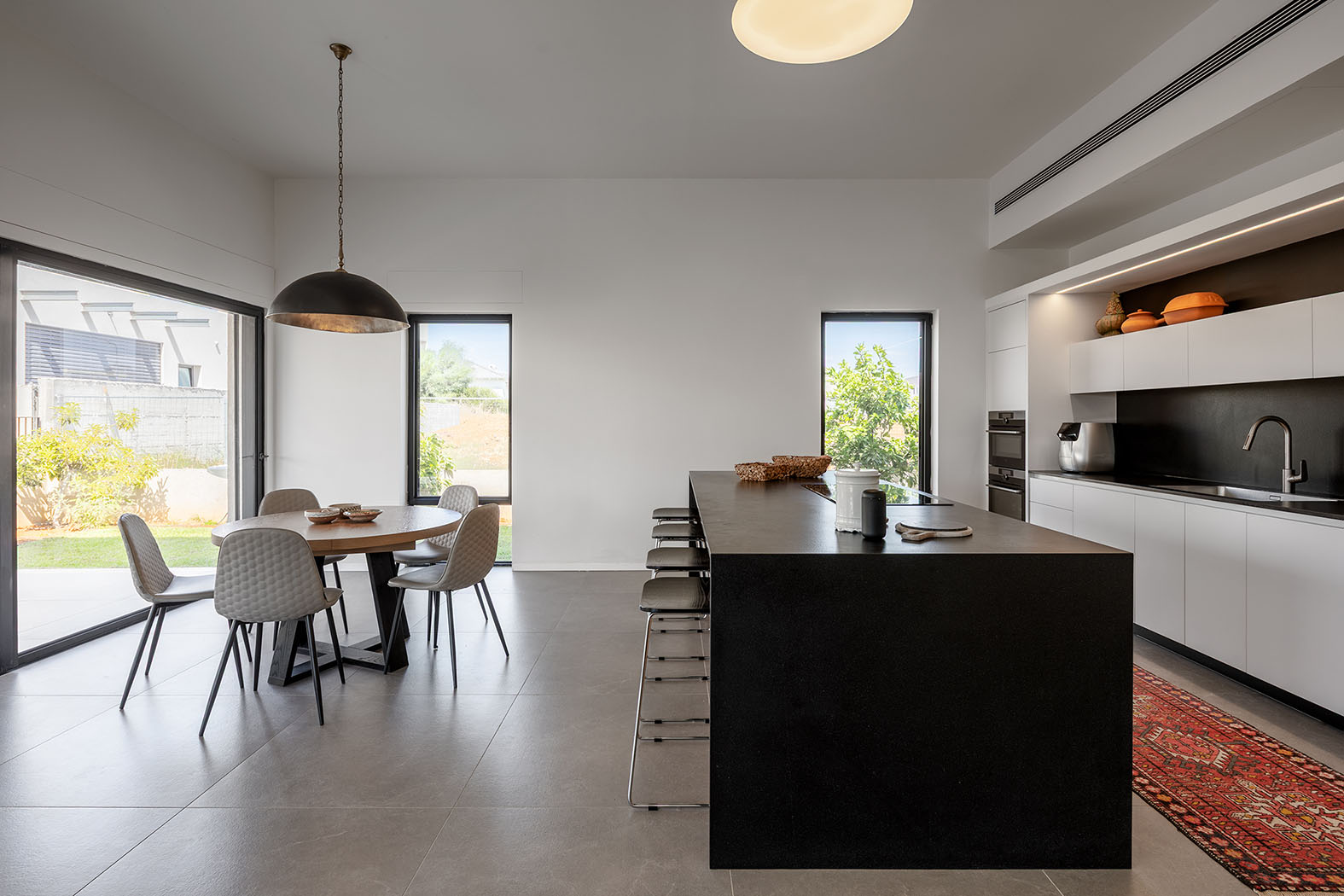
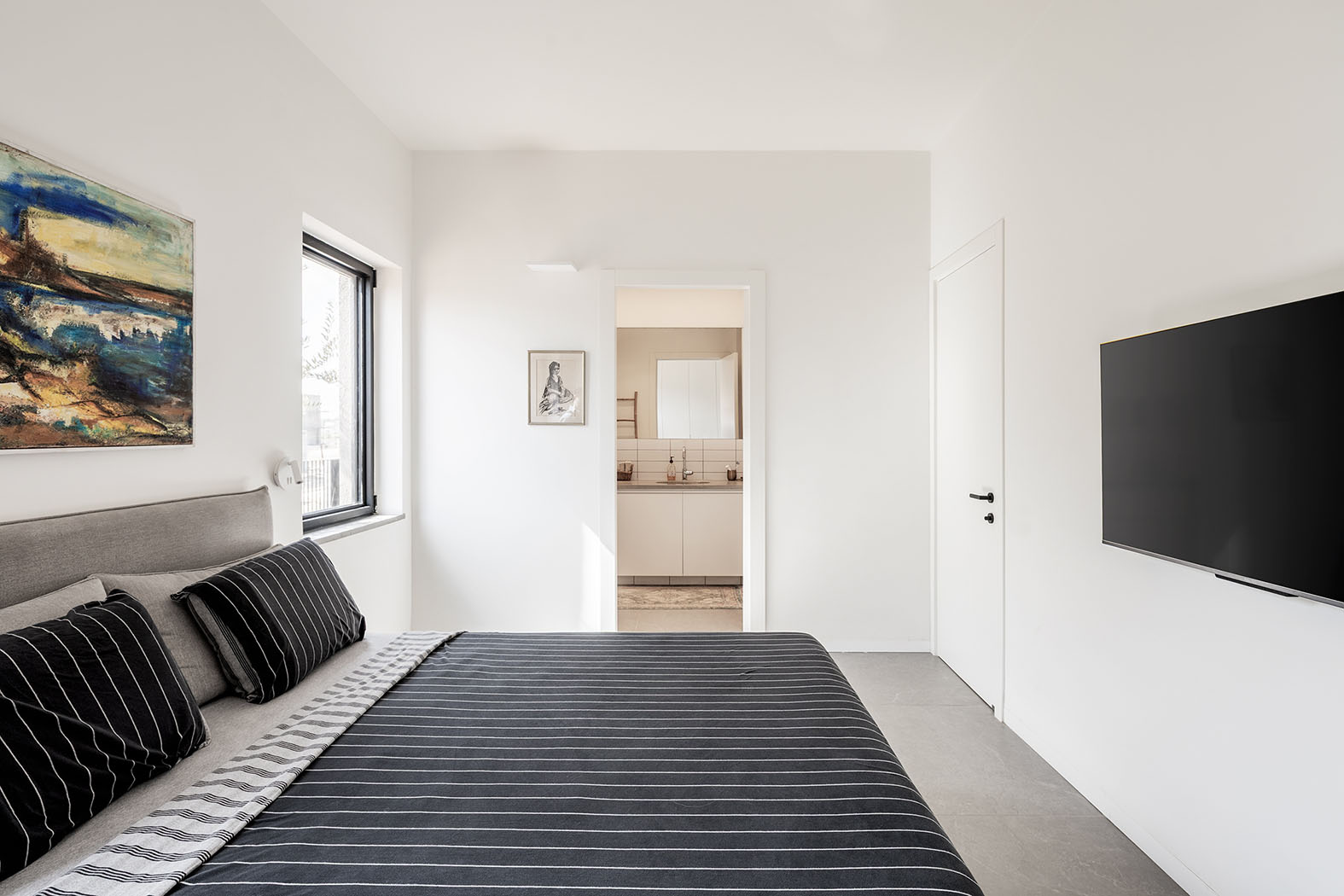
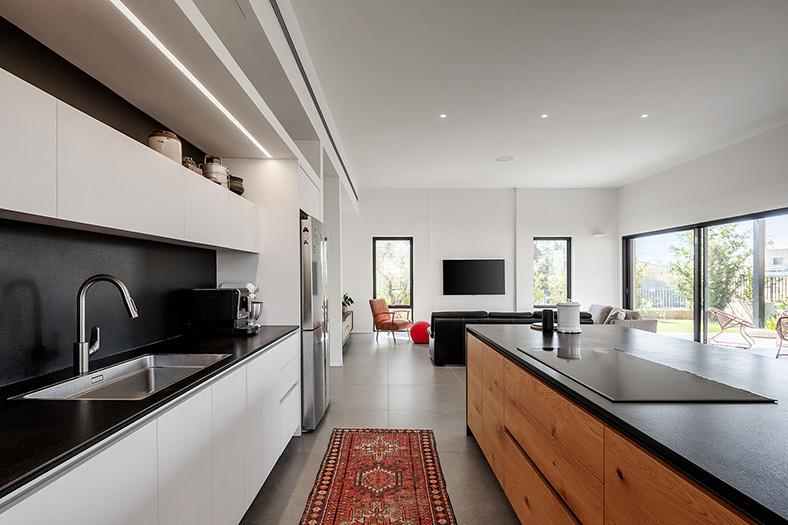
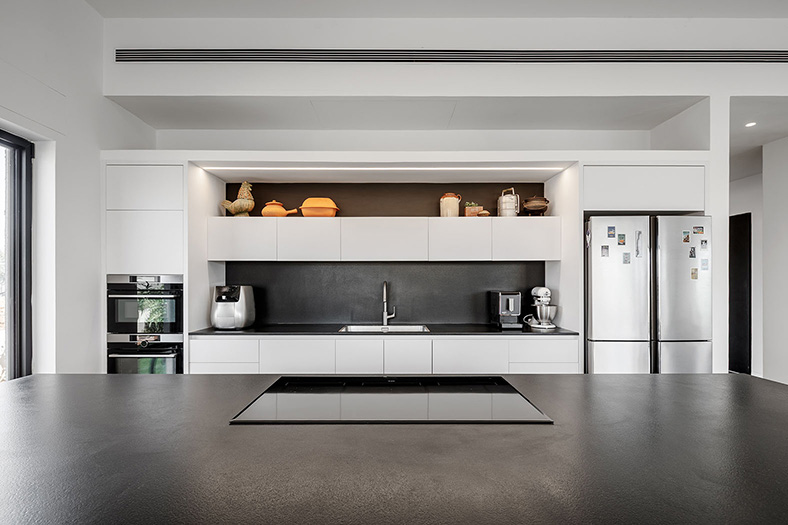
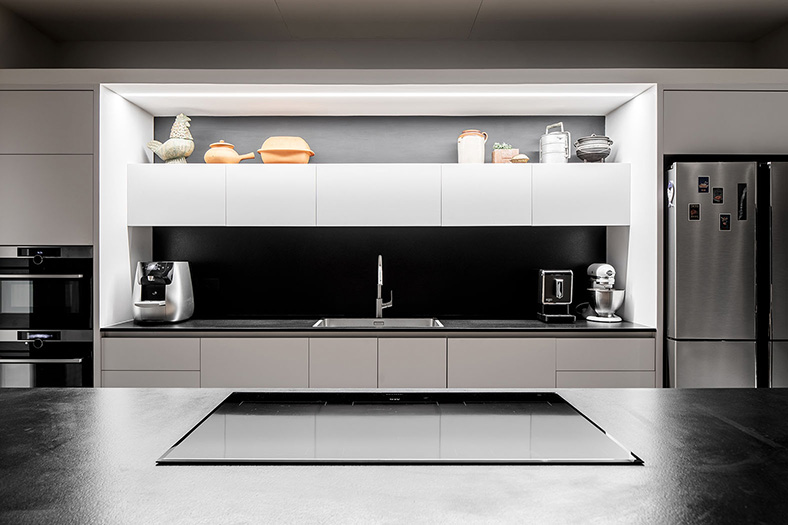
The construction and selection of materials consider energy savings, efficient maintenance and aesthetic value. The result is a timeless design that will develop with the changing of its use.
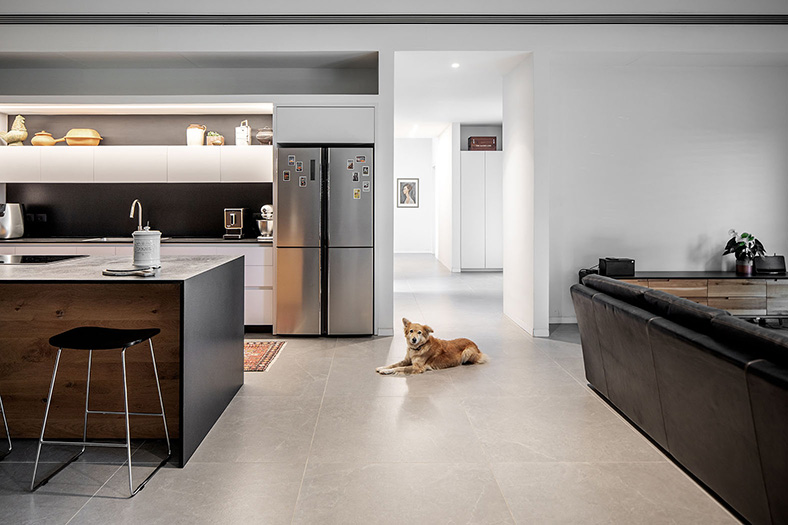
Julie is enjoying the home
The project was made in collaboration with Rachel Barnoon.
MnvThe Hebrew language academy building
- Type
- Civic
- Scale
- Large
- Status
- Planning competition
- Year
- 2020
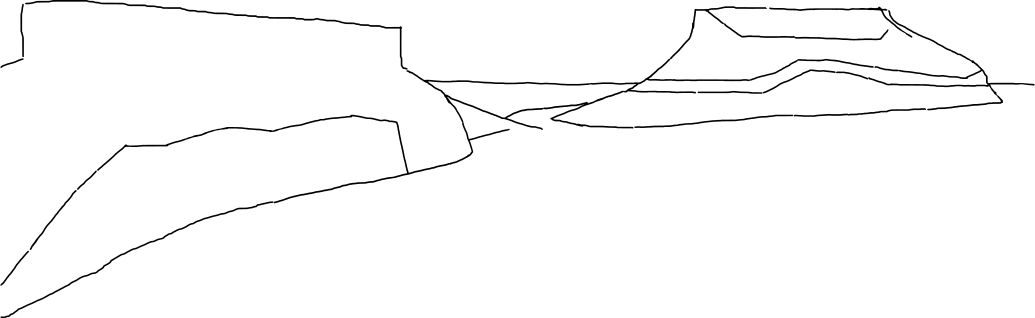
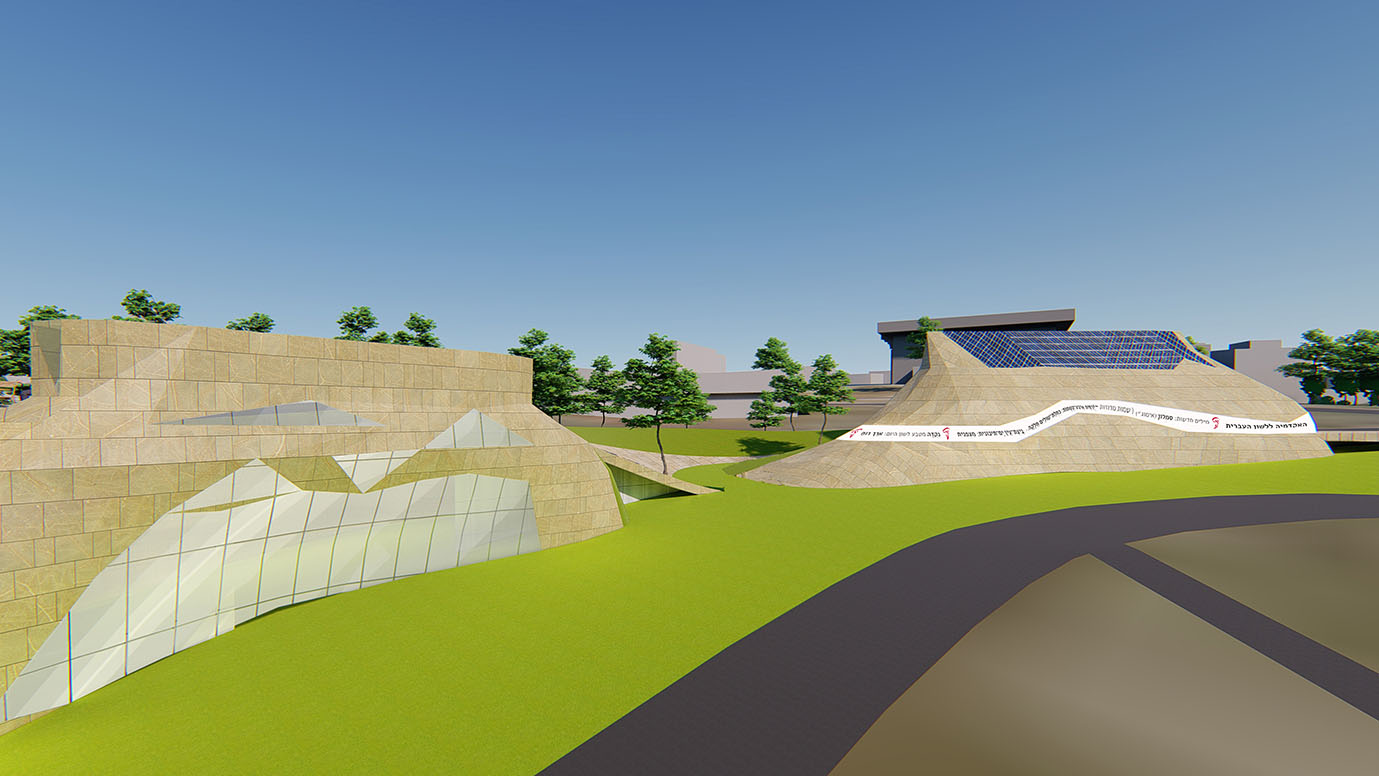
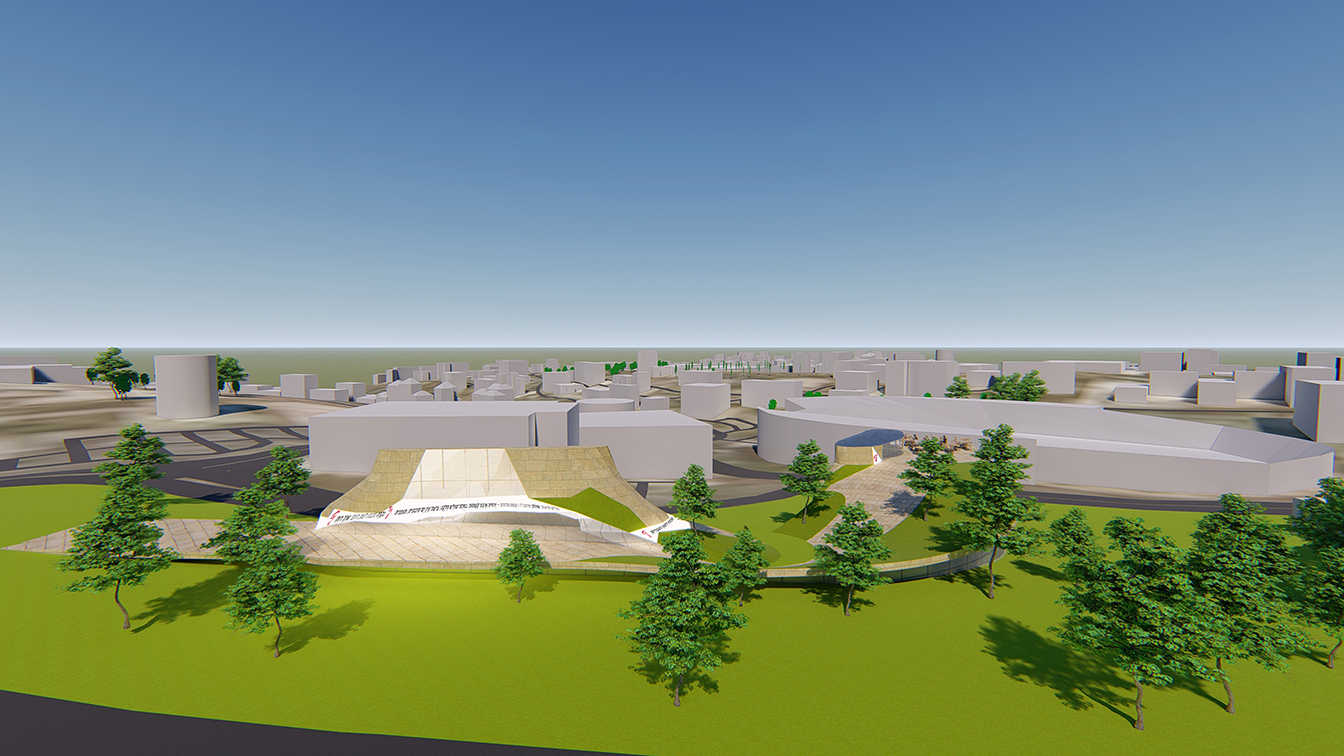
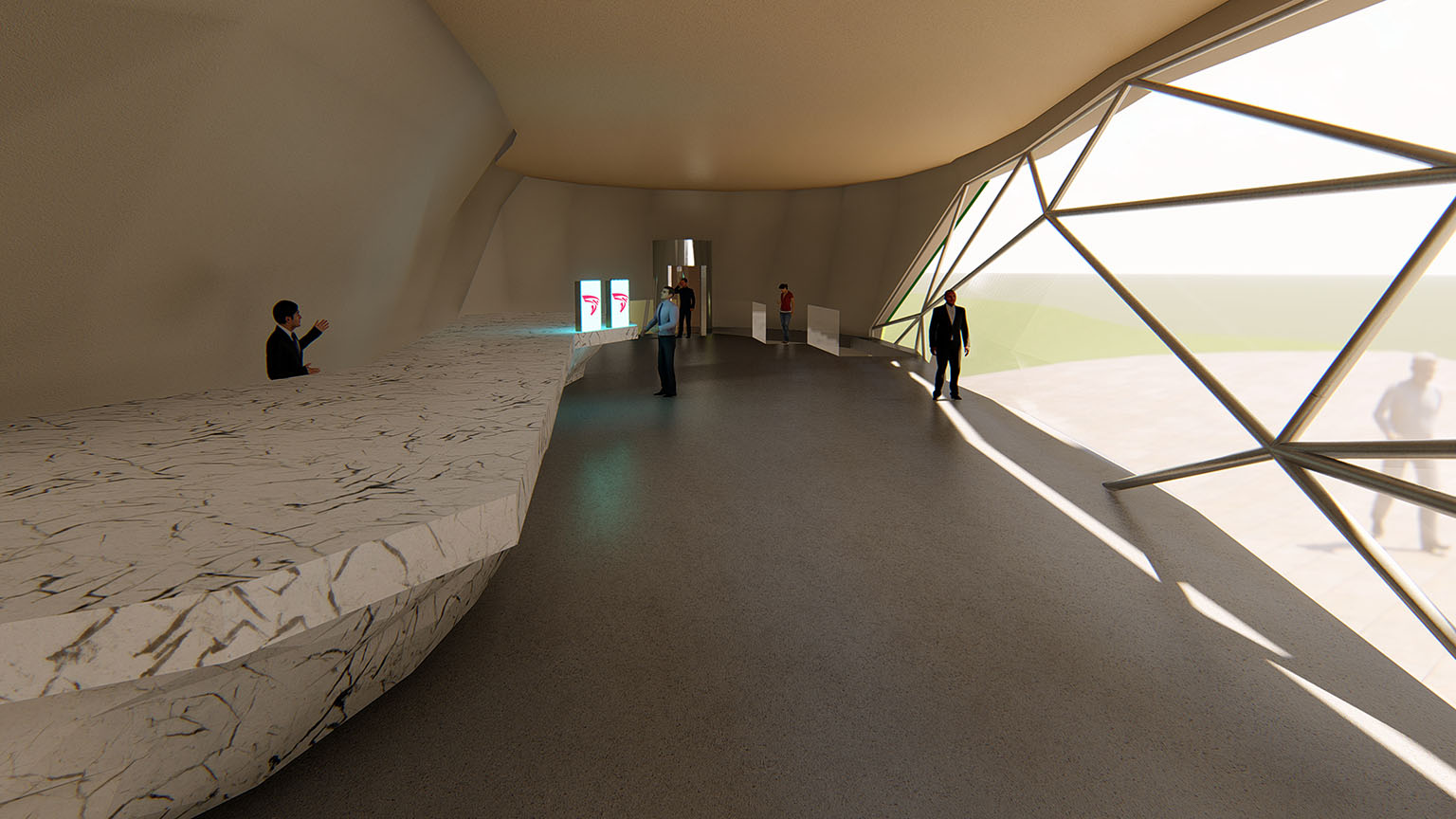
The Hebrew language, like any language, exists in a space that cannot be quantified or contained. It exists in…
The Hebrew language, like any language, exists in a space that cannot be quantified or contained. It exists in a space created by communication between its speakers through a variety of means, from everyday speech, to written language, and to digital correspondence. In this space, it develops as if by itself, but in fact, development occurs thanks to countless communicative interactions between its speakers. The Academy of the Hebrew Language has taken on, by law, the role of guiding the development of the language. This challenging task must naturally include the participation of the Hebrew-speaking public, since they are the ones who use the language and develop it. The word "Minveh" does not describe an existing structure because until today, Hebrew speakers have had no need for it - no house for the Hebrew language has yet to be built. Its construction invites an opportunity to think outside the box about the relationship between the public and the building and the urban environment. The location of the Minveh is also an opportunity. The plot on which the Minveh will be built lies between the language's past and its present - between the Museum of the Bible Lands and the National Library. Just as the Academy of the Hebrew Language, also in its incarnation as the Hebrew Language Committee, connects the past and the present, so the Minveh can connect between the museum and the library, between yesterday and today and at the same time look ahead to tomorrow. And so we have an opportunity to create a connection between the times, between the past and the present and the future.
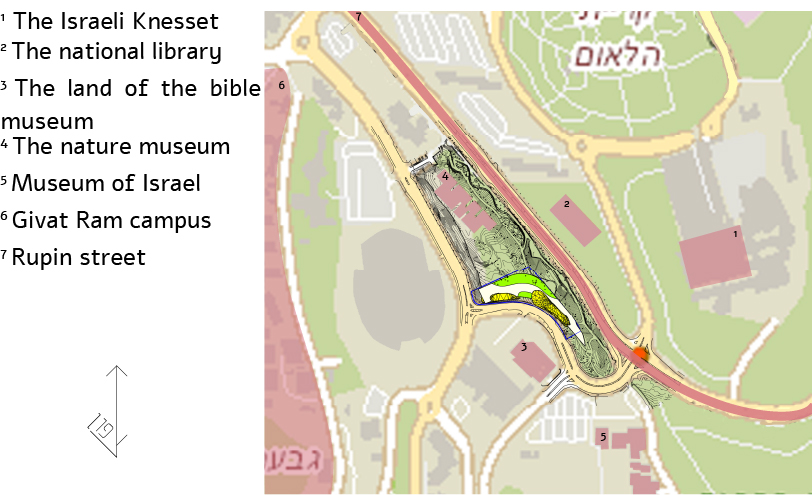
Surroundings
גם מיקומו של המנווה הוא הזדמנות. המגרש עליו יוקם המנווה שוכן בין עברה של השפה להווה שלה - בין מוזיאון ארצות המקרא לבין הספרייה הלאומית. כפי שהאקדמיה ללשון, גם בגלגולה כוועד ללשון העברית, חיברה ומחברת בין העבר להווה, כך יוכל המנווה לשמש כחוליה מחברת בין המוזיאון לספרייה, בין האתמול להיום ובה בעת להביט קדימה אל המחר. והרי לנו הזדמנות ליצור חיבור בין העתים, בין העבר לבין ההווה לבין העתיד.
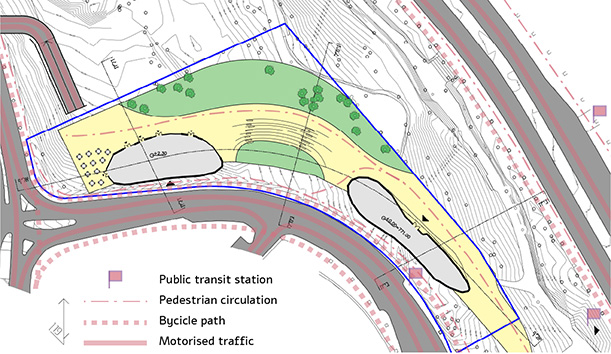
Building and landscape
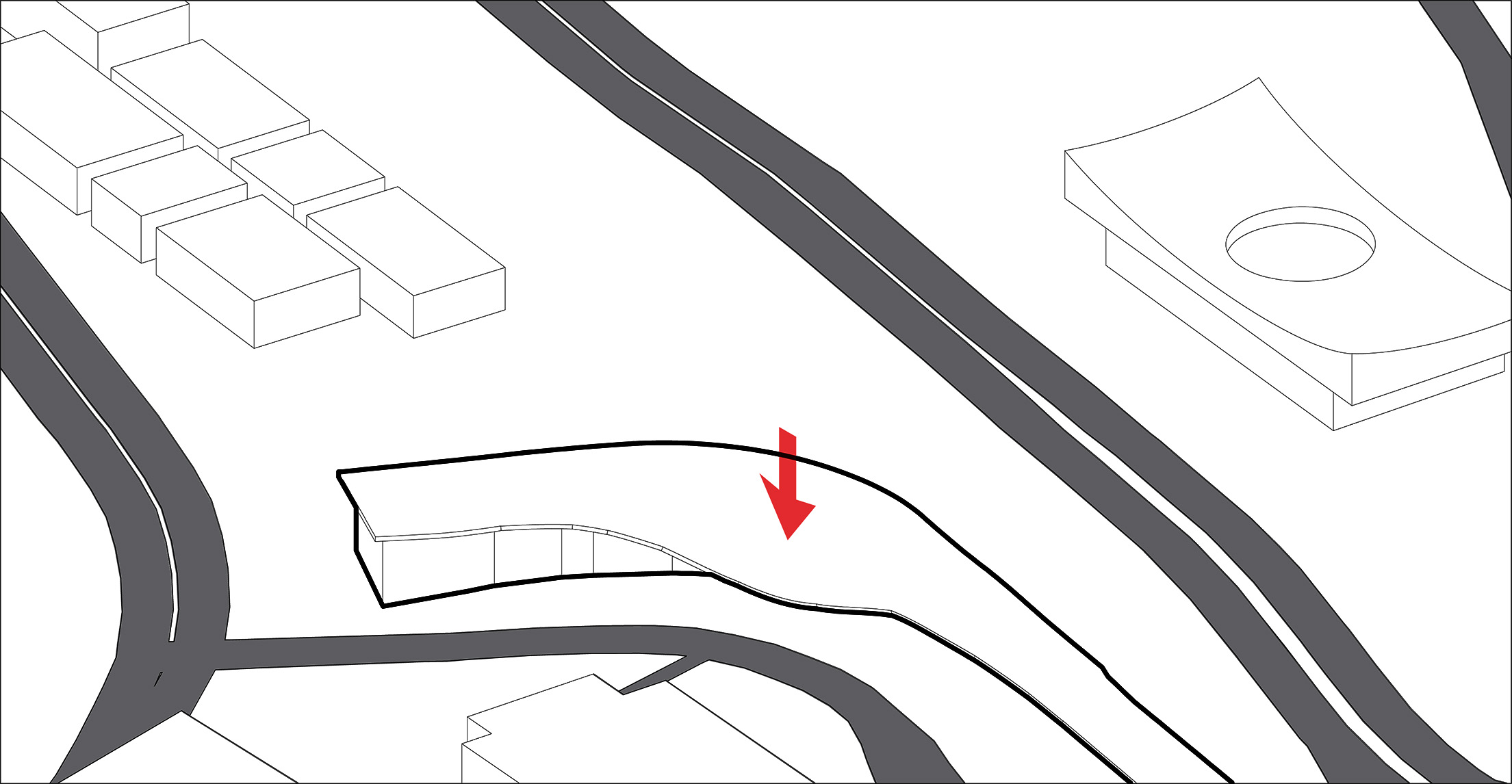
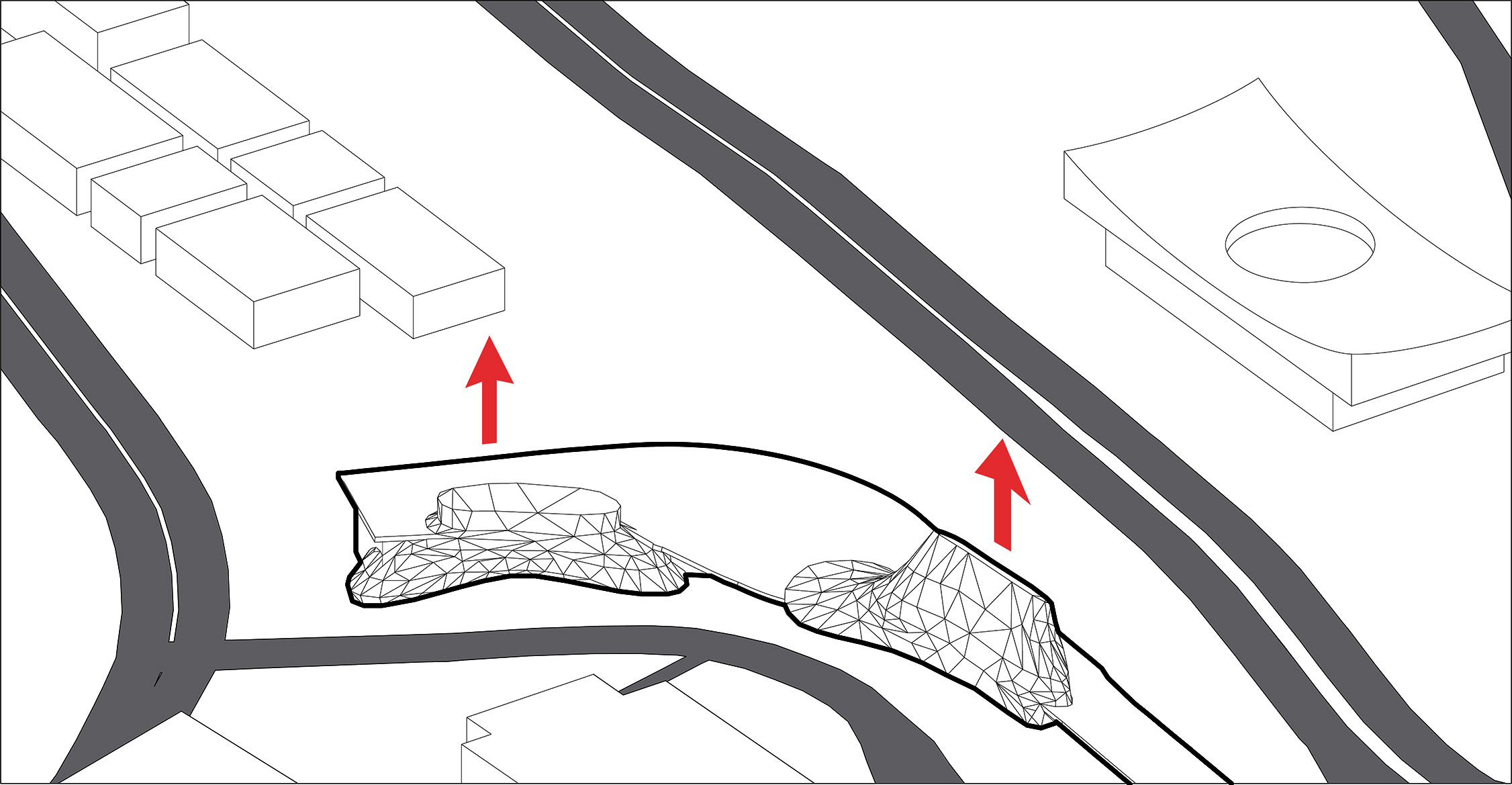
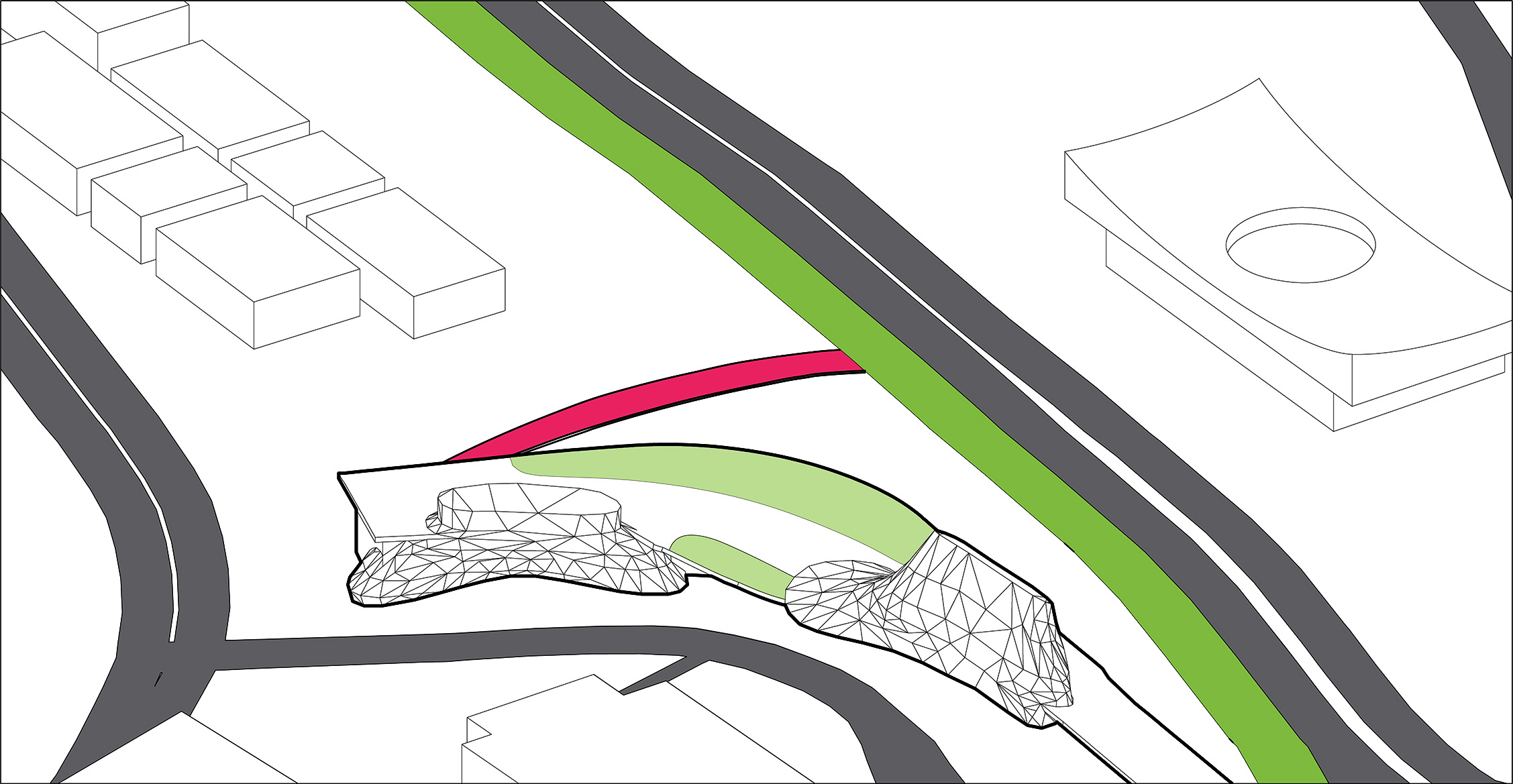
The proposal for the Hebrew Language Academy is based on these two opportunities: urban connection by creating transitions and views between the project and its surroundings, and strengthening the connection between the Hebrew Language Academy and its audience in the virtual space by emphasizing it in the physical space.
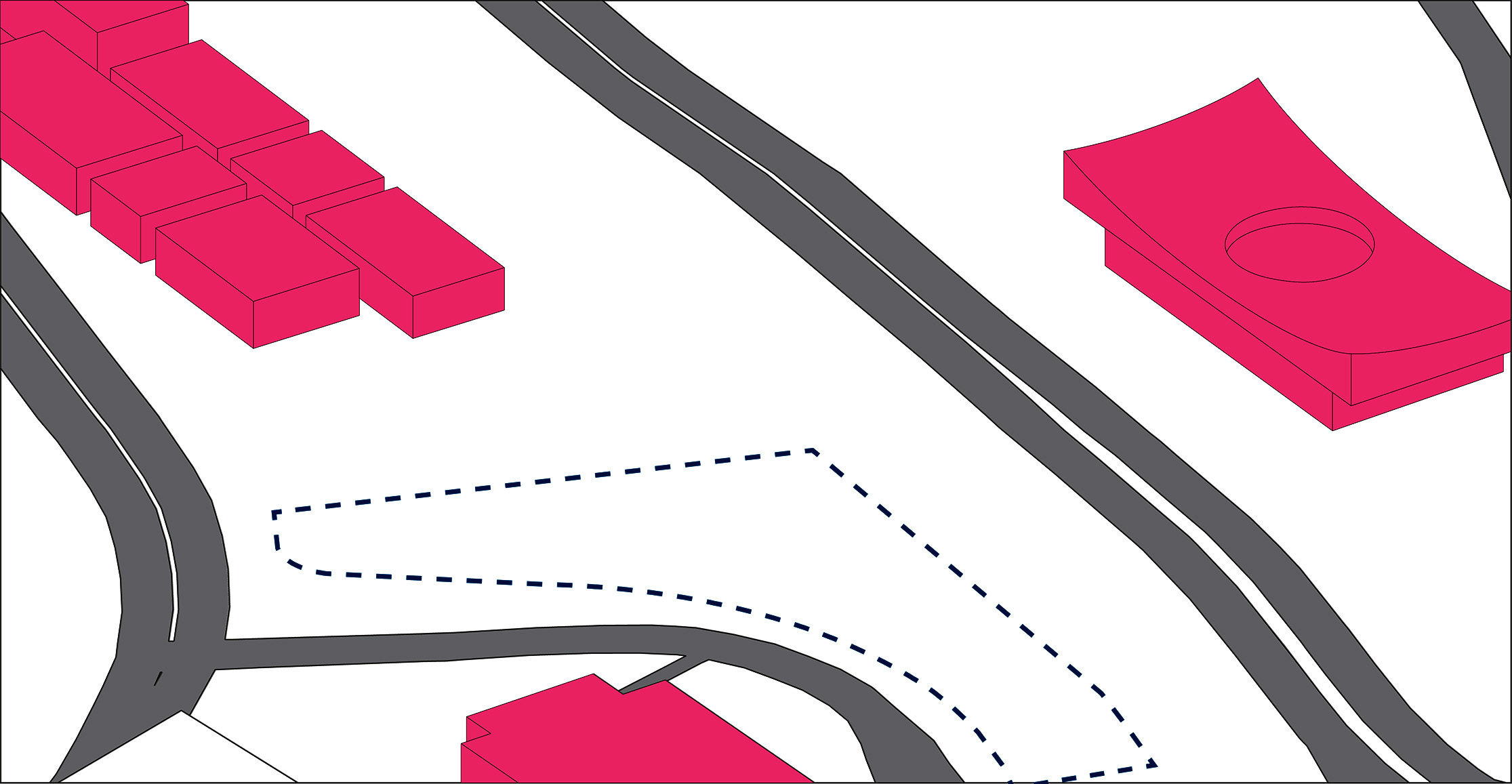
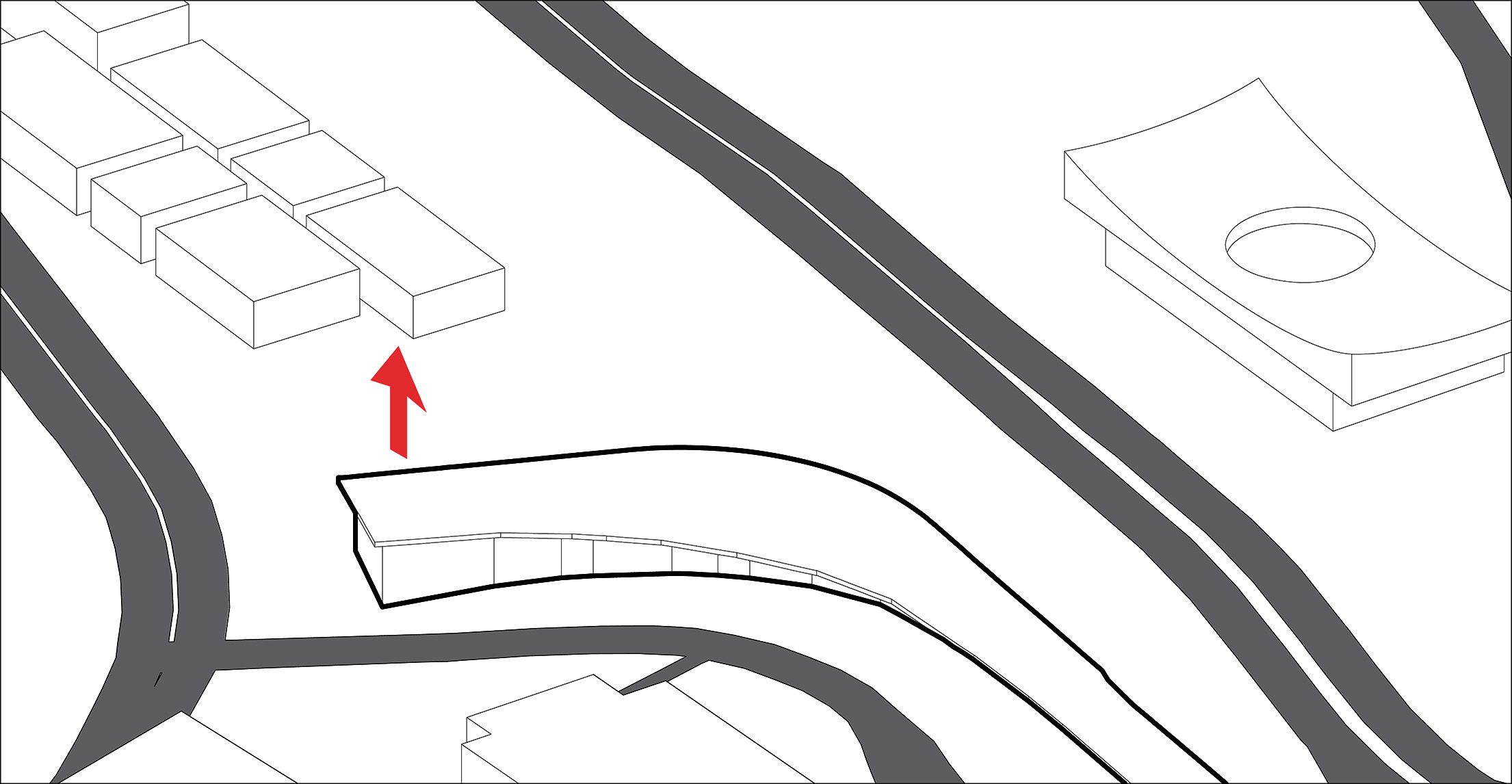
1. Site location
The connection to the city begins with the pedestrian entrance to the lot via the Weiz-Rupin intersection by the creation of a gently sloping ramp beneath which most of the project is located. The ramp invites the public to stroll on the roof of the building and continues to the edge of the lot, where a restaurant with a balcony overlooking the Givat Ram campus is located. The ramp is at a height that will facilitate the connection to the planned promenade along Rupin Street to the north. In its center, the ramp "dips" towards Weiz Street, where the public is given the opportunity to gather in an open amphitheater overlooking the Biblical Lands Museum or descend to Weiz Street. In addition to the connection to the environment via the ramp, the proposal includes such a connection from within the exhibition itself via entry and exit terminals, which will allow visitors to move freely between the exhibition spaces and the urban space, thus adding frenzy and vitality to it.
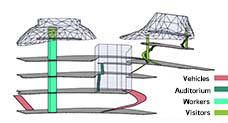
Circulation scheme
The connection between the academy and its audience is already happening today thanks to its excellent social media department. One of the ideas for the exhibition at Minveh is to strengthen the department's activities by presenting them on the facade of the building using digital screens. Presenting this connection in the physical space will give it additional meaning, emphasizing the dynamism of the language. The same screens will also project products from interactive exhibitions that will be presented at the museum, thus increasing visitors' sense of belonging to the Minveh. At the end of the visit, visitors will be able to continue to update themselves on the results of their work at the Minveh through a dedicated app. This way, the academy's sphere of influence will reach the wider public sphere, far from its geographical location.


section a-a
With this proposal, the center will improve the physical space in which it is located and at the same time will influence the space in which the language exists by maximizing public participation. Combining these two goals will create a structure of great significance to the urban environment and the Hebrew language, and will place the Academy of the Hebrew Language in the forefront of institutions for the study and promotion of languages in the world.
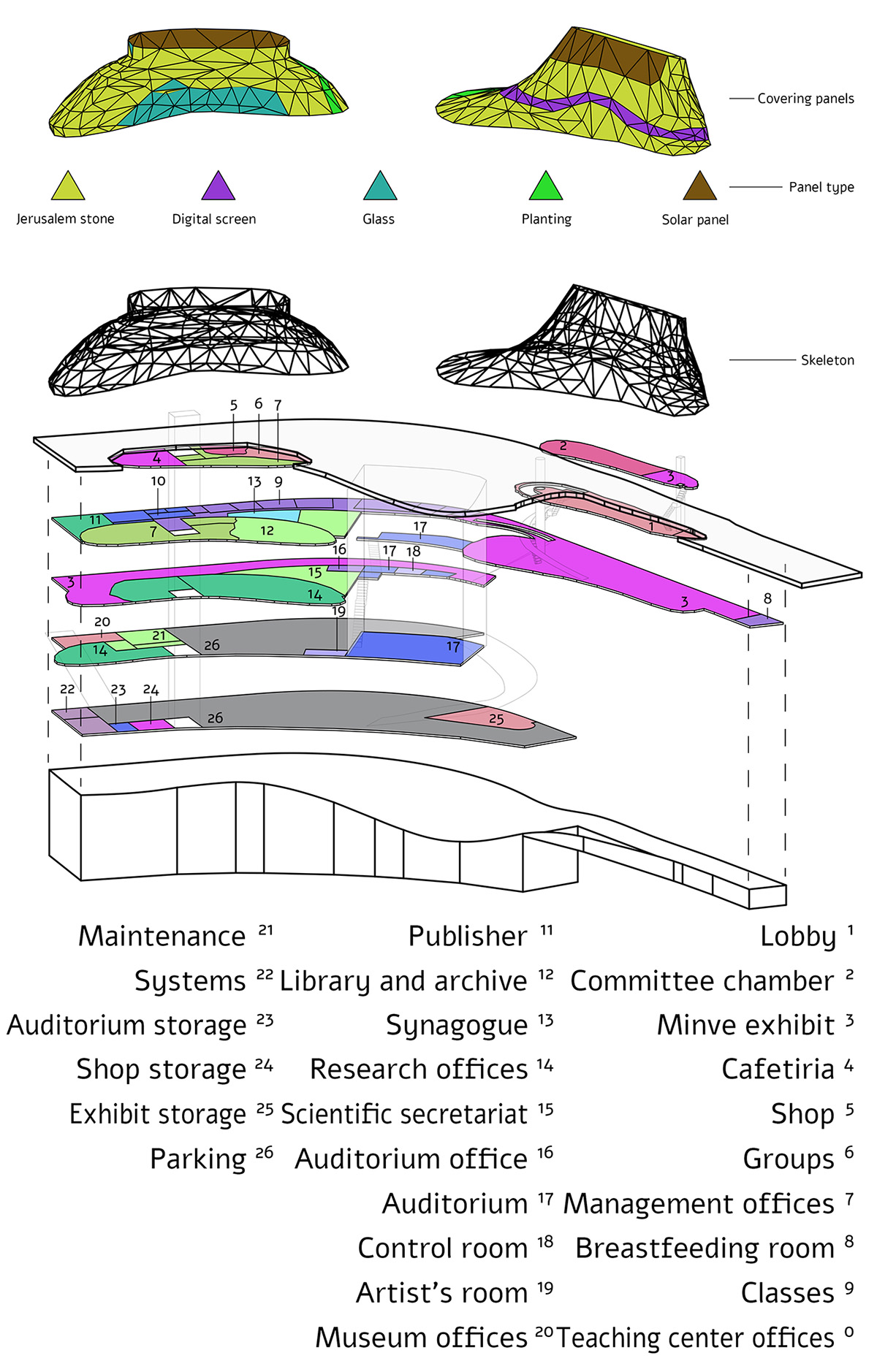
Program scheme
Green building strategies
1. Using solar energy for the needs of the Minveh 2. Using thermal mass to regulate temperatures between day and night 3. Using the wind regime to create a ventilated space in the summer and a sheltered space in the winter 4. Using shading to block the sun in summer and for passive heating in winter 5. Using vegetation to reduce the urban heat island effect


section b-b
ZYZY
- Type
- Renovation
- Scale
- Medium
- Status
- Built
- Year
- 2021
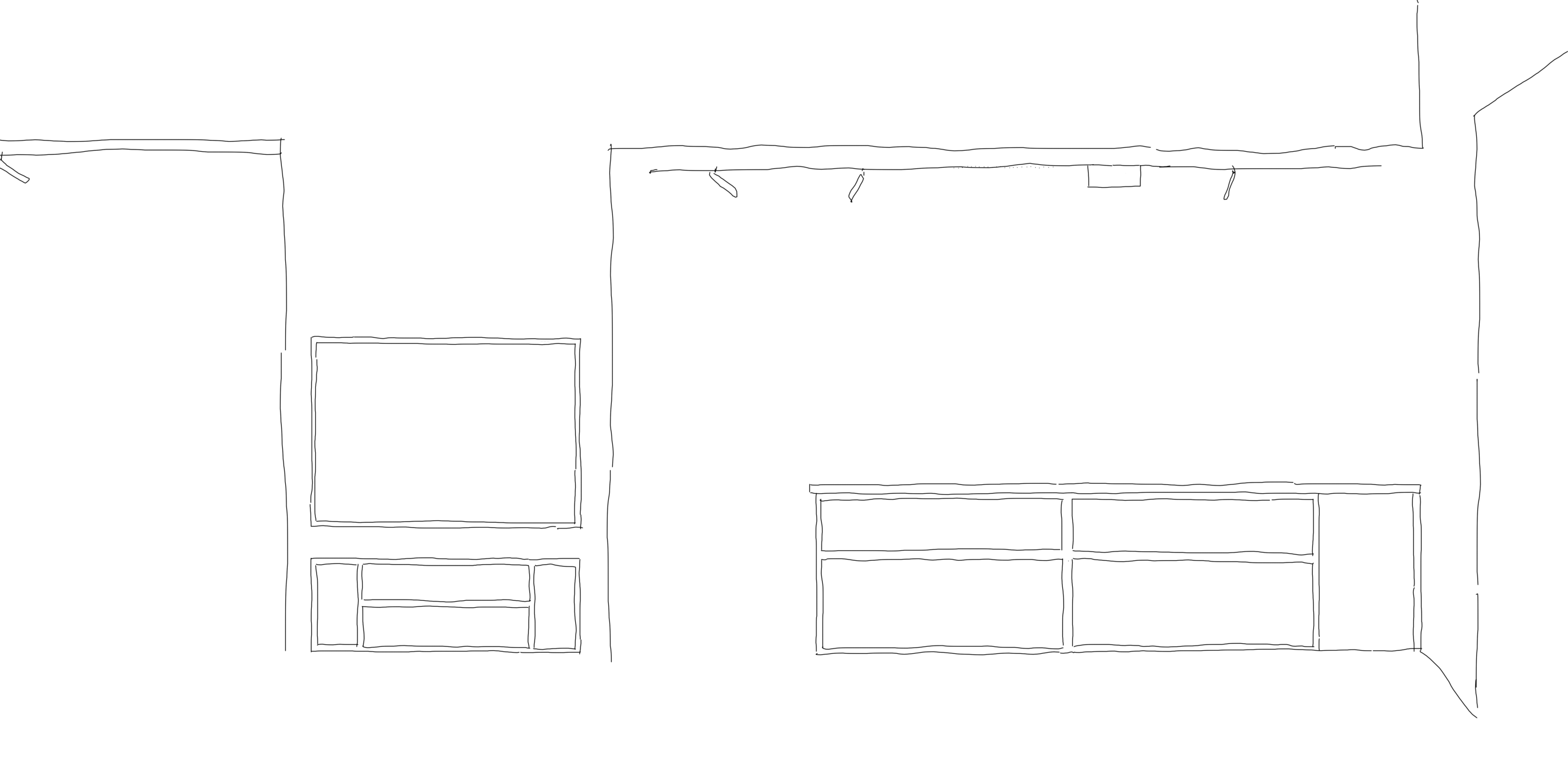
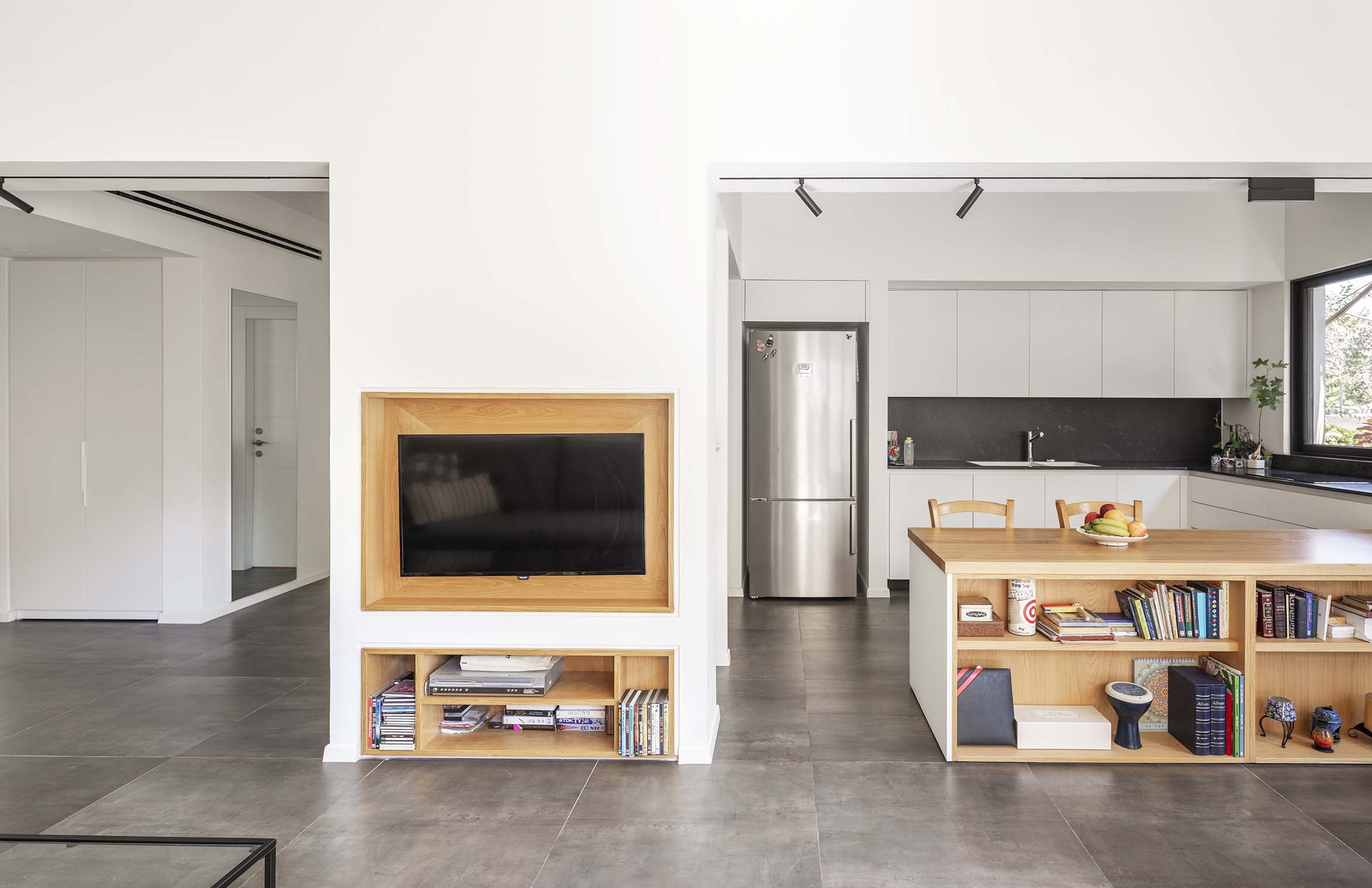
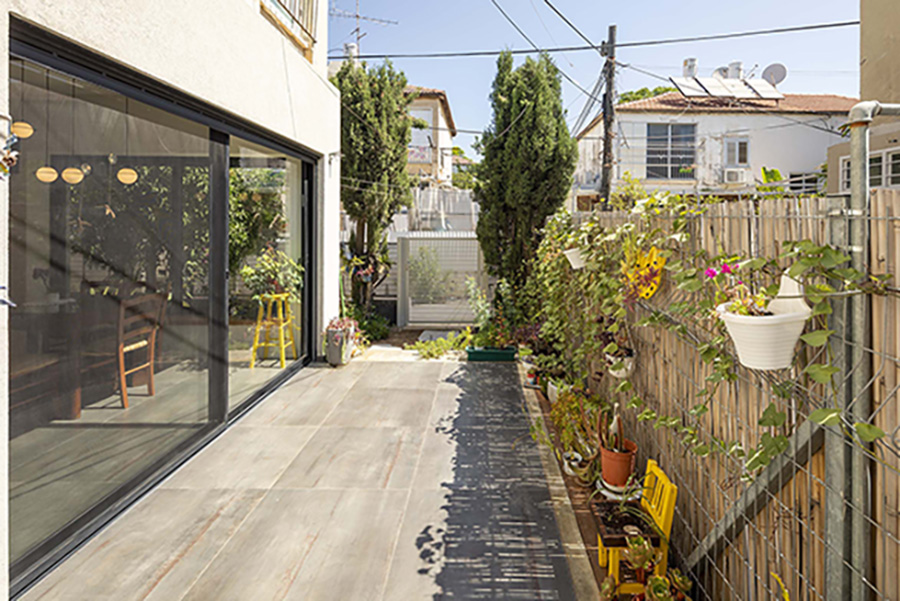
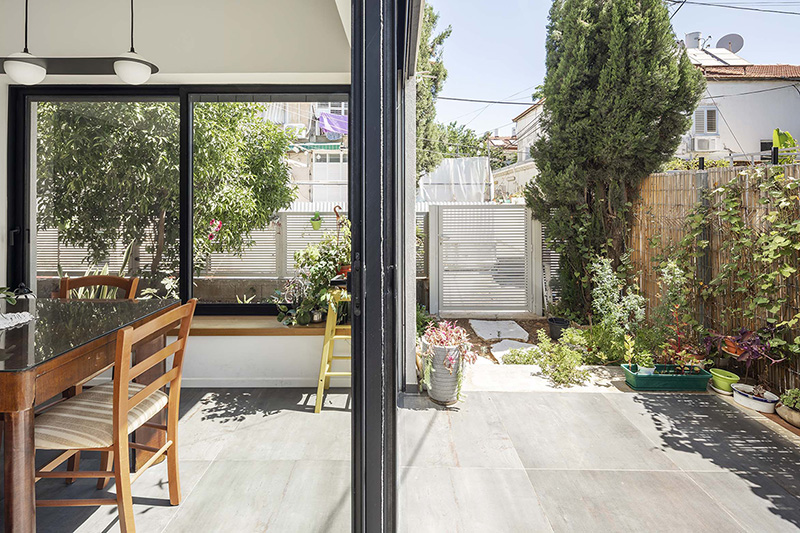
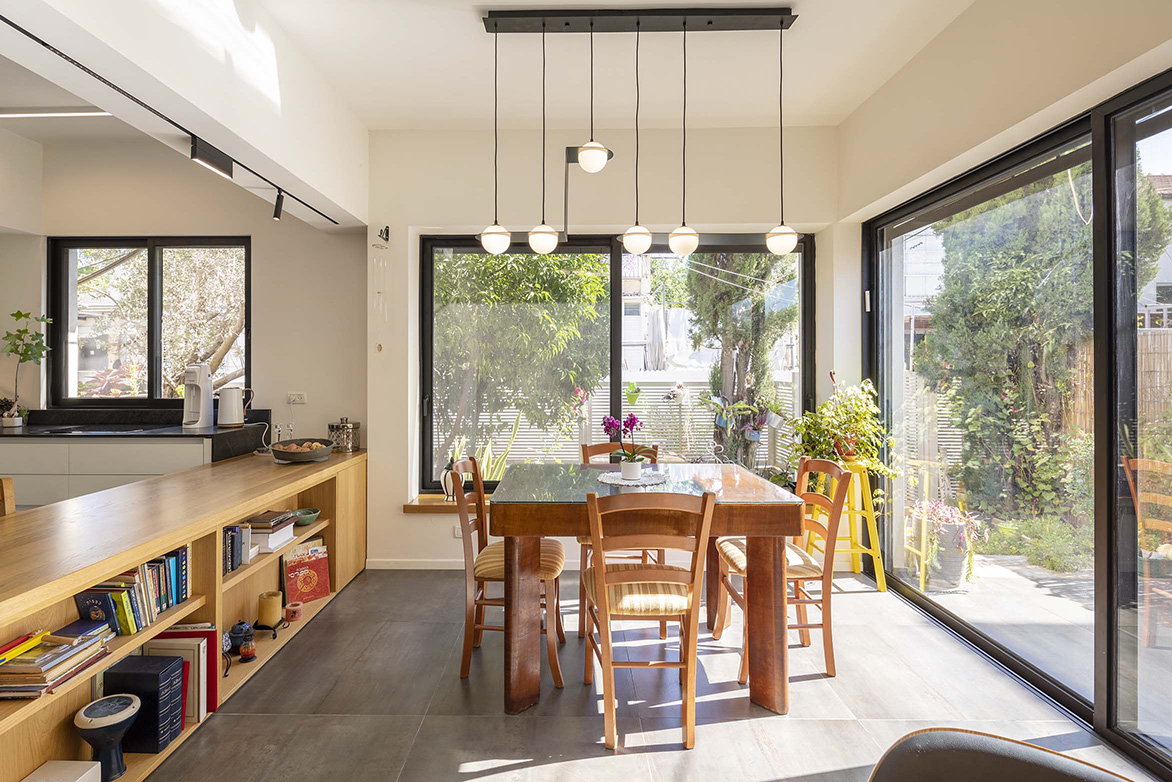
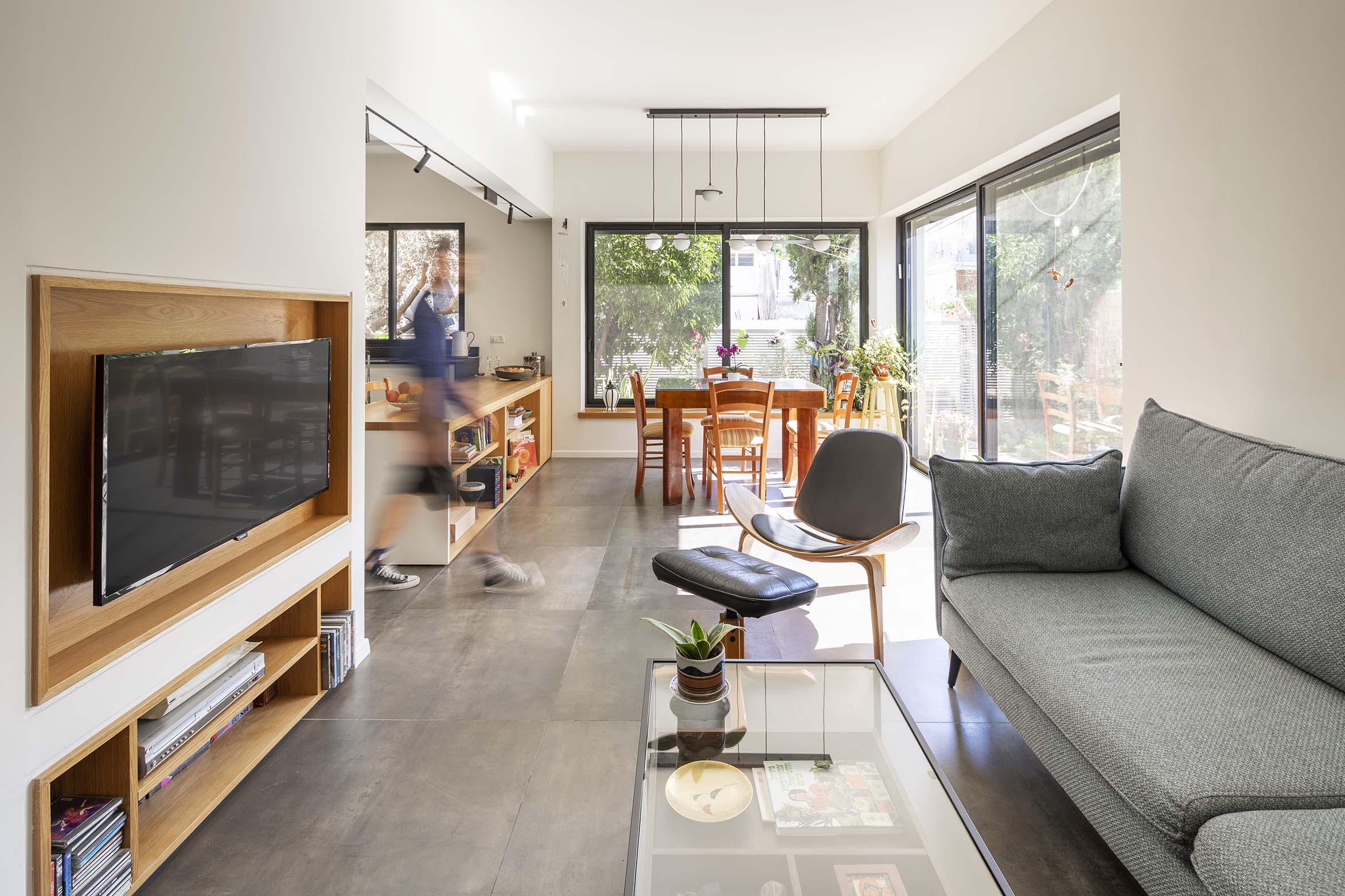
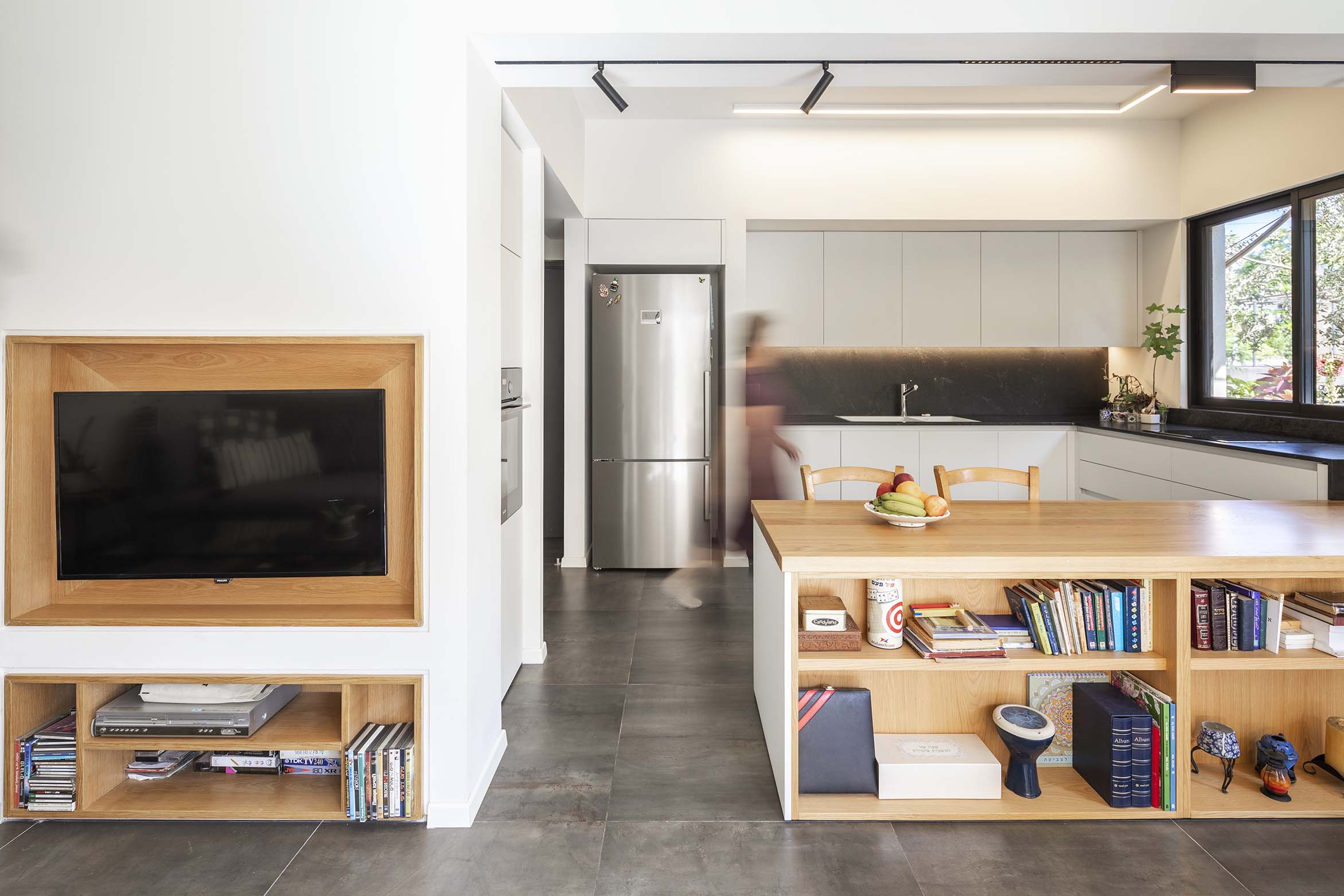
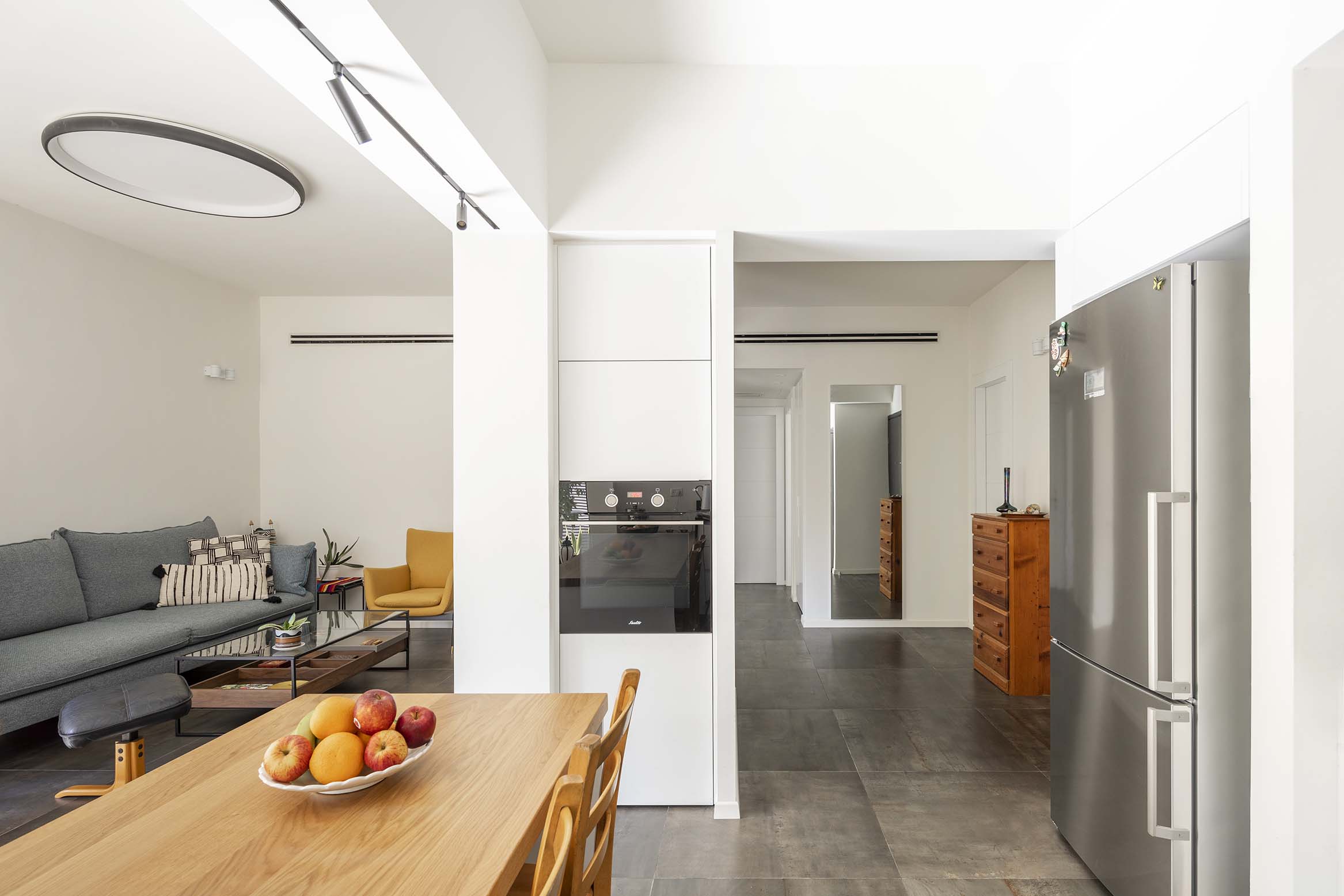
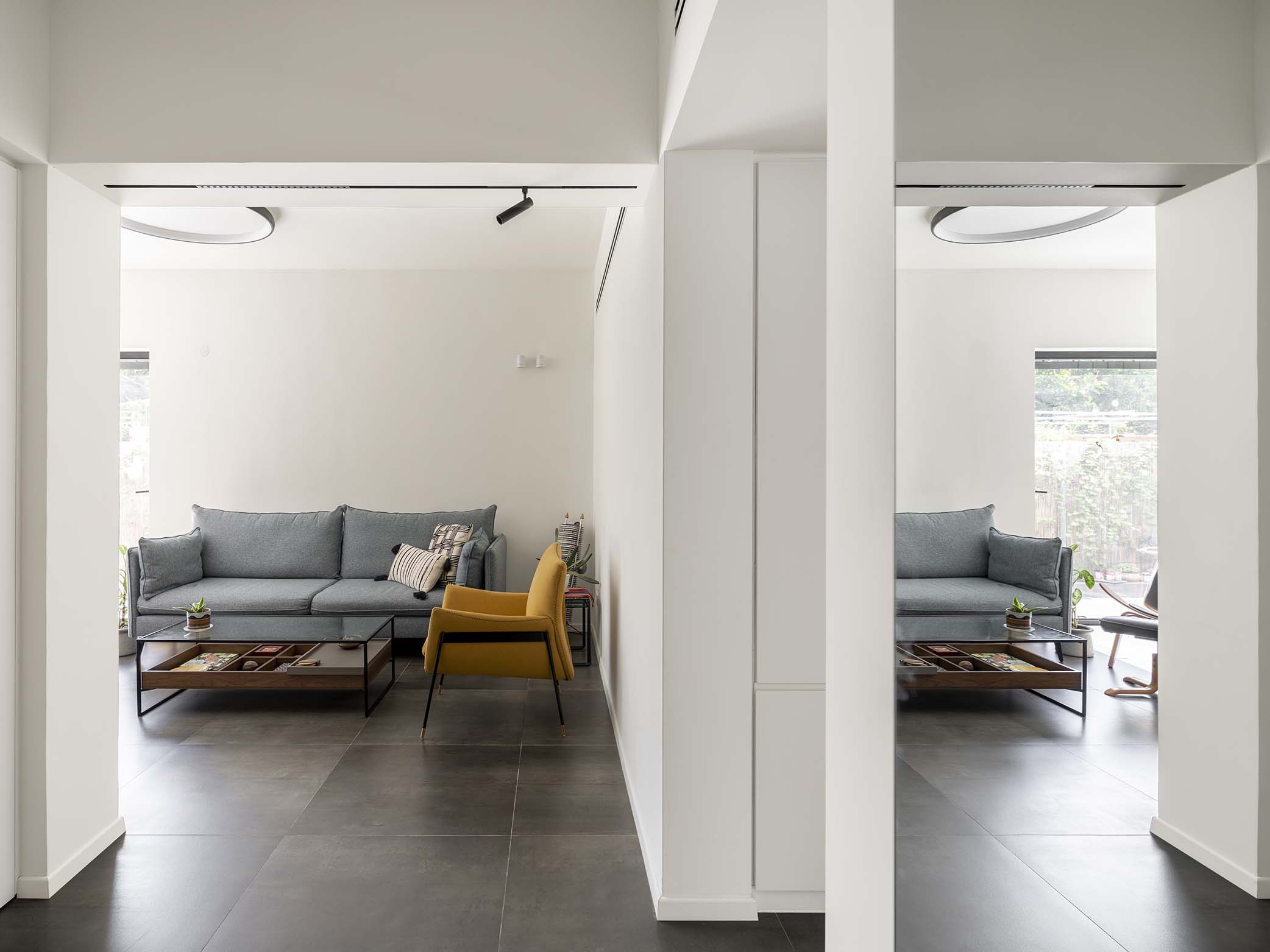
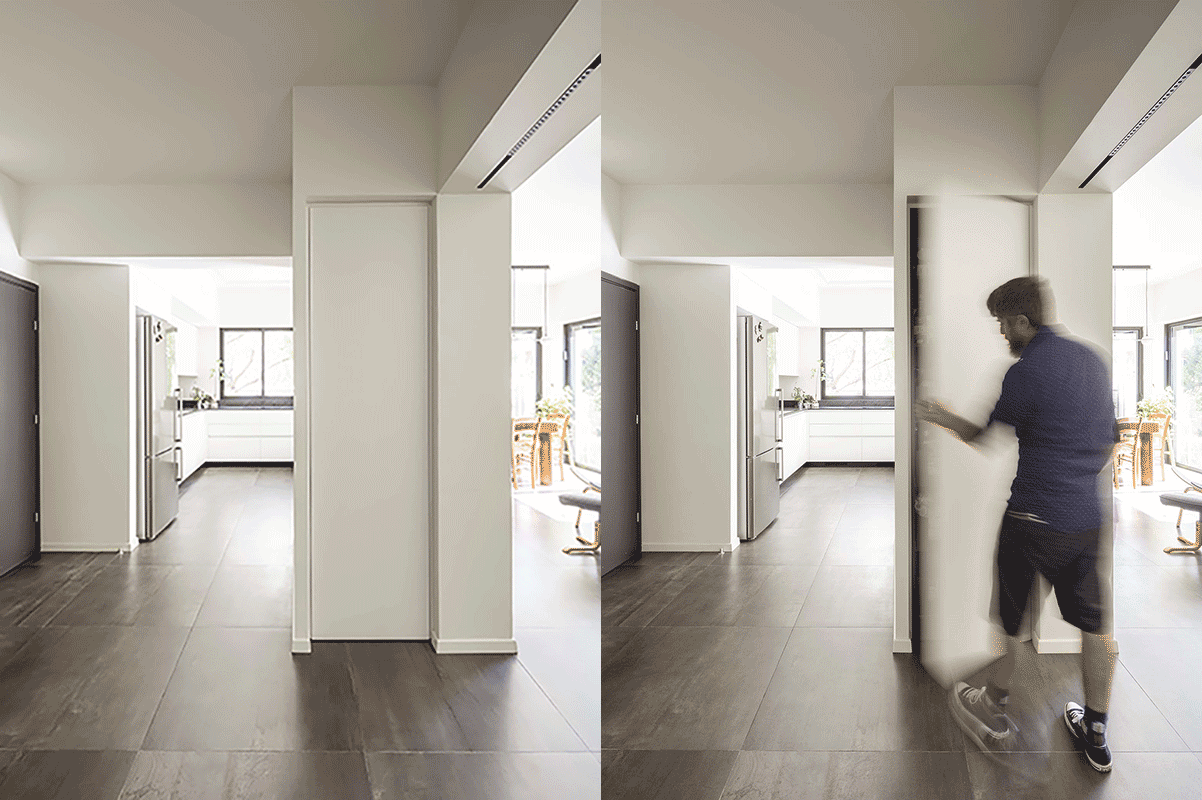
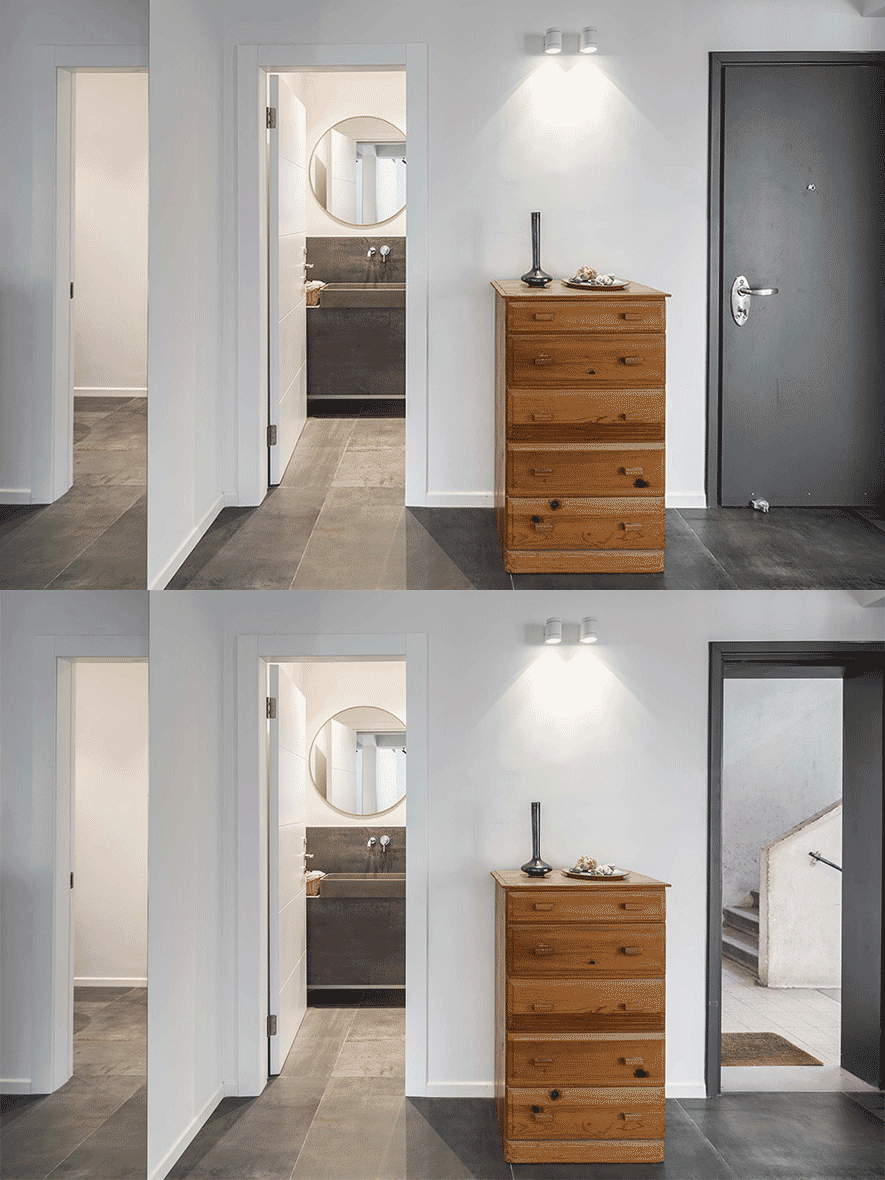
The origins of this home go back to a family with multiple children that grew up under circumstances much…
The origins of this home go back to a family with multiple children that grew up under circumstances much different than in contemporary times. The new needs required a rethinking of the division, use and relationship between the parts of the house.

Before
The garden unit became one of the daughters’ home and she asked us to transform it into an independent, up-to-date and comfortable space, that suits her personal needs.

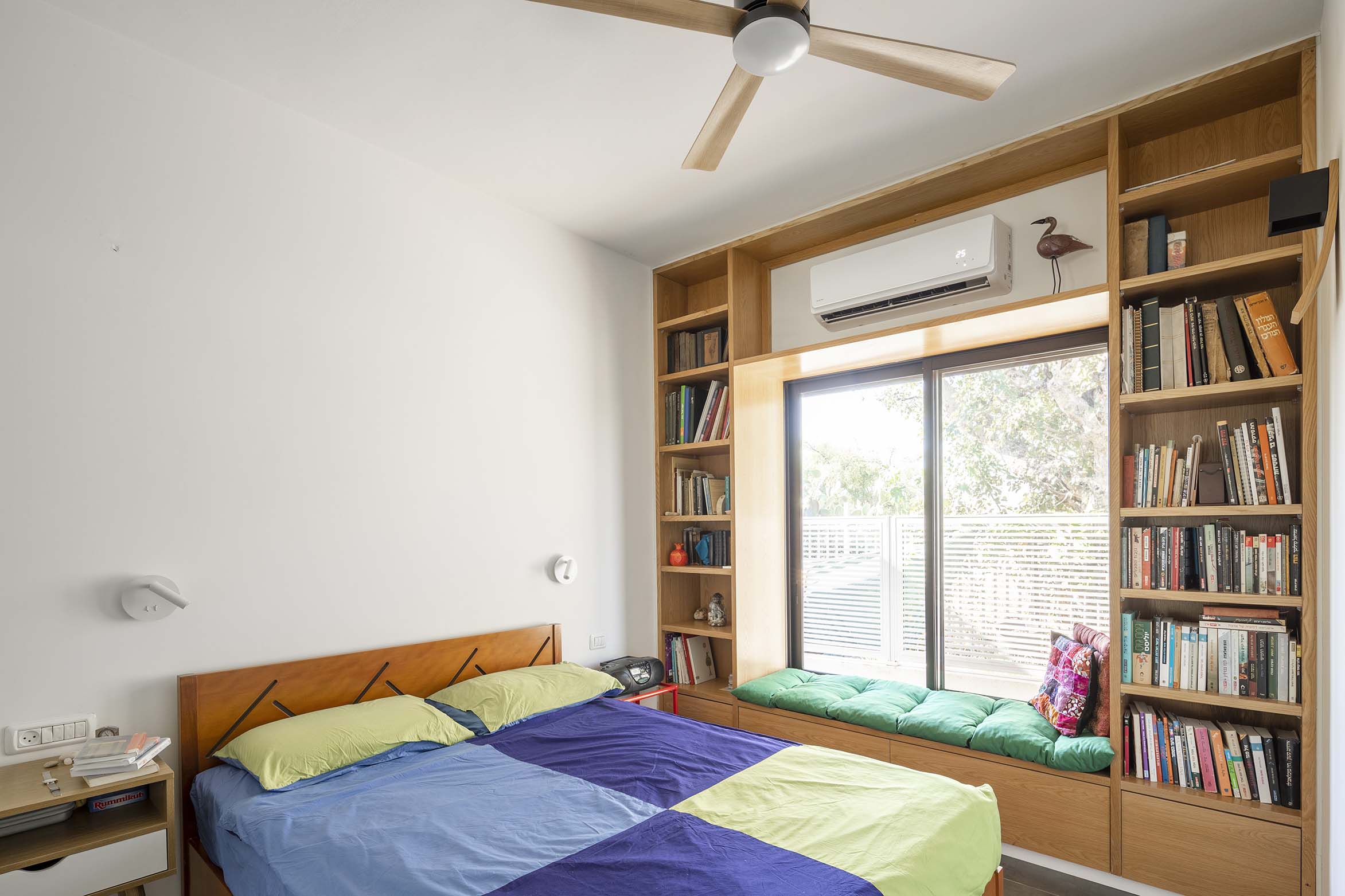
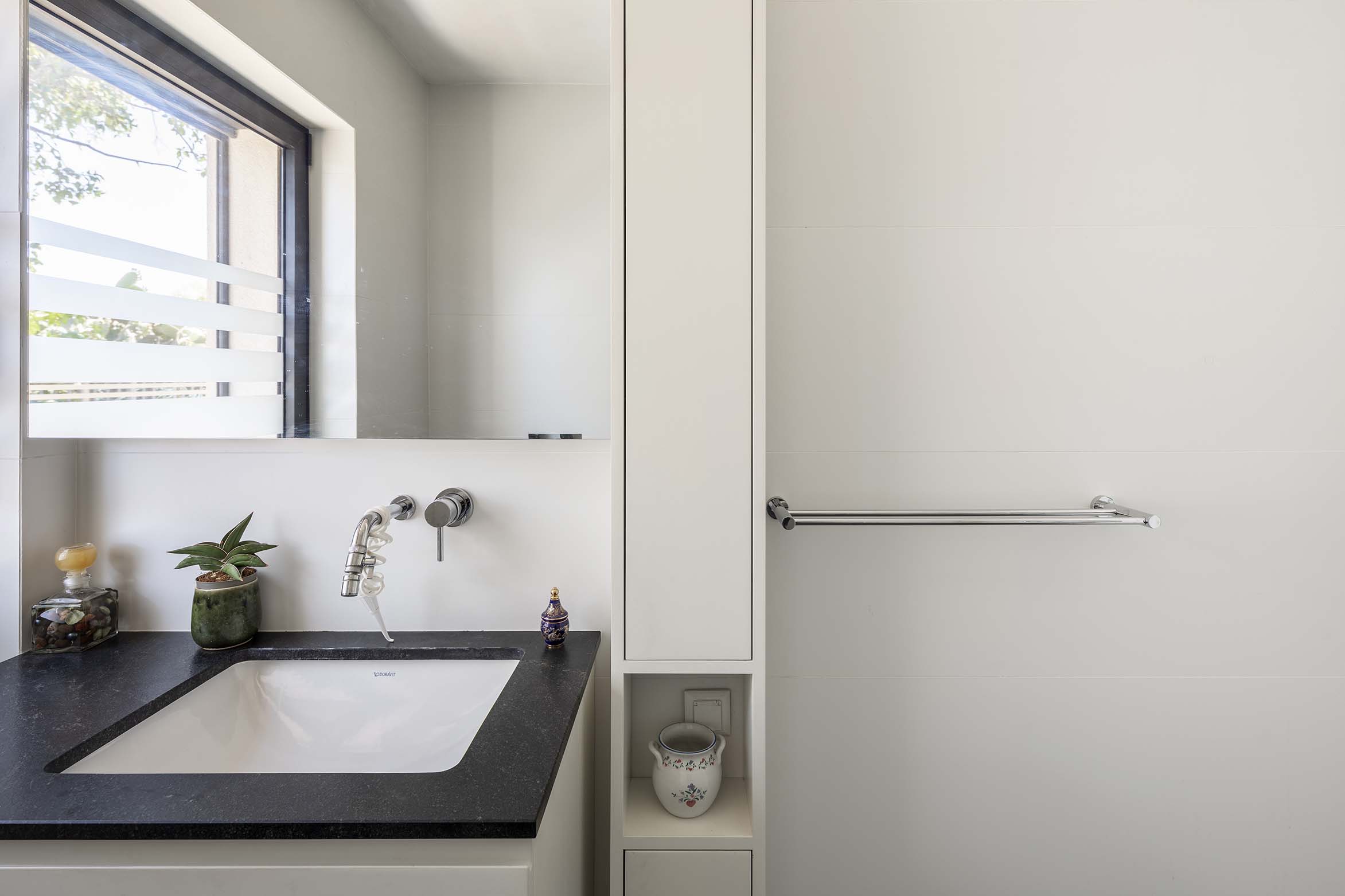
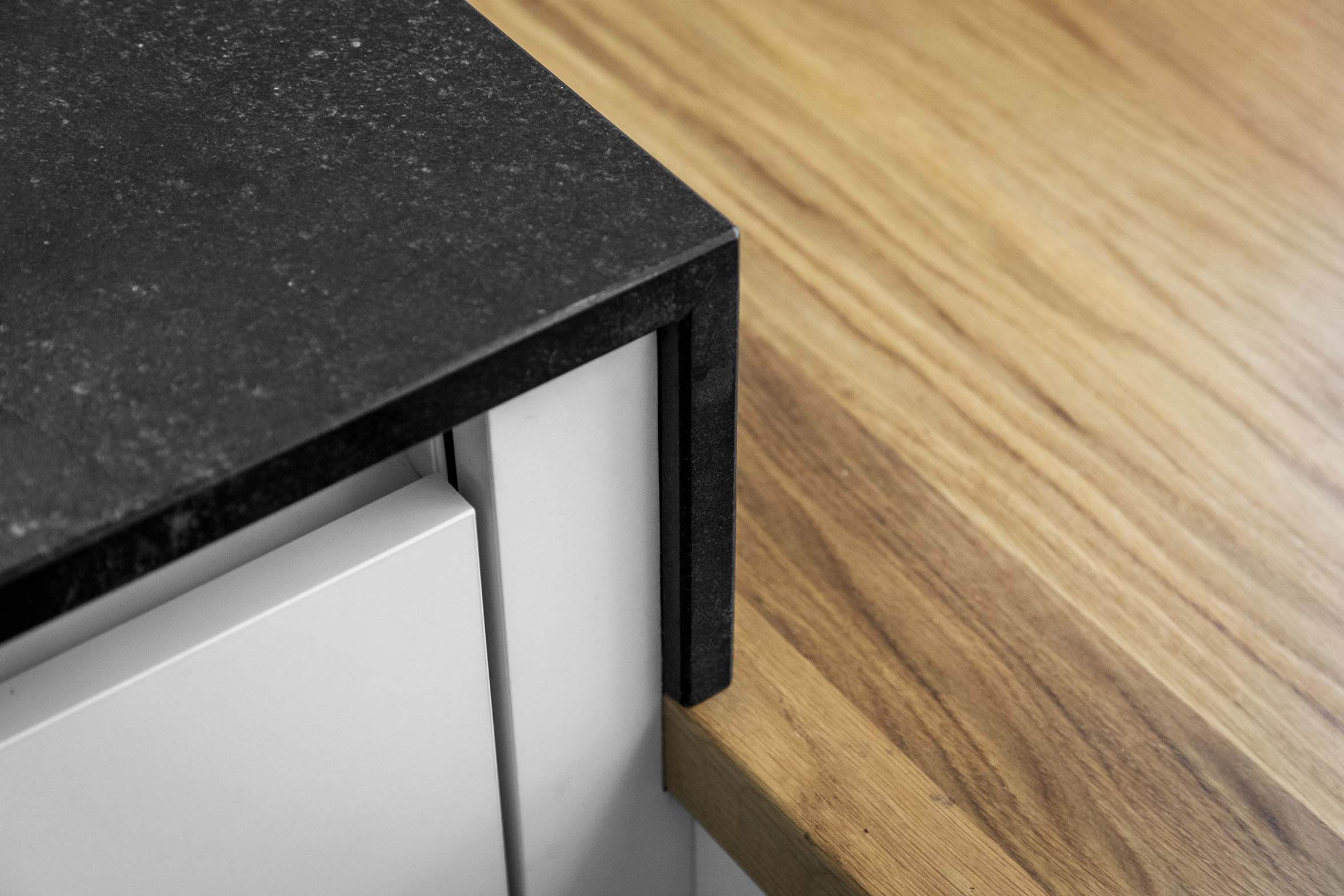
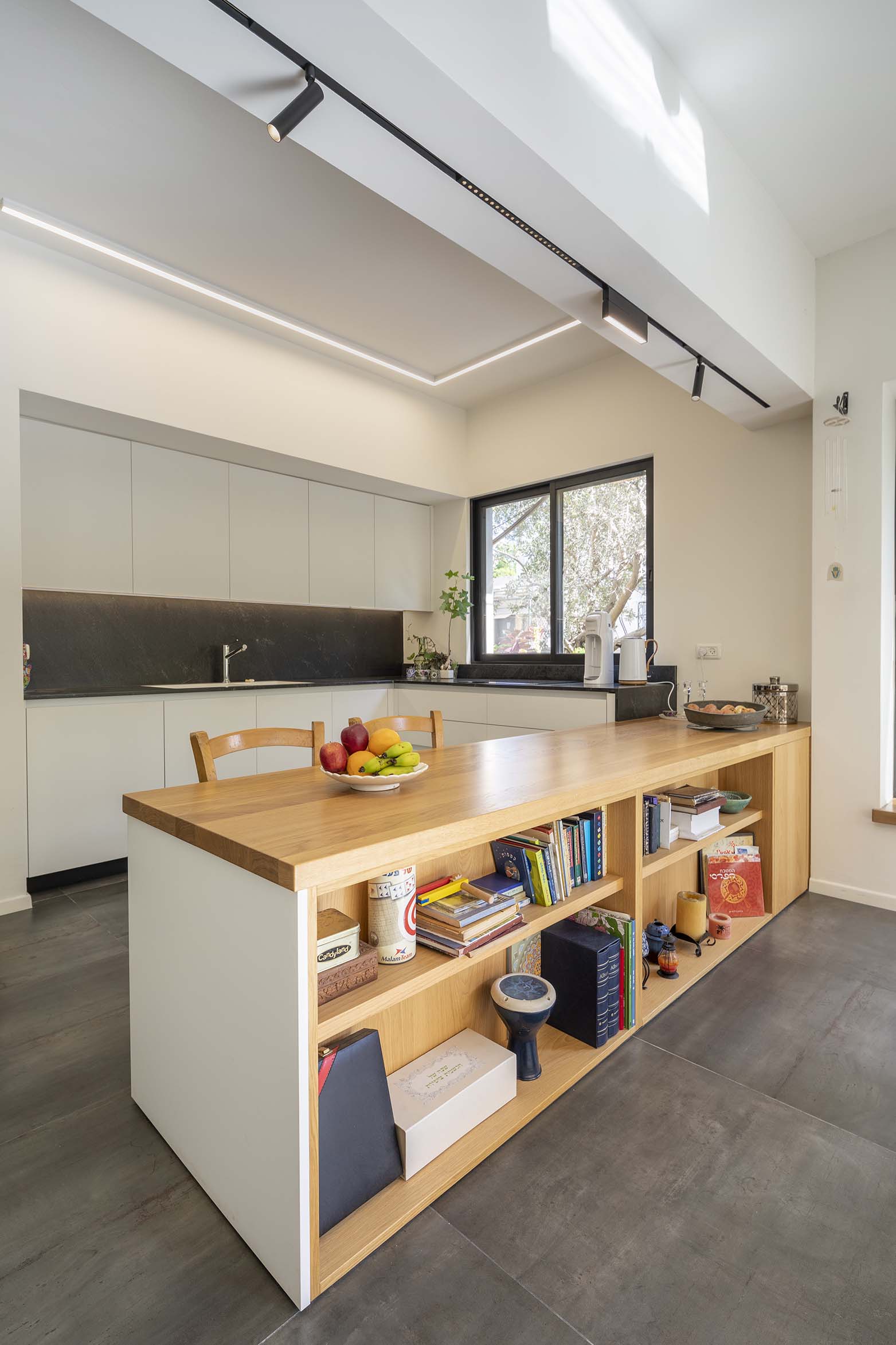
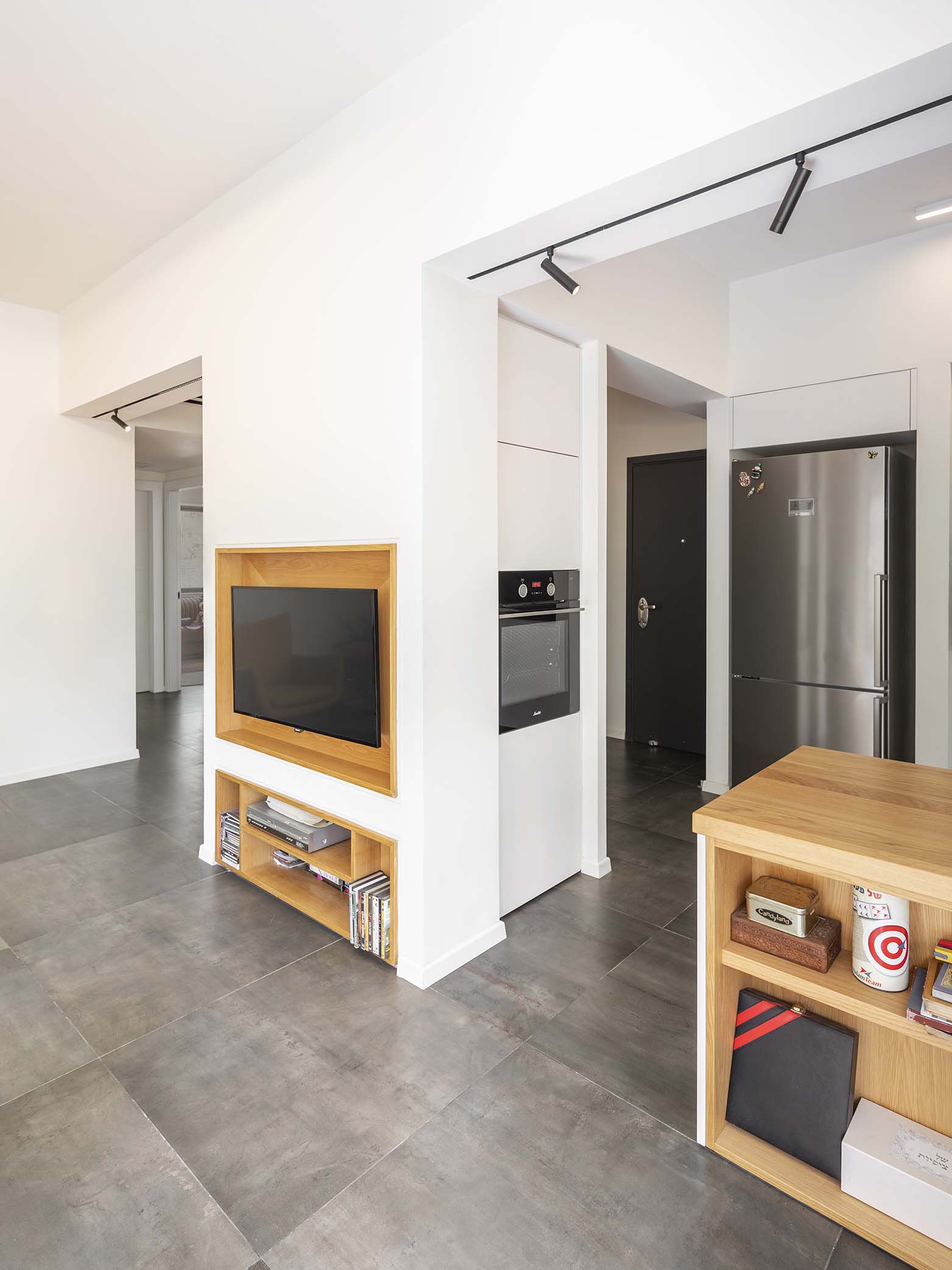
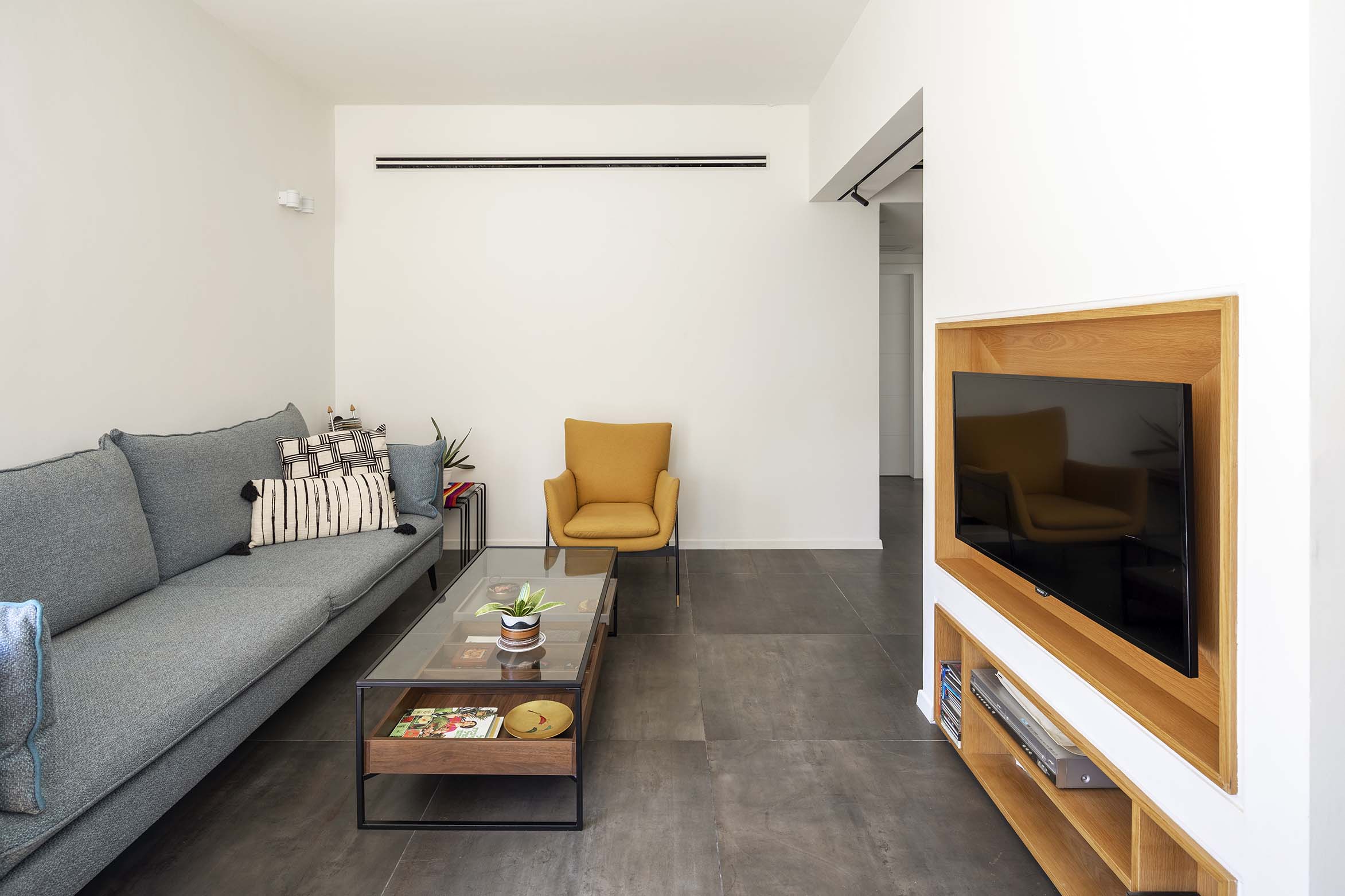
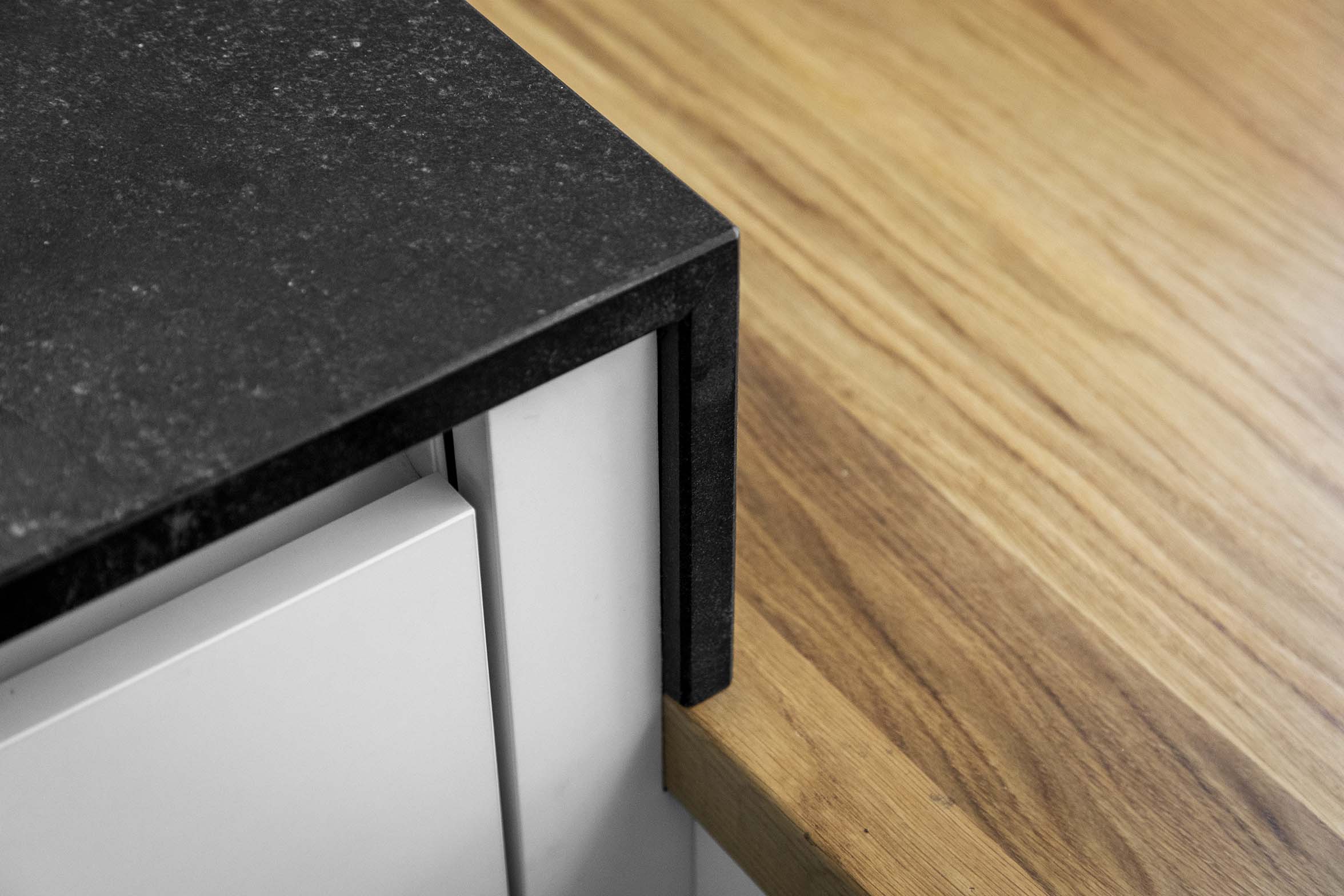
The result we achieved in this design is an entirely fresh approach to the spaces, giving a generous ambiance, unified public uses in direct dialogue with the outdoor area. Accurate detailing and use of materials akin with the owners’ wishes, including the interior design and planning of the carpentry work, allowed the final project to become a fulfillment of her dream home.
CSComing soon

MzMezcalito
- Type
- Hospitality
- Scale
- Medium
- Status
- Built
- Year
- 2022
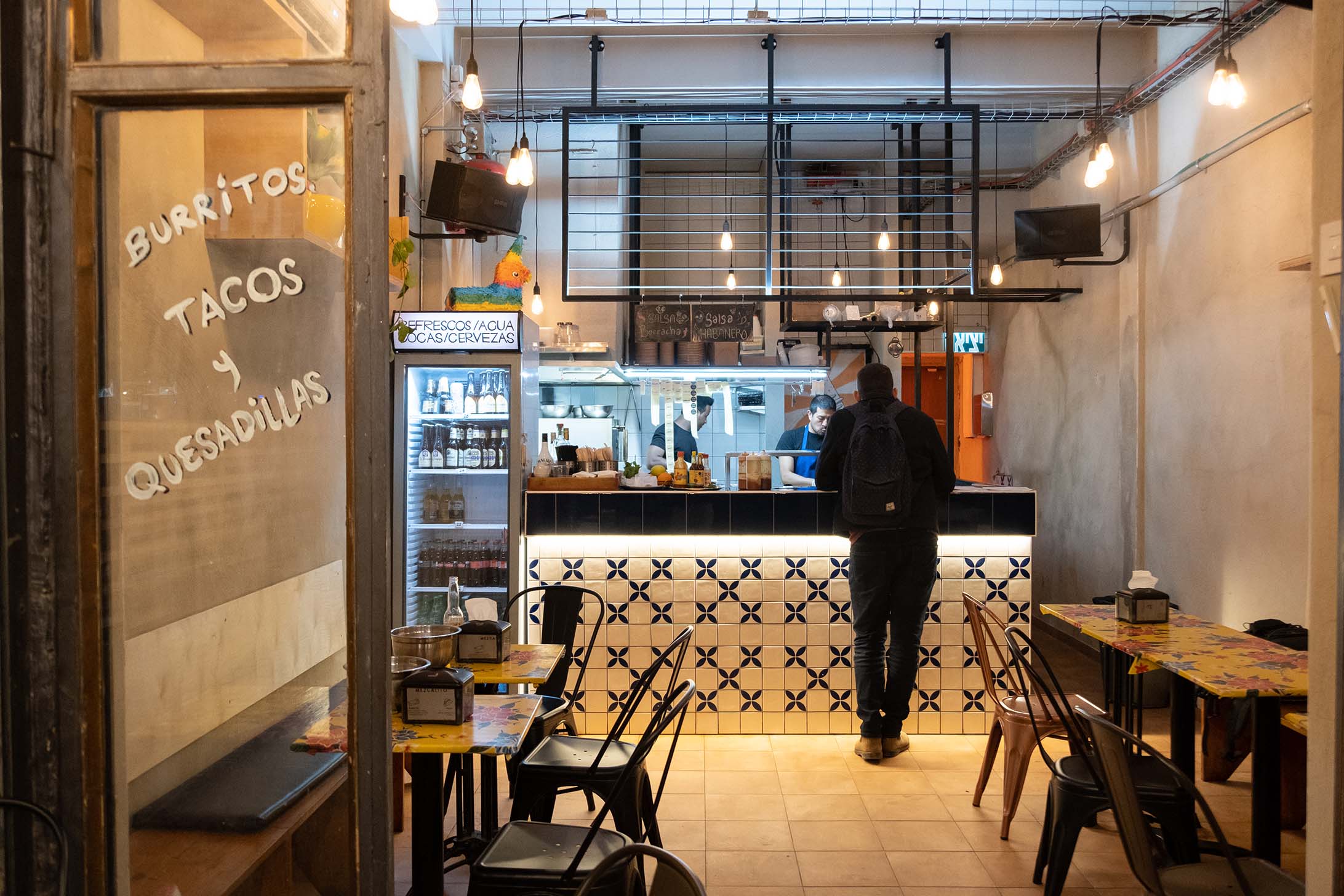
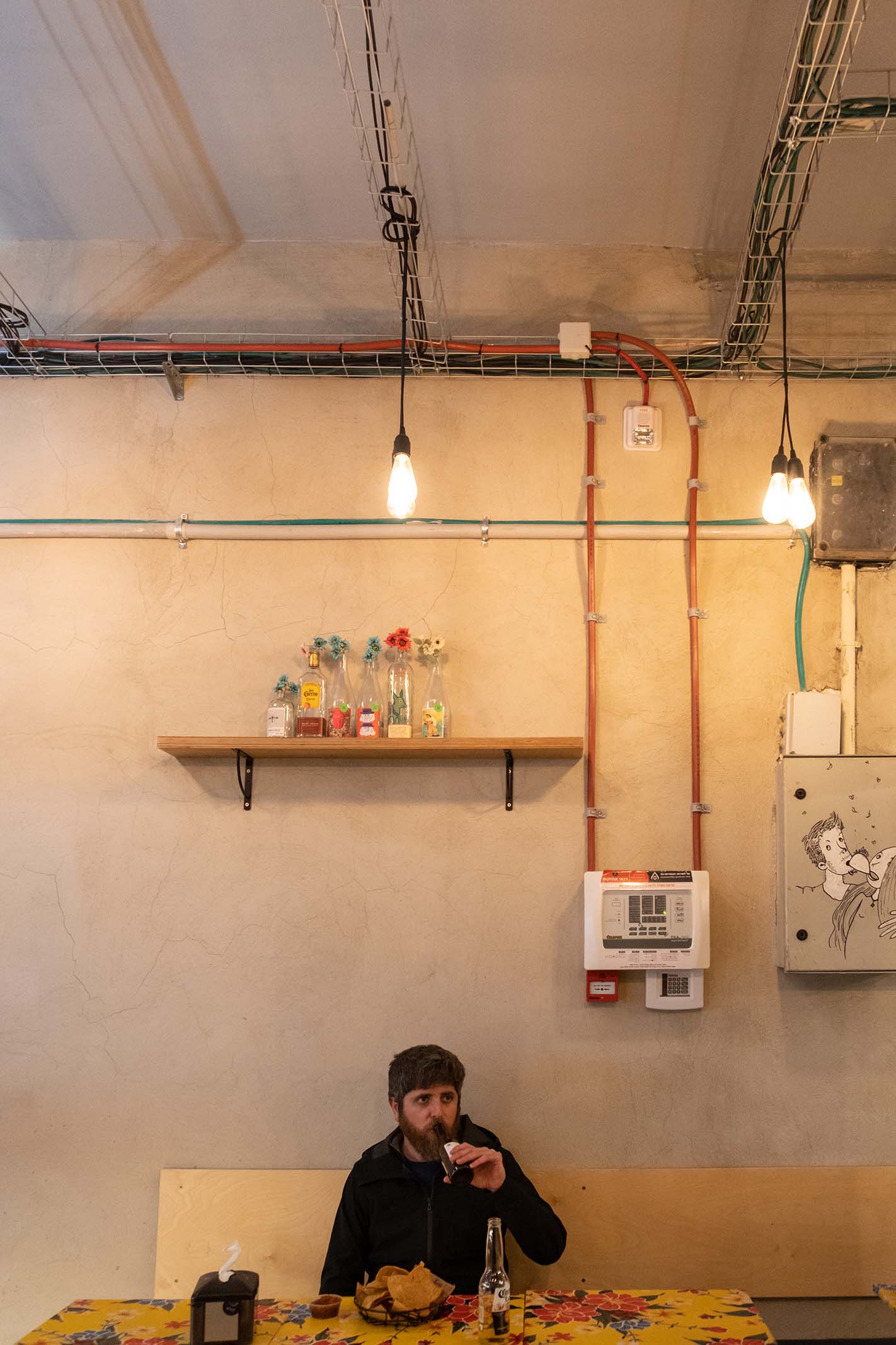
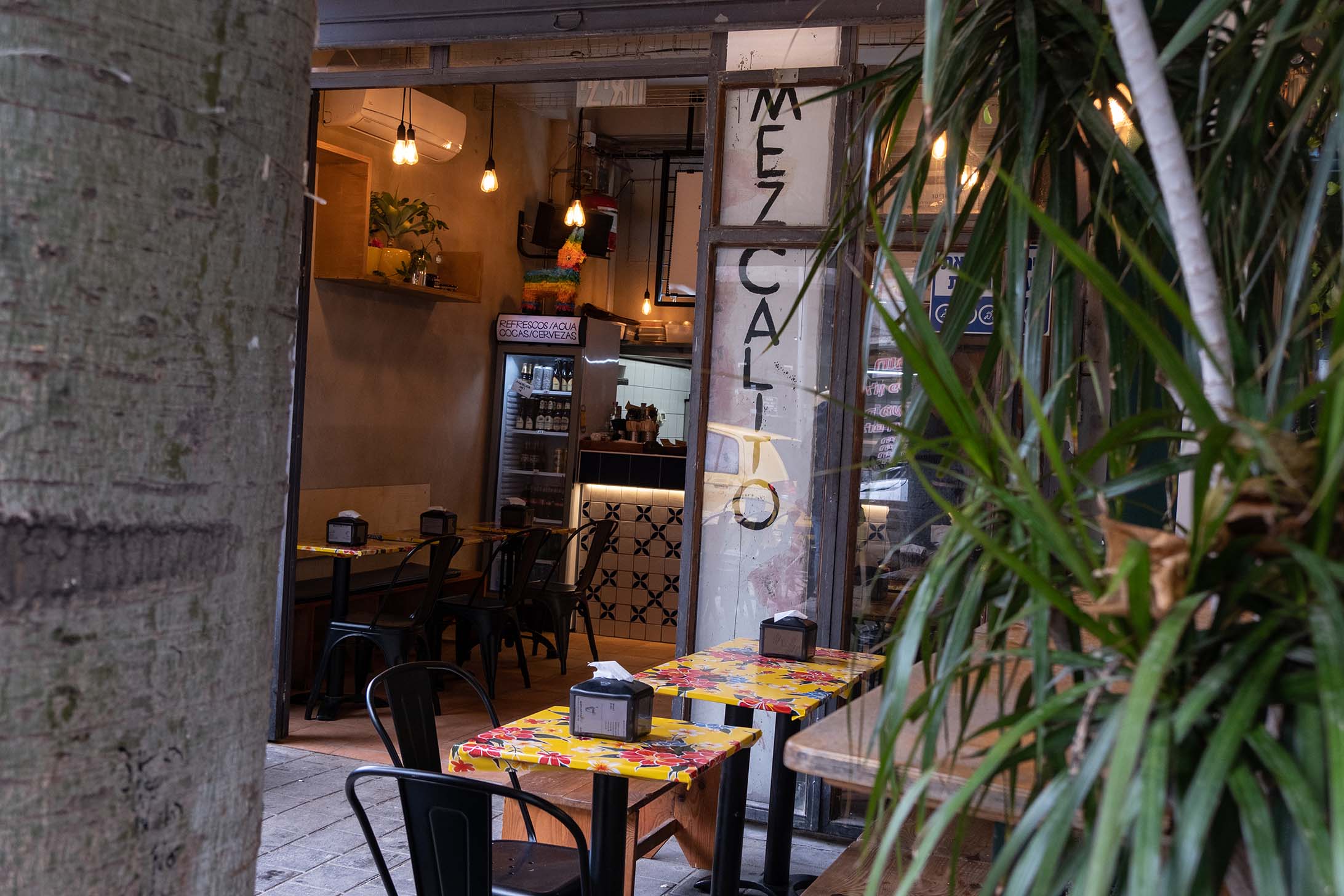
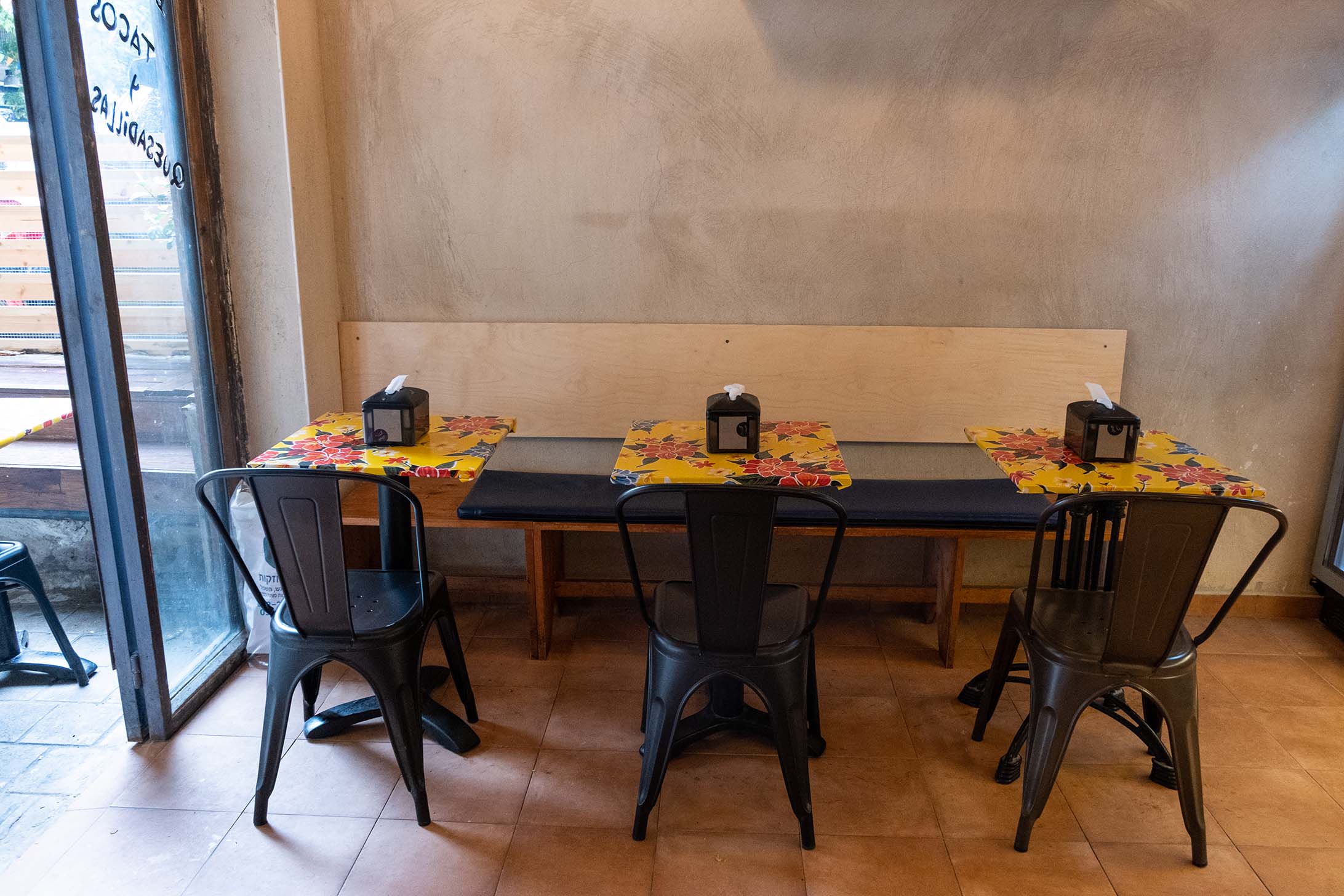
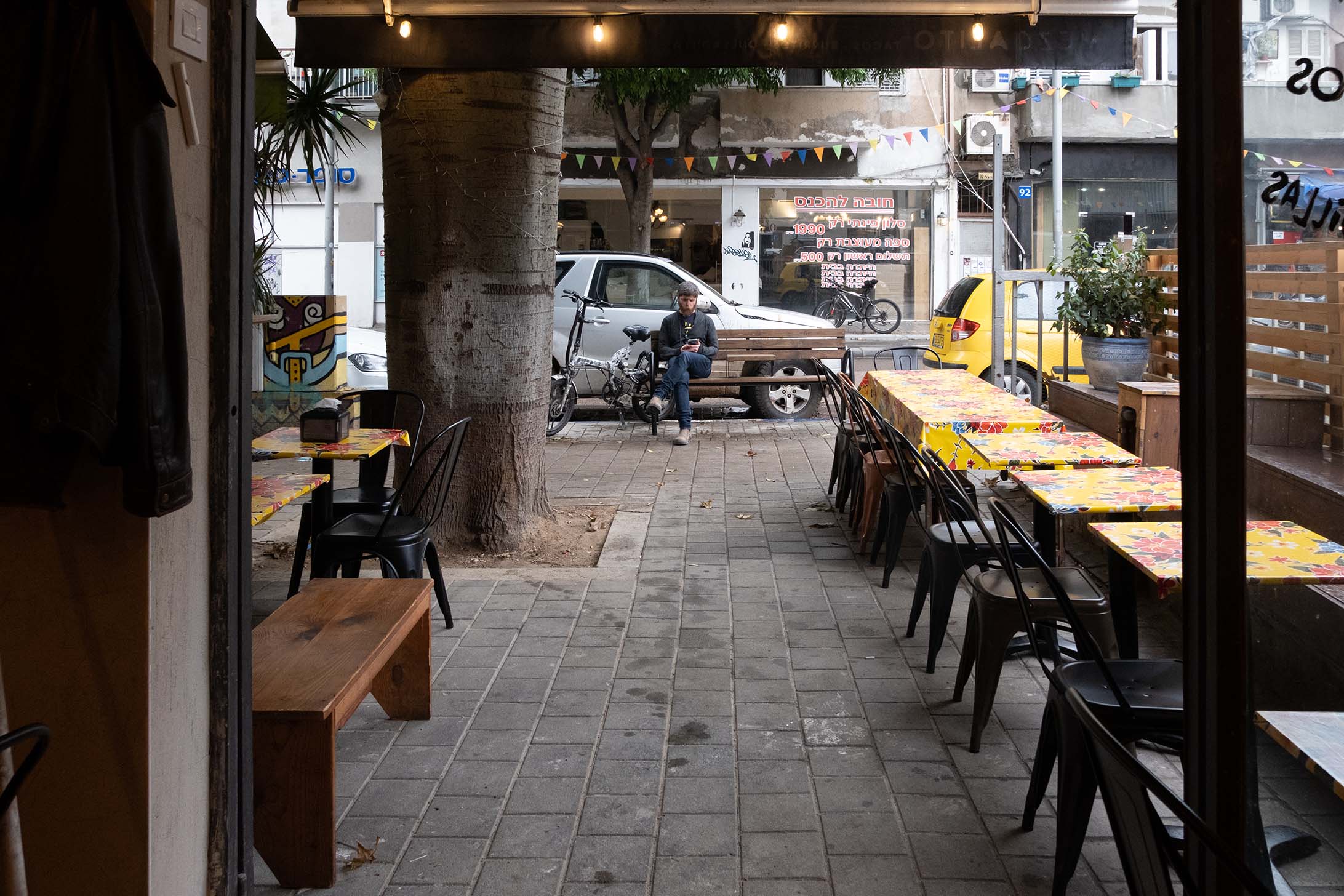
A restaurant needs to be planned and executed on a very tight schedule and budget, as once the clients have a…
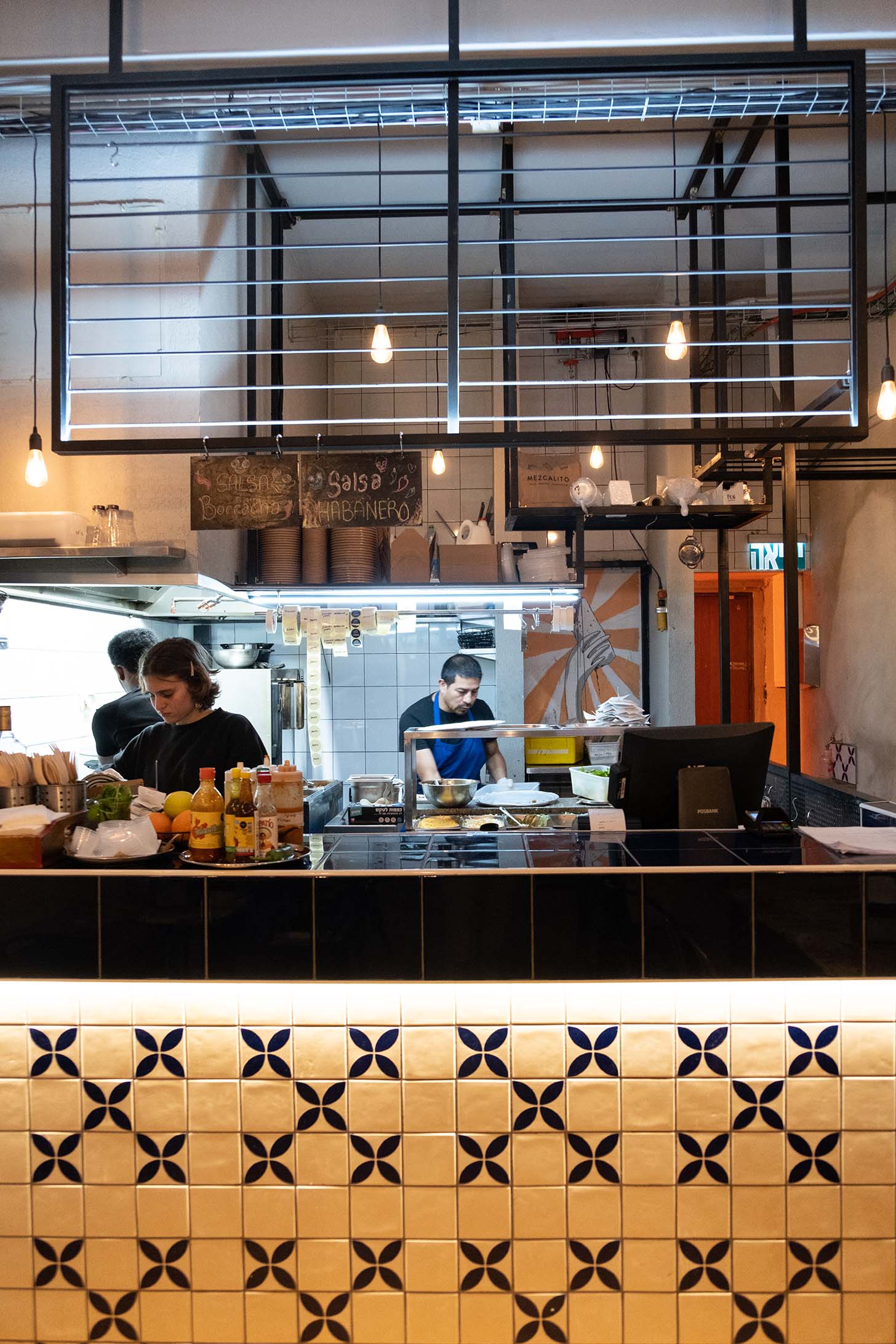
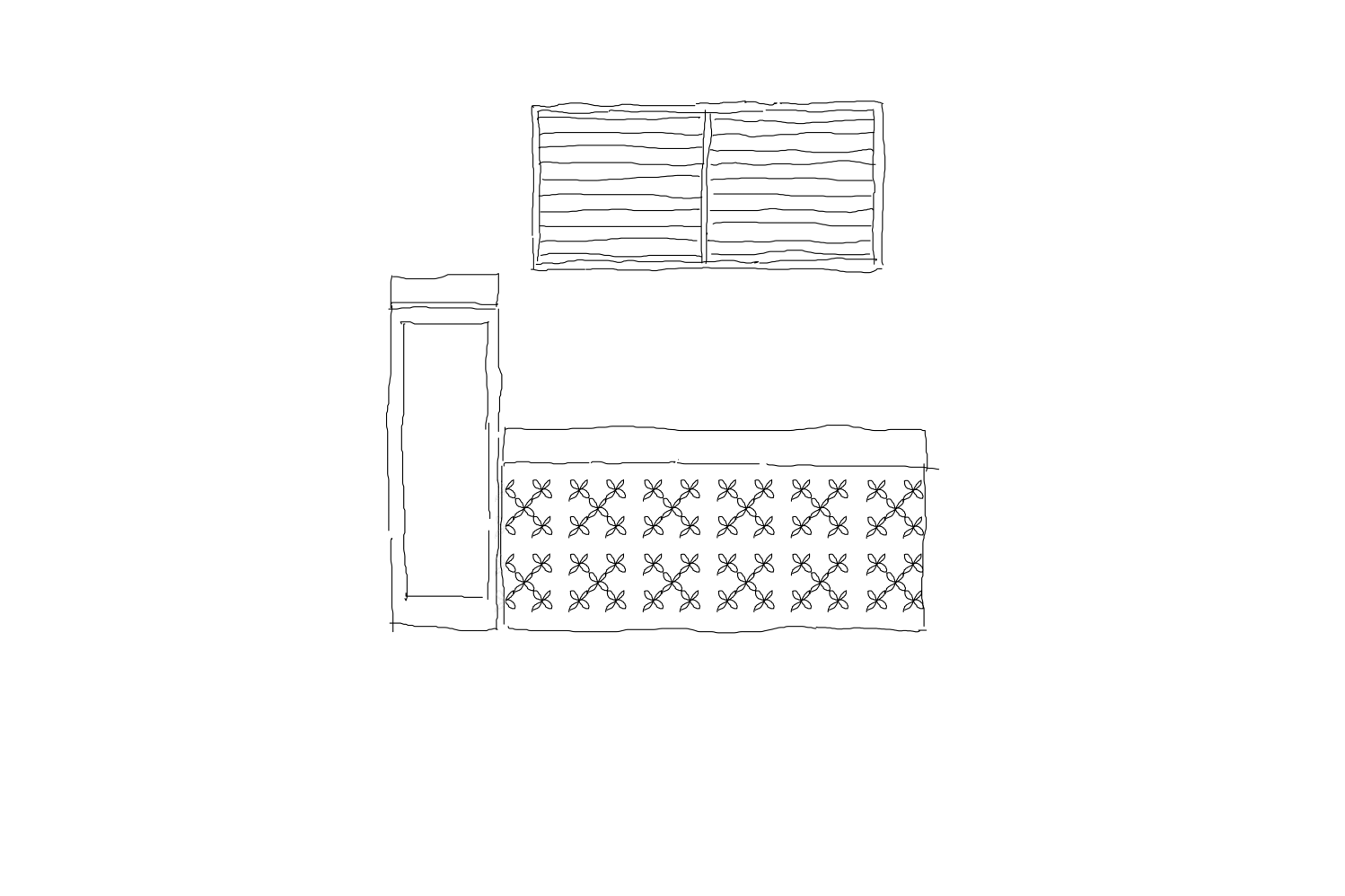
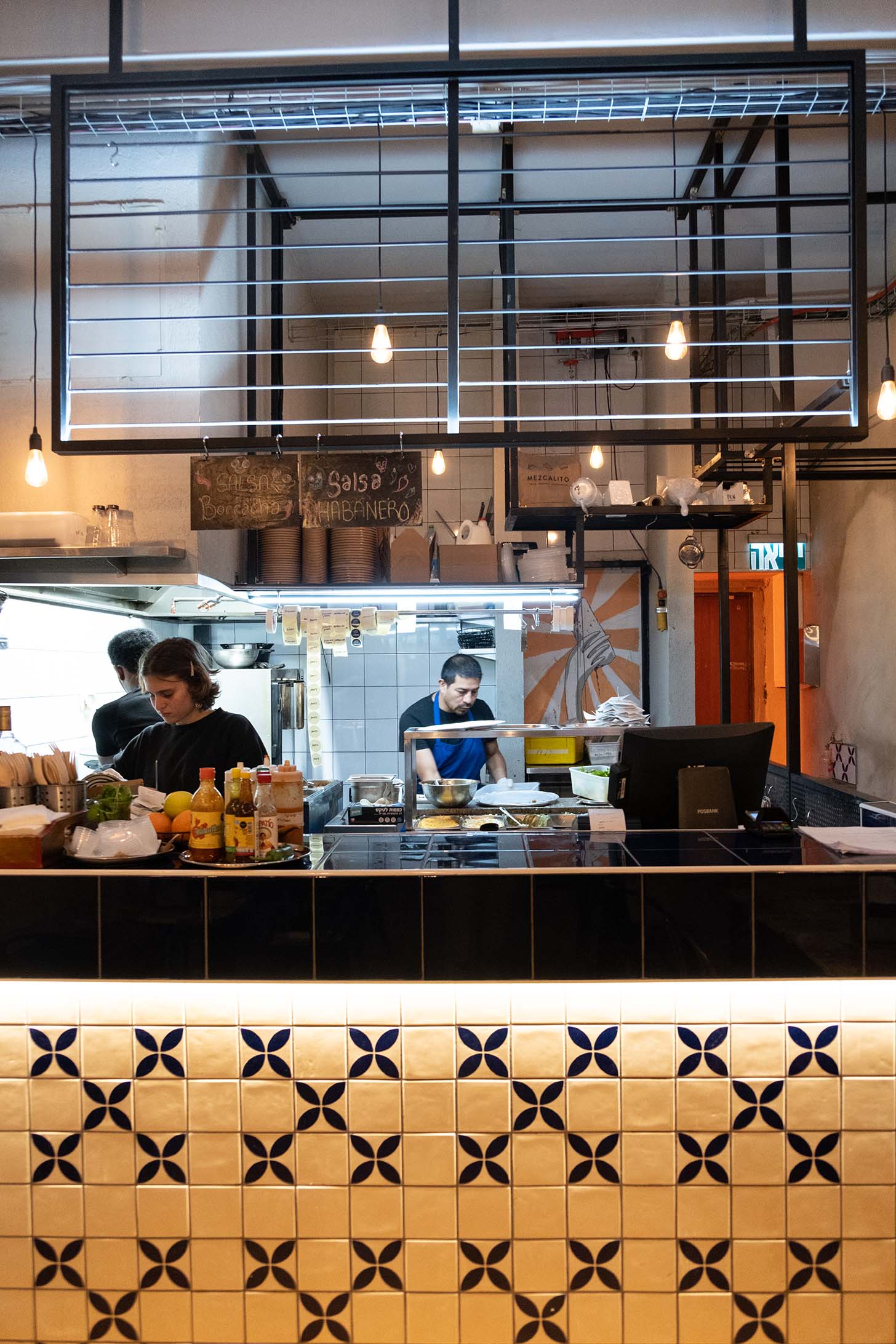
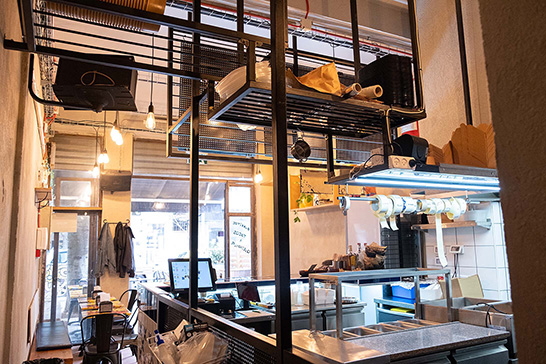
A restaurant needs to be planned and executed on a very tight schedule and budget, as once the clients have a deal on a place they want to operate or they start to lose money. This place was opened within 3 months of getting the commission. These 3 months were a very intense collaboration with the clients, including planning, material selection, bids, unique metal works and carpentry, construction, finishings and supervision. The plan is meant to maximise the sitting area while maintaining an open kitchen that can be operated by only one cook if necessary. The service in the restaurant is planned as a counter where the clients order the food and pick it up, too, but it also allows for table service, if needed.
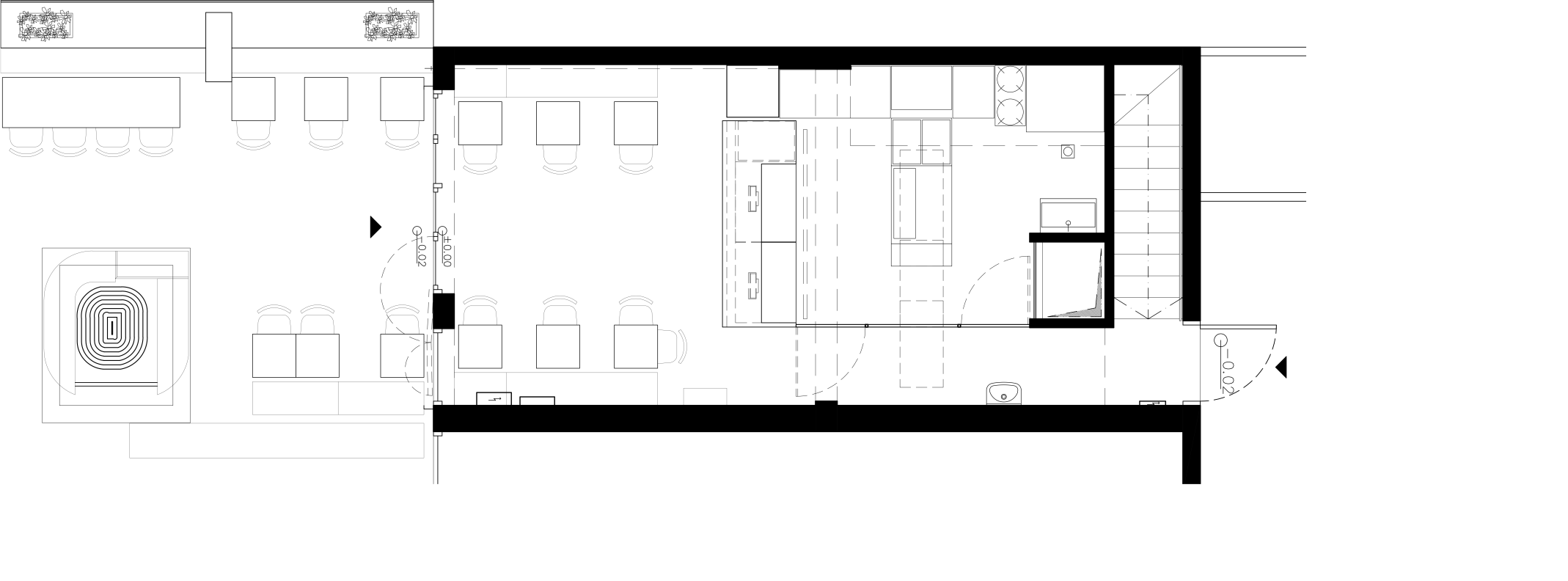
Plan
The counter is planned to face the street to be inviting and friendly while being as efficient with the space as possible.
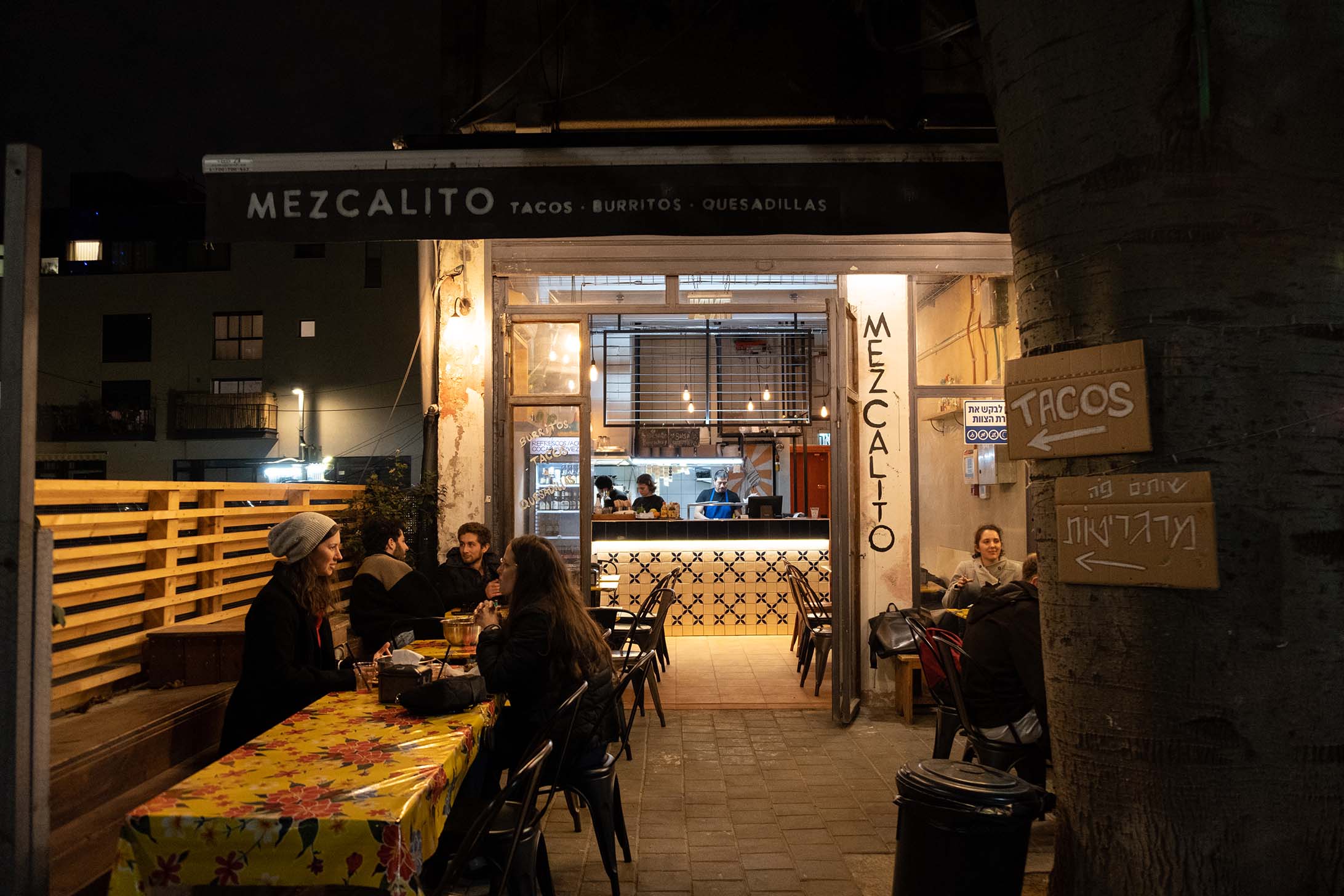
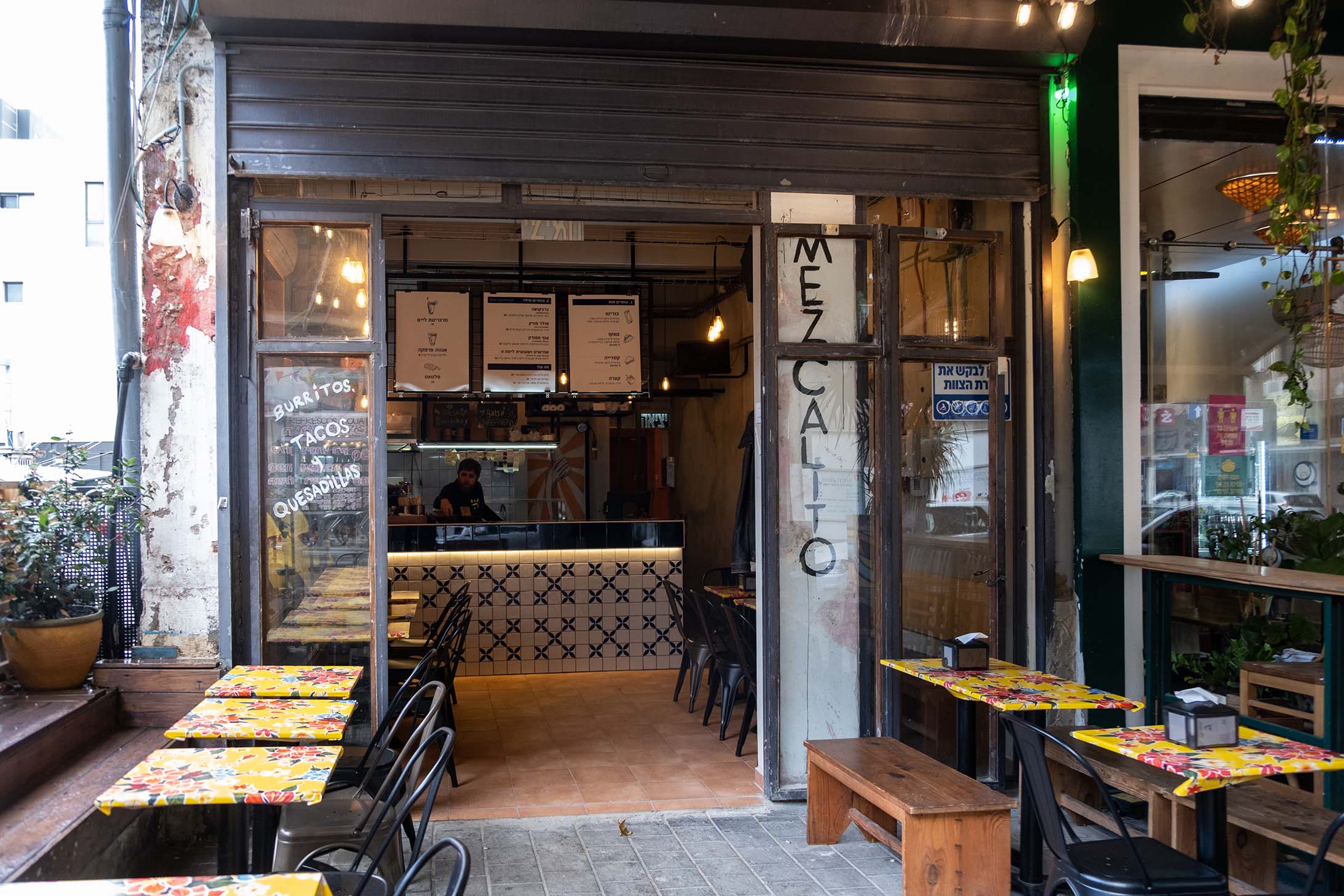
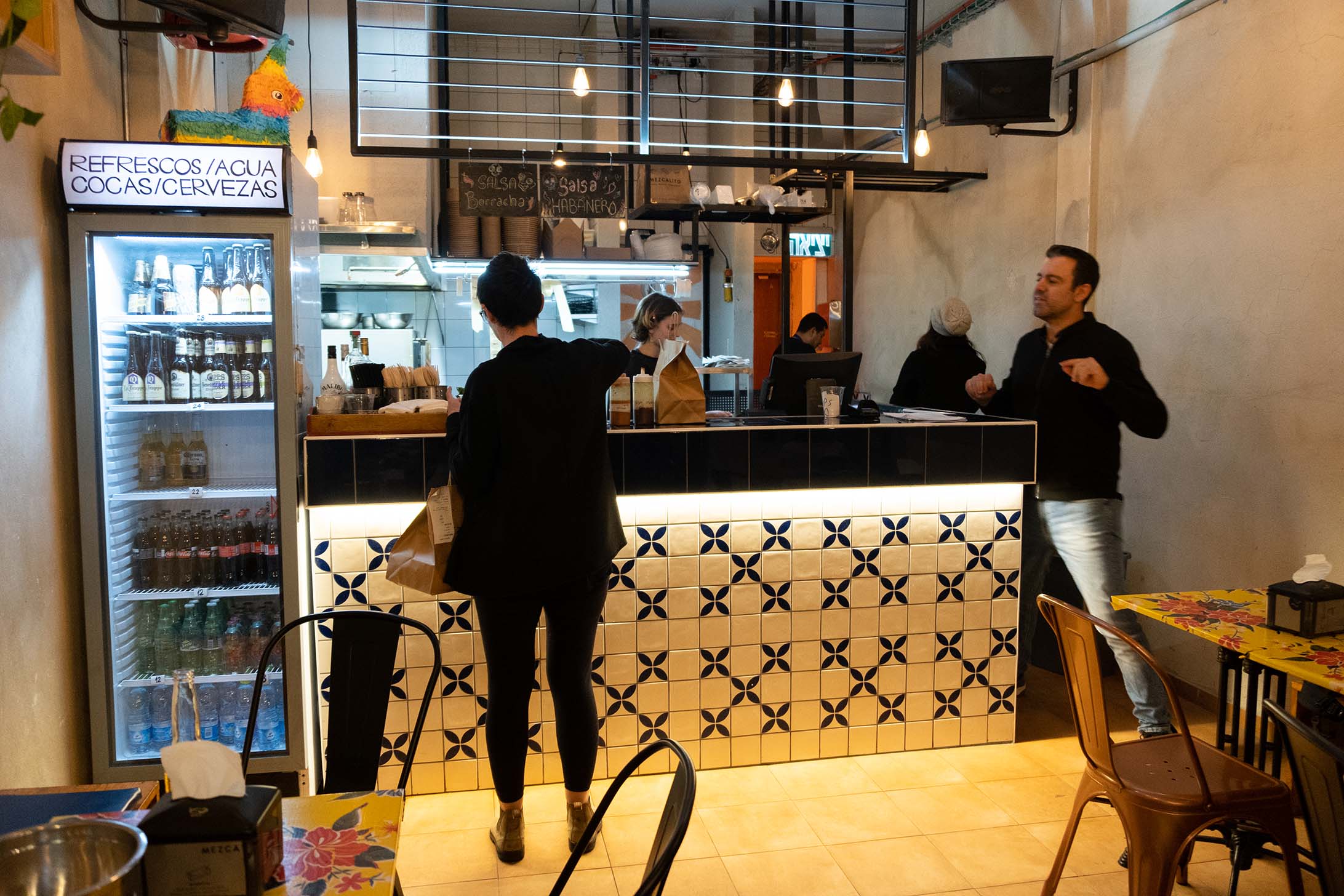
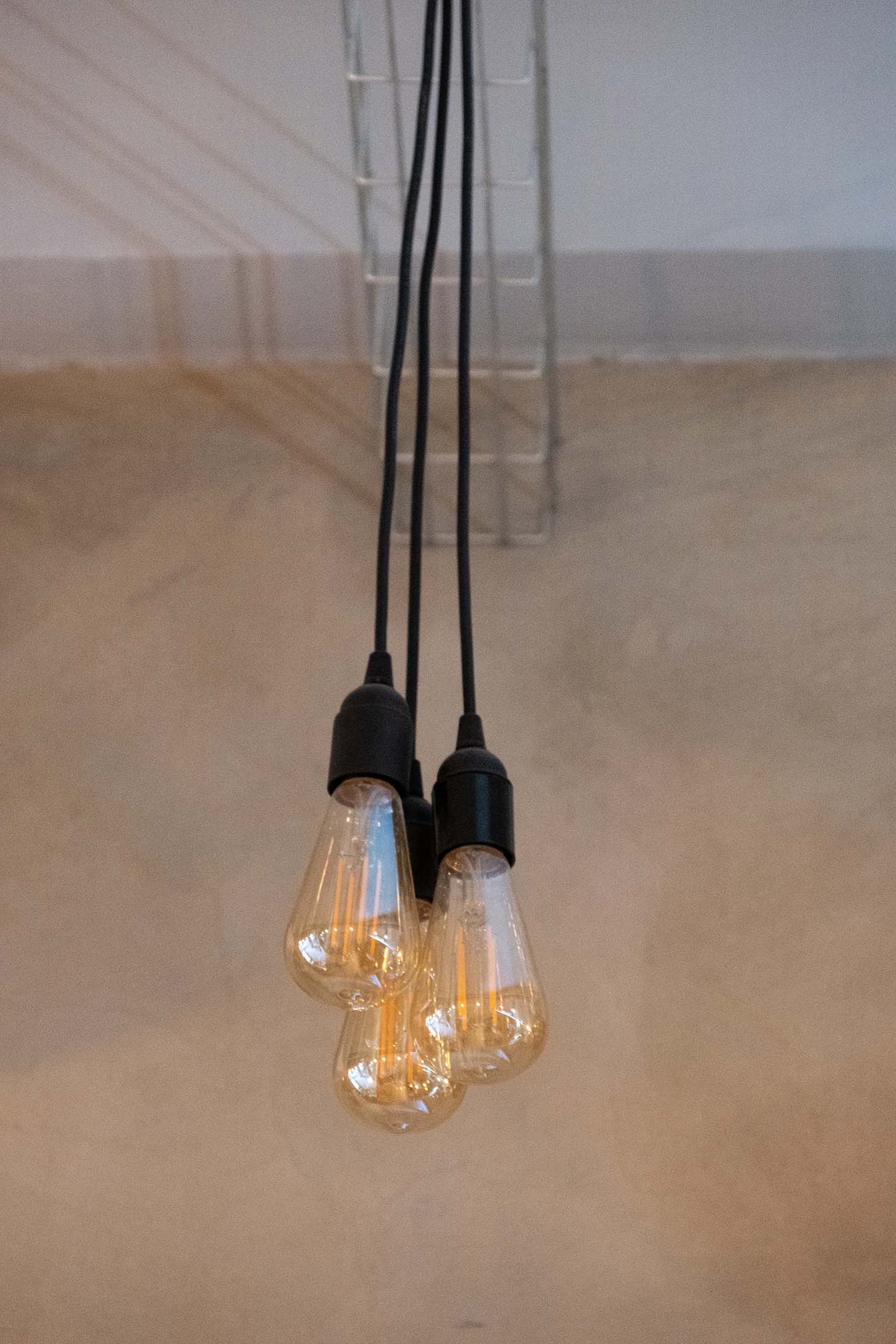
The infrastructure of the place (lighting, communications, fire safety etc.) were planned in such a way as to be easy to maintain, with the cables being hung from the ceiling in an open tray for easy access. The lighting design allows the restaurant to divide the small space into several areas with different lighting intensities. The lighting in the kitchen is professional lighting that allows for comfort in working while the customers in the dining area are not bothered by this.
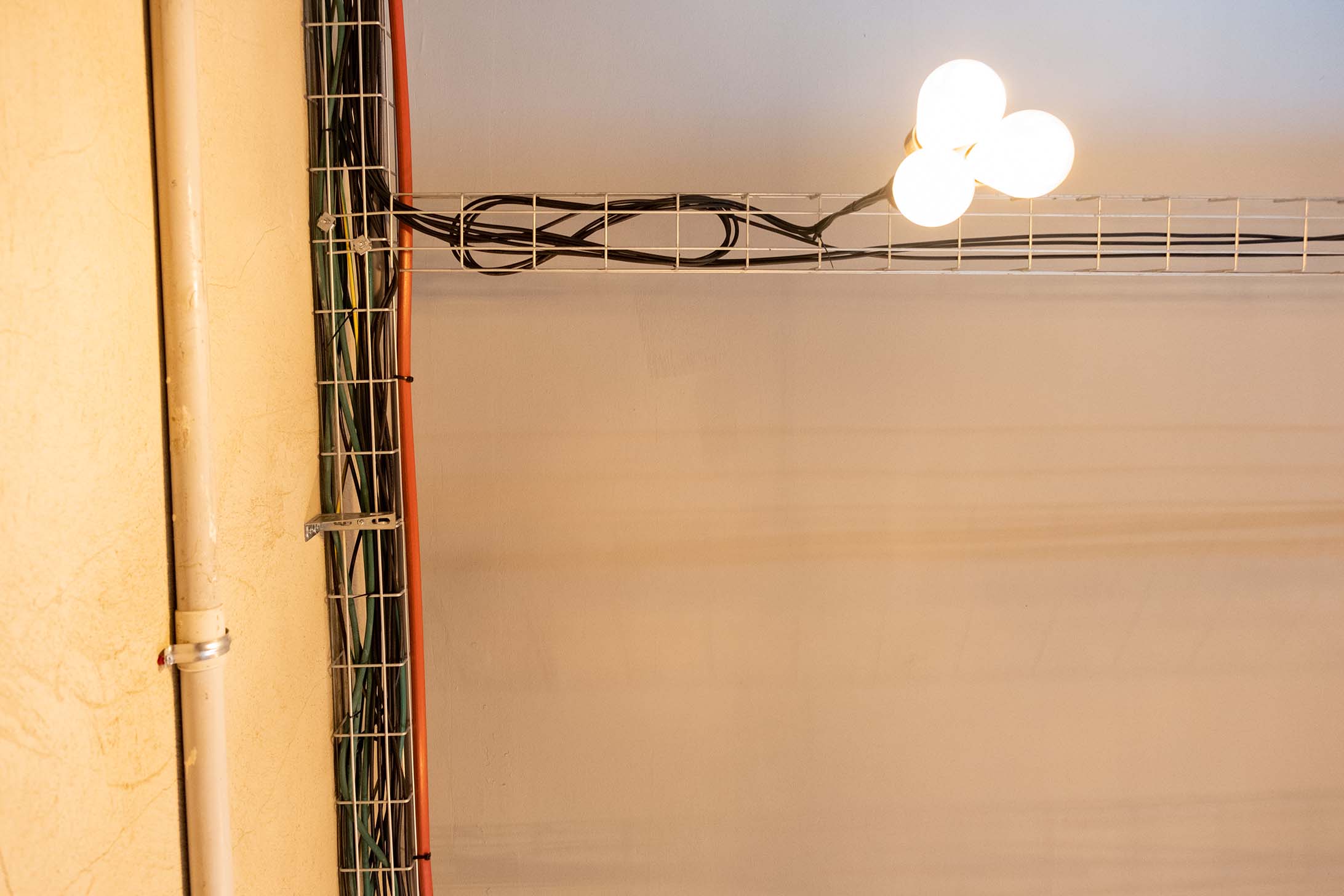
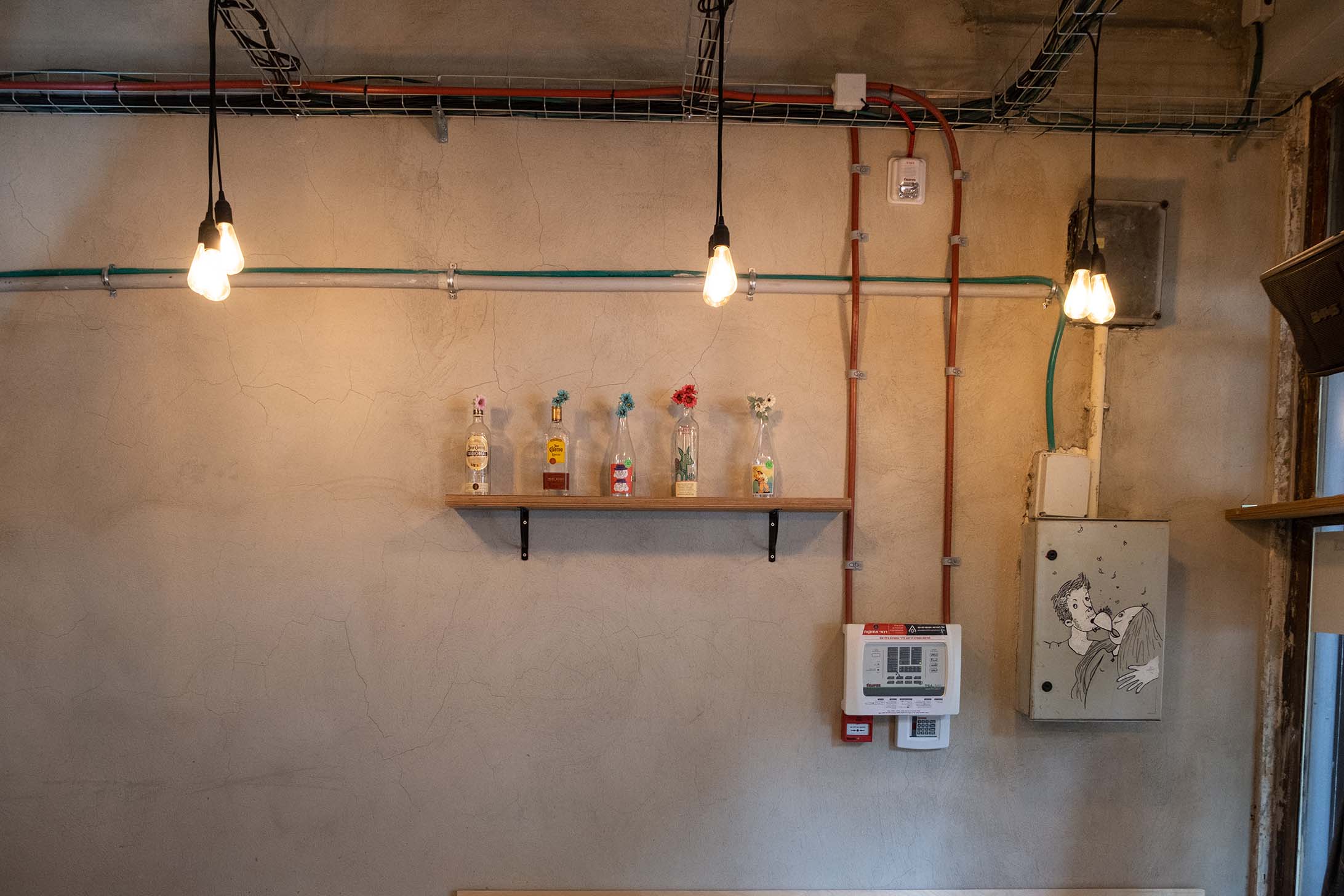
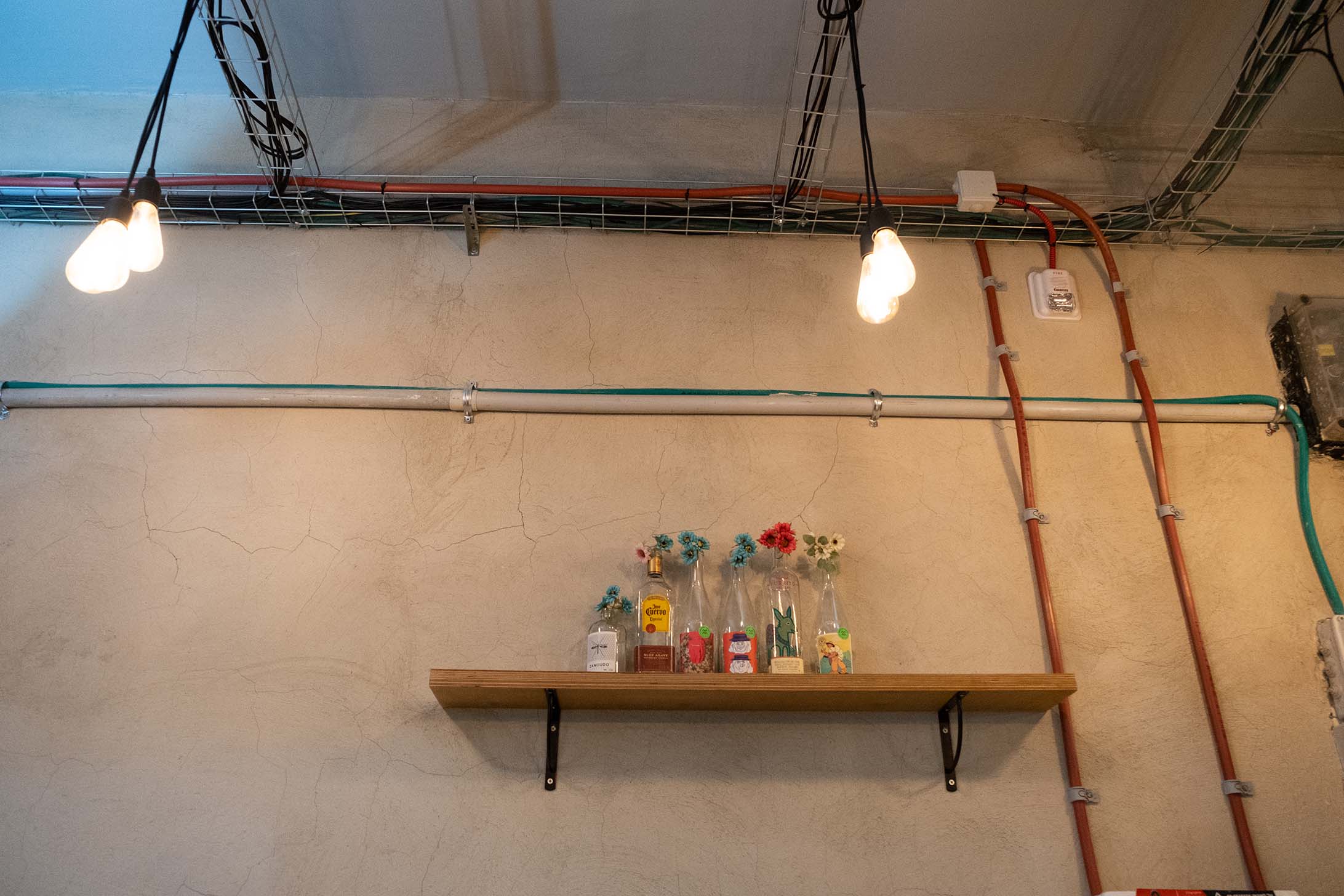
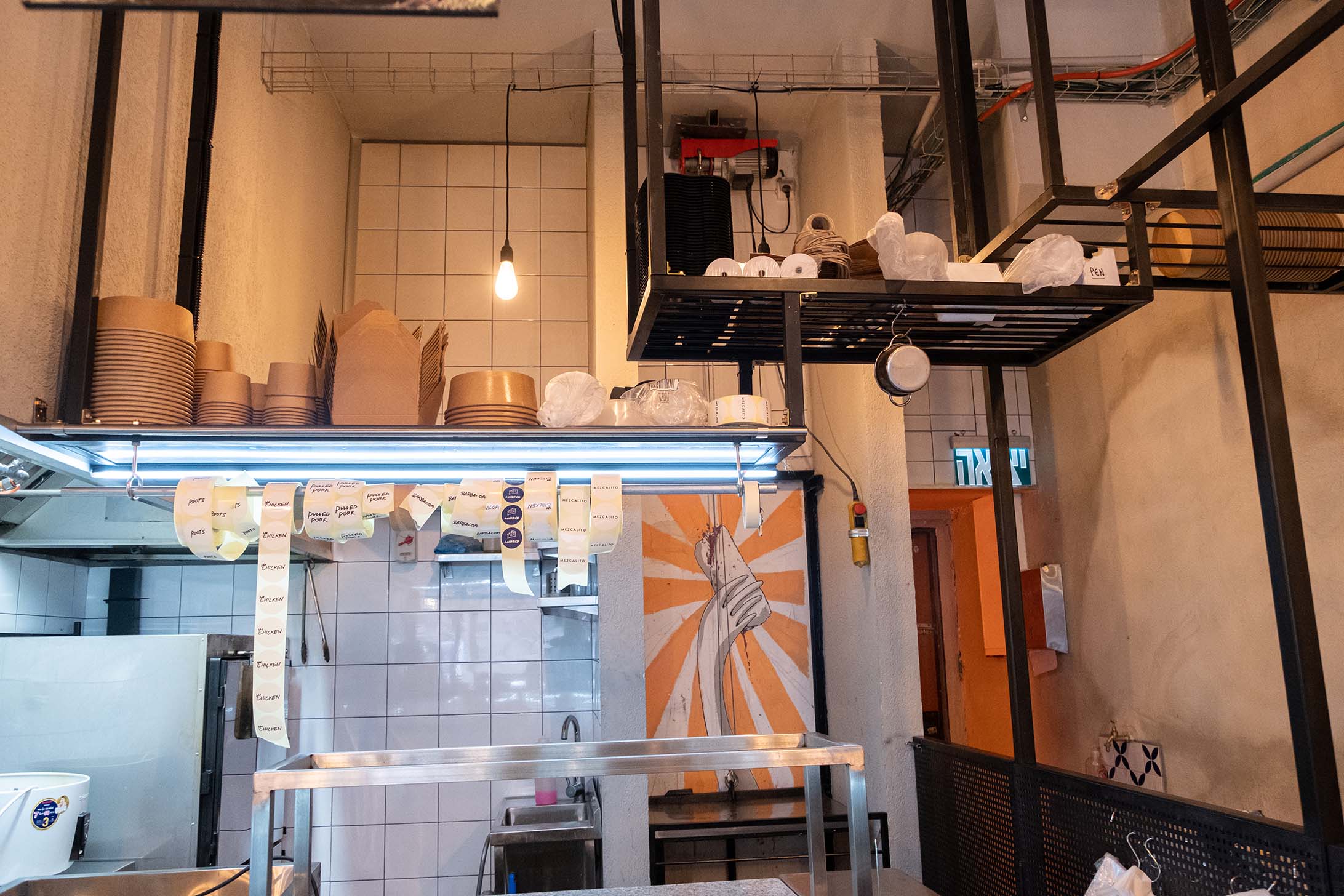
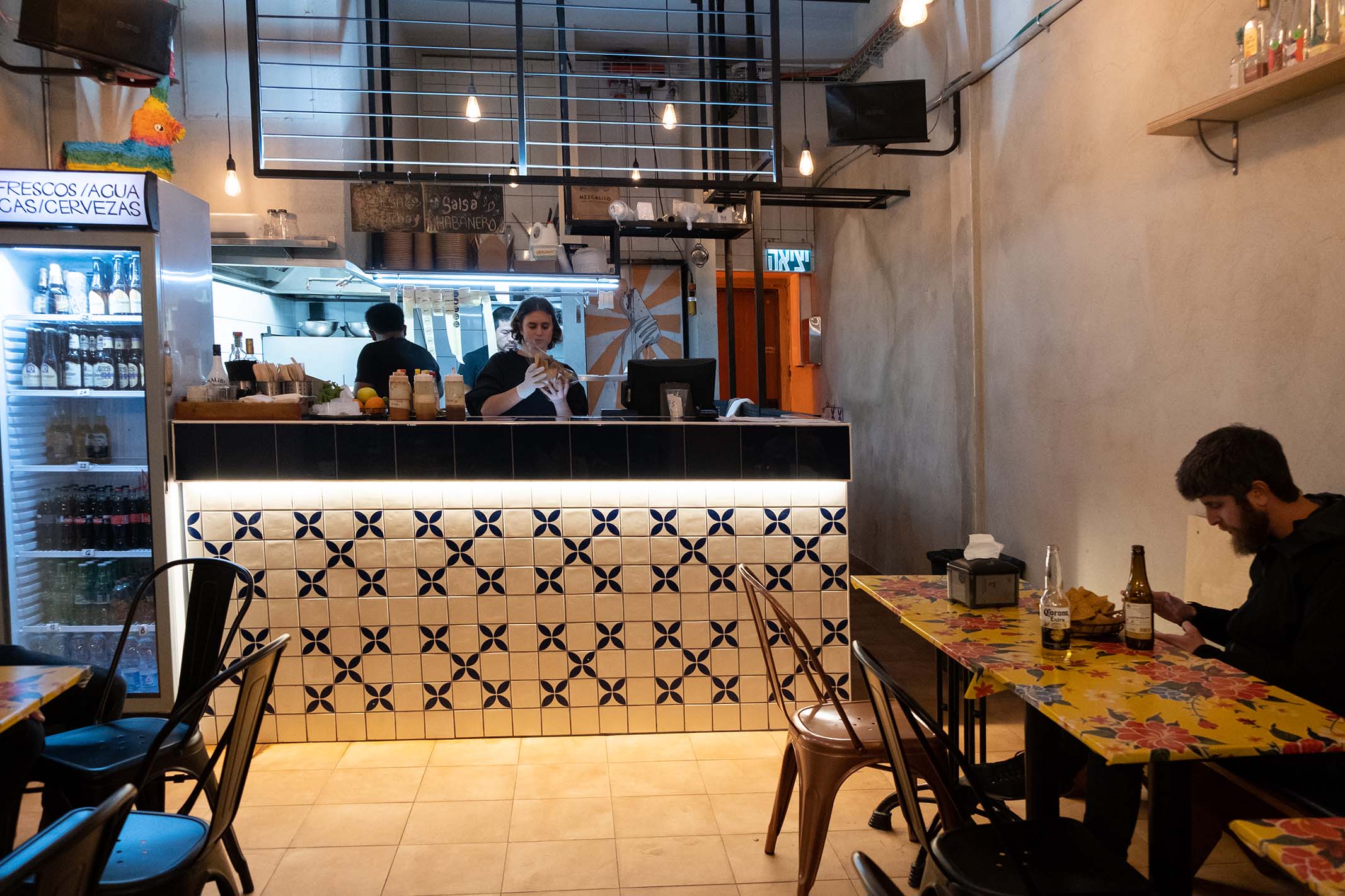
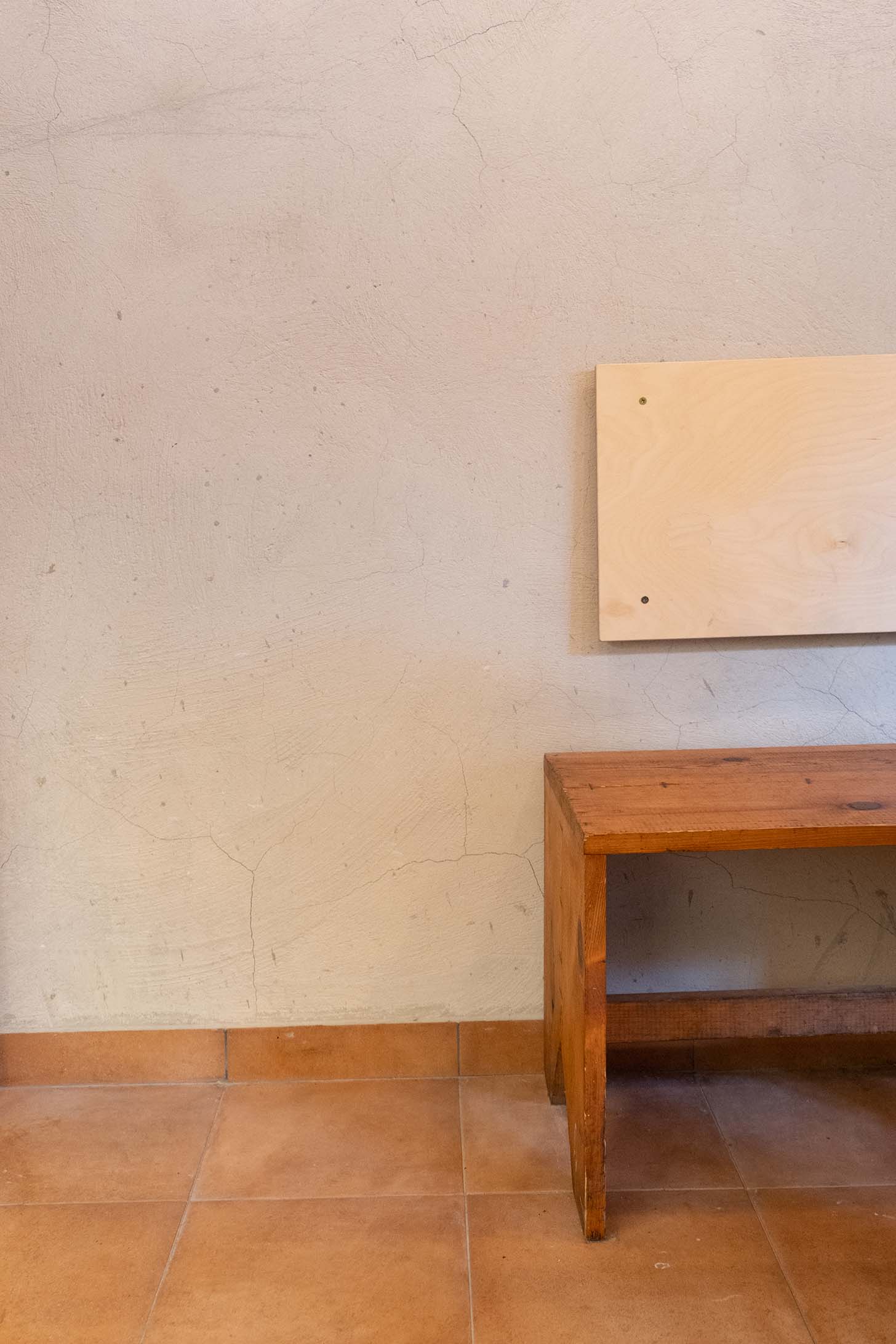
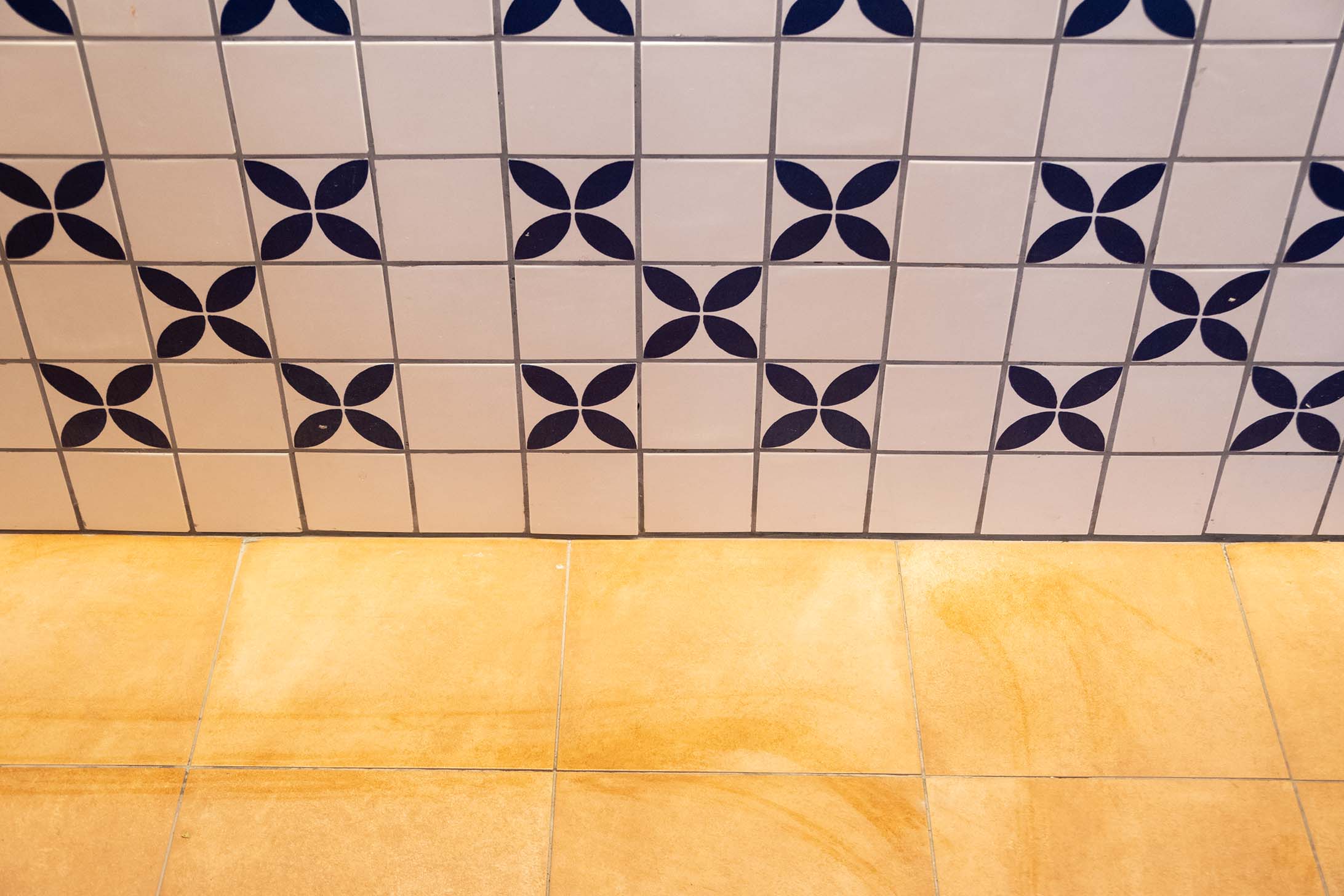
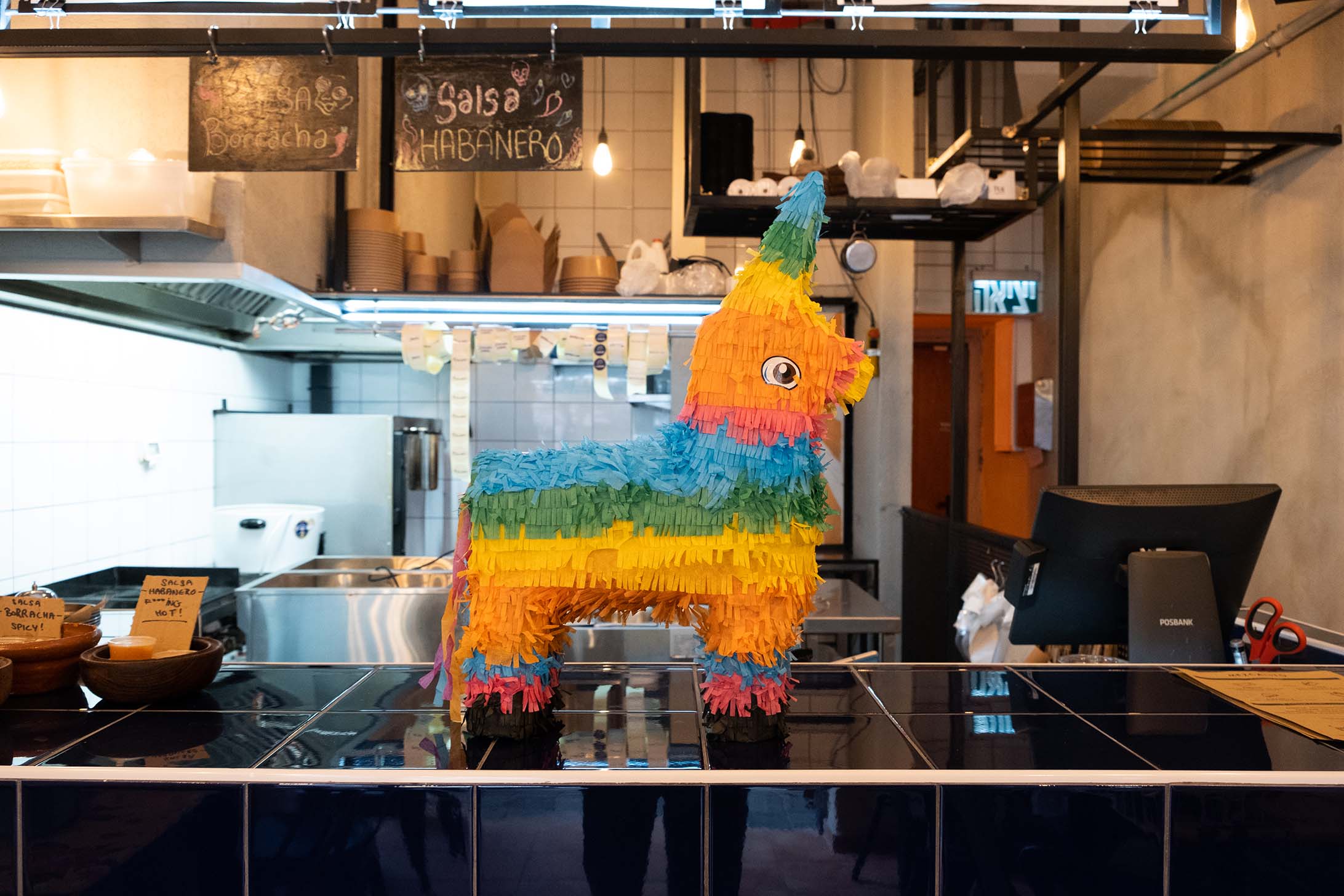
The aim of choosing the materials for the space was to evoke both Mexico, in the brown tiles and blue ceramics, and street food, in the rough plaster chosen for the walls. Wooden furniture fits well into this atmosphere and allows for relatively easy maintenance. The resulting material surfaces are relatively empty, allowing the owners great flexibility in decorating throughout the life of the restaurant.
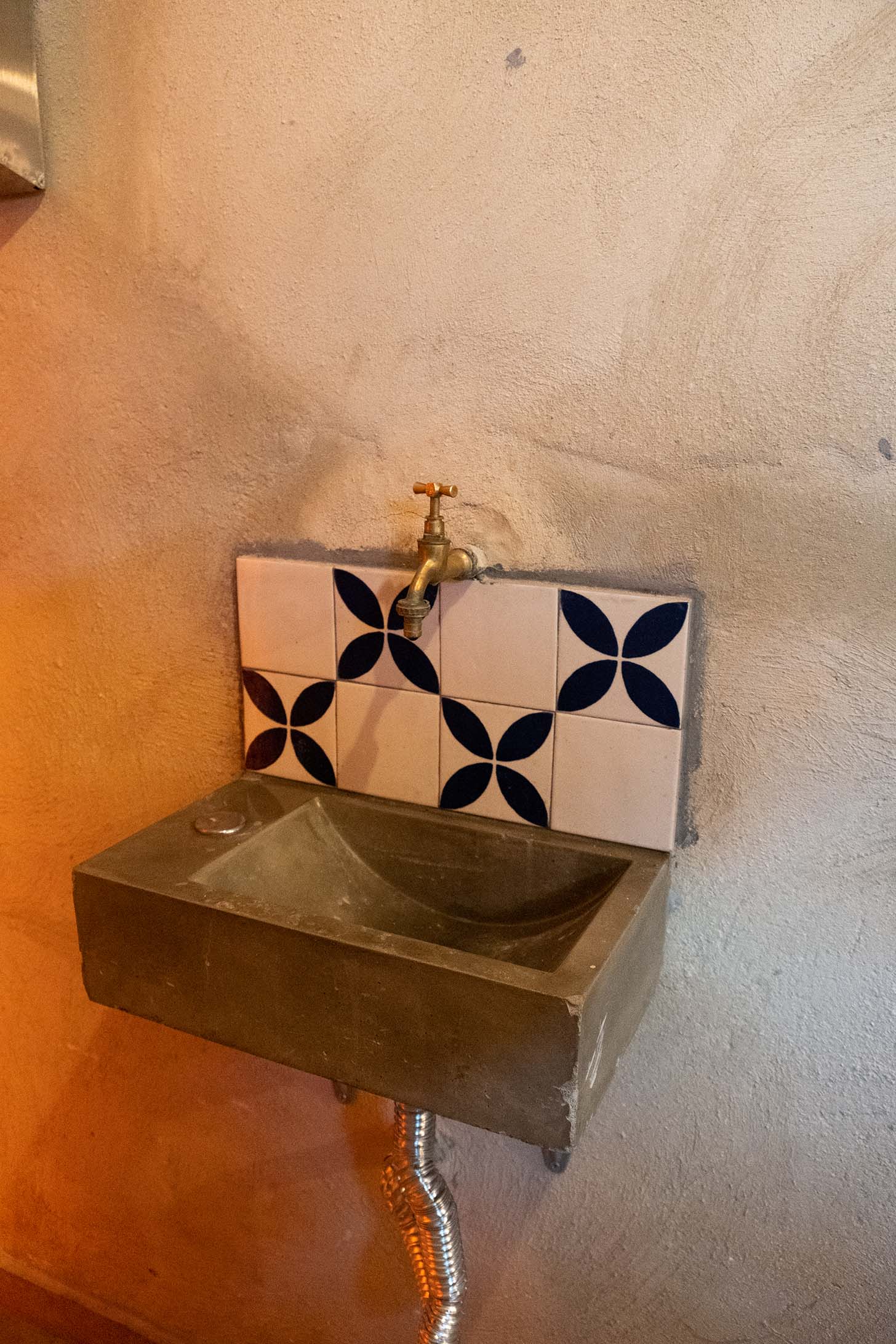
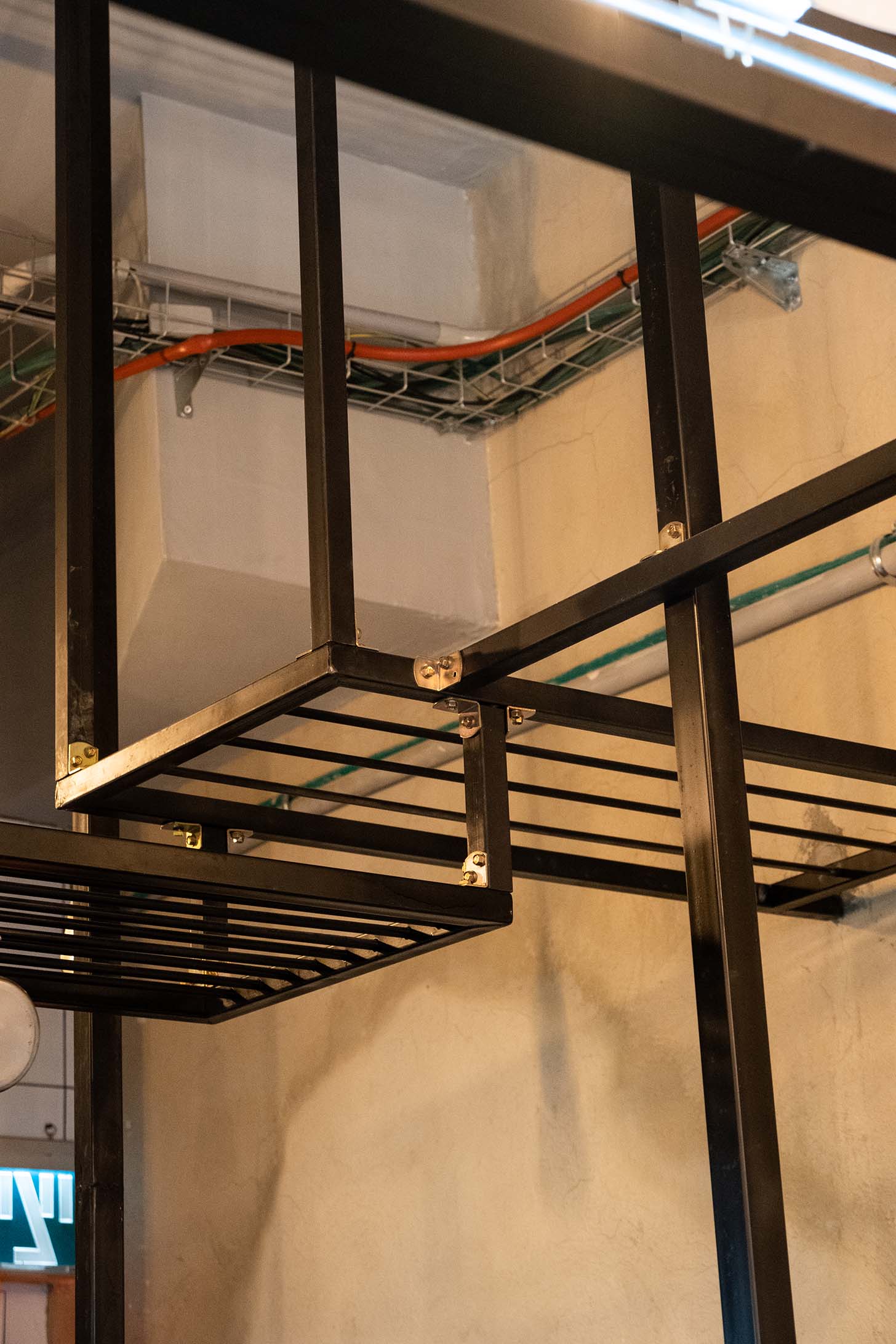
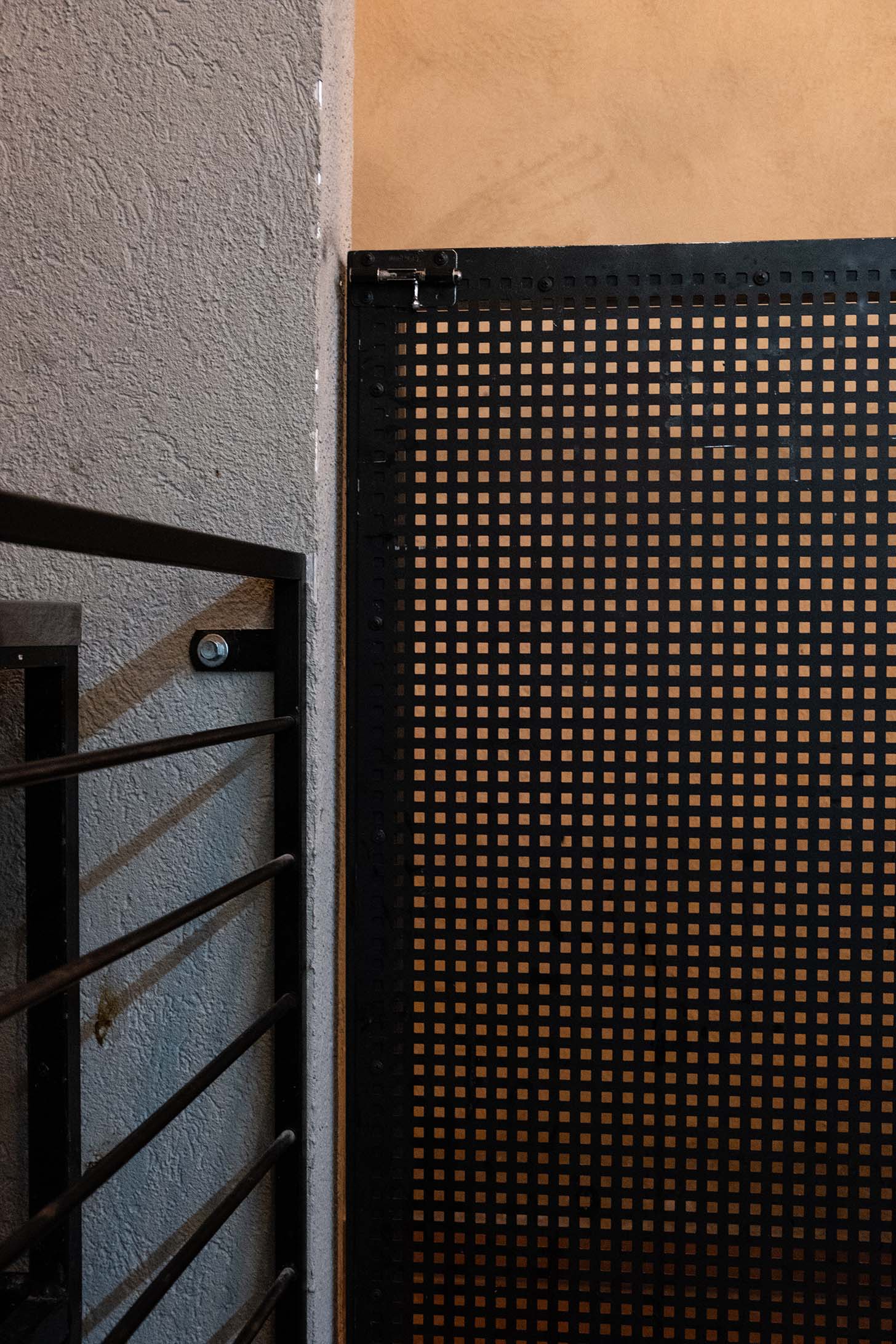
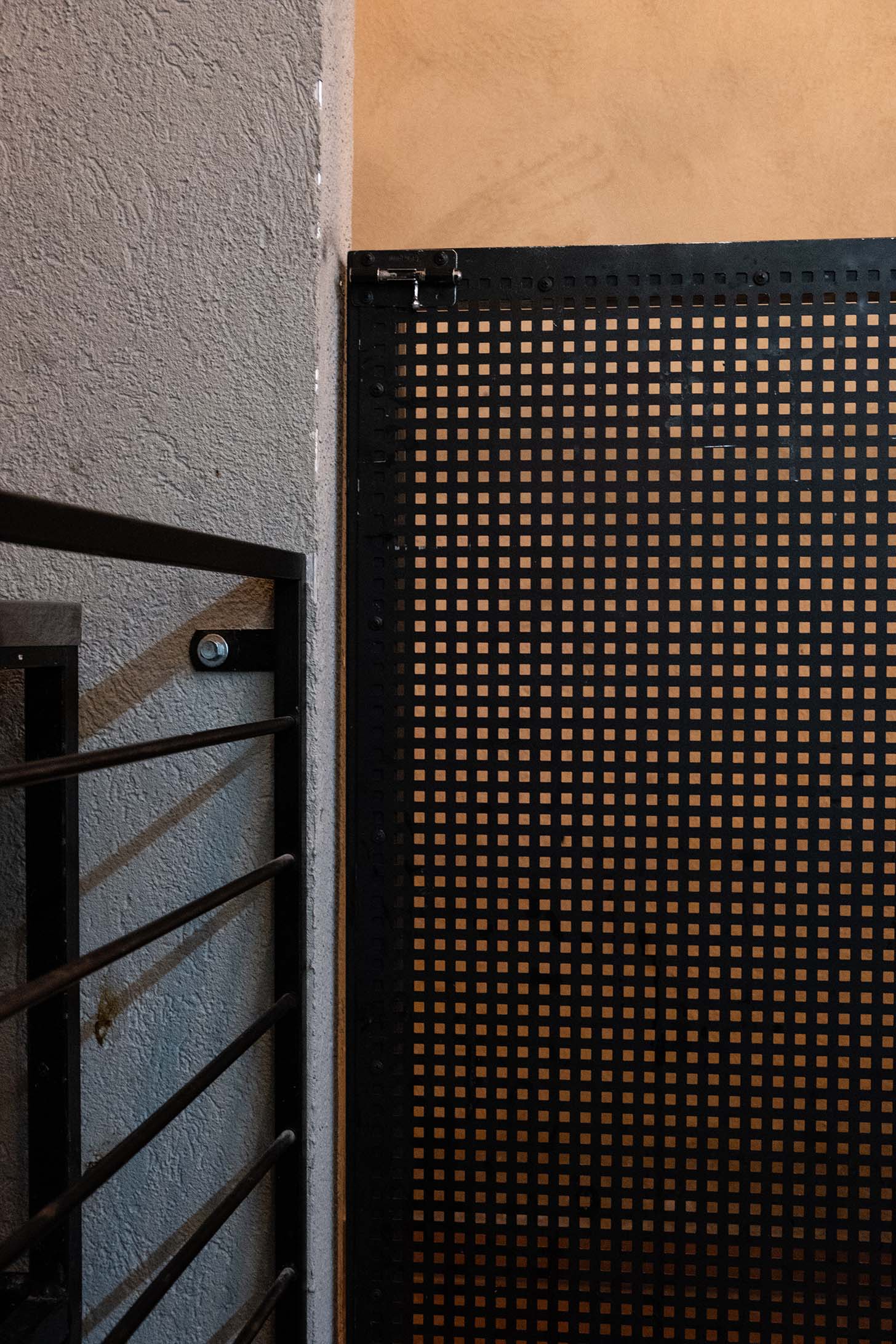
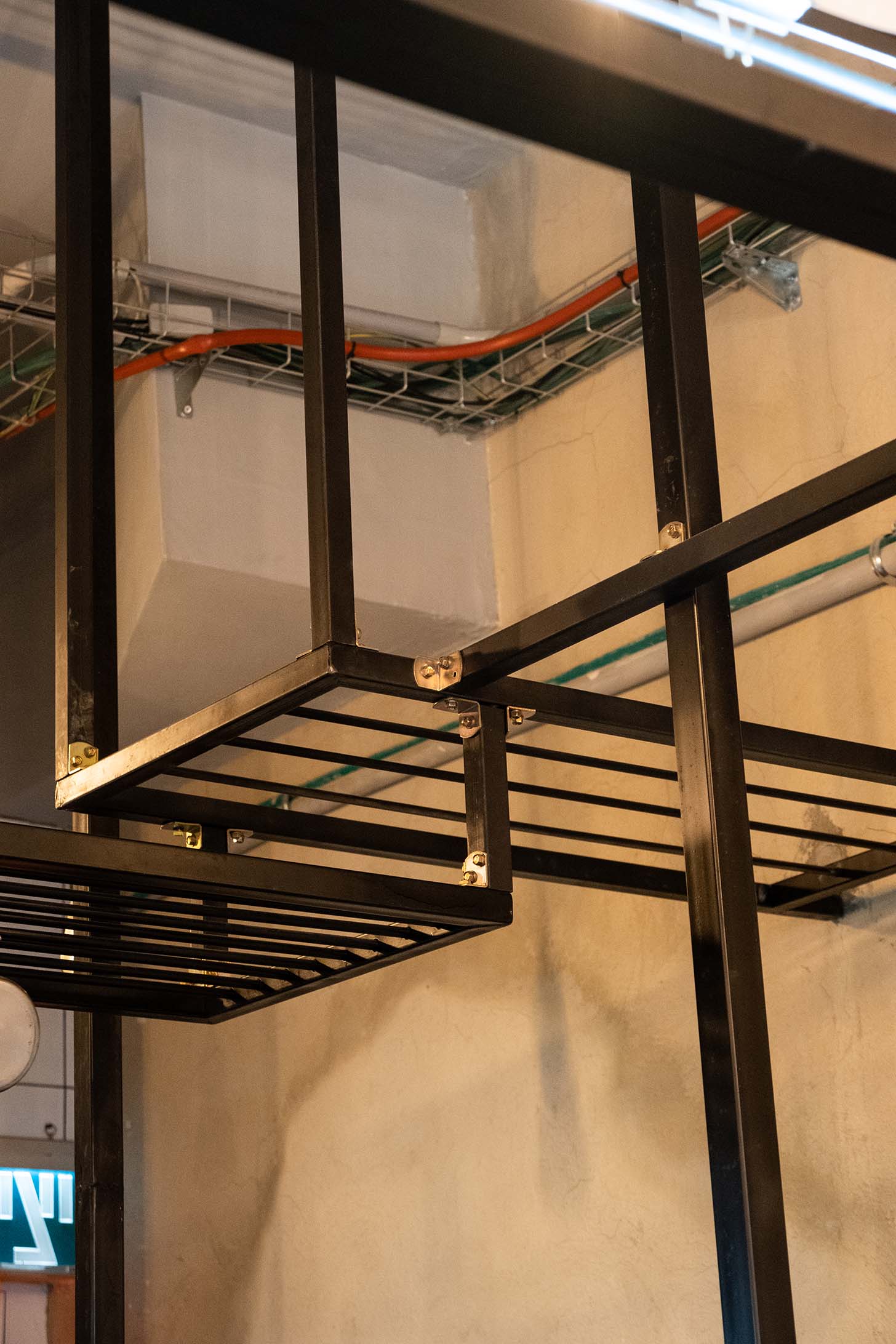
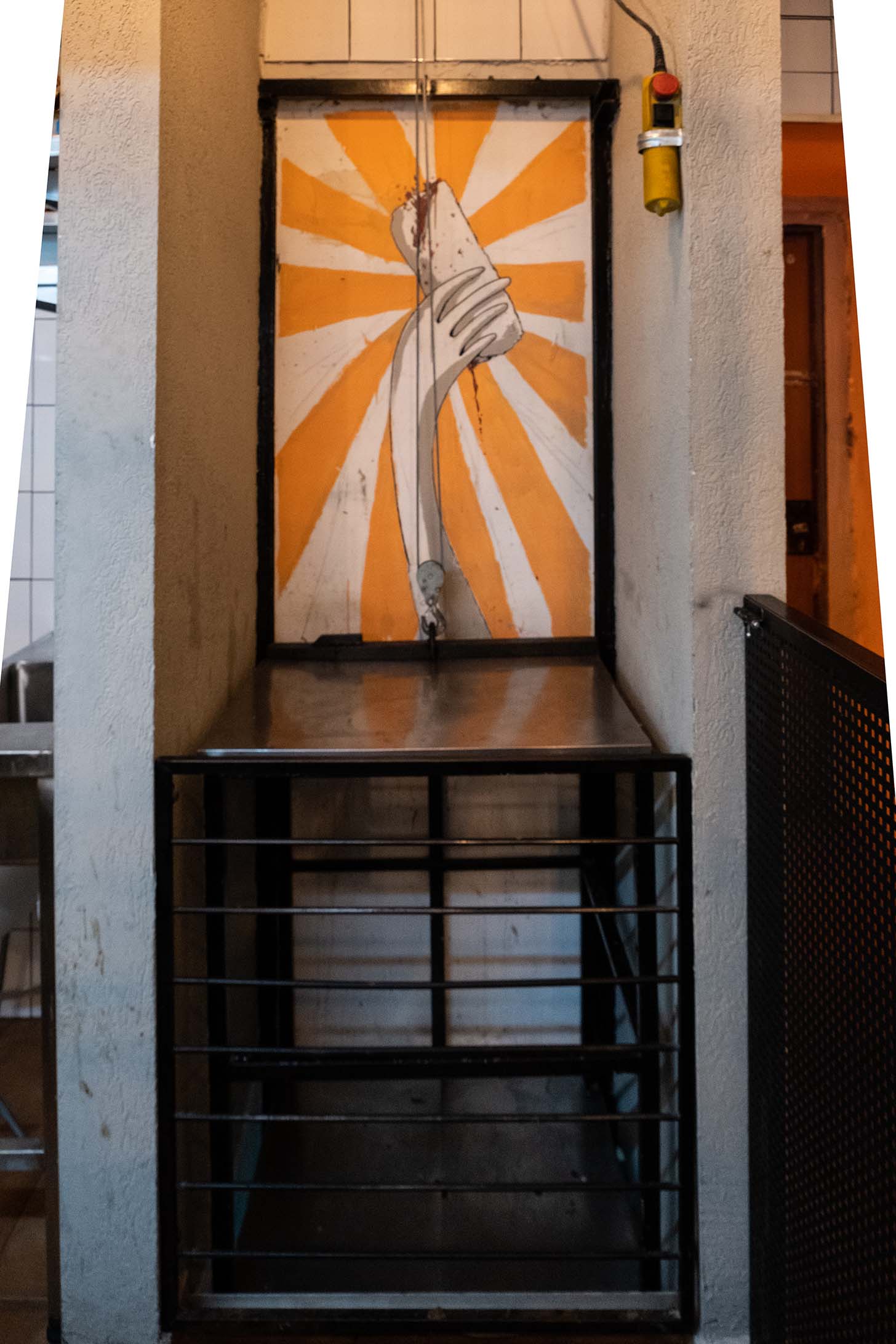
The purpose of the framing in this restaurant is to provide specific solutions to spatial needs while integrating into the created aesthetic language. Railings, shelves, and racks were all created in the same language and create an intriguing spatial play.
Buen provecho!
AETAET
- Type
- Renovation
- Scale
- Medium
- Status
- Built
- Year
- 2020
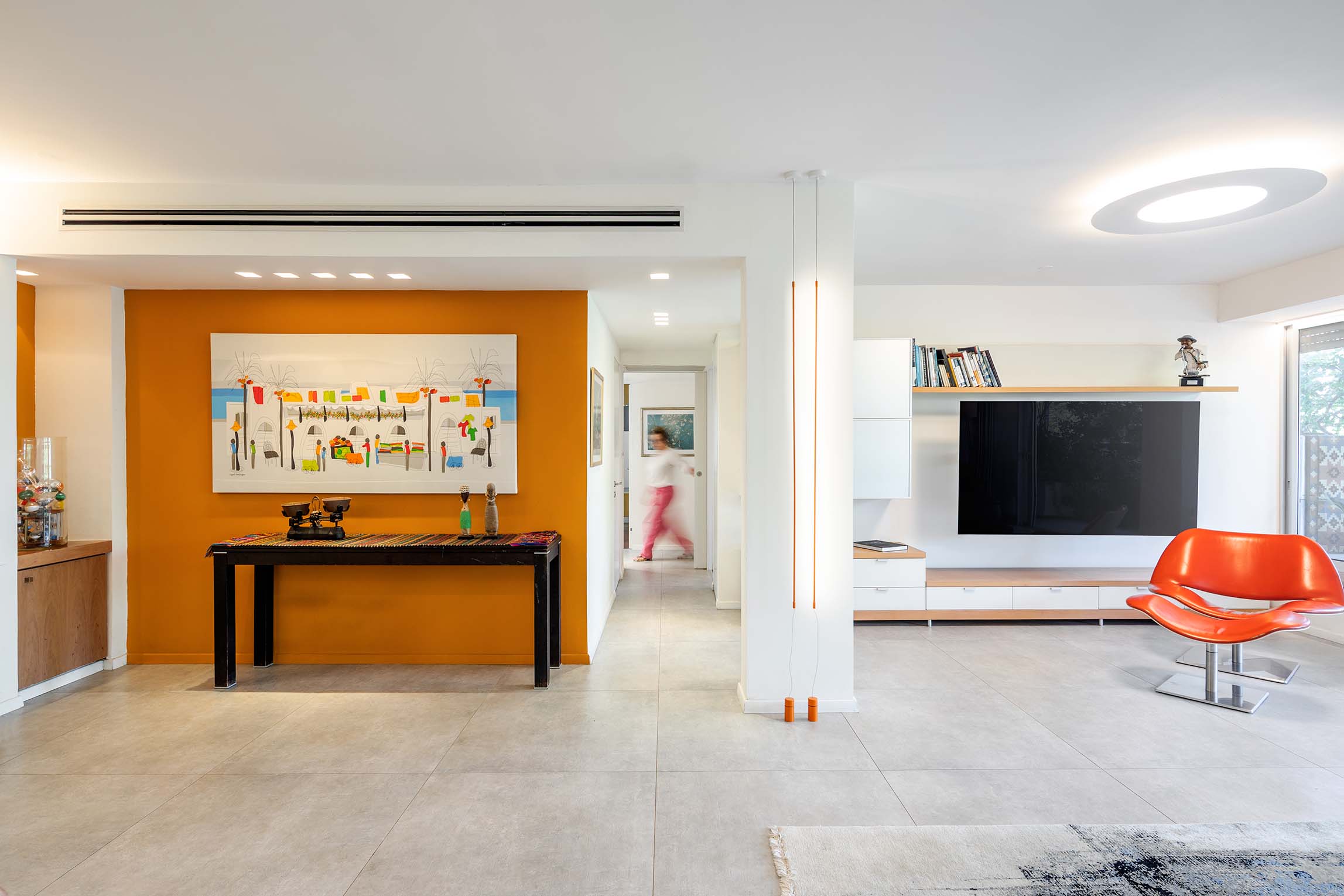
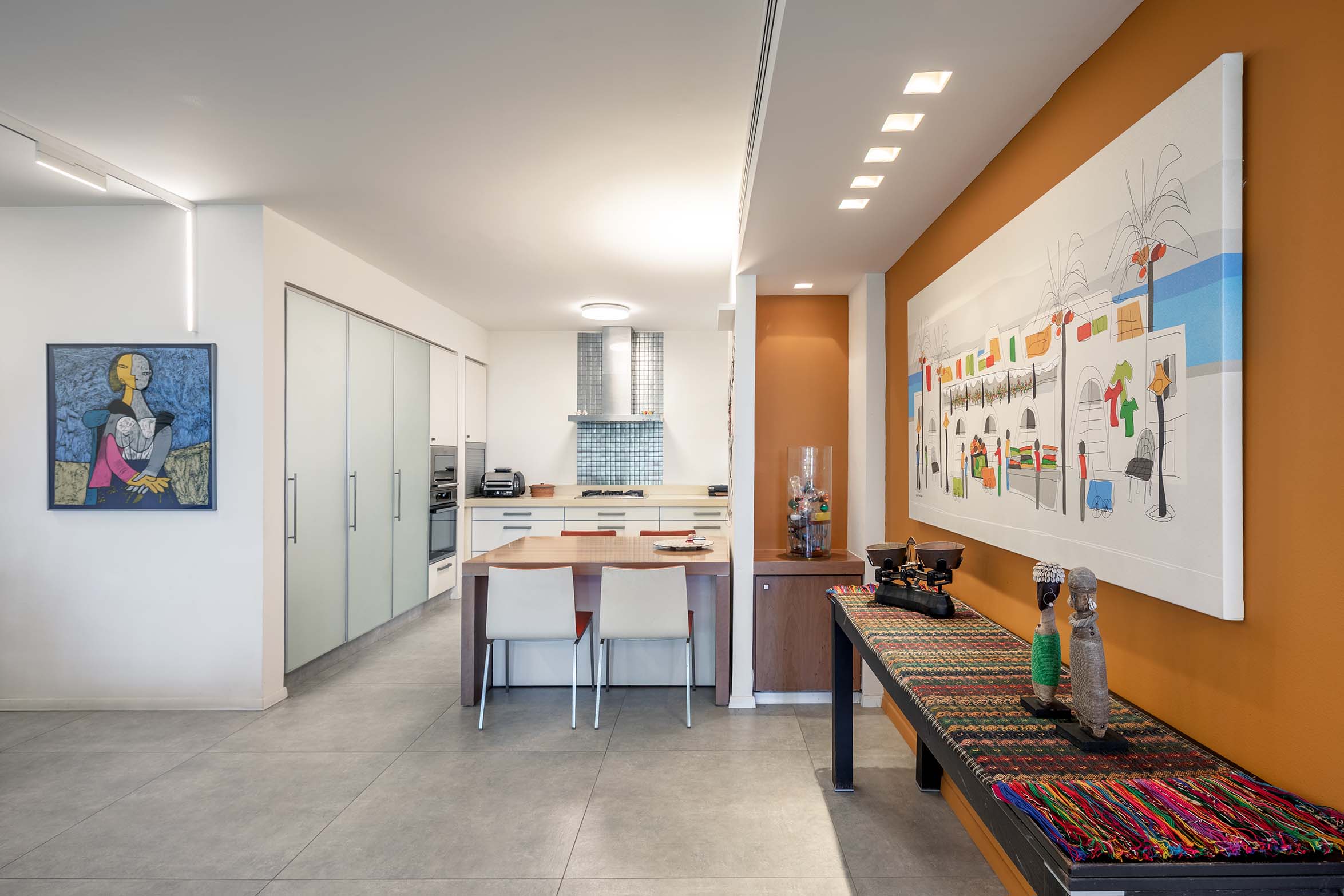
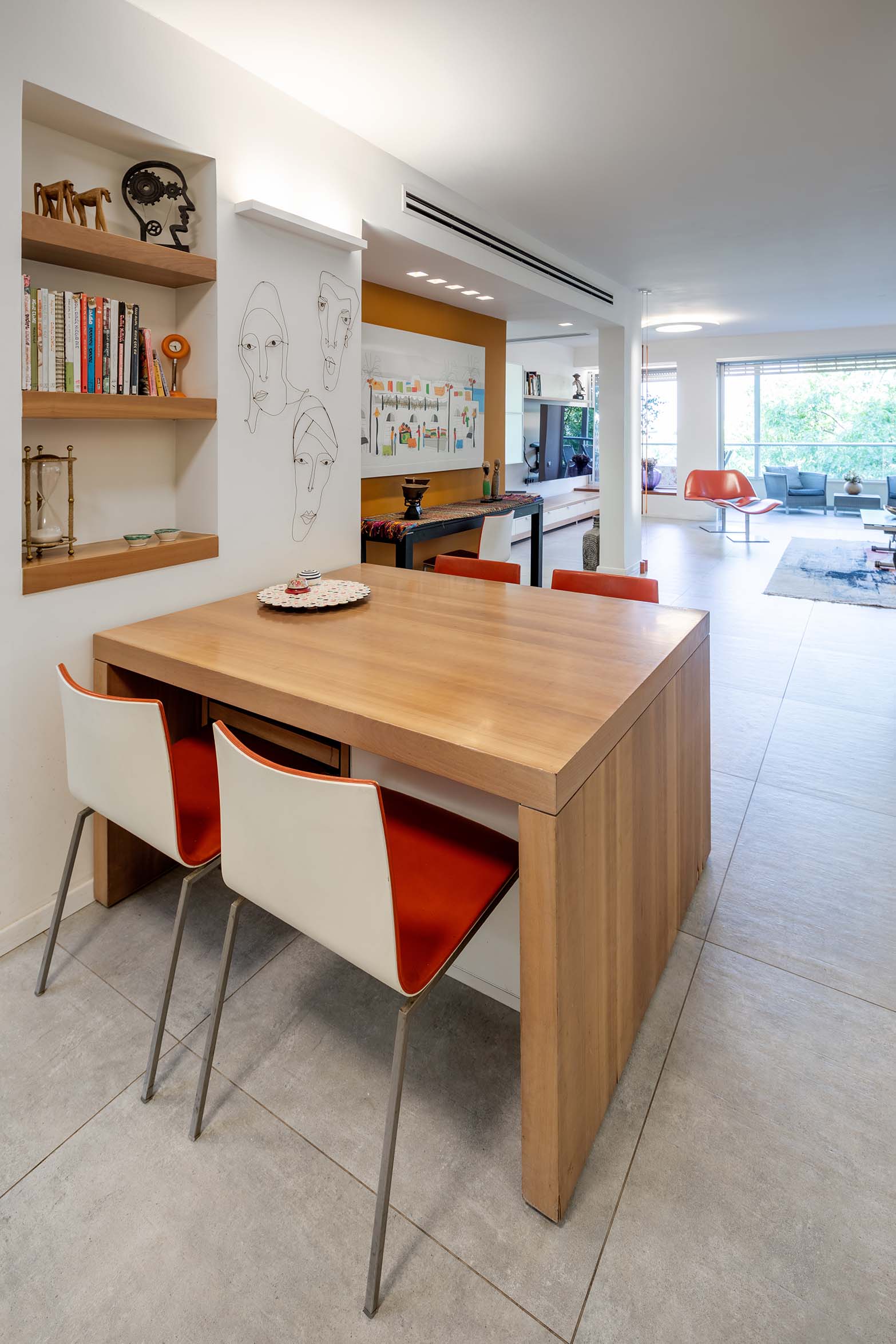
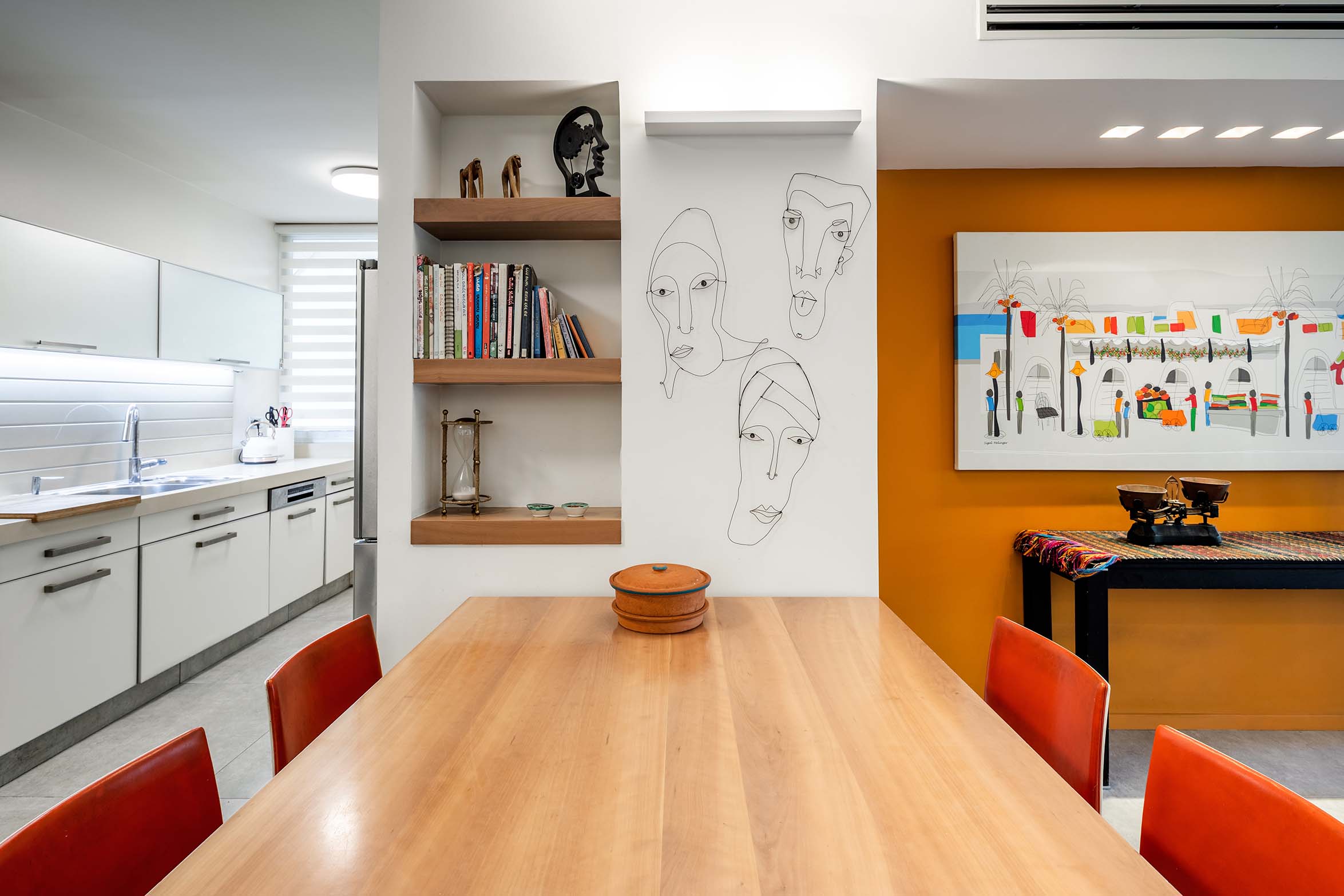
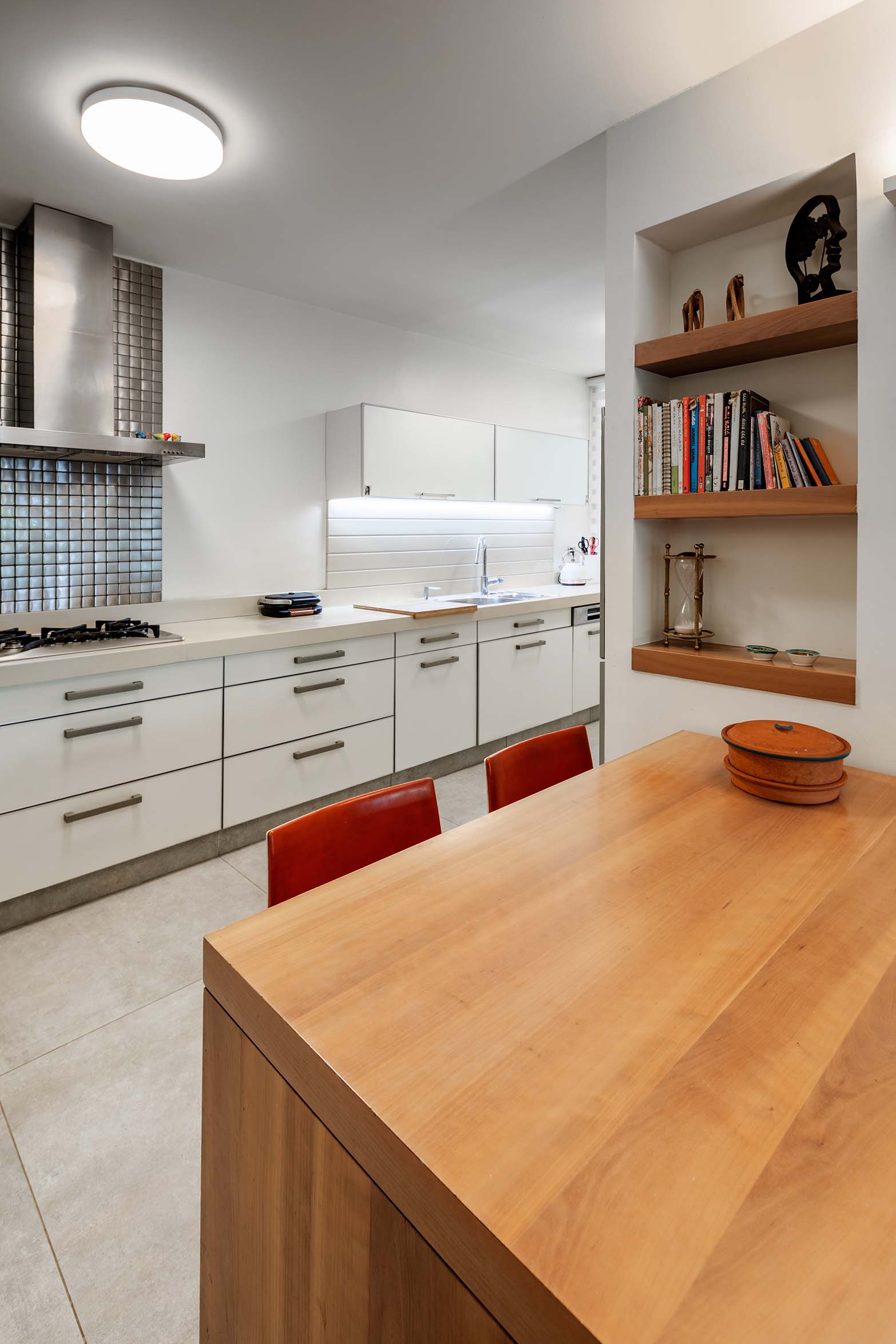
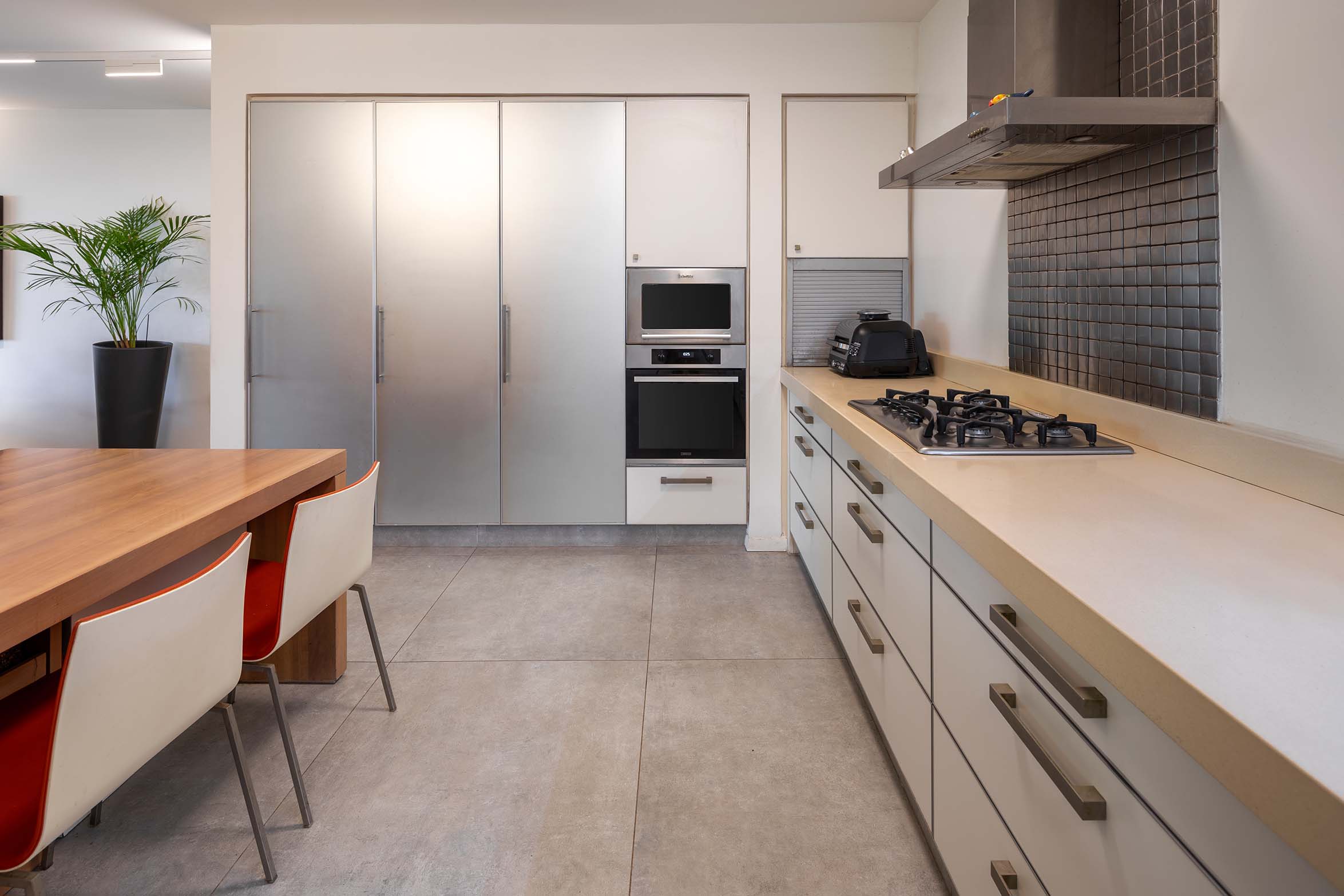
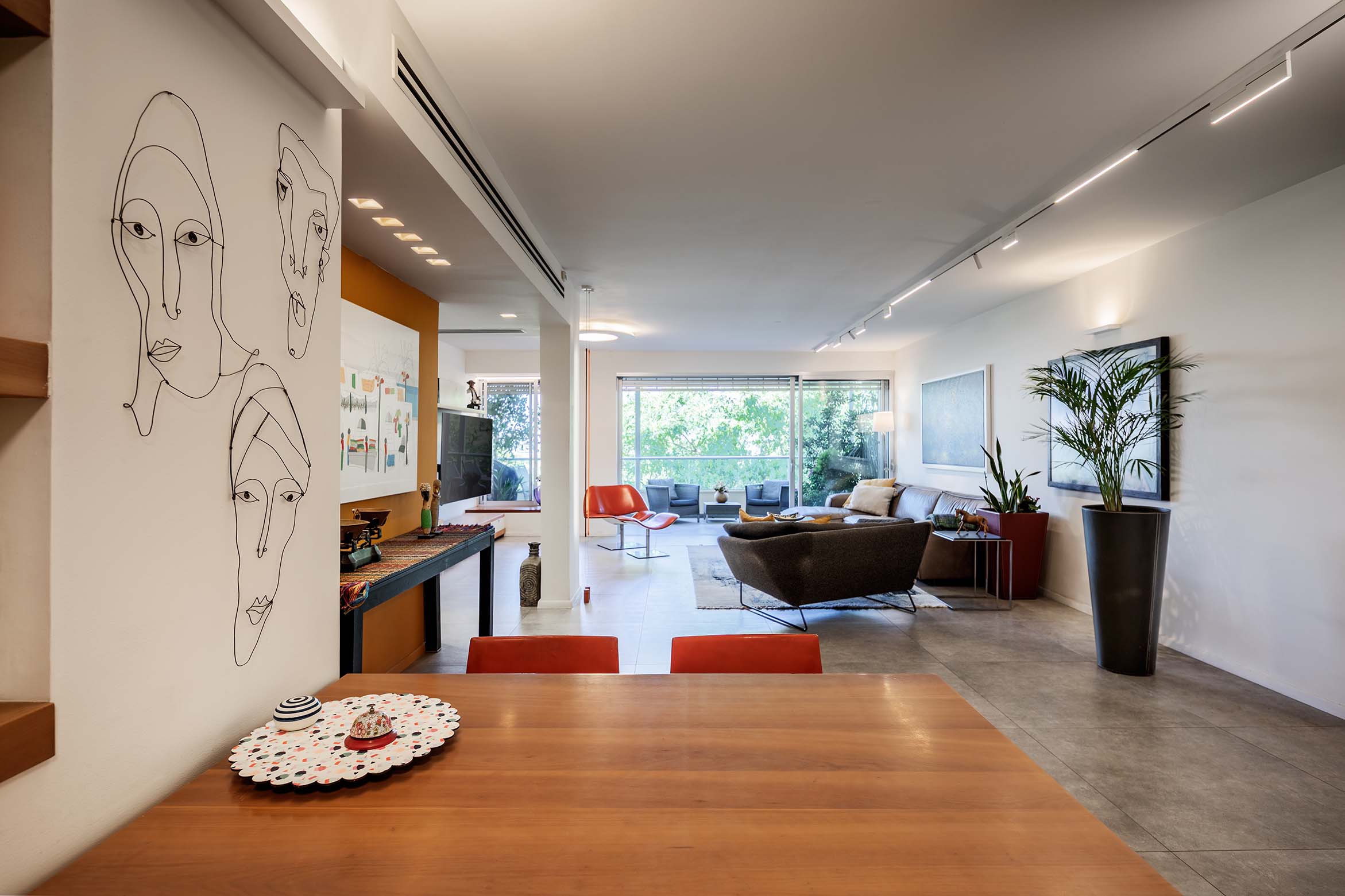
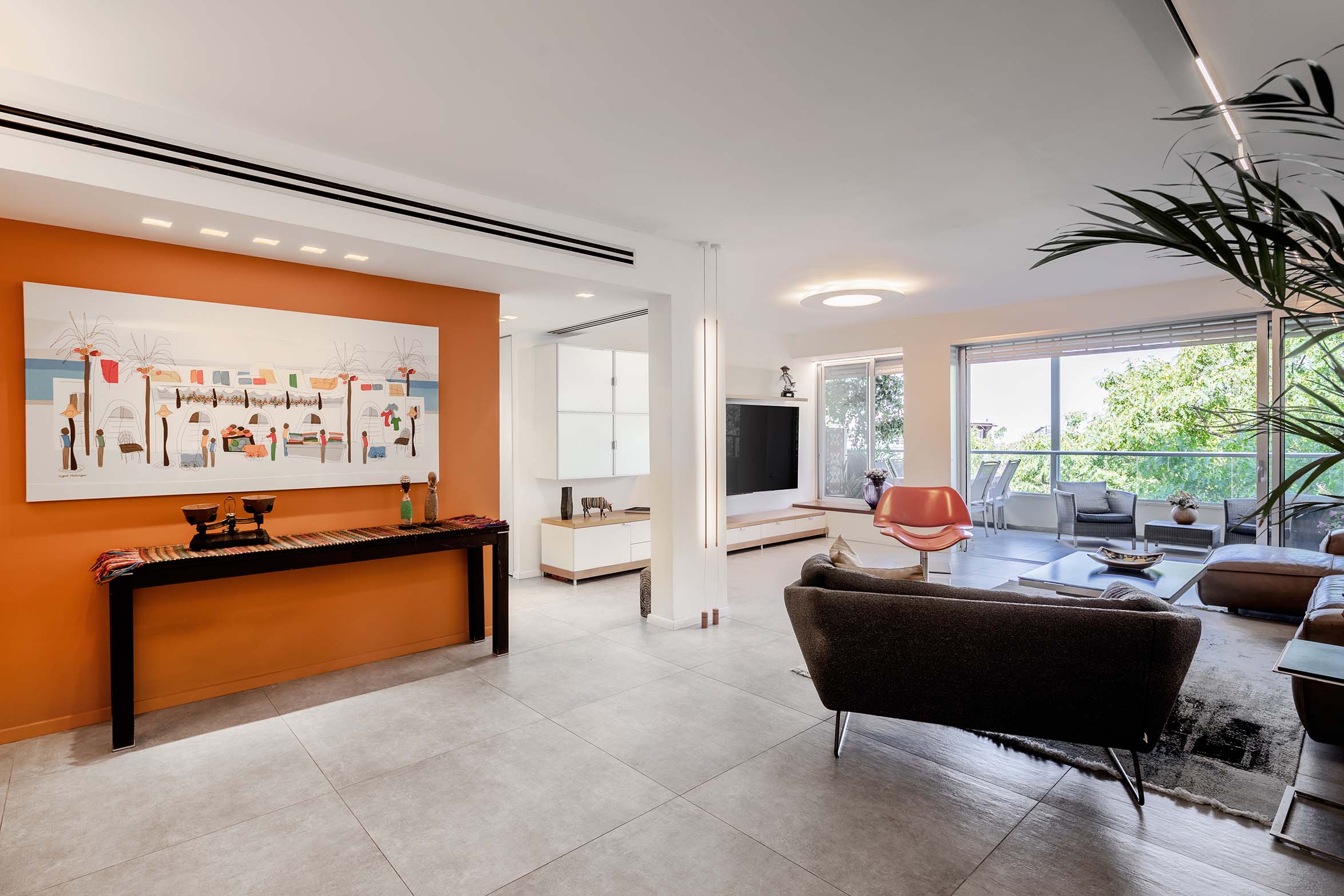
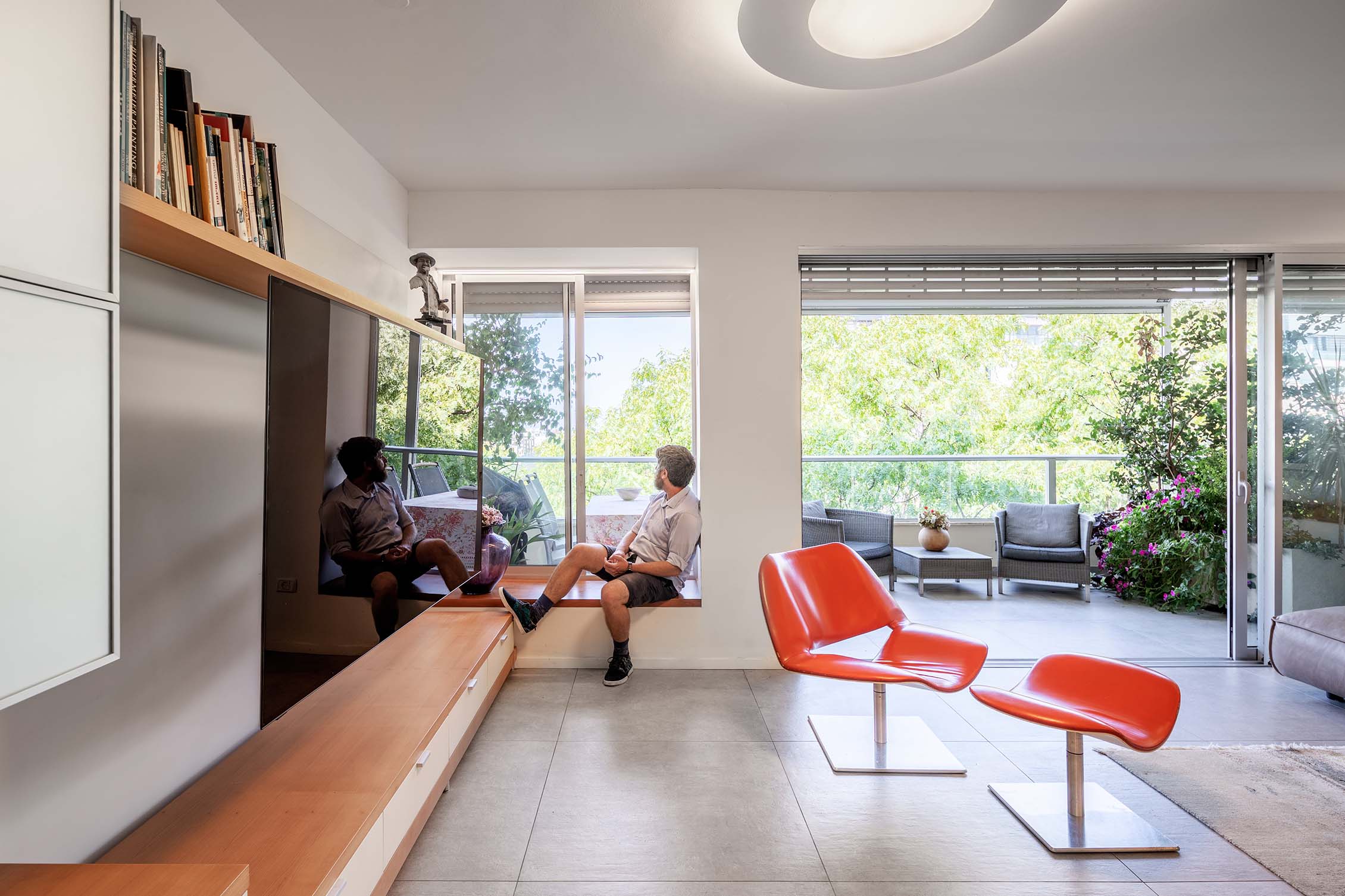
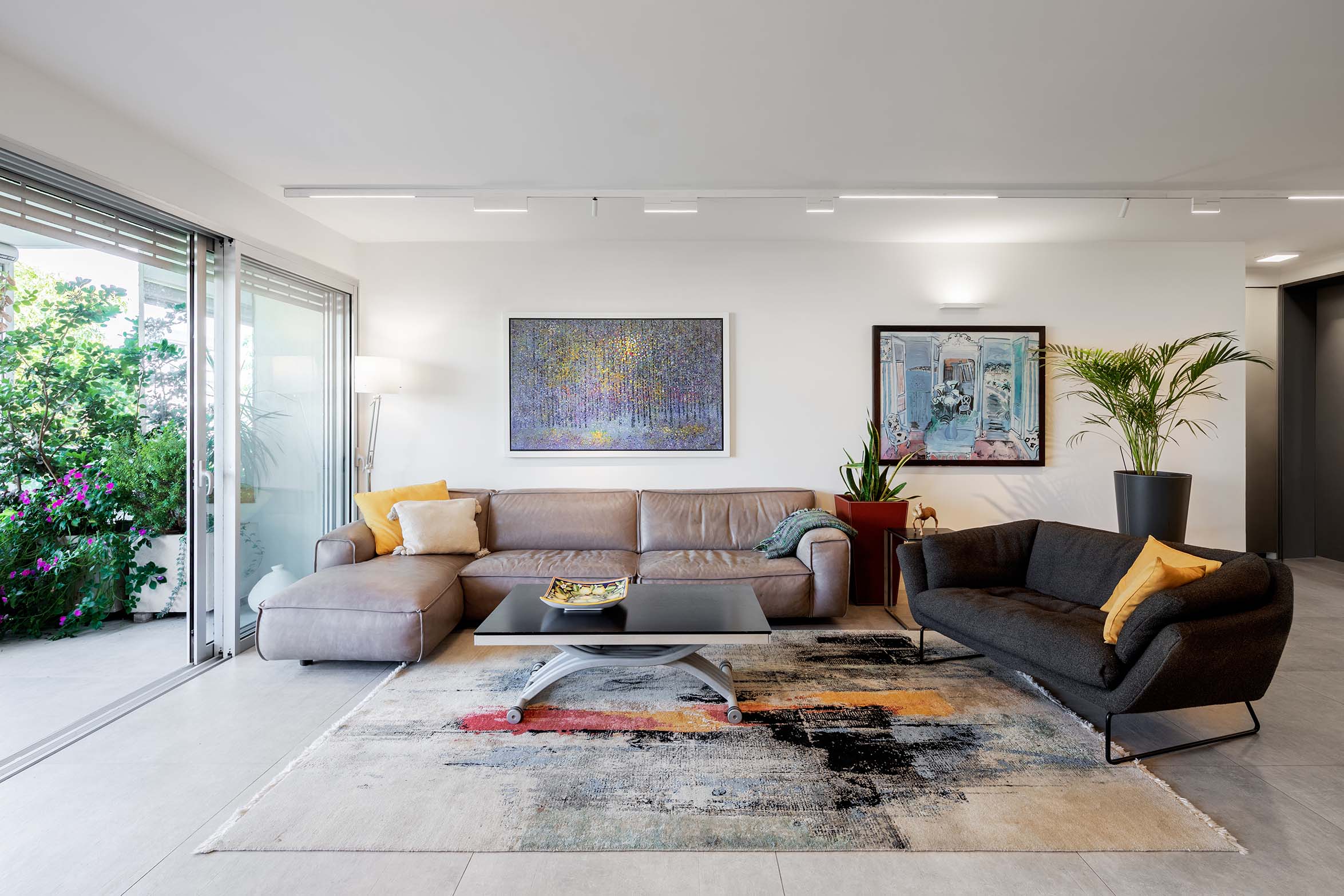
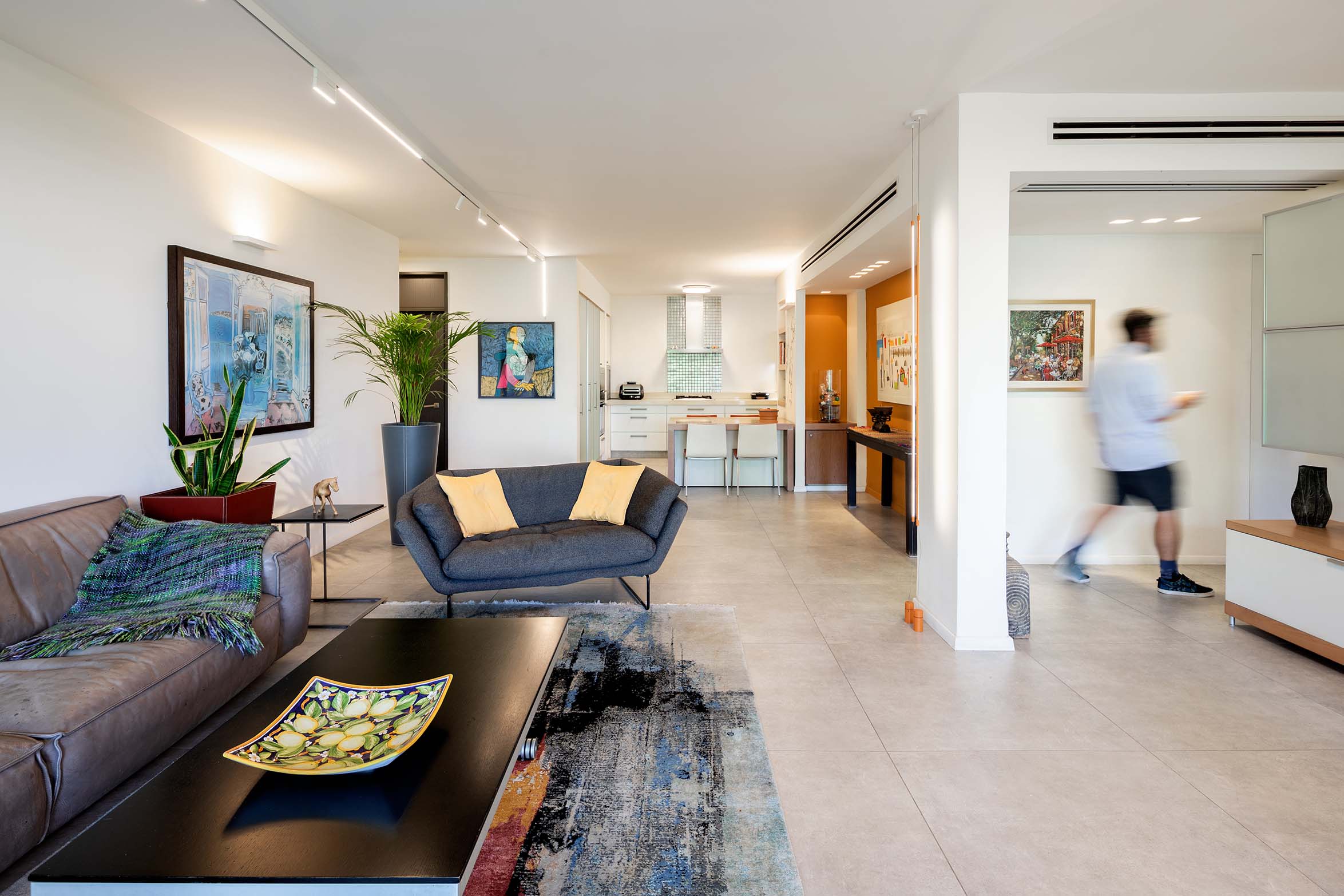
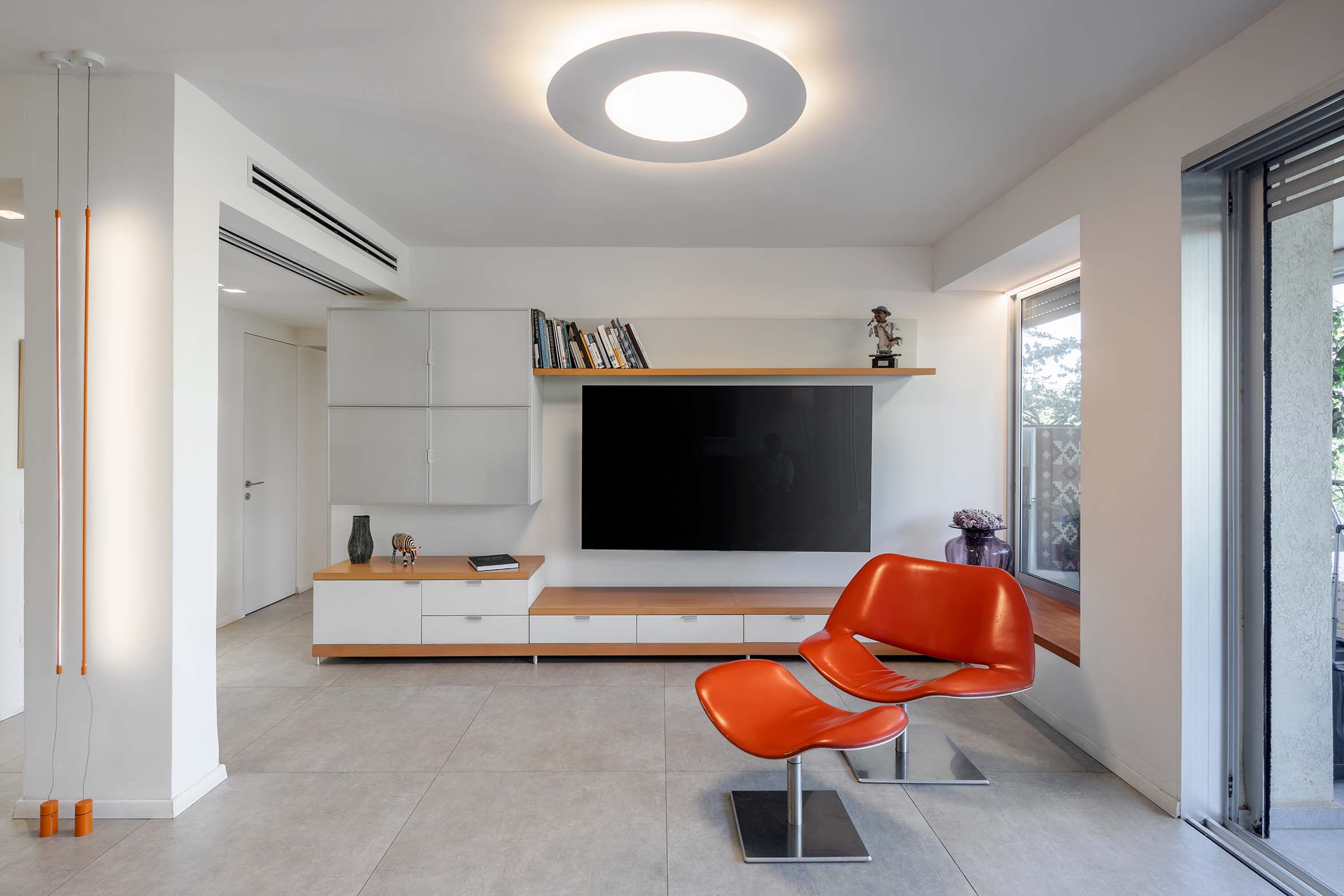
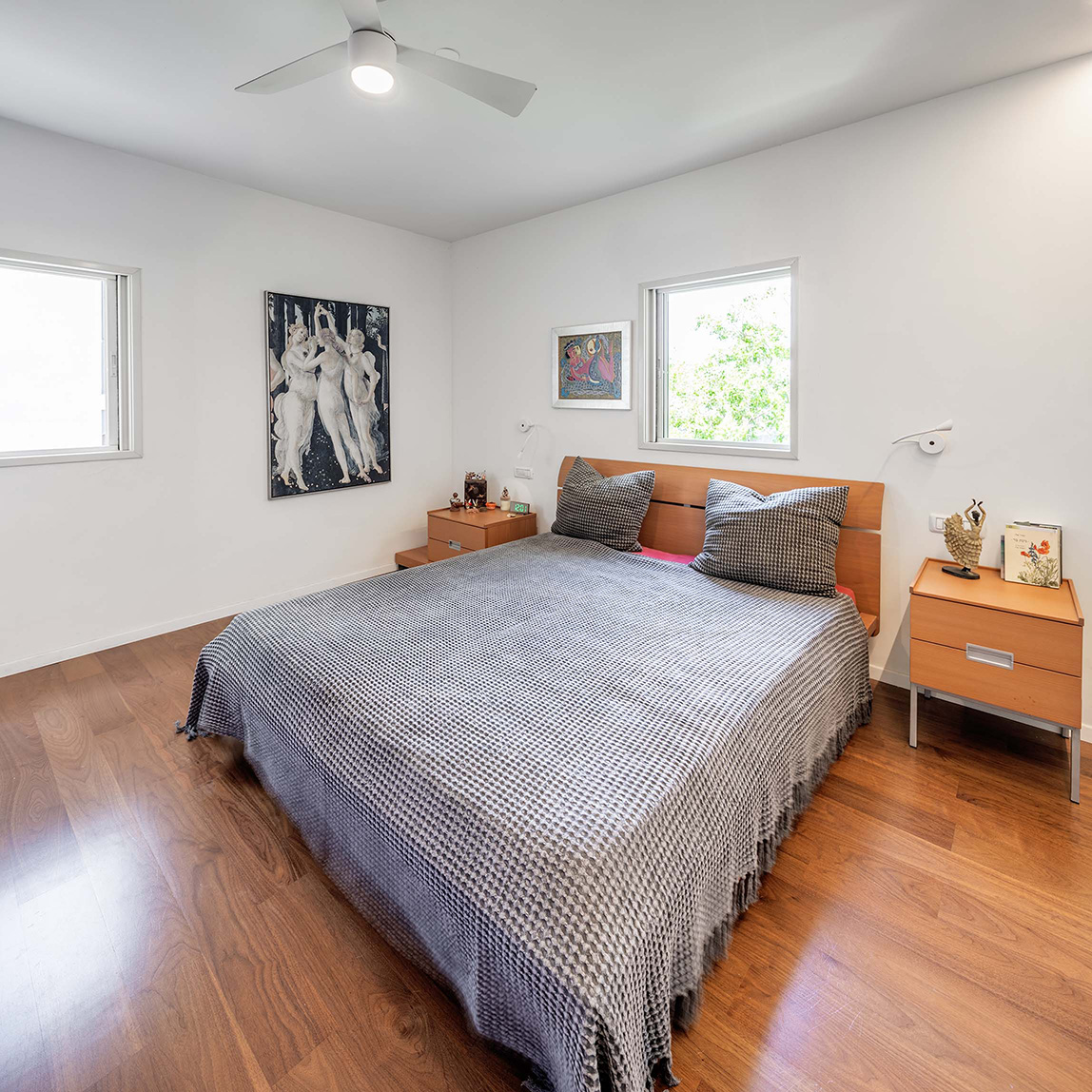
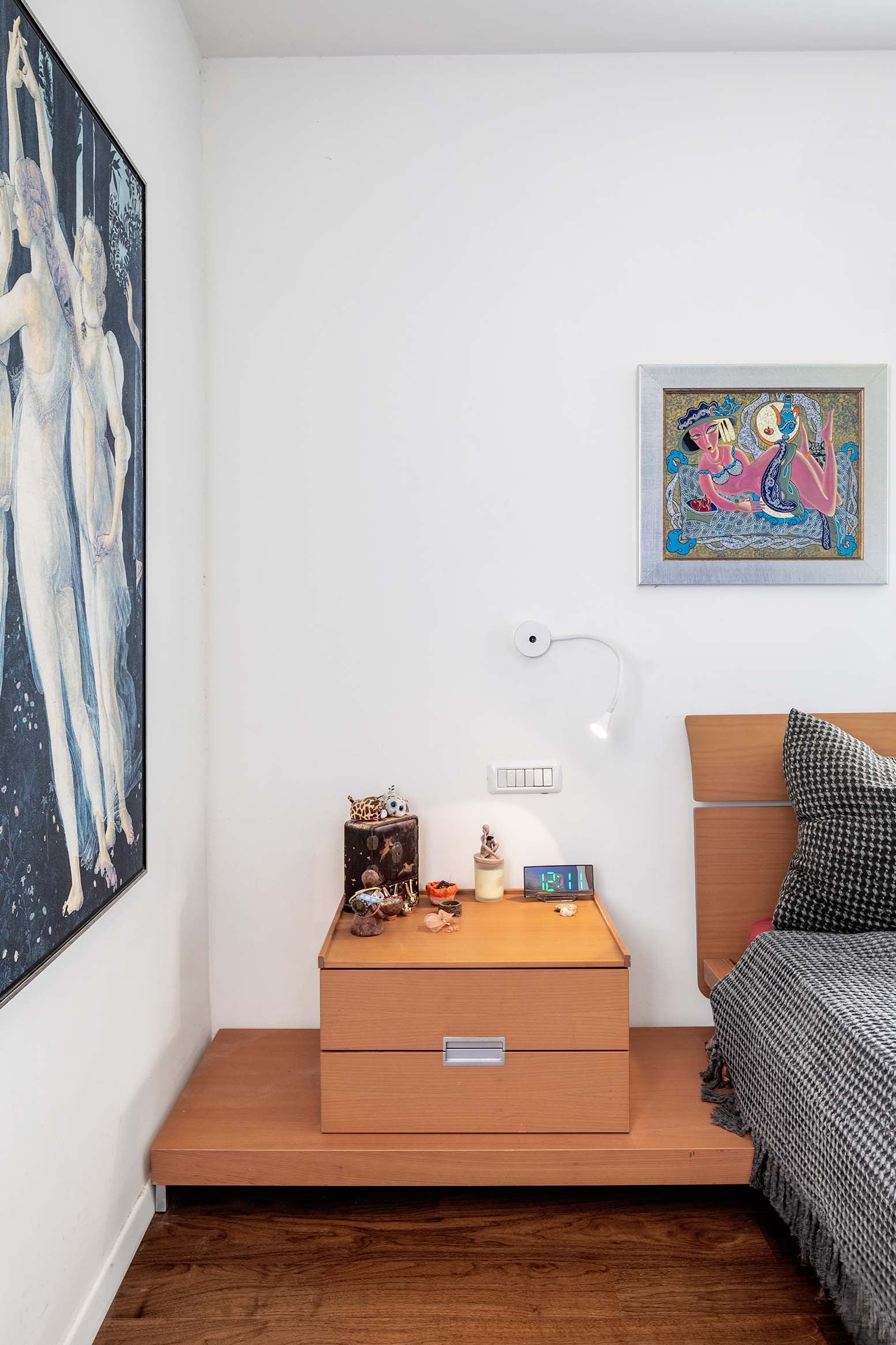
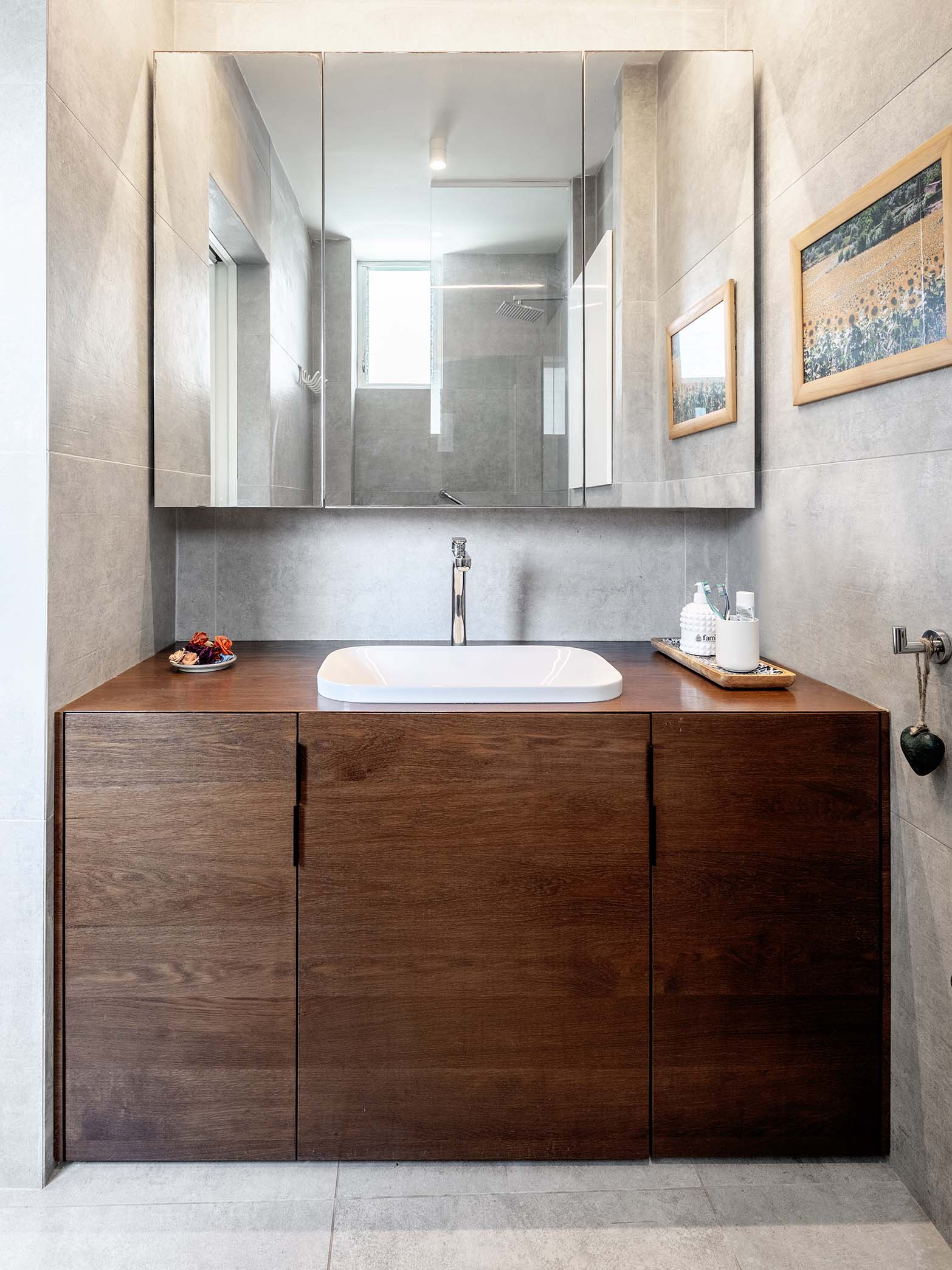
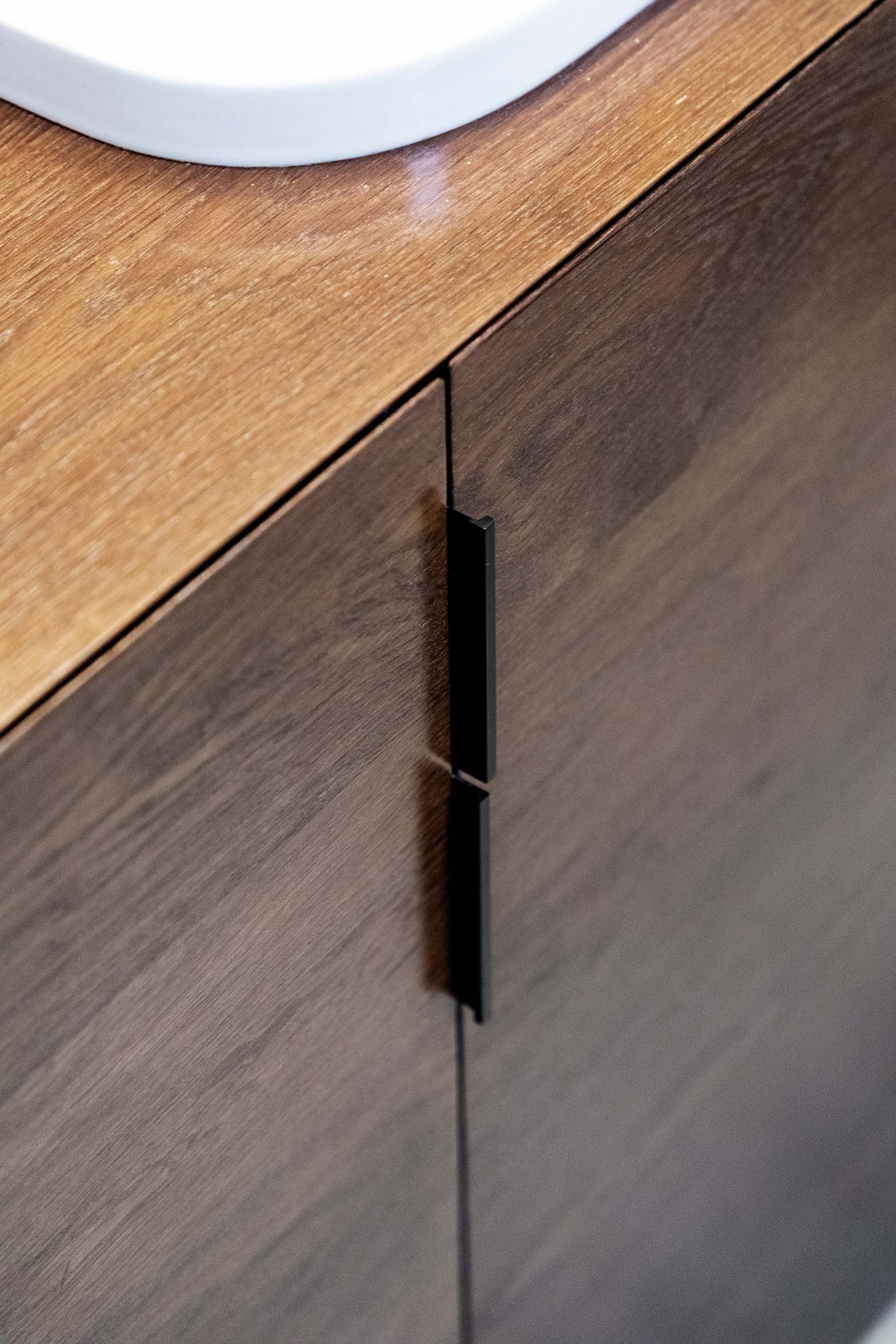
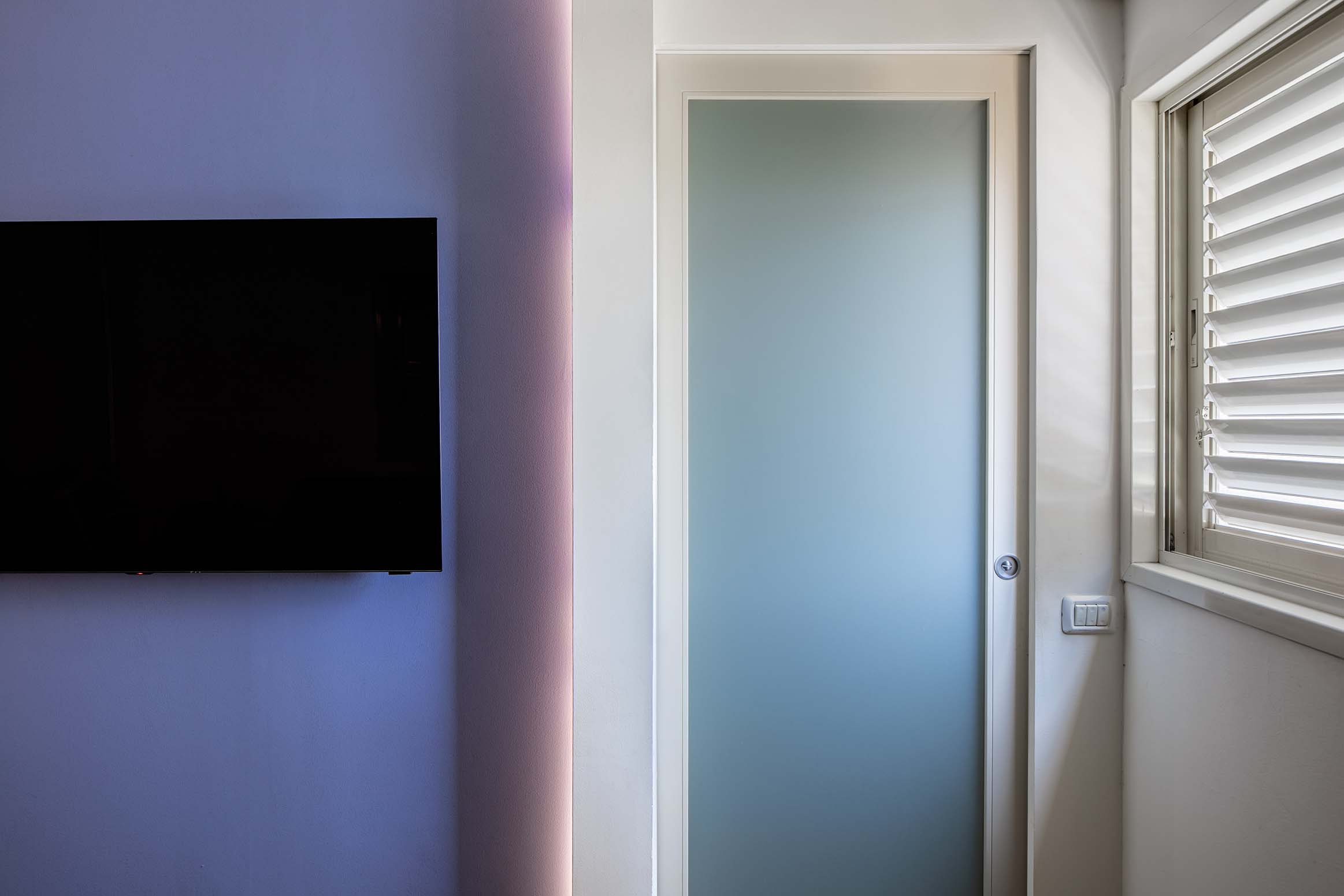
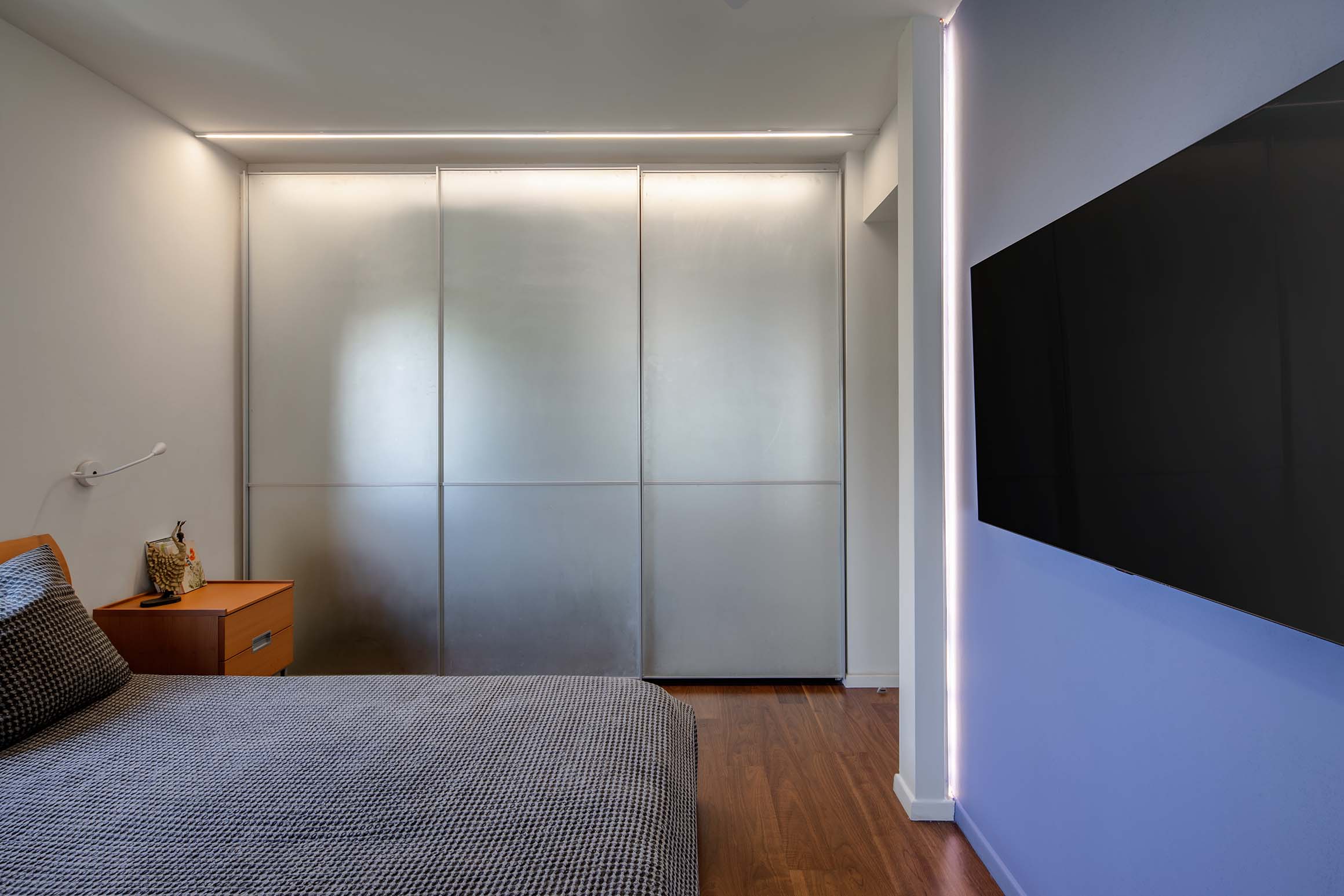

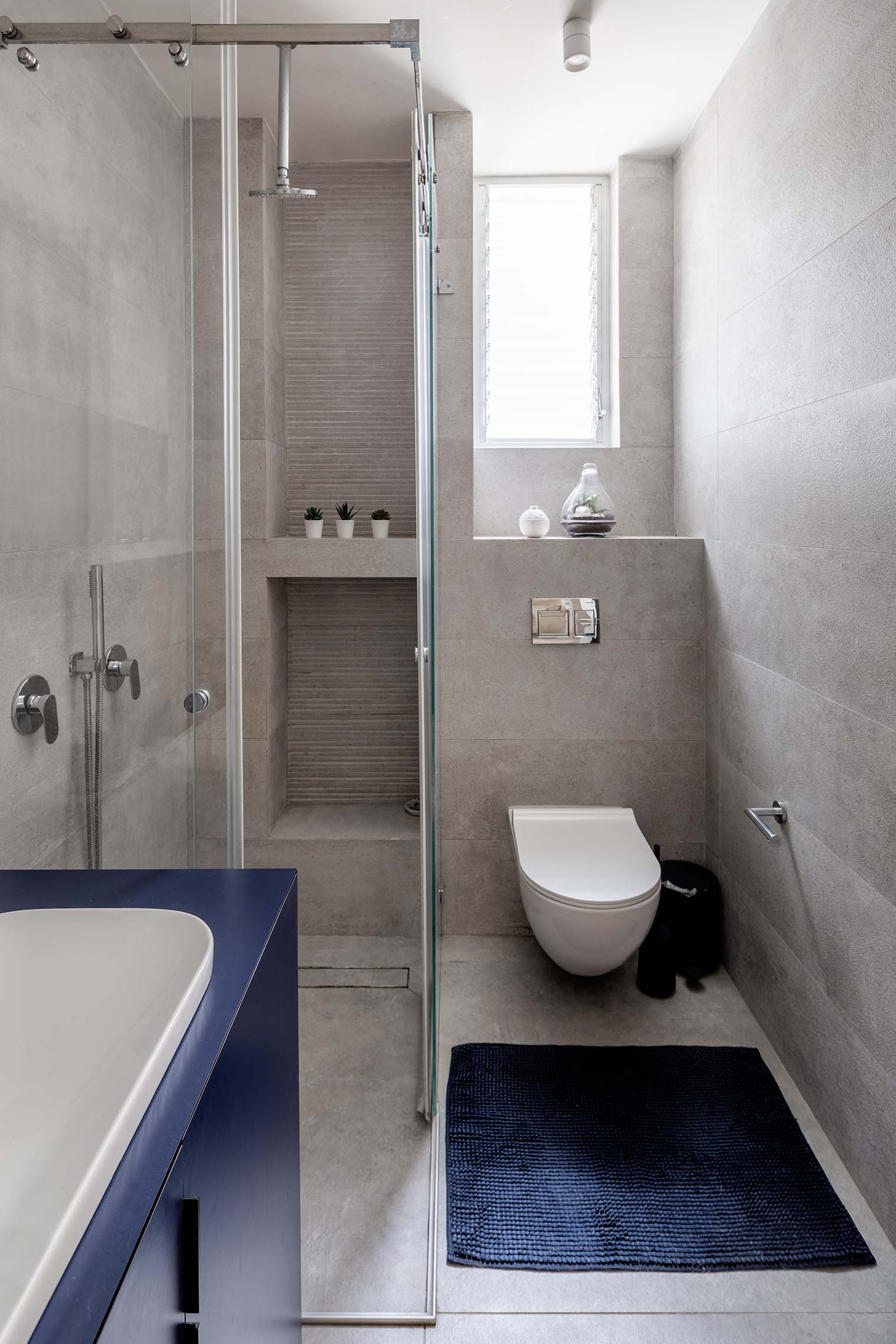
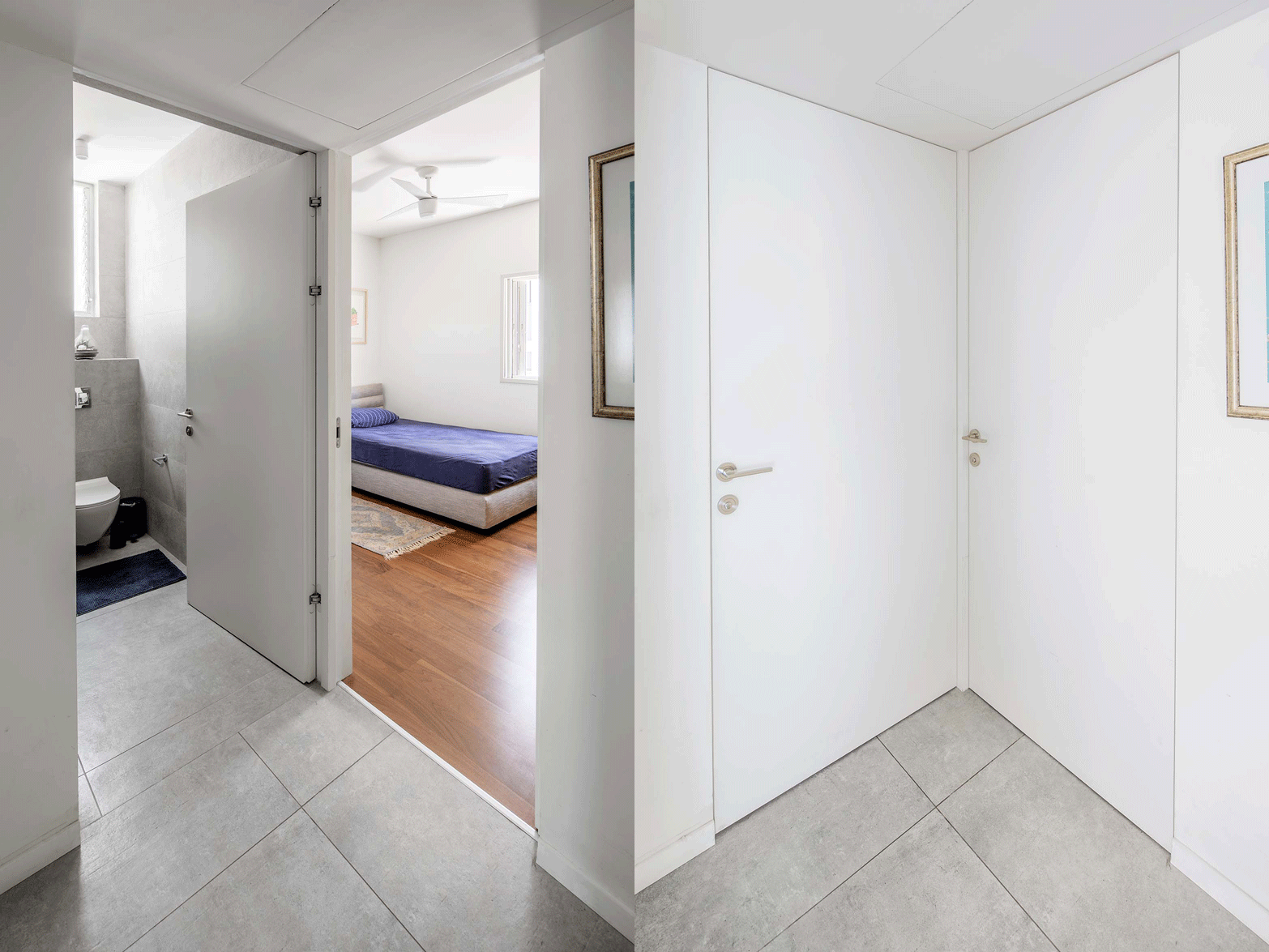
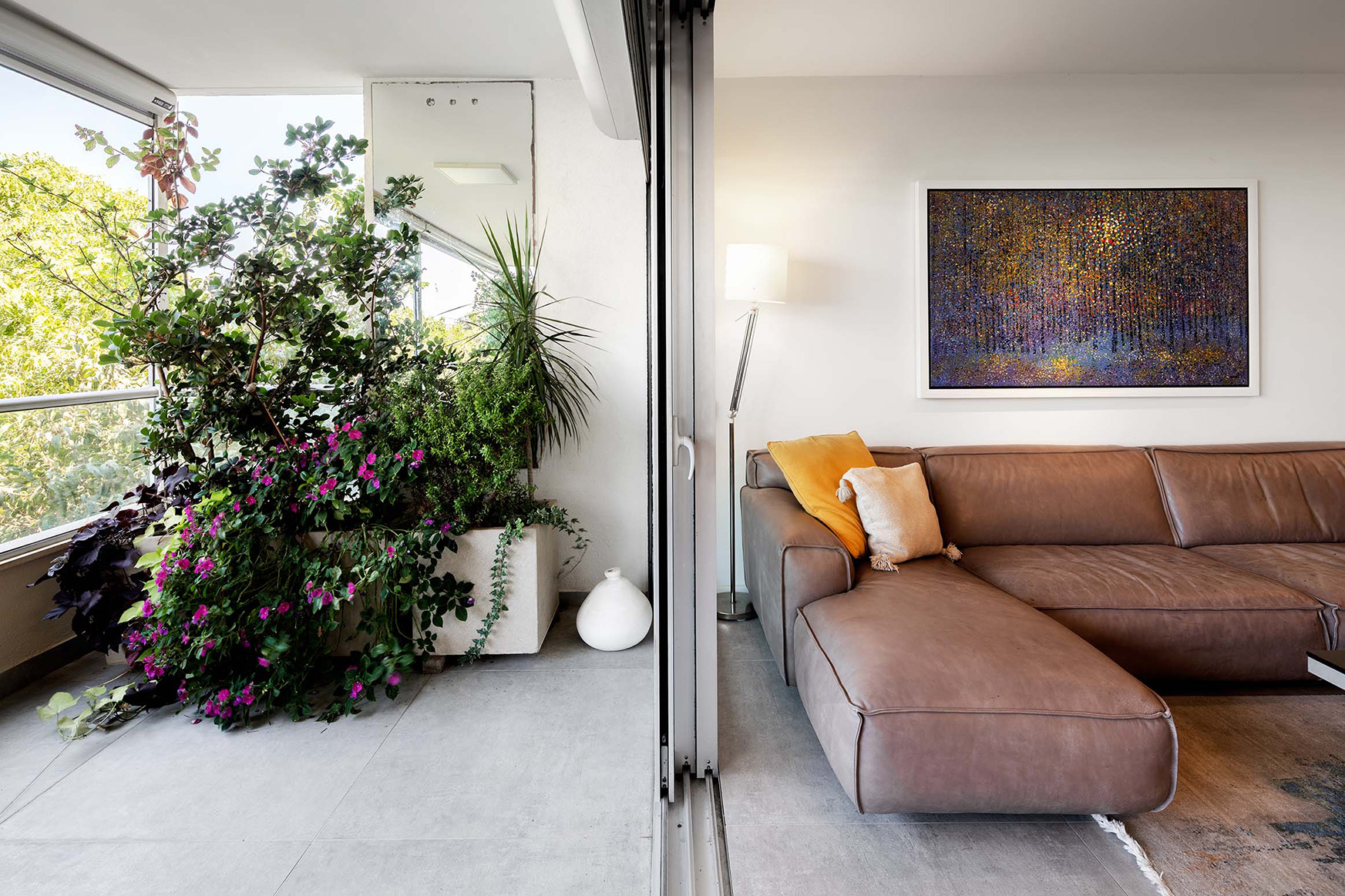
This apartment belongs to a couple, with an adult son living at home. Their wish was to move to a penthouse…
This apartment belongs to a couple, with an adult son living at home. Their wish was to move to a penthouse with spaciousness, privacy for the youngster and for themselves, plus the option to host freely and comfortably. After searching, they came to the conclusion that it was more feasible to renovate their existing apartment and optimize the spaces as well as to accommodate for economic constraints.
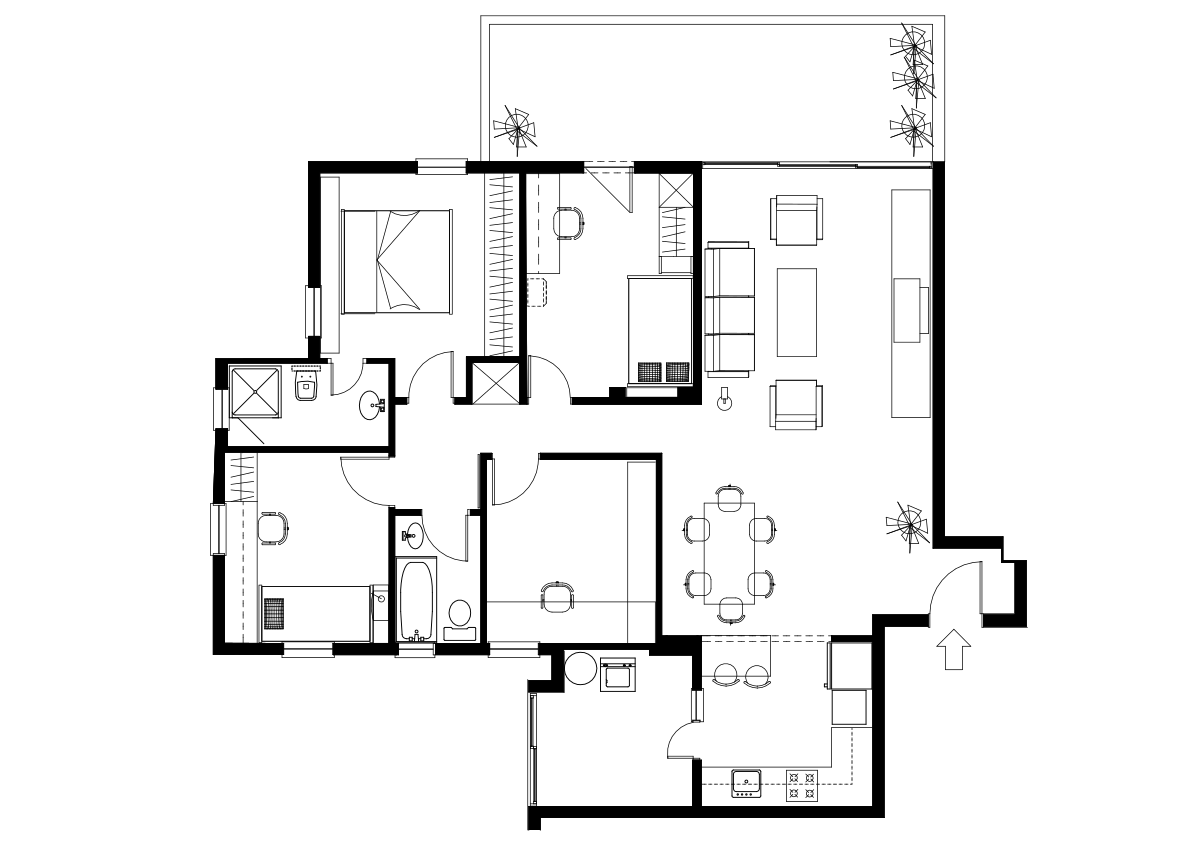
Before
We accepted the challenge and came up with a design that in effect, turned their home into a penthouse that fulfilled all their fantasies.
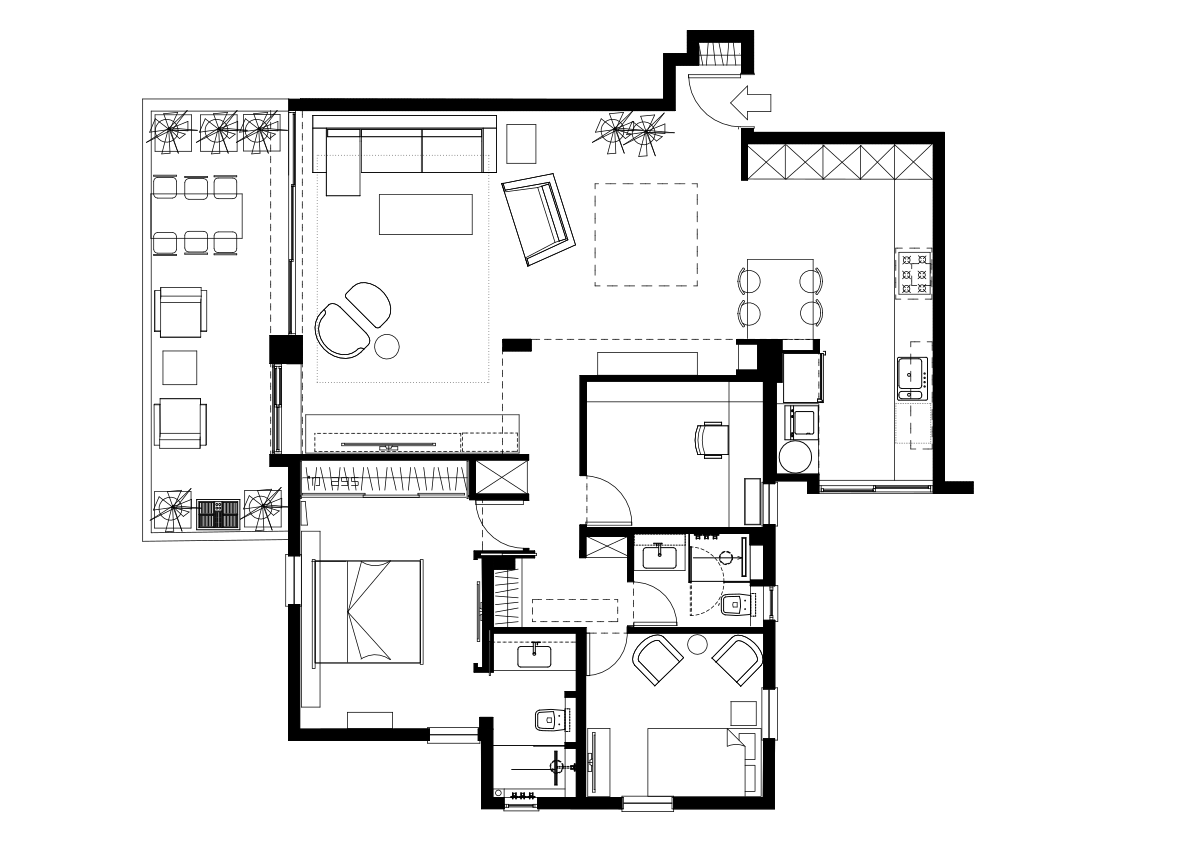
After
By eliminating one of the rooms that was already obsolete, we enlarged the public space with direct access to a large terrace facing a landscape of tree canopies and beyond. For the young man, we created a private unit, while still allowing the use of the facilities for guests, as was deemed necessary. In addition to that, the couple also enjoys their very own private suite.
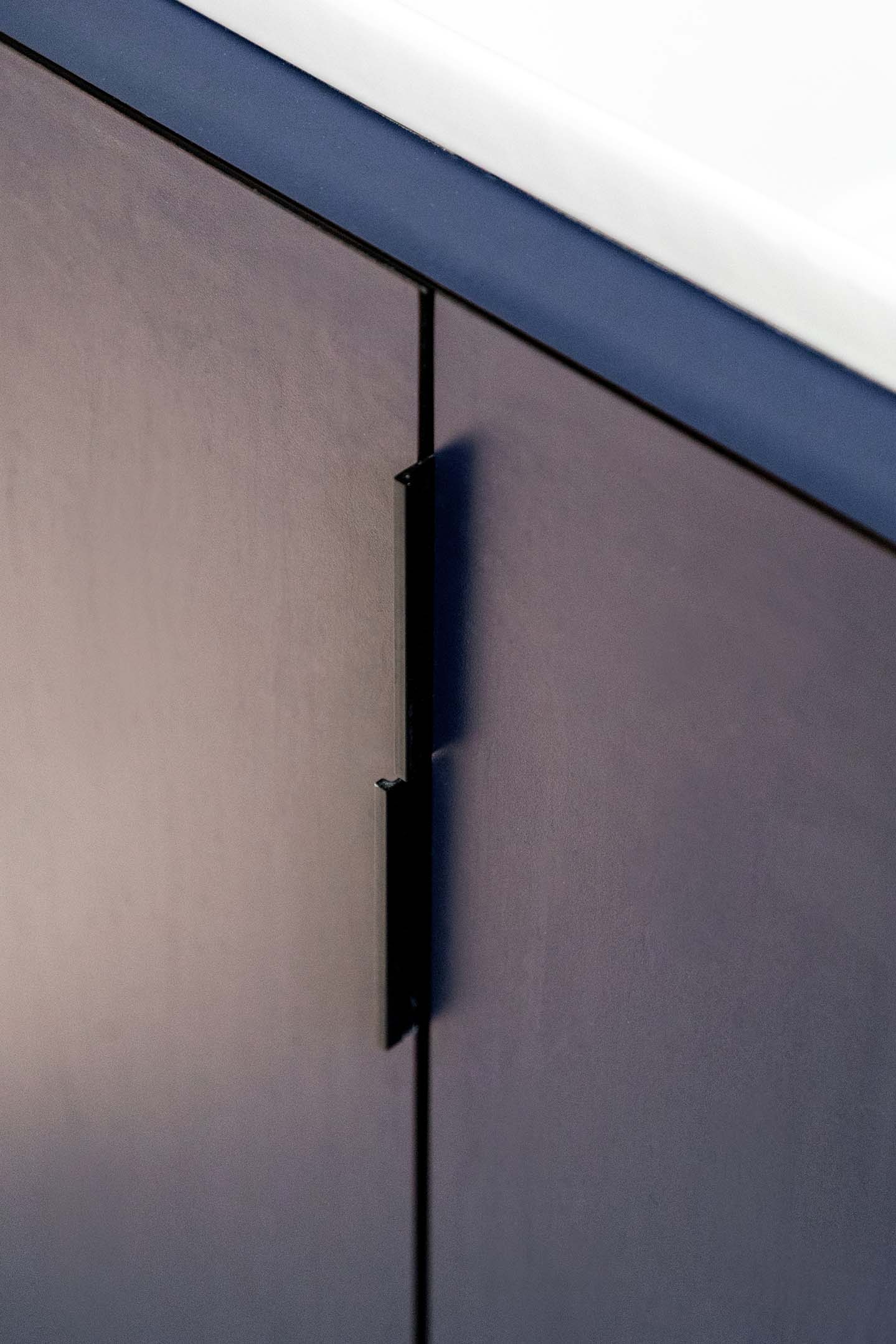
In this project, the couple elected to use our design services in all the facets of their home, and the final outcome reflects this in a thoughtful and well executed apartment, where everything combines seamlessly and in perfect harmony. The materials were chosen with care to be neutral in color and of good quality. However, colors were introduced in focal points to blend and match with the family’s art collection. We also chose the furniture throughout the apartment. Lighting was an element to be considered with special care. Furthermore, we designed the carpentry work to accommodate all the family’s needs. As in all of our projects, the actual construction and execution was closely supervised by us, making sure that every step was carried out in the best possible way.
DADA
- Type
- Renovation
- Scale
- Medium
- Status
- Built
- Year
- 2025

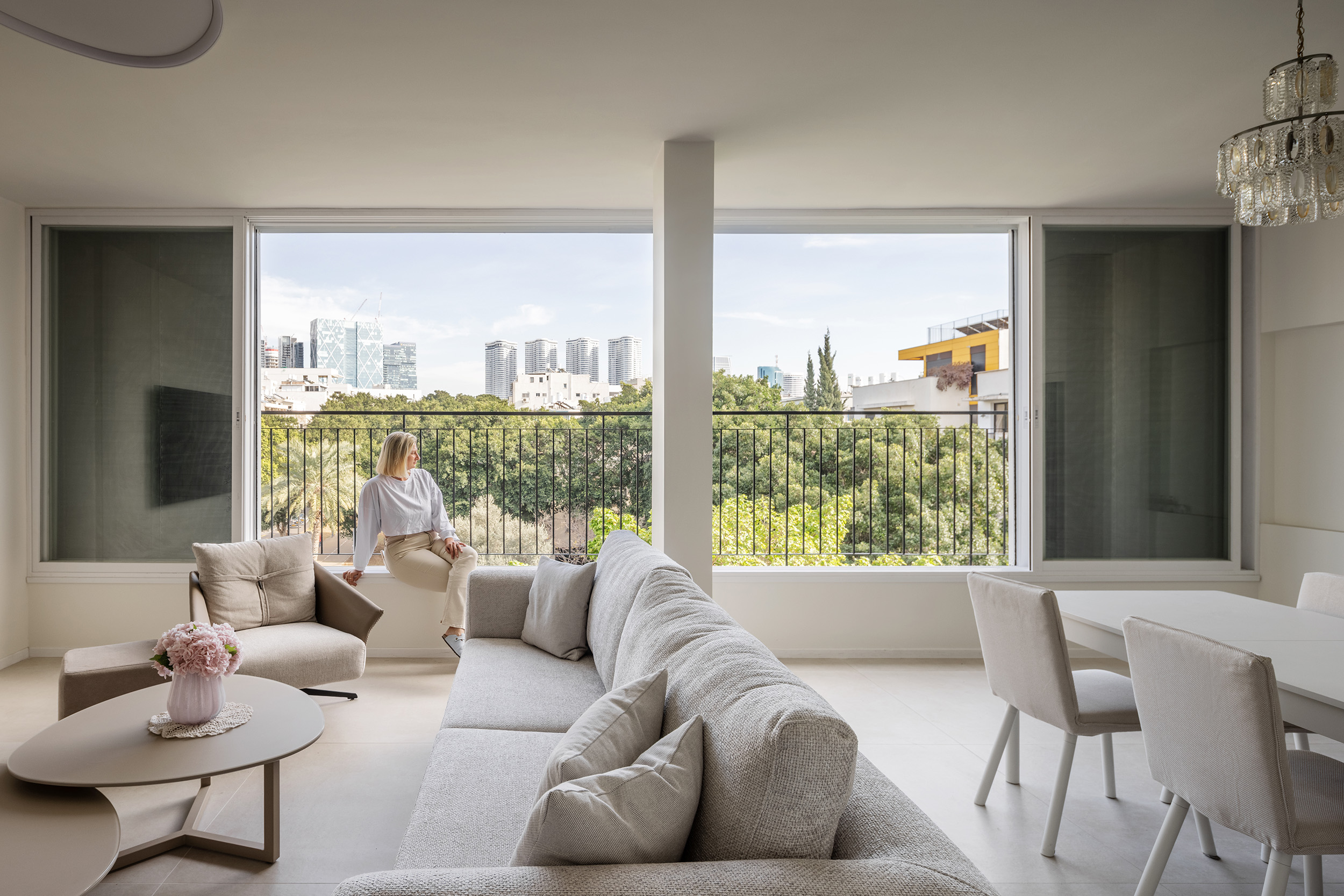
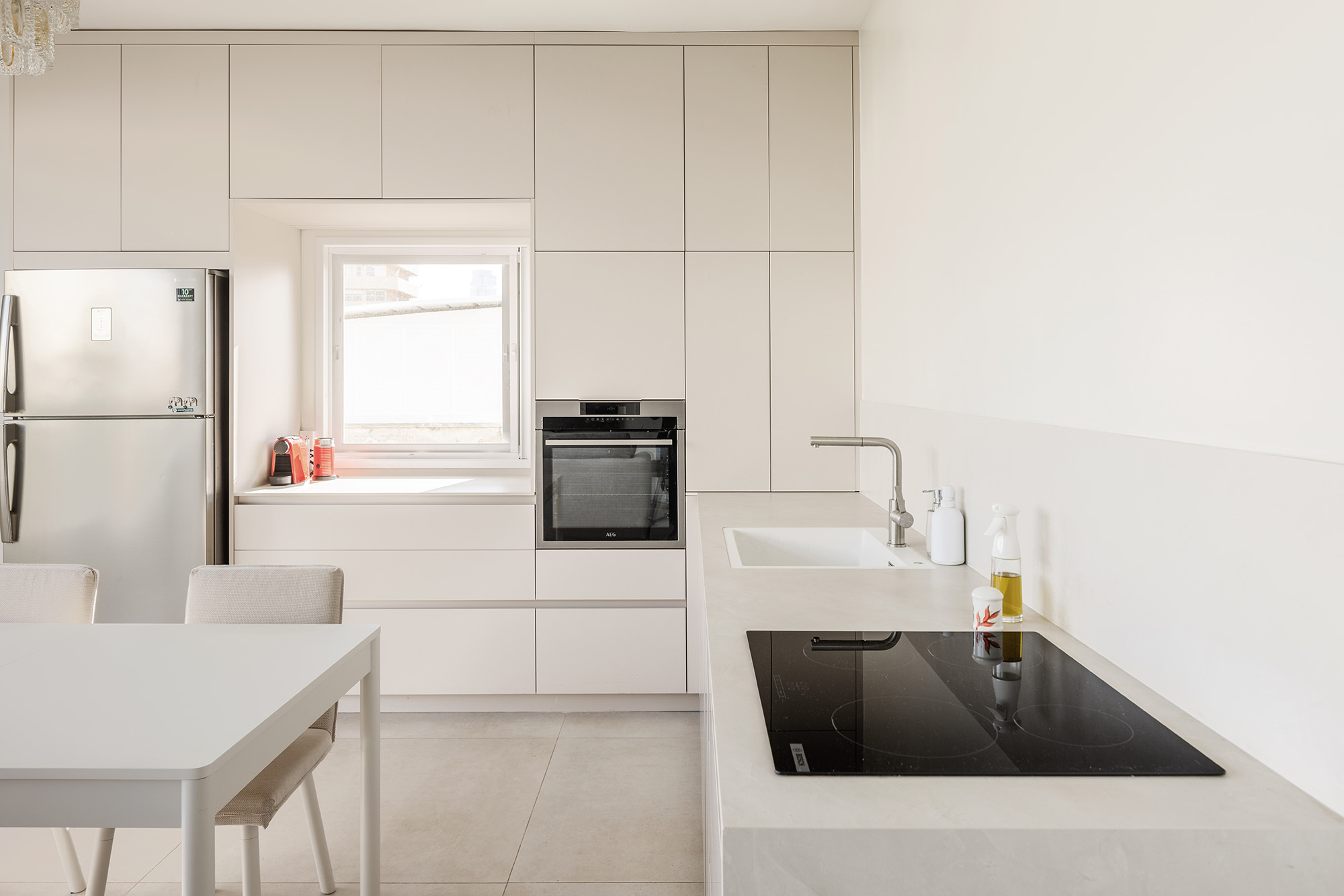
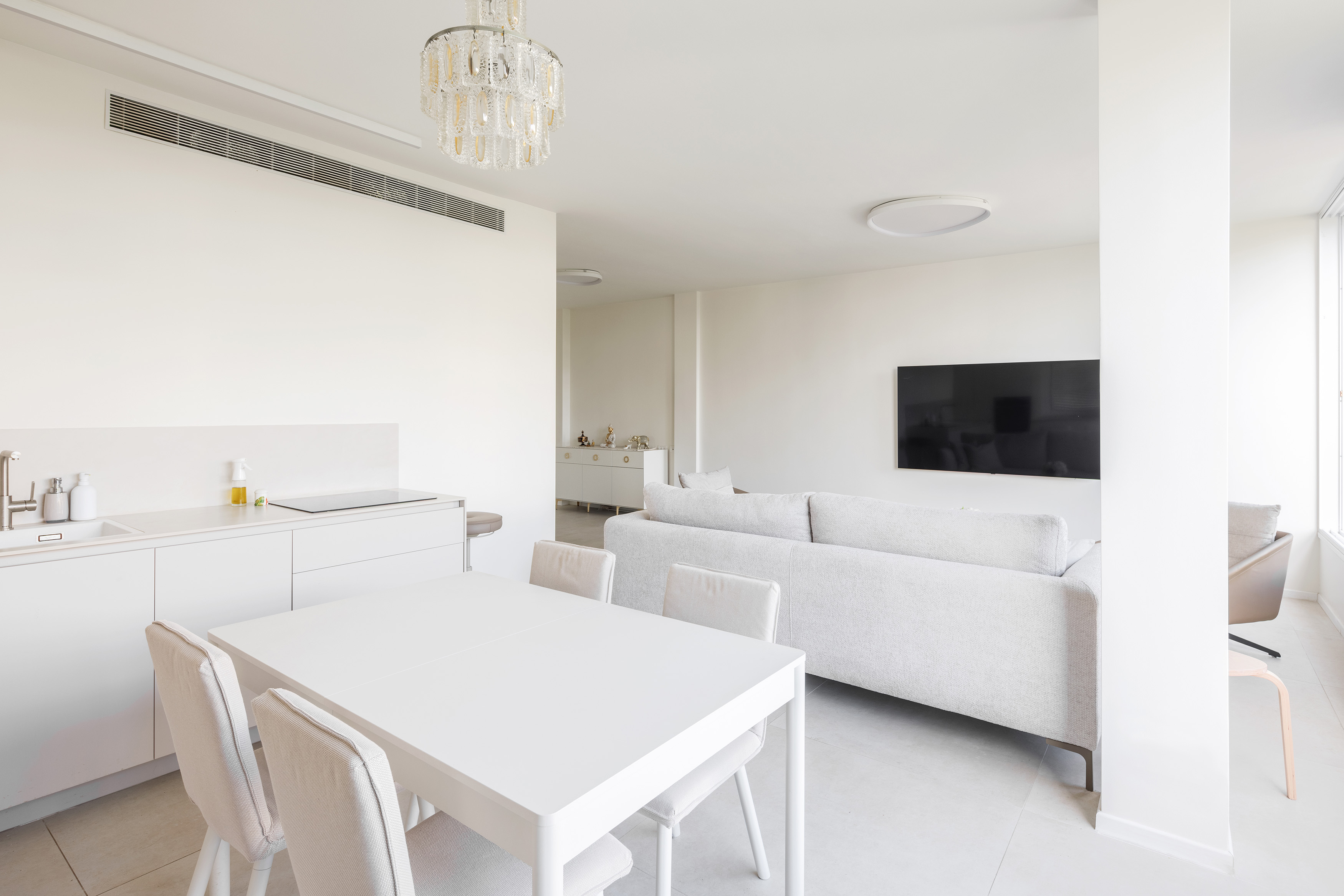
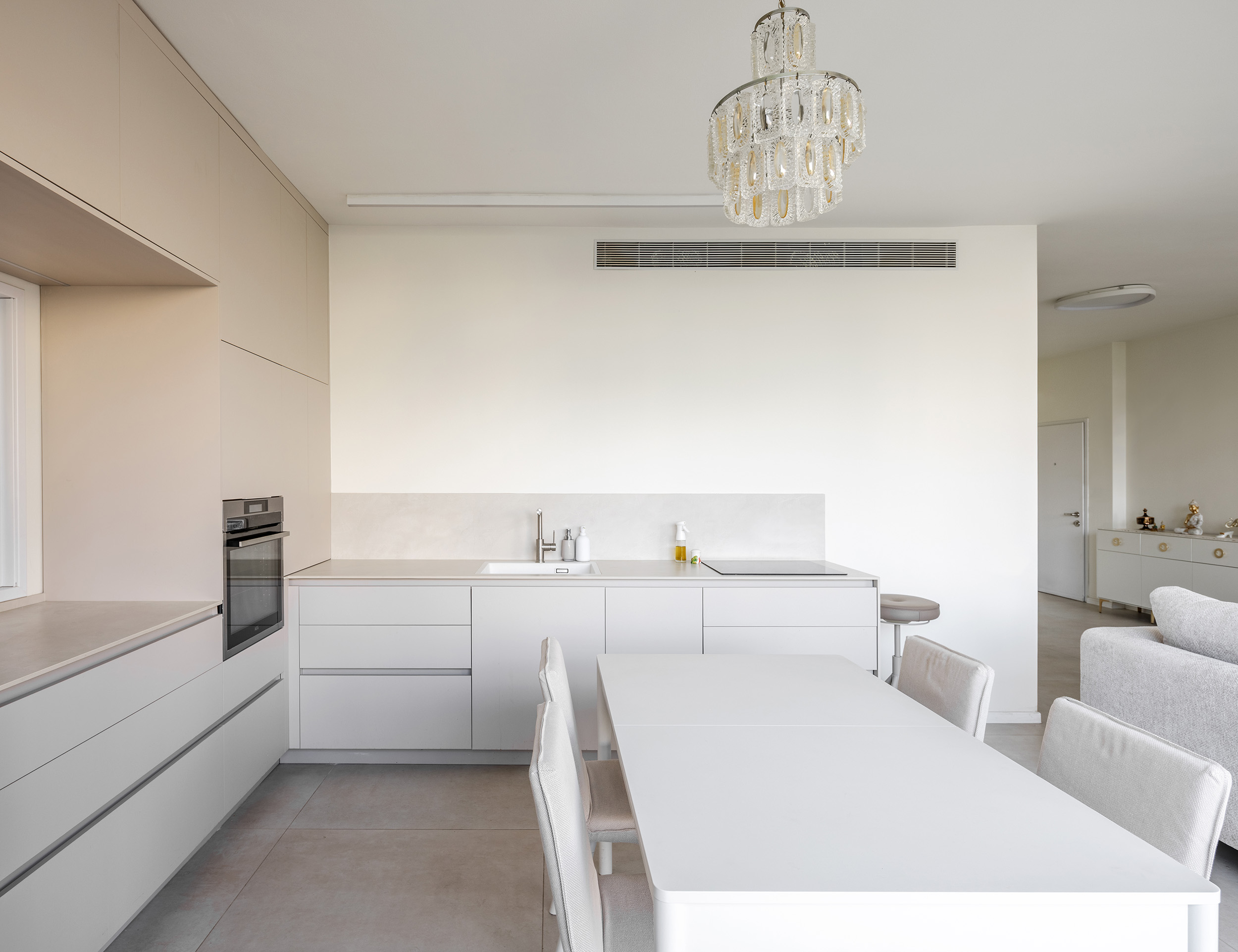
The first time we saw this apartment, we fell in love with its location and its great potential. Our main…
The first time we saw this apartment, we fell in love with its location and its great potential. Our main challenge was to guide the homeowner to accept our vision for a completely new configuration from the one she was used to living in.

before
The bedrooms were moved to a more private and quiet area and the service functions were placed in a hidden and efficient location. The carpentry in the project was designed down to the last detail to suit the unique needs of the client.

after
The result is a spacious home with an uninterrupted panoramic view of central Tel Aviv. In accordance with the client's taste, we chose materials in light and monochromatic colors that created a minimalist interior design.
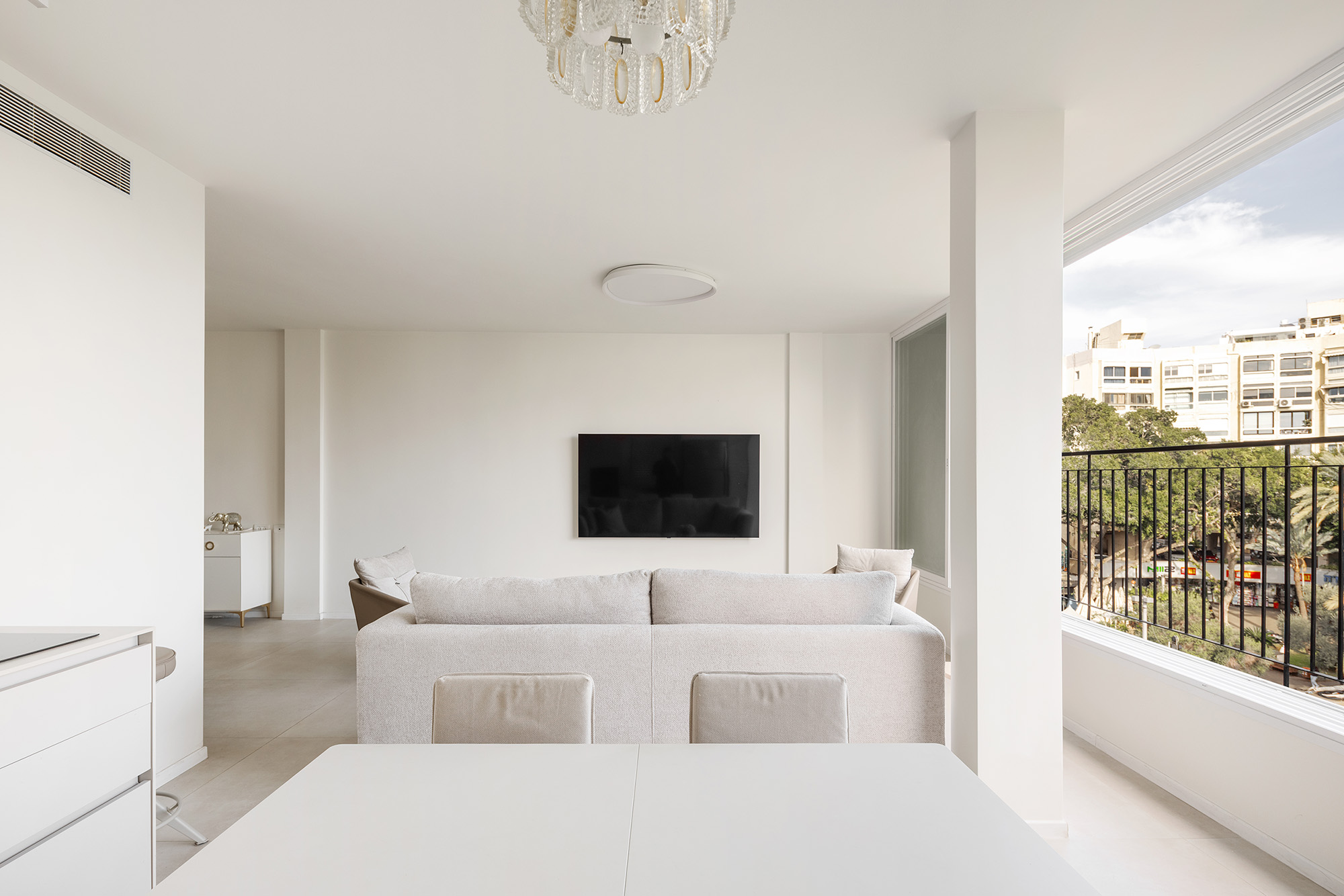
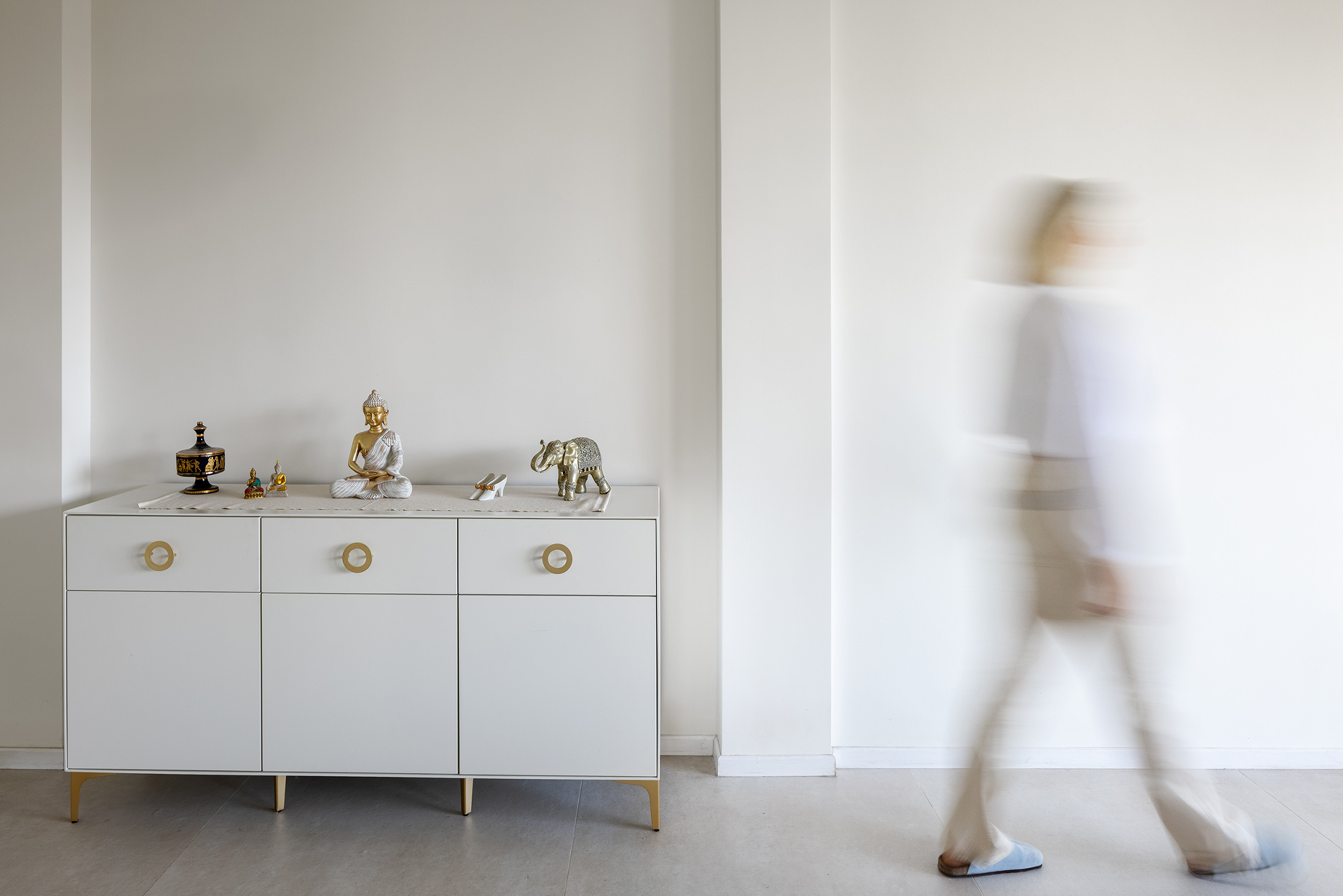
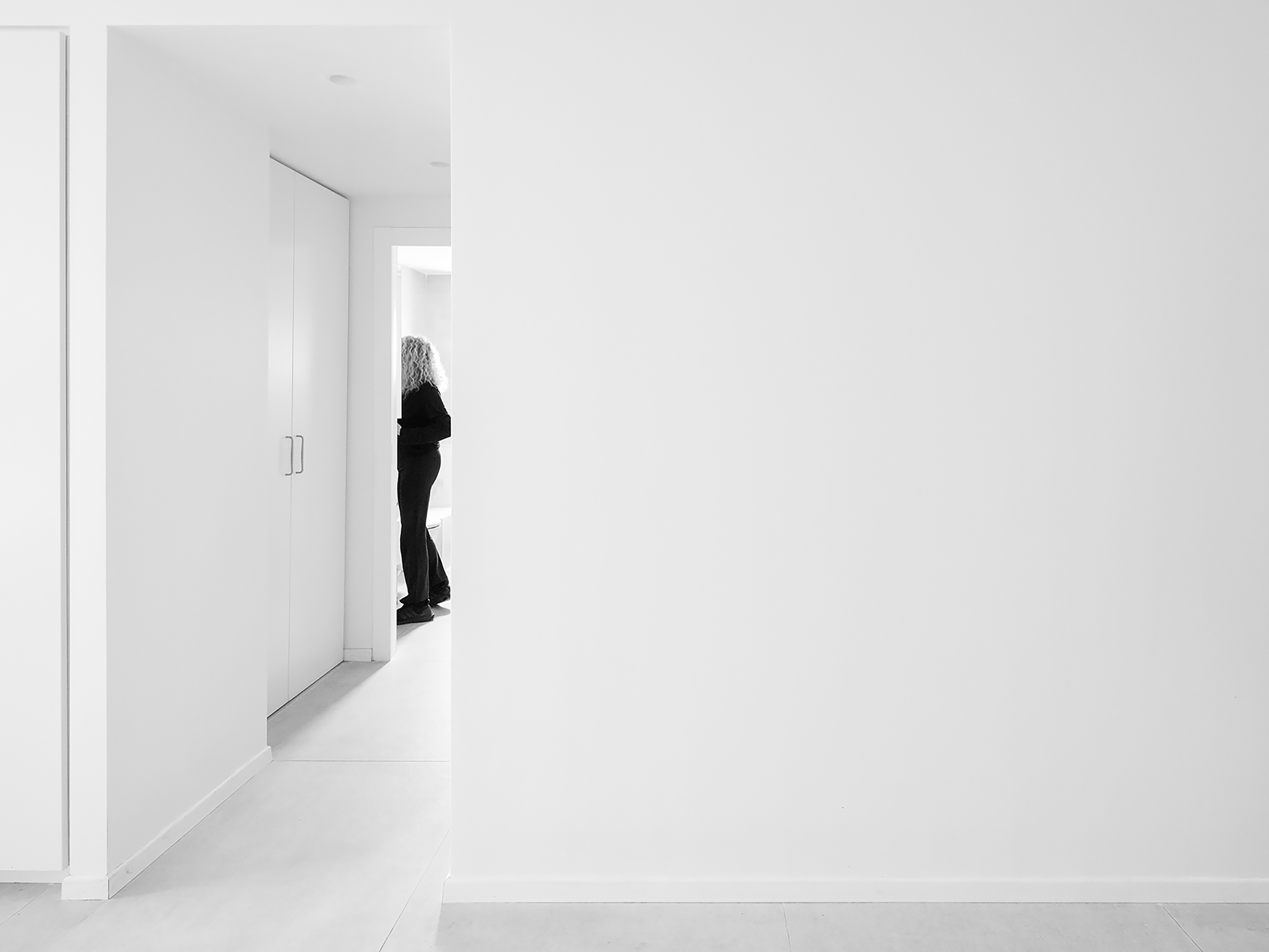
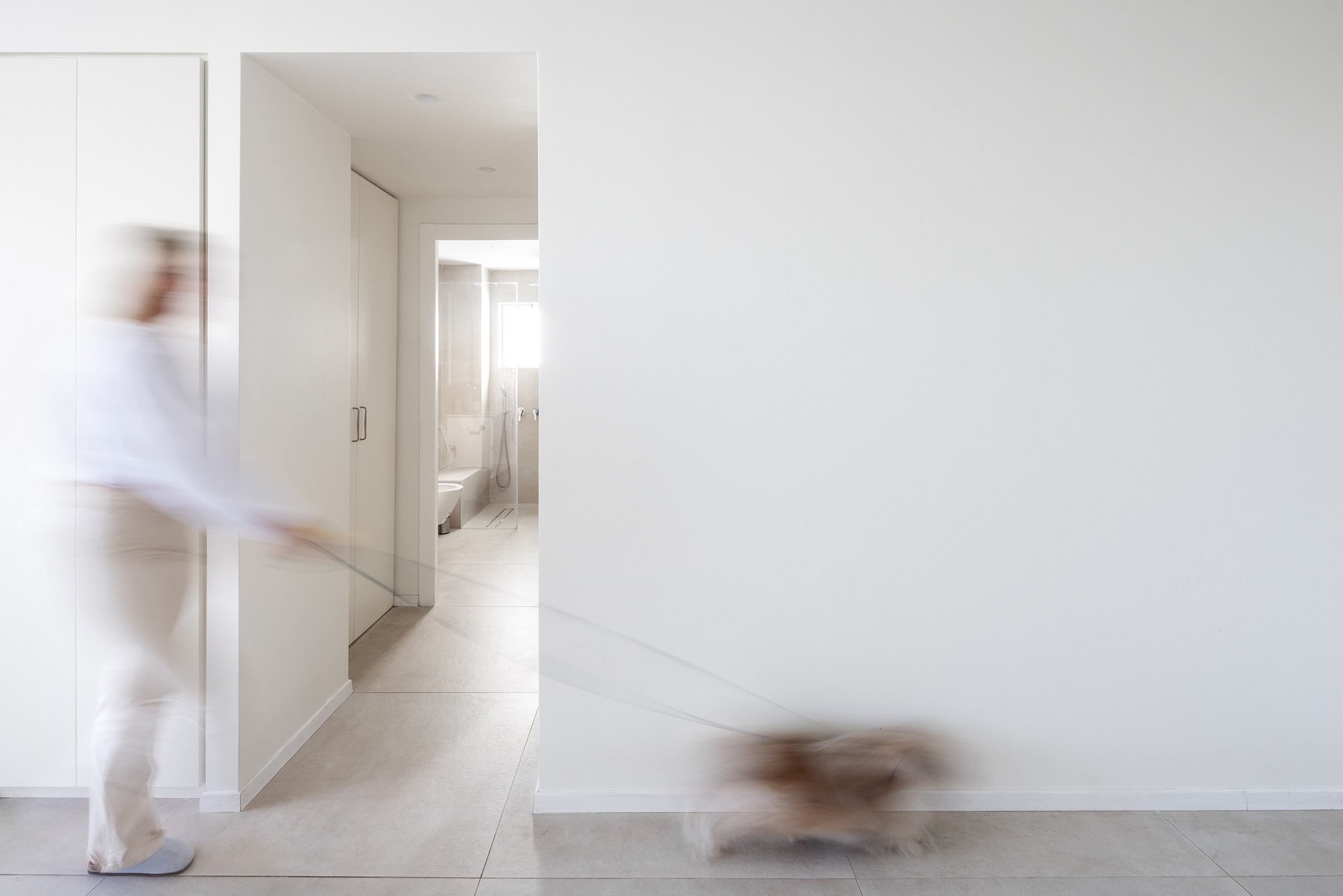
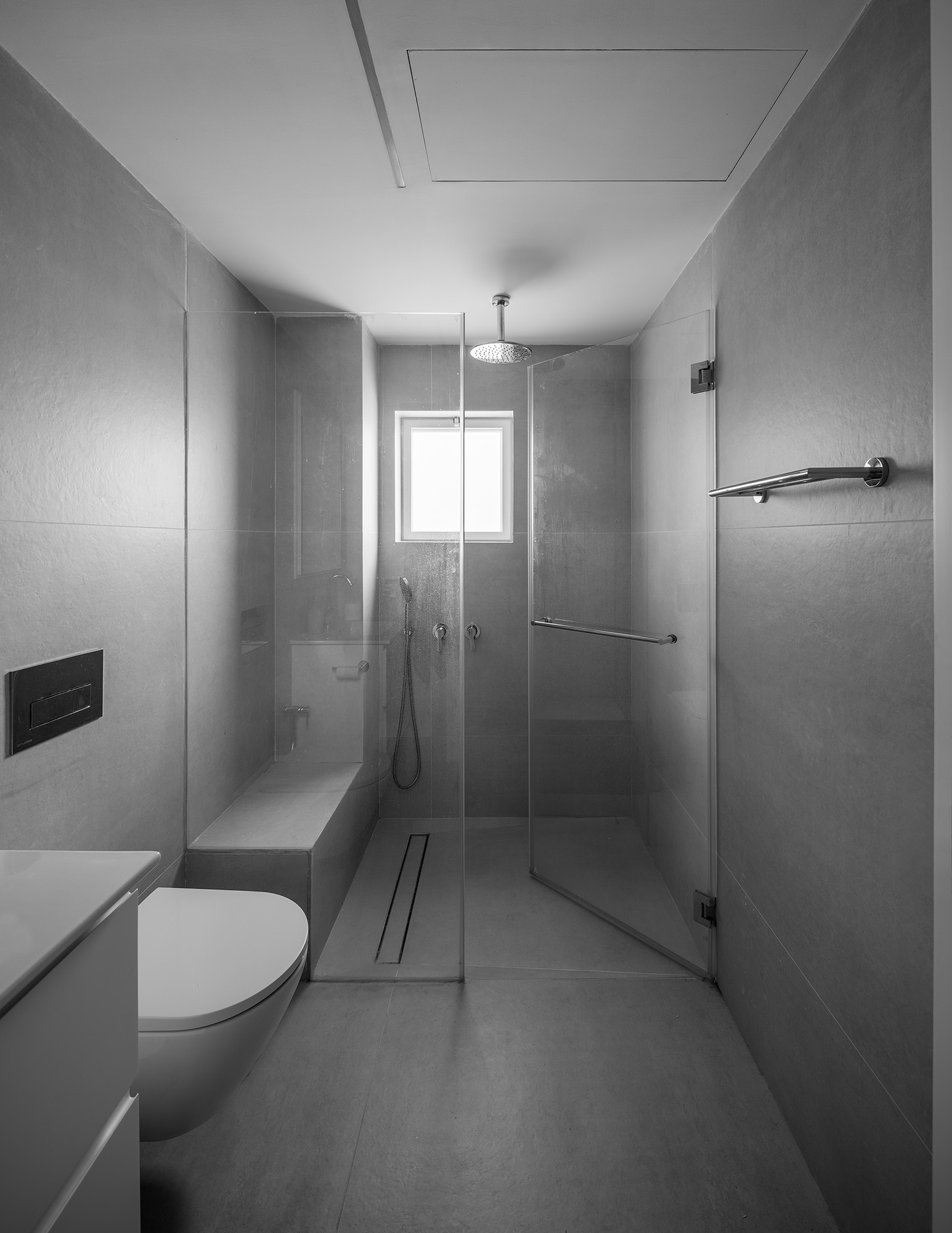
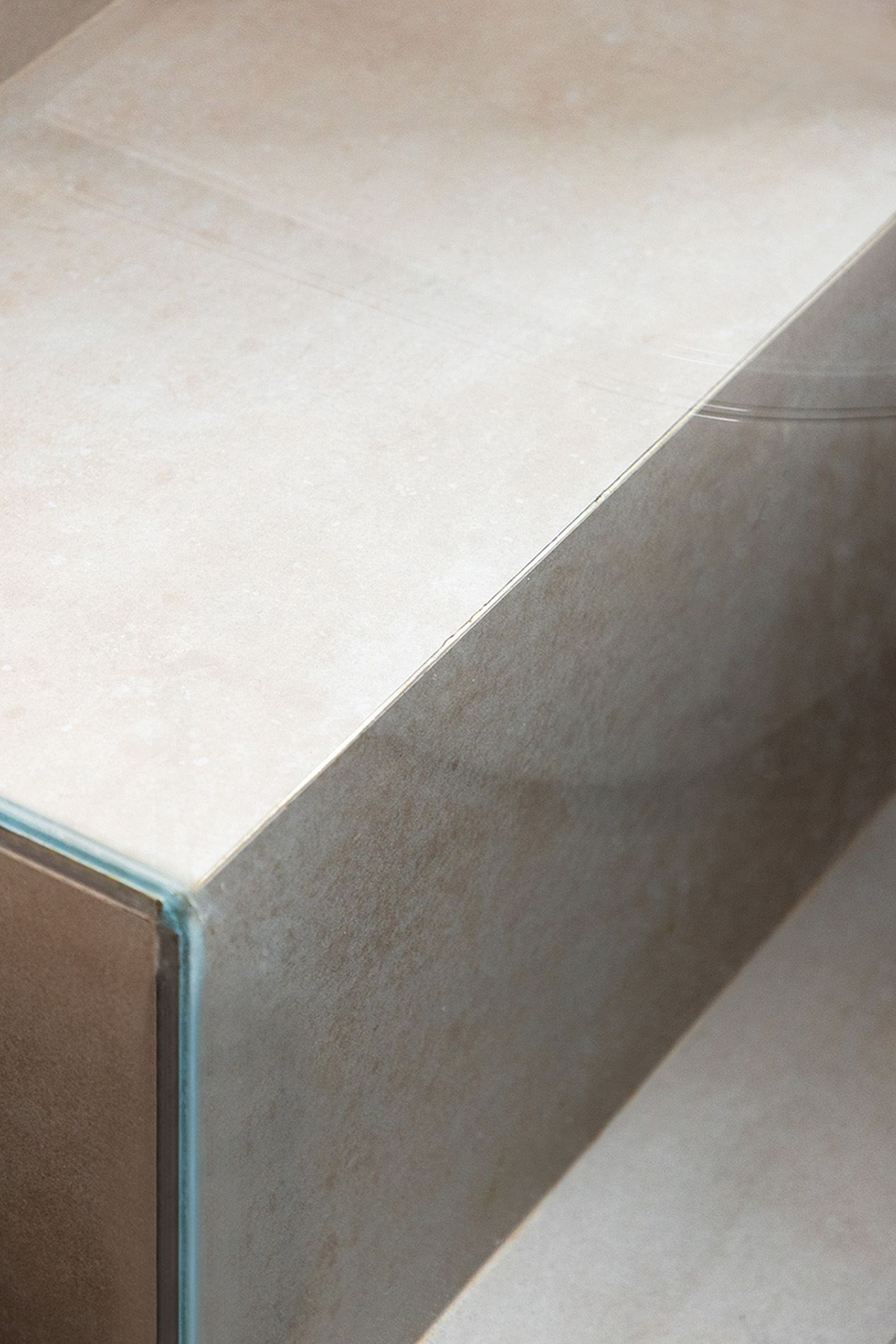
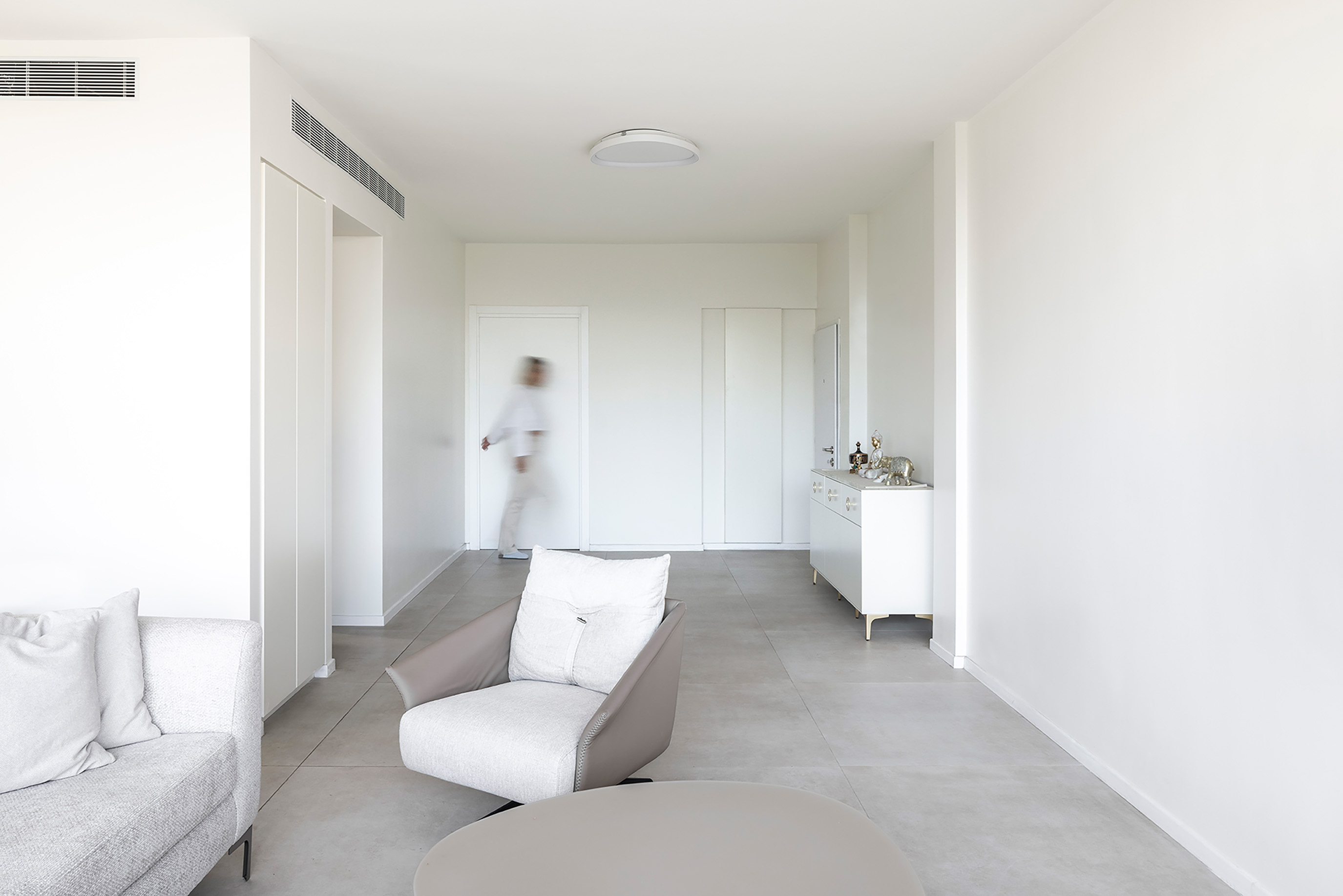
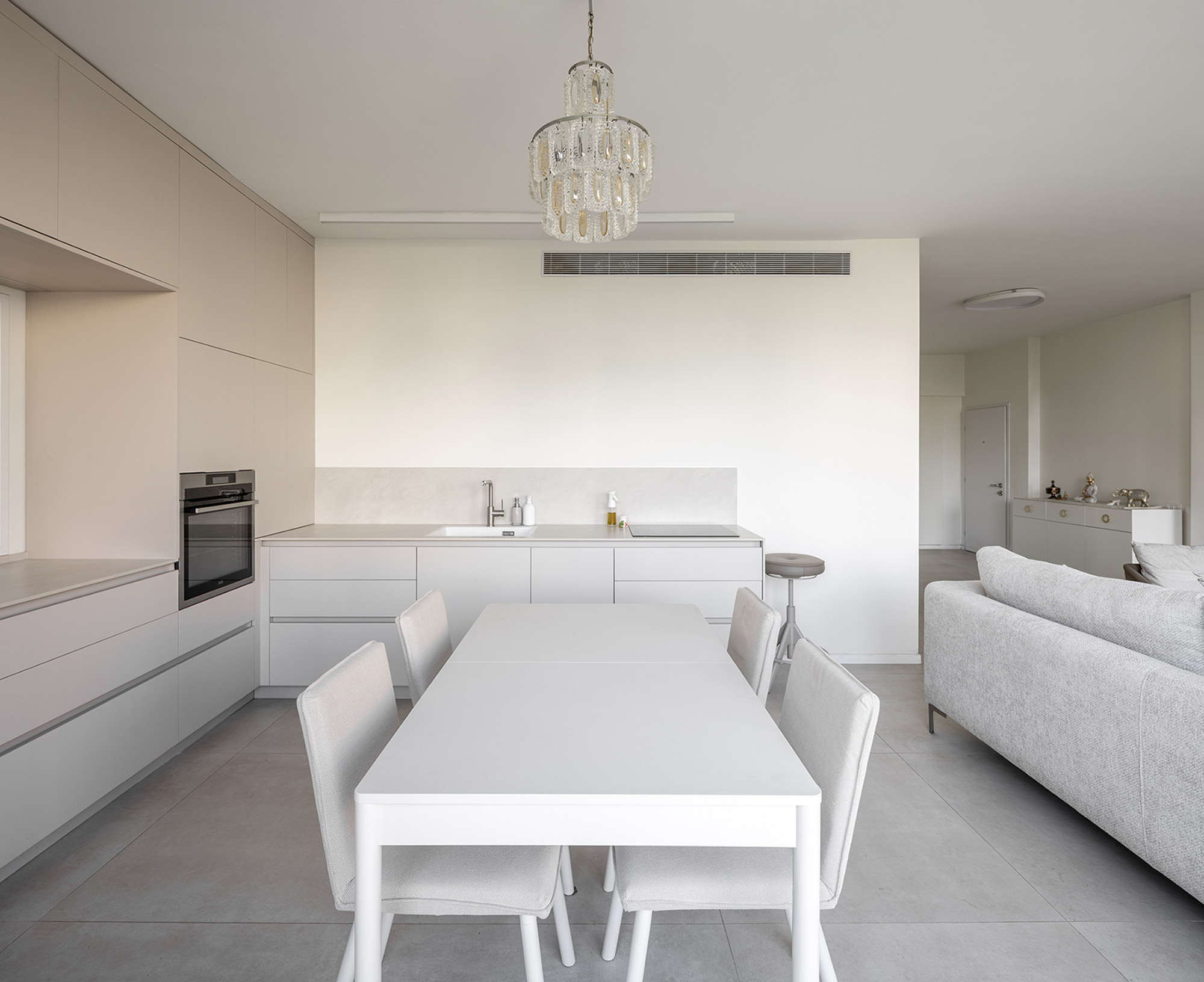
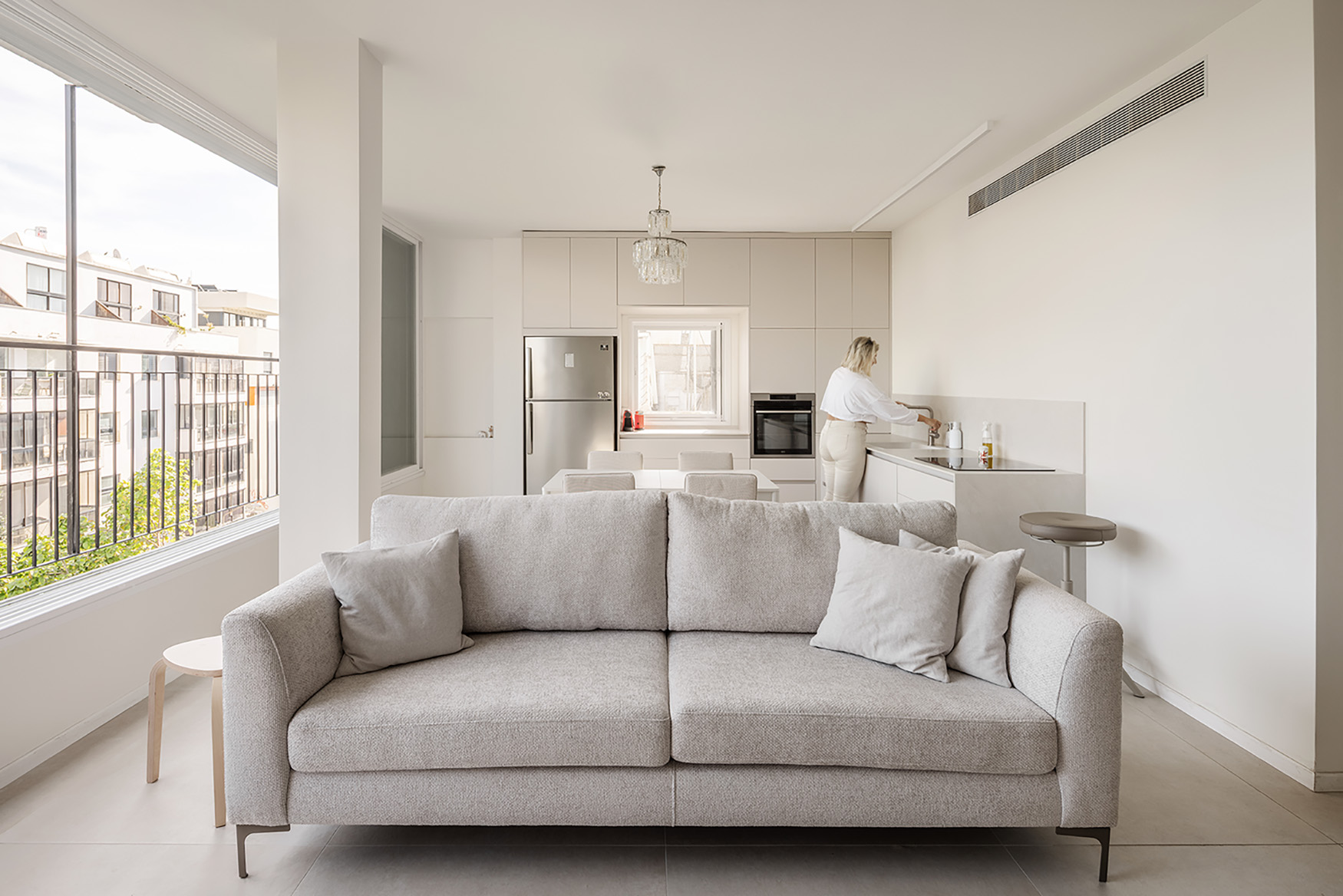
The client's reaction after returning to her renovated home was one of joy that she had followed our lead and received a new and improved apartment.
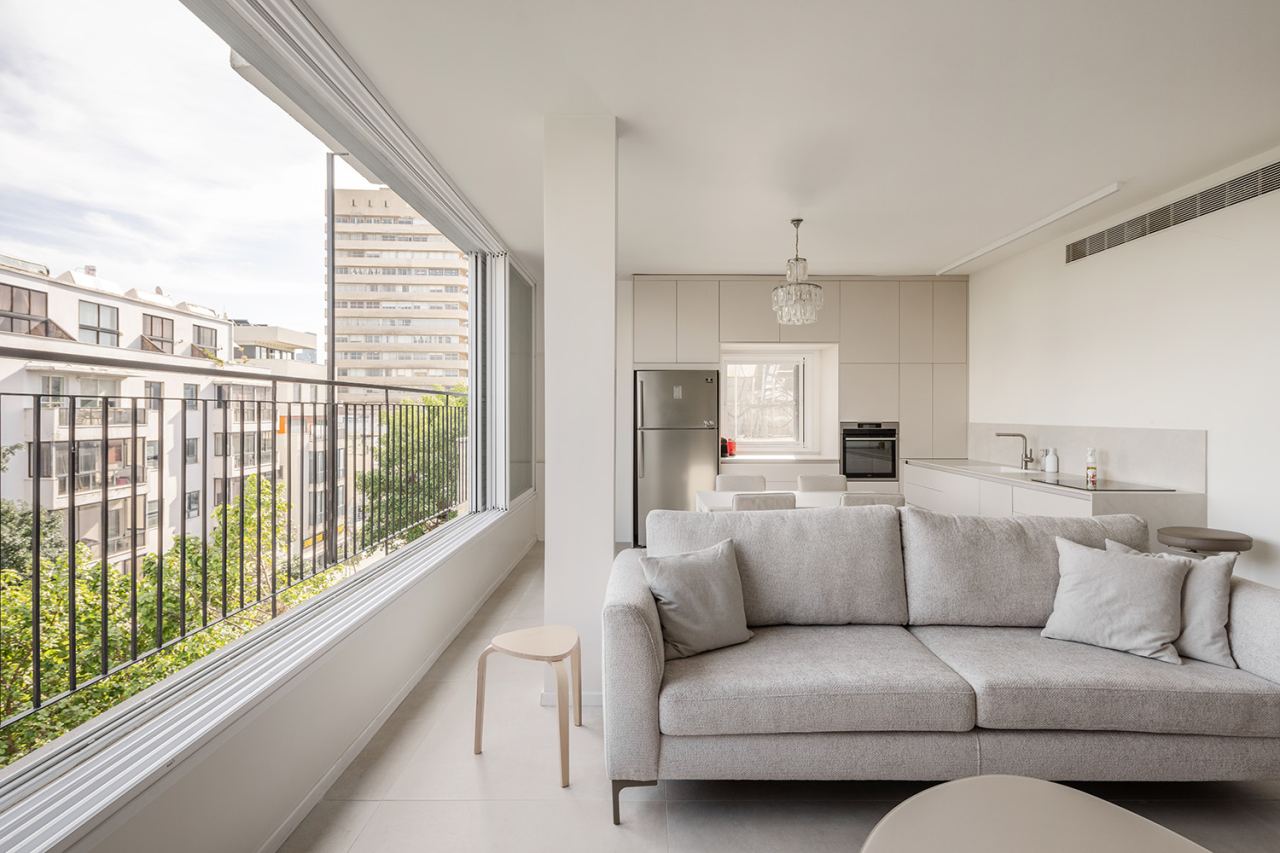
Contact
Email: office@steiner-arch.com
Phone: 036834091
Address: 5 Sirkin st., Haifa 55 HaHagana st., Herzliya
About
Our firm was founded in Guatemala in 1976 by husband and wife team Meir and Frida Steiner under the name Engelberg-Steiner Architecture. We designed and built a variety of projects in different fields. In 1980 the studio relocated to Israel, where the name was changed to the current "Steiner Architecture". Our services include design, licensing, and preparation of documents for bidding and construction. We allow for flexibility during the building phase and we are accurate in our planning. Supervision on site and continued service after delivery are also part of our DNA as architects. What defines our creative process is the close collaboration with the clients all the way through to the final product. We find bold and original solutions to maximize the space while respecting the budget. Detailing every element with attention and precision, we make the clients’ vision into a reality with our guidance, educated opinion and advice. Curating the materials and using technology in functional and unexpected ways is how we achieve exquisite results that entice all the senses. In 2022, the founding couple's son, Yaniv, joined Frida as a partner, marking a new chapter in the practice. This partnership values the wisdom of the past while embracing the potential of the future. Together, Frida and Yaniv continue to expand their work with the same passion, integrity, and devotion that has long been the hallmark of the firm’s architectural journey.
Team
Frida Steiner
Job: Architect | Founding partner
Education: Bachelor of Architecture from Pratt Institute in Brooklyn, New York, 1973
For Frida, architecture is more than a profession — it is an instinct, a lifelong language, and an essential…
For Frida, architecture is more than a profession — it is an instinct, a lifelong language, and an essential part of her identity. Every project she embraces becomes a full-body endeavor, approached with curiosity, rigor, and a deep emotional investment. Born in Guatemala in 1950, Frida pursued her architectural studies in the United States and during her student years she immersed herself in diverse facets of the field, gaining hands-on experience with private clients as well as public institutions and architectural offices. These early roles exposed her to a wide spectrum of architectural challenges and sharpened her multidisciplinary approach. After completing her degree, Frida returned to Guatemala City with her husband, where together they founded an architectural practice. Alongside her professional work, Frida joined the faculty of the Universidad de San Carlos de Guatemala, teaching architecture and authoring a self-learning textbook on architectural drawing and drafting — a contribution that reflected her commitment to education and the craft of design. In 1980, Frida relocated to Israel, where she continued to shape the built environment through residential and commercial projects in the private sector. Her work remained defined by the same meticulous attention to detail, thoughtful design sensibility, and unwavering dedication that has guided her throughout her career.
Yaniv Steiner
Job: Architect | Partner
Education: BA from the Azrieli school of architecture, Tel Aviv University, 2015
Yaniv was born into an environment where architecture was discussed, viewed and learned, being that both his…
Yaniv was born into an environment where architecture was discussed, viewed and learned, being that both his parents are architects. It is a famous family story that Yaniv nursed as a baby in construction sites while all around him the air was full of building noise and dust. This made his path to the profession of architecture the most natural path to be taken. Yaniv has been working independently with various architects, developers and collaborators since his student years and beyond. He has participated in a number of architectural competitions, sharpening his creative skills. Yaniv joined the firm in 2022, after 7 years of working in the field and gaining experience in larger firms while doing large scale projects. Since joining the firm, Yaniv has been involved in many projects, while engaging in the growth of the firm’s presence in the built environment. While working as a partner in an architectural firm, Yaniv teaches architectural students at the Shamoon college of engineering (SCE) in Be’er Sheva, contributing to the promotion of the quality of future architecture in Israel.
Articles
The Process of Renovating an Apartment
To learn about construction, the best school is to be on the site, see the process live, get to know the…
To learn about construction, the best school is to be on the site, see the process live, get to know the materials first hand and how they are implemented, know the forces at work, and only then, DESIGN. Following, we observe ,at close hand, the transformation of one apartment that got a new life through the process of renovation.
About the challenge
This is the “home away from home” of a family from overseas, who comes to Israel on vacations or to celebrate holidays and special occasions. The apartment is situated in a building with very irregular angles that make the full use of the space very challenging. Its location is in close proximity to the beach, which requires the use of materials resistant to the harsh conditions known in that kind of climate.
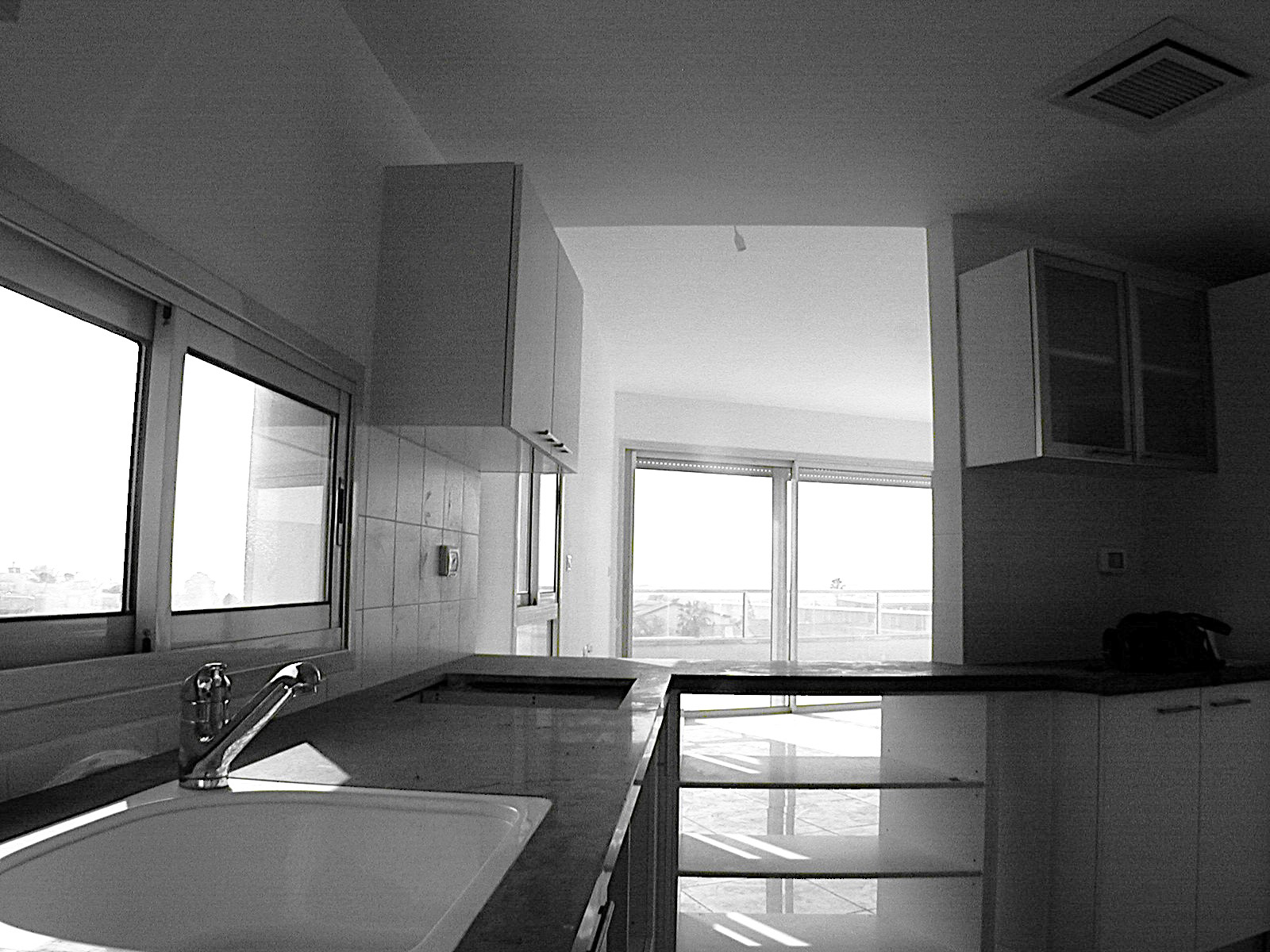
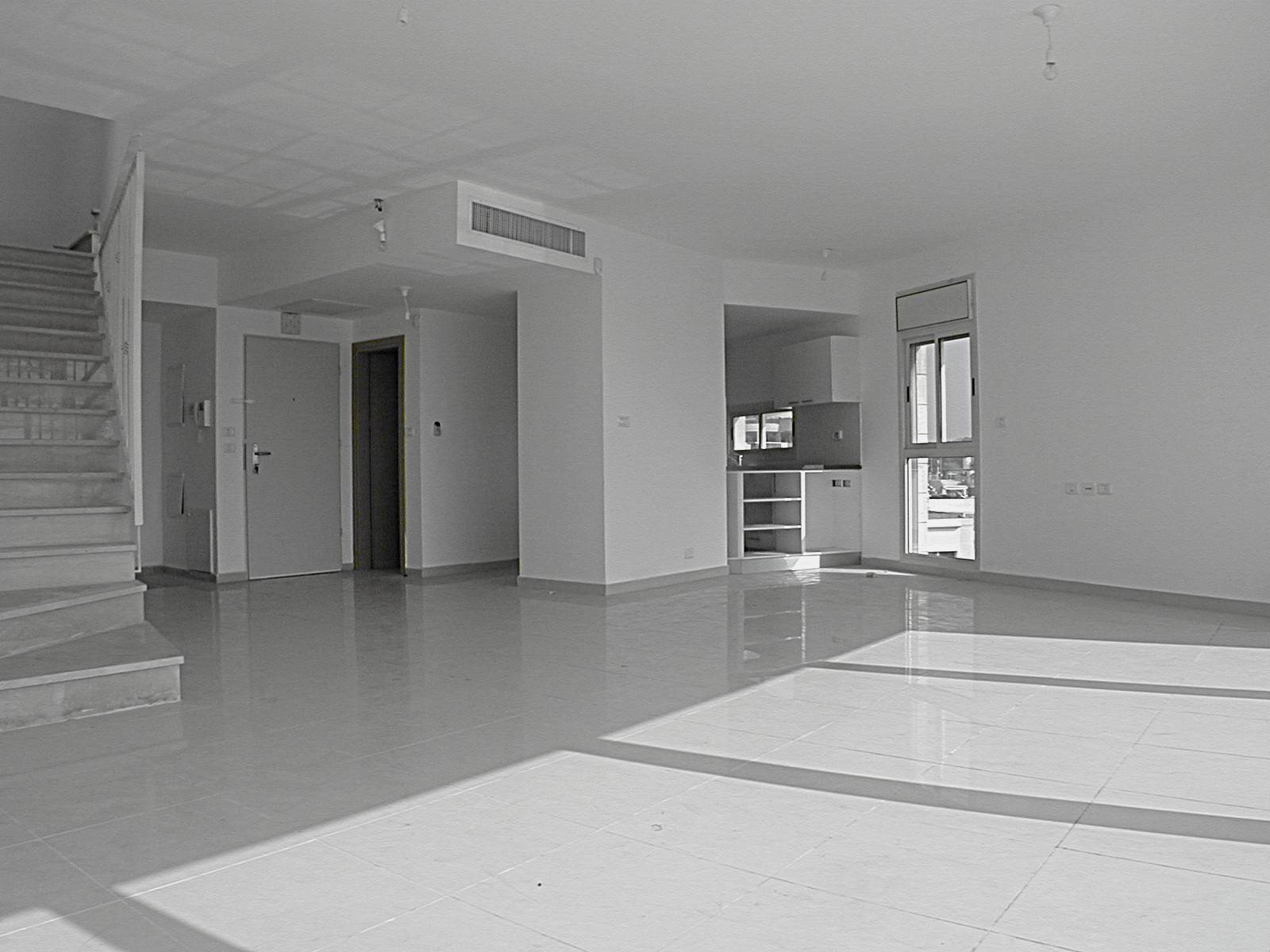
Before
About the plan
The apartment consists of three floors. The entrance is on the central level that leads directly into the main public spaces. The lower level houses the private bedrooms and bathrooms. Whereas the top level is a large terrace used for bigger crowds and entertainment. The designed floor plans show how the curved and angular walls are left free to enhance the spaciousness of the apartment in some cases, and in others they accommodate storage.


Roof terrace floor
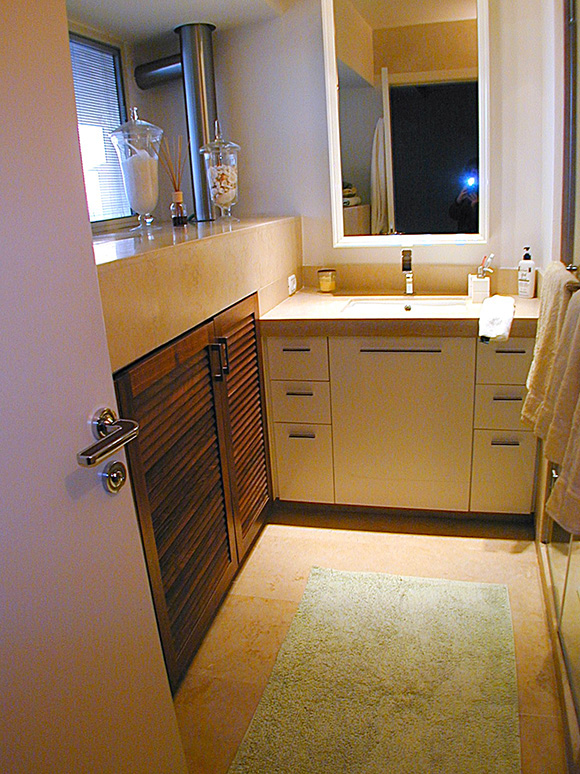
About the master bathroom
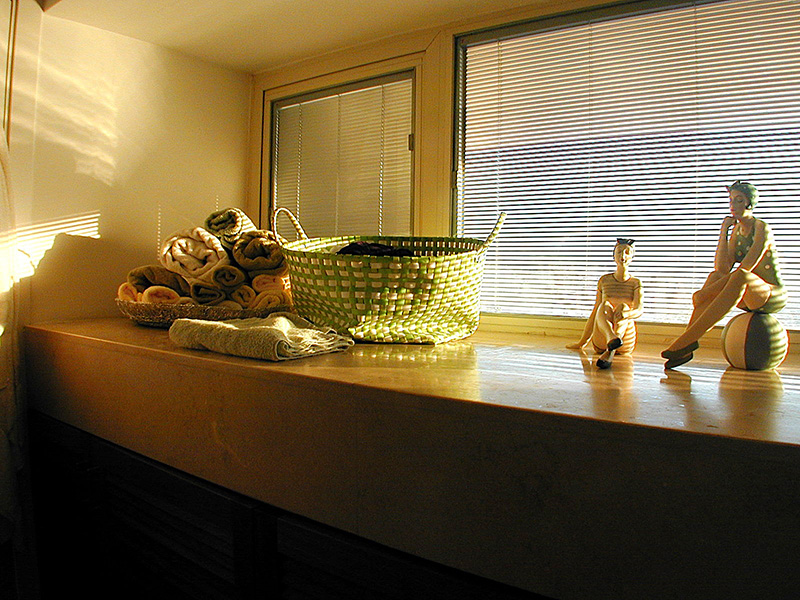
The bathrooms have particularly good use of the space. The niche under the window is utilized for laundry machines and additional storage.
About the master bedroom
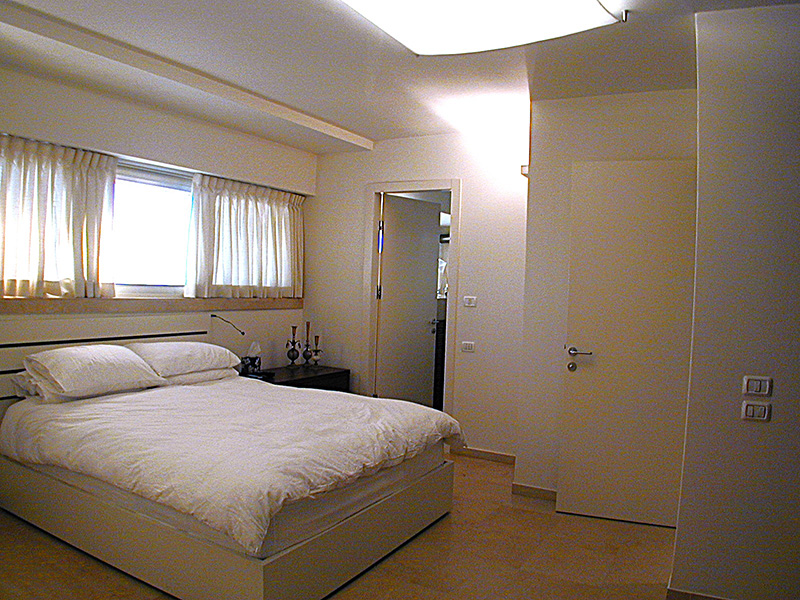
The window ledges expanded the interior by placing the new windows on the outer perimeter. Same happens in the master bedroom where bedding storage is behind the headboard that hides the under window niche.
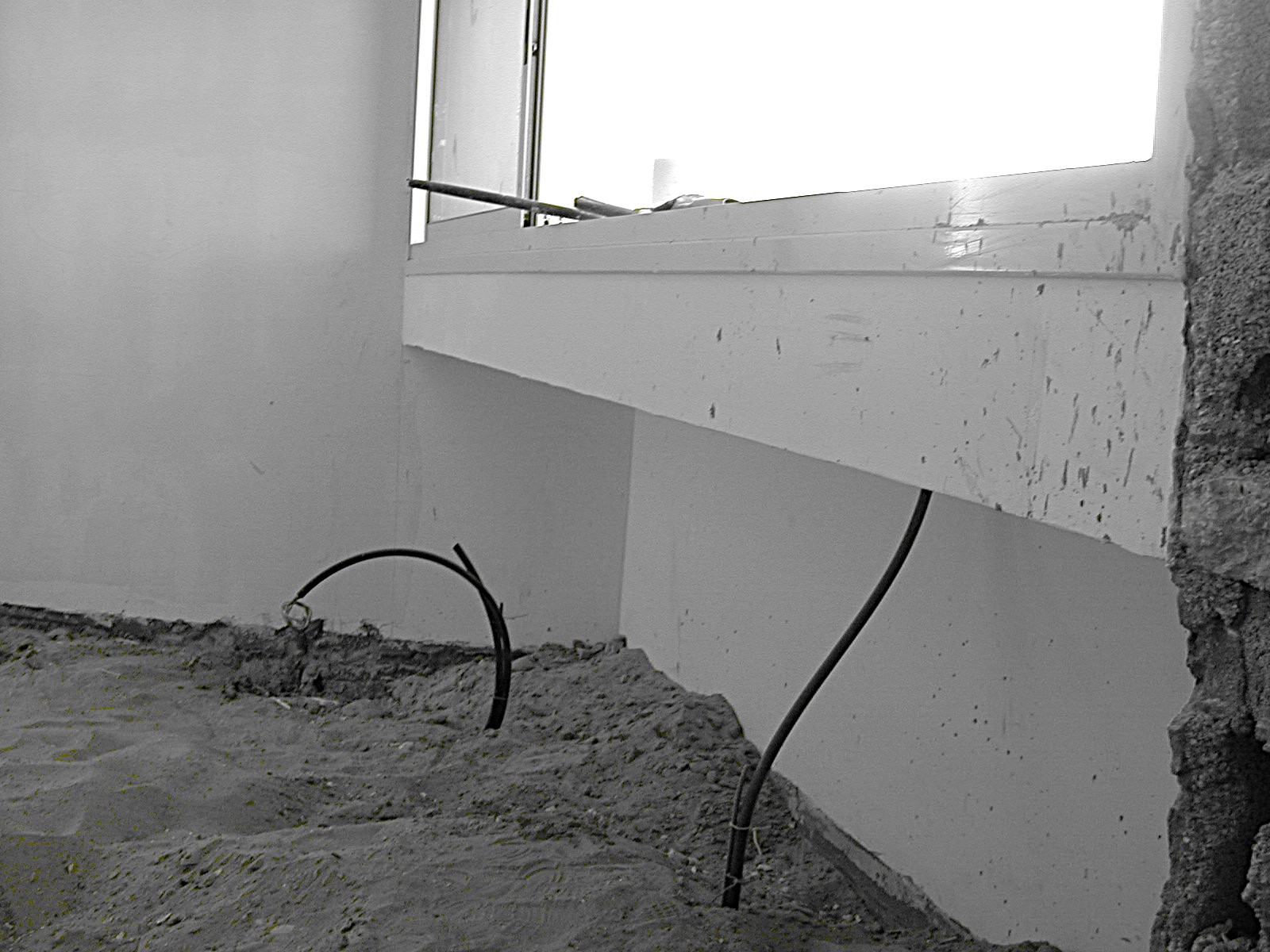
About infrasstructure
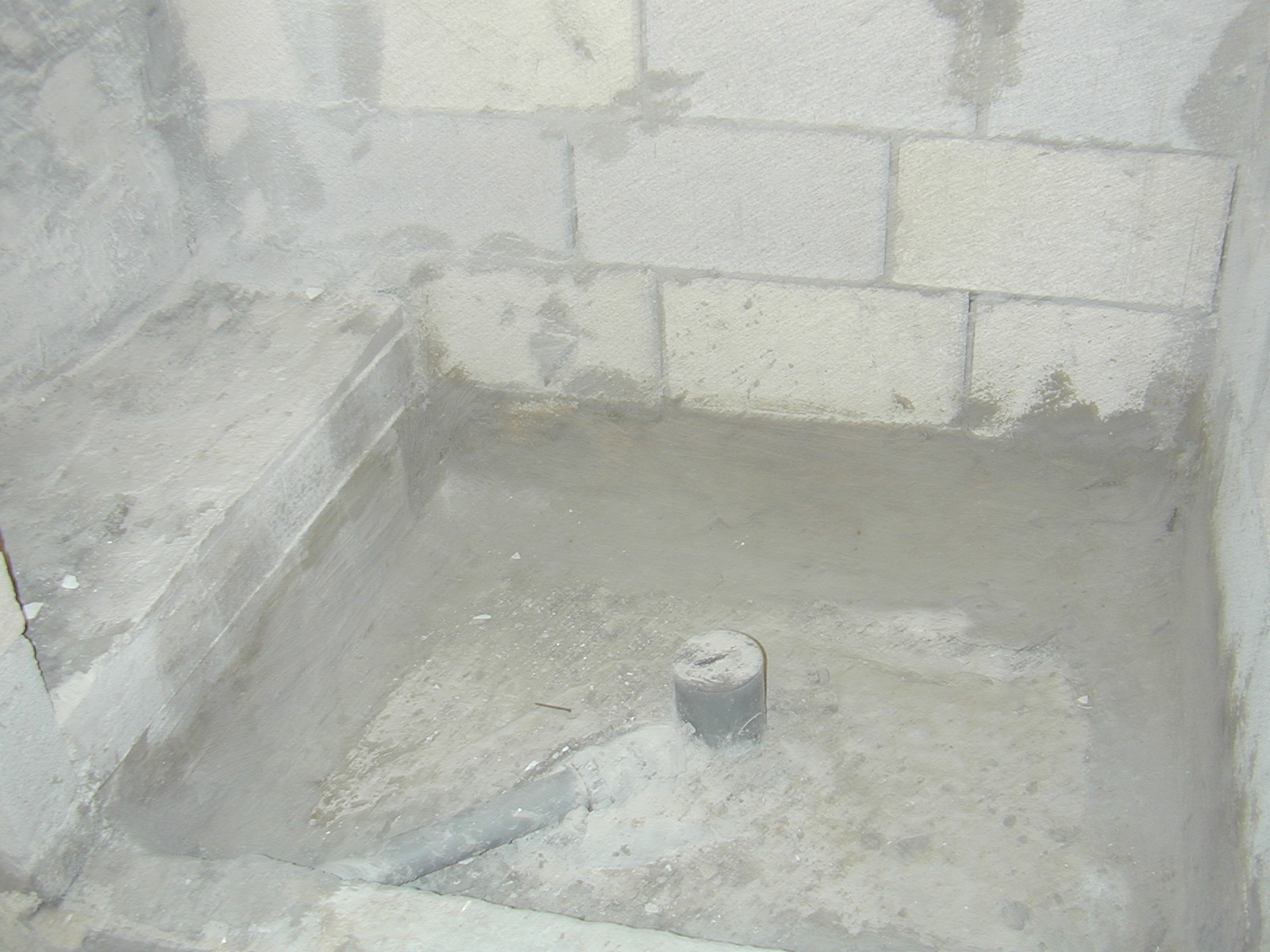
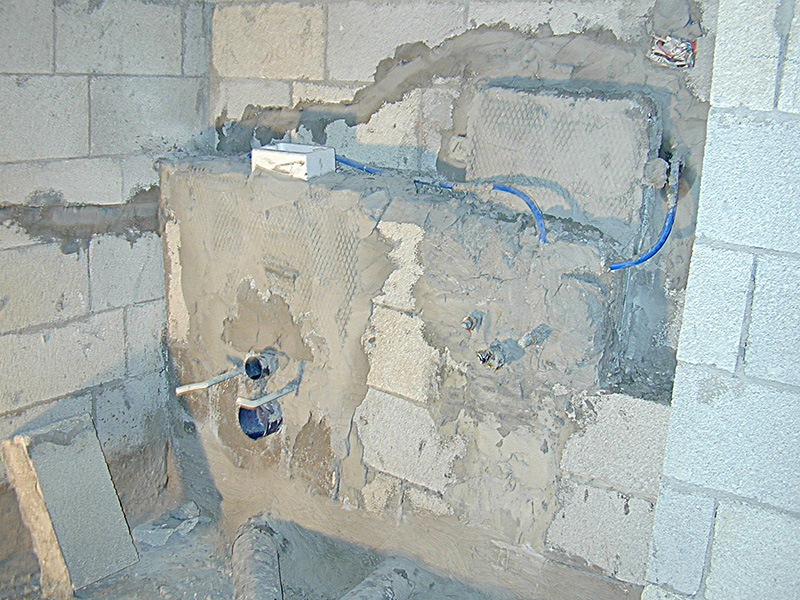
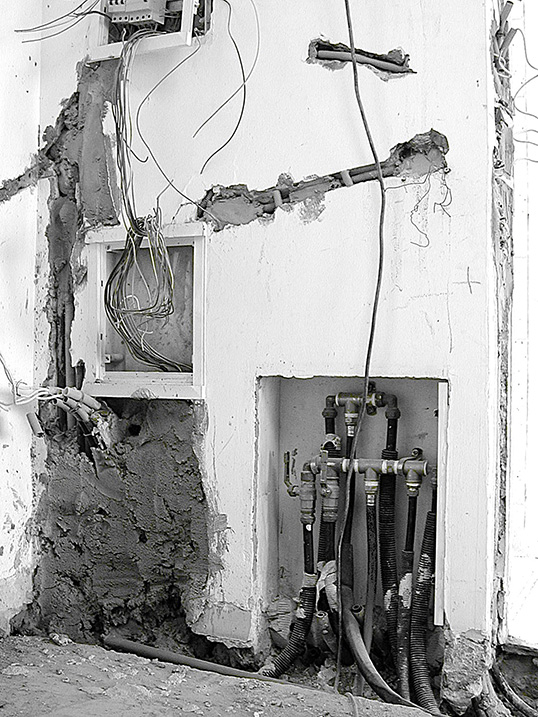
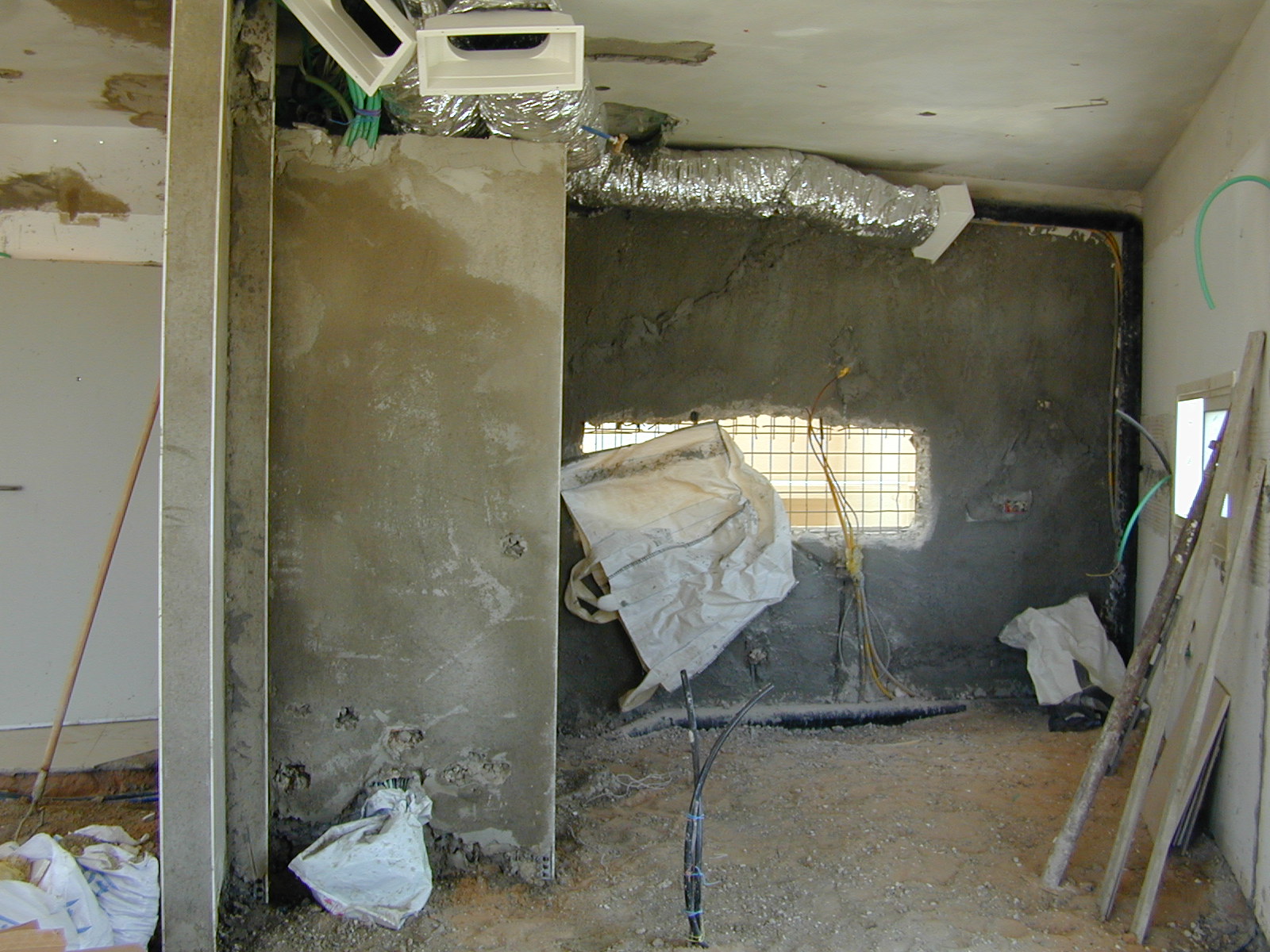
Plumbing, electricity and air conditioning, is done thoroughly and with great care and attention paid to accuracy and quality.
About the kitchen
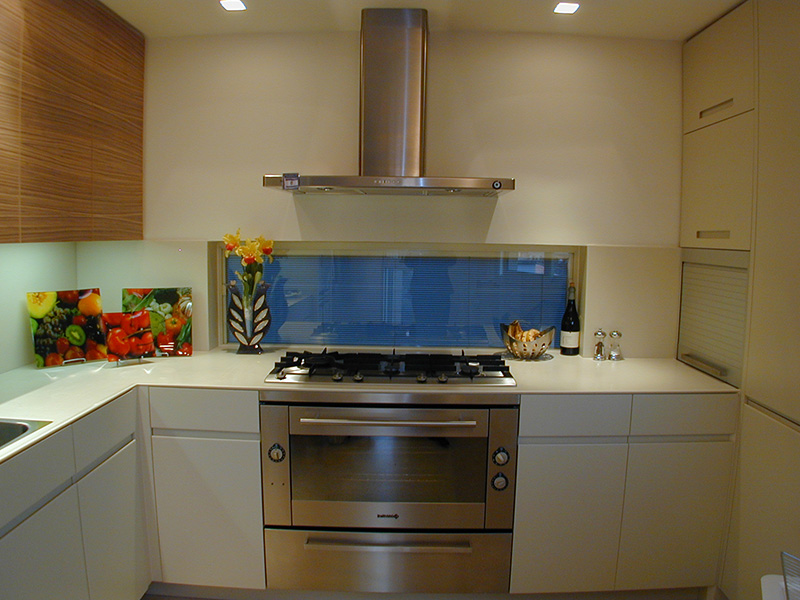
A window is added to allow direct light into the kitchen without compromising privacy.
About the stairs
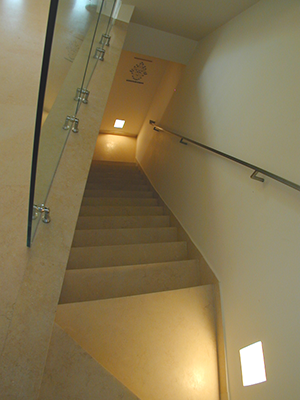
The stairs are a central part of this apartment visually and physically; therefore, they need to be easy for use and aesthetically pleasing. An additional step was added to the main section in order to make its use more comfortable and safe.
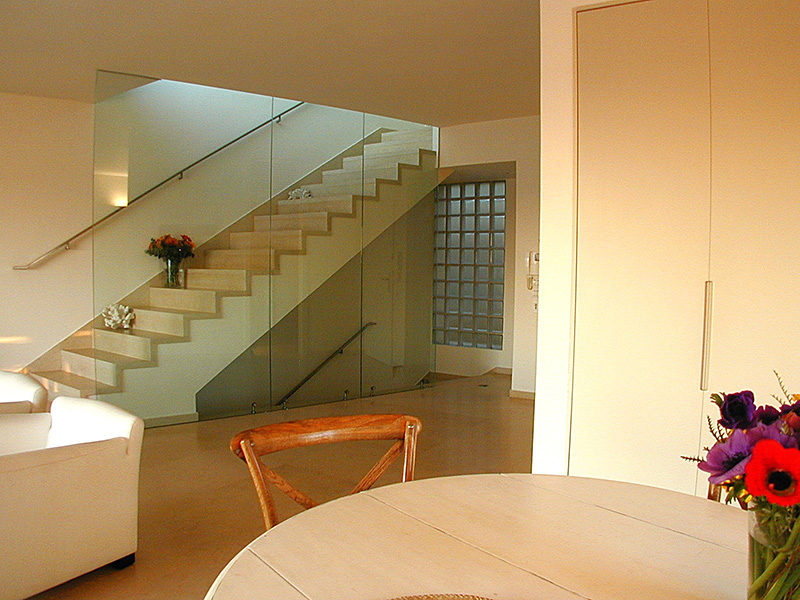
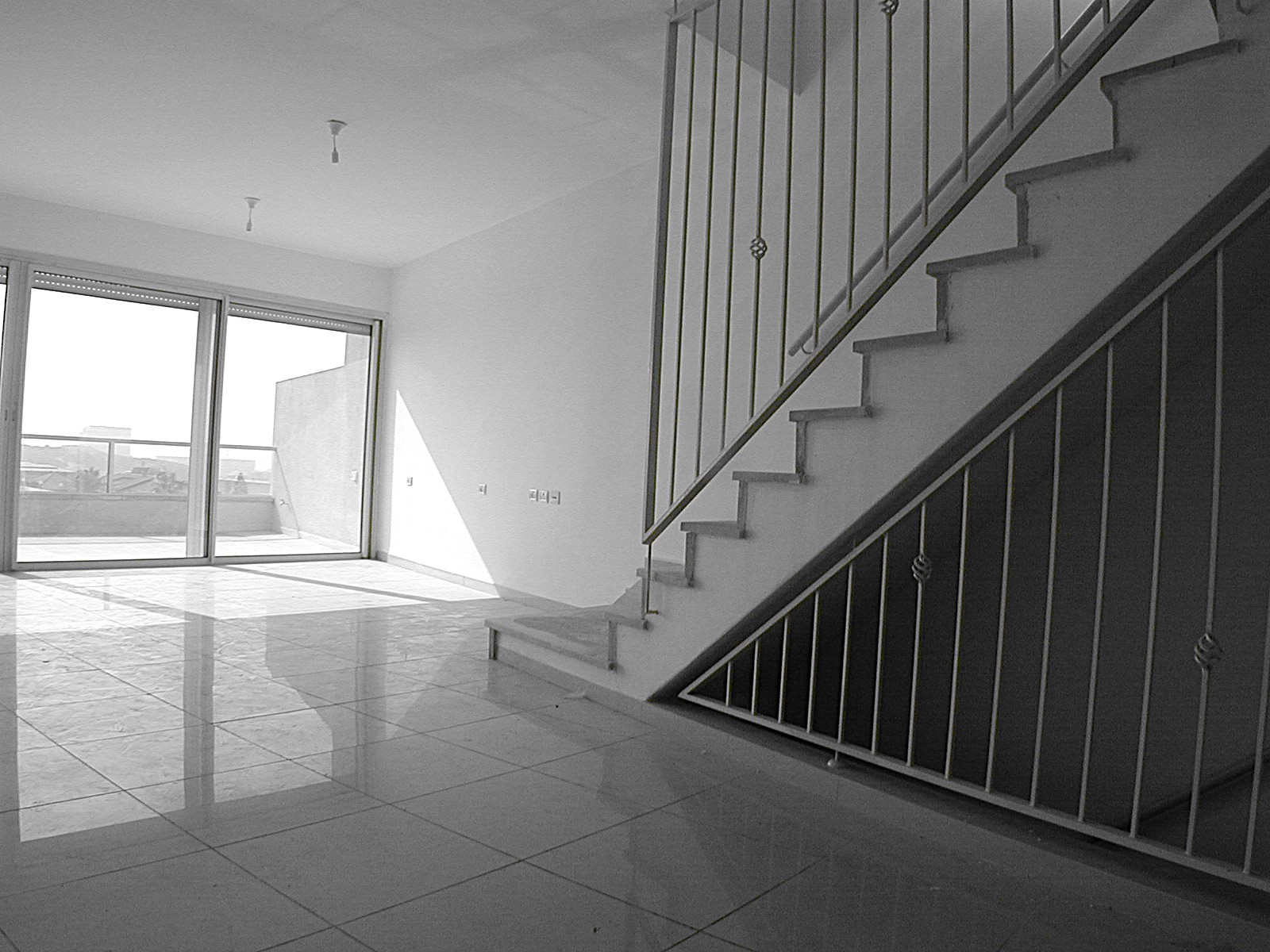
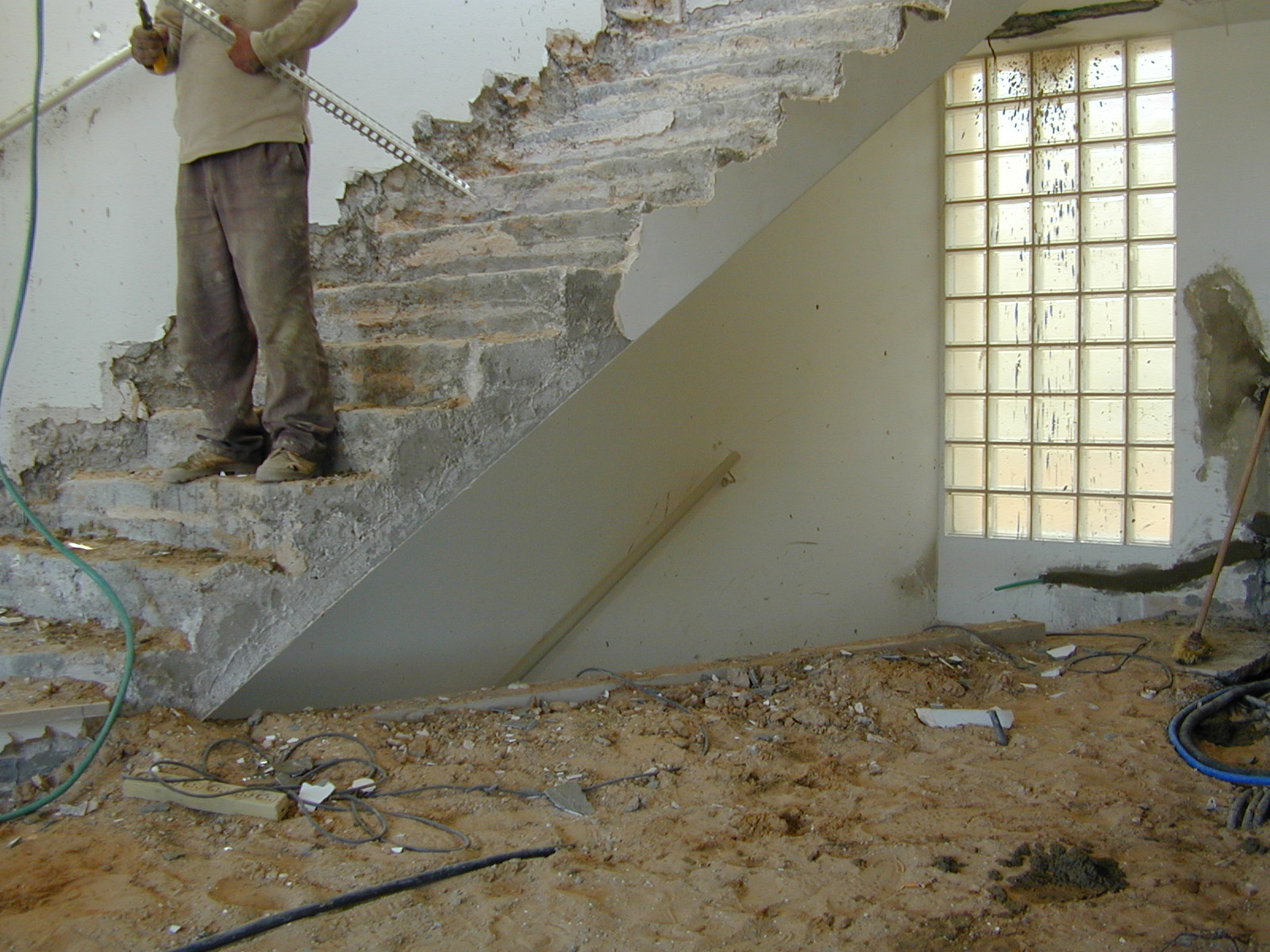
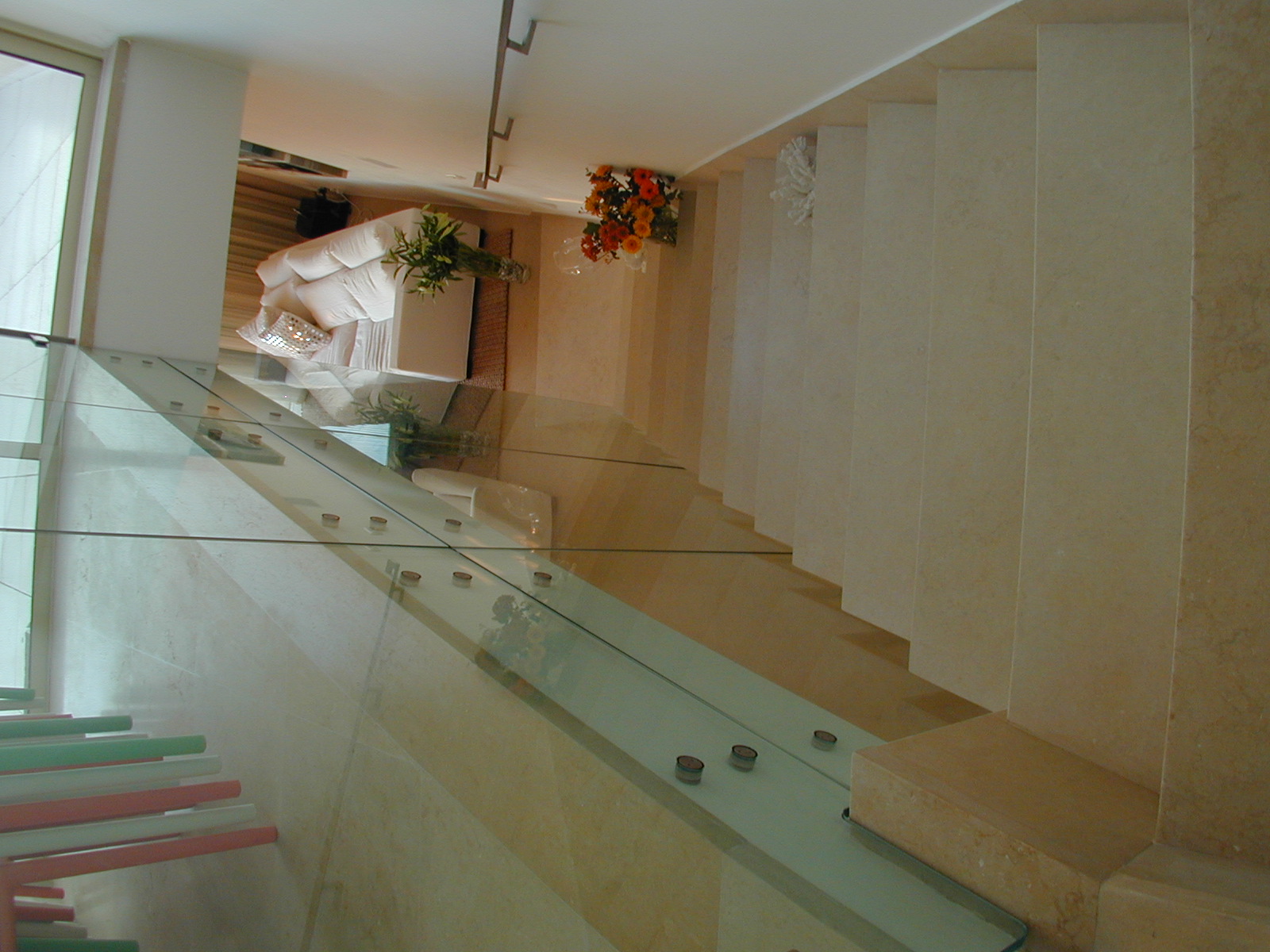
The metal railing, which was visually cumbersome, changed to a glass wall that makes a minimalistic and safe component. The supports and connections of the glass wall are on the inside so as not to be seen from the main spaces.
About lighting
Lighting is always an important element of design. In this case, the fixtures are unobtrusive, appearing only as a source of light and not a decorative feature. In order to allow for recessed ceiling lights, the concrete slab was carefully carved, special elements inserted, replastered and perfectly finished. The final result is the effect of only light glowing where most needed.
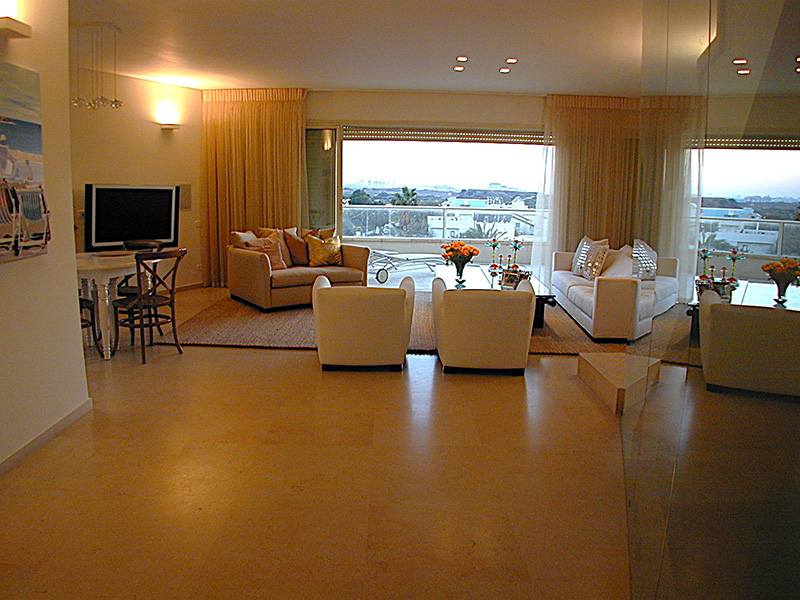
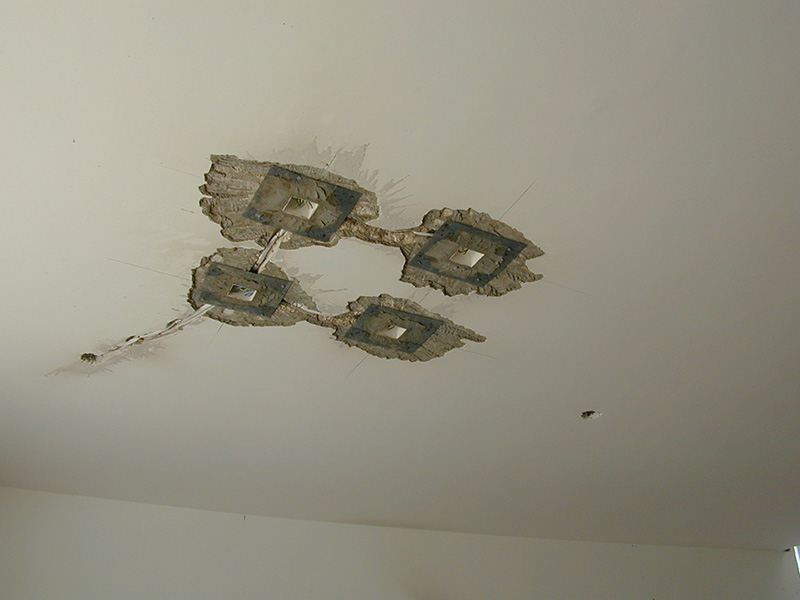
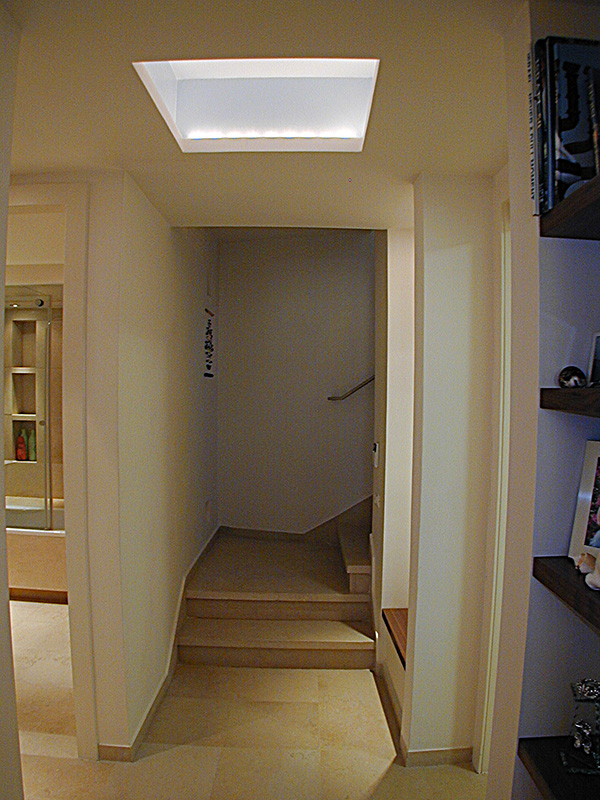
The lighting in the lower level corridor is an emulation of a skylight that brings in natural light, giving the darker space a bright ambiance.
About furniture selection
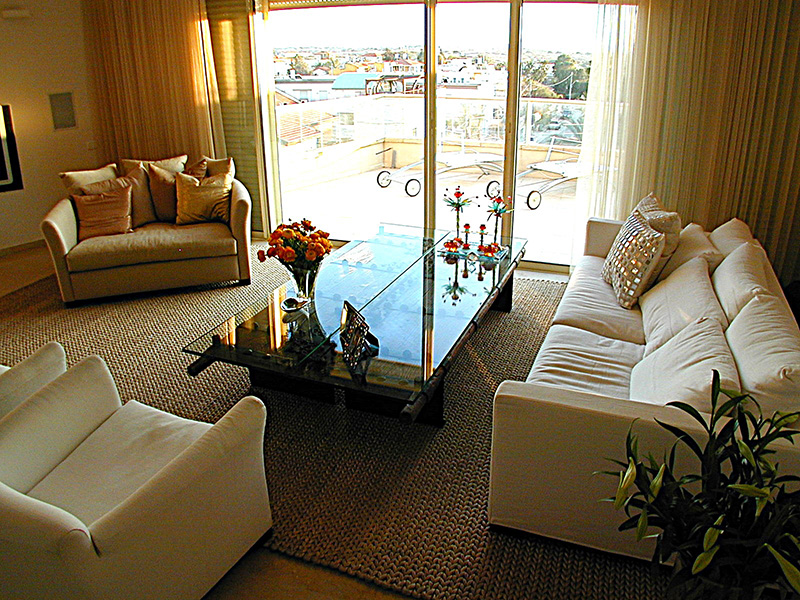
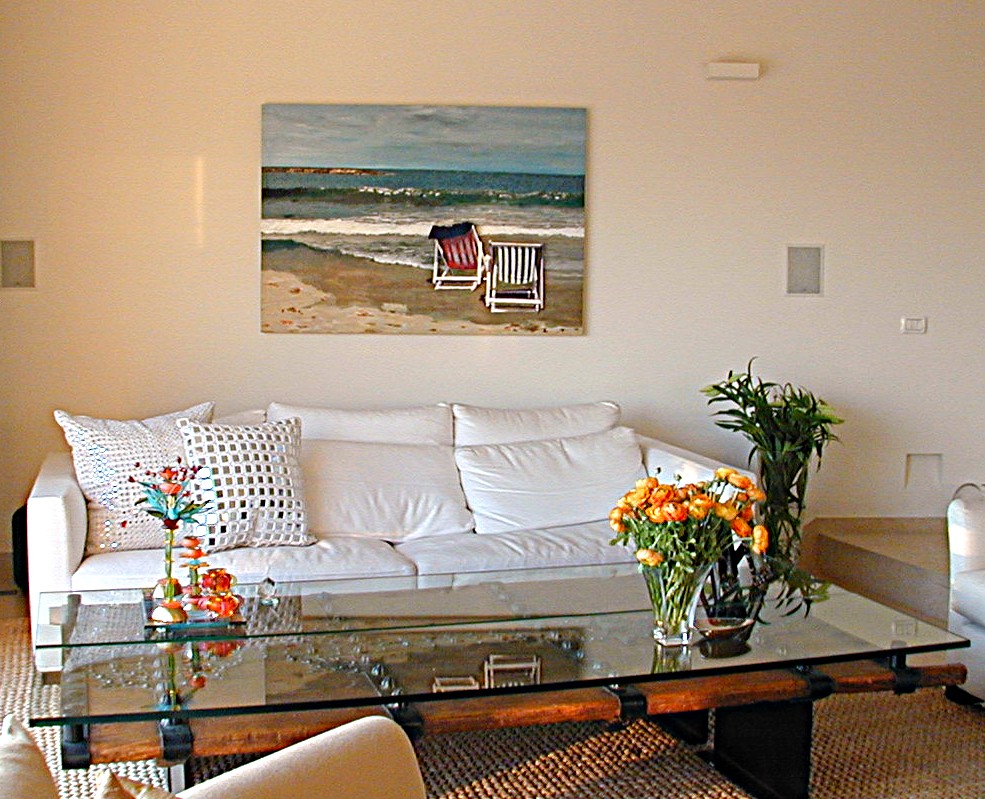
The furniture was carefully chosen to allow a sense of comfort, luxurious yet relaxing ease. This is achieved by starting with the most common of materials, a rug made of woven rope laid on the smooth stone floor. Over that, are placed clean looking easy chairs made of natural fibers. Included in the composition is a cosy sofa in white linen with inviting pillows including those with silver enhancements, thus stepping up the refinement. To the side is a comfortable love-seat in a gold palette that accommodates decorative pillows. Completing the sophistication of style are the curtains in a shimmering gold fabric reflecting the sunset.
About designing furniture
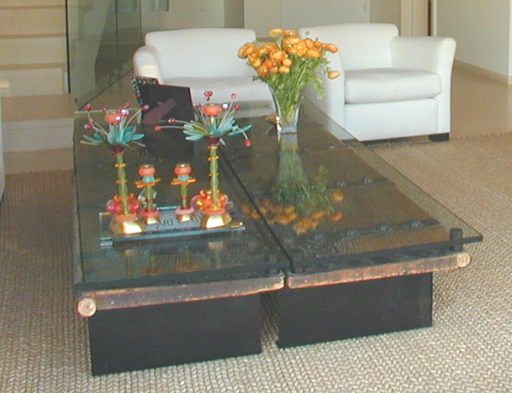
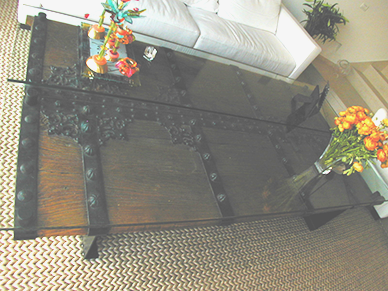
At the center of the living room is a double coffee table made of two antique doors chosen for this purpose. Metal bases were made to specifications in order to support the wood and iron doors. Cylindrical metal objects were made to hold the 20 mm clear glass and separate it from the wood and were specifically made to blend in with the iron belts that are part of the original doors. The overall result is a very practical conversation piece, which upgraded rough materials into a slick and polished look.
About a roof terrace
The ample roof terrace became the center for entertaining, enjoying the weather and the views.
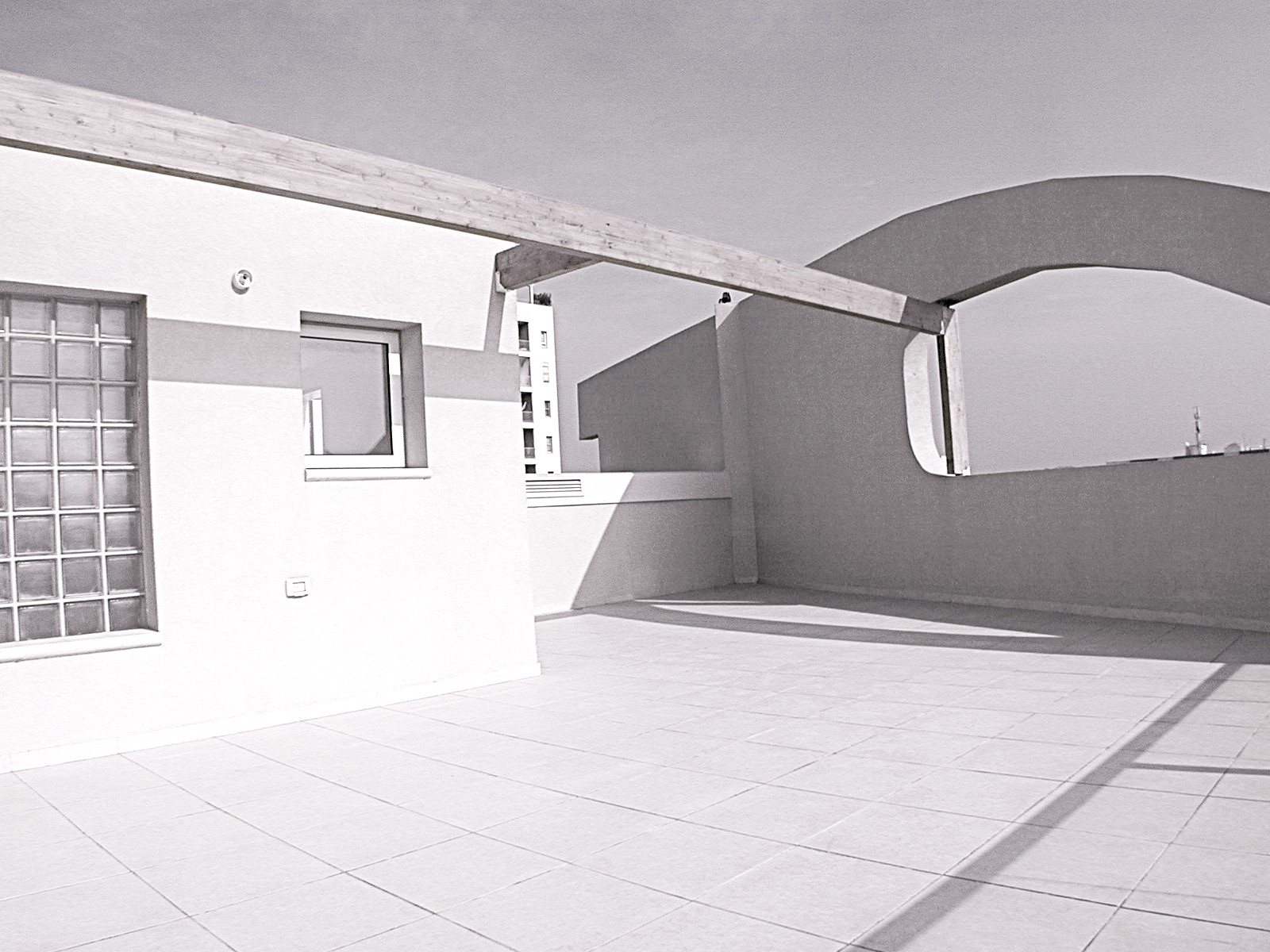
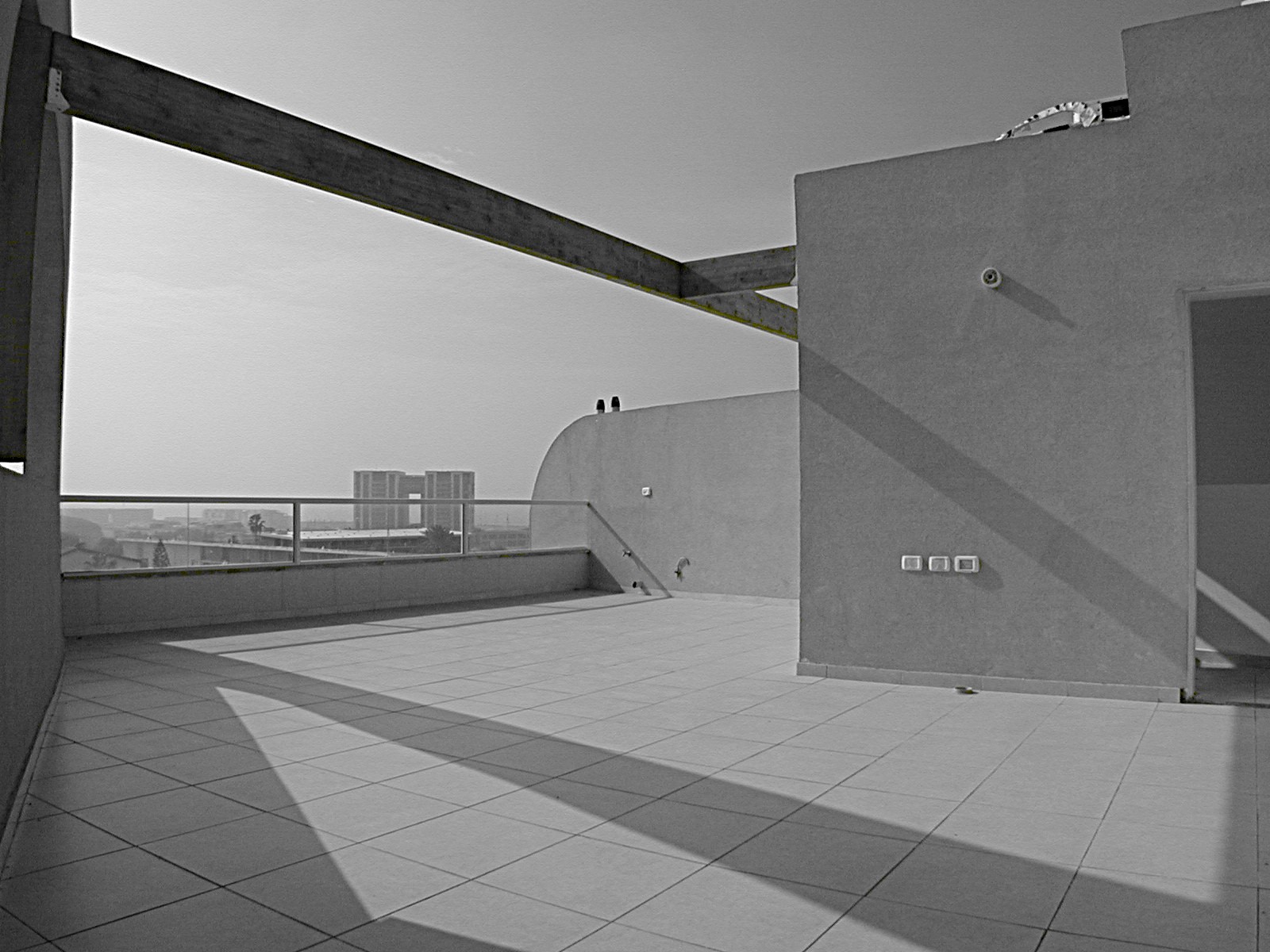
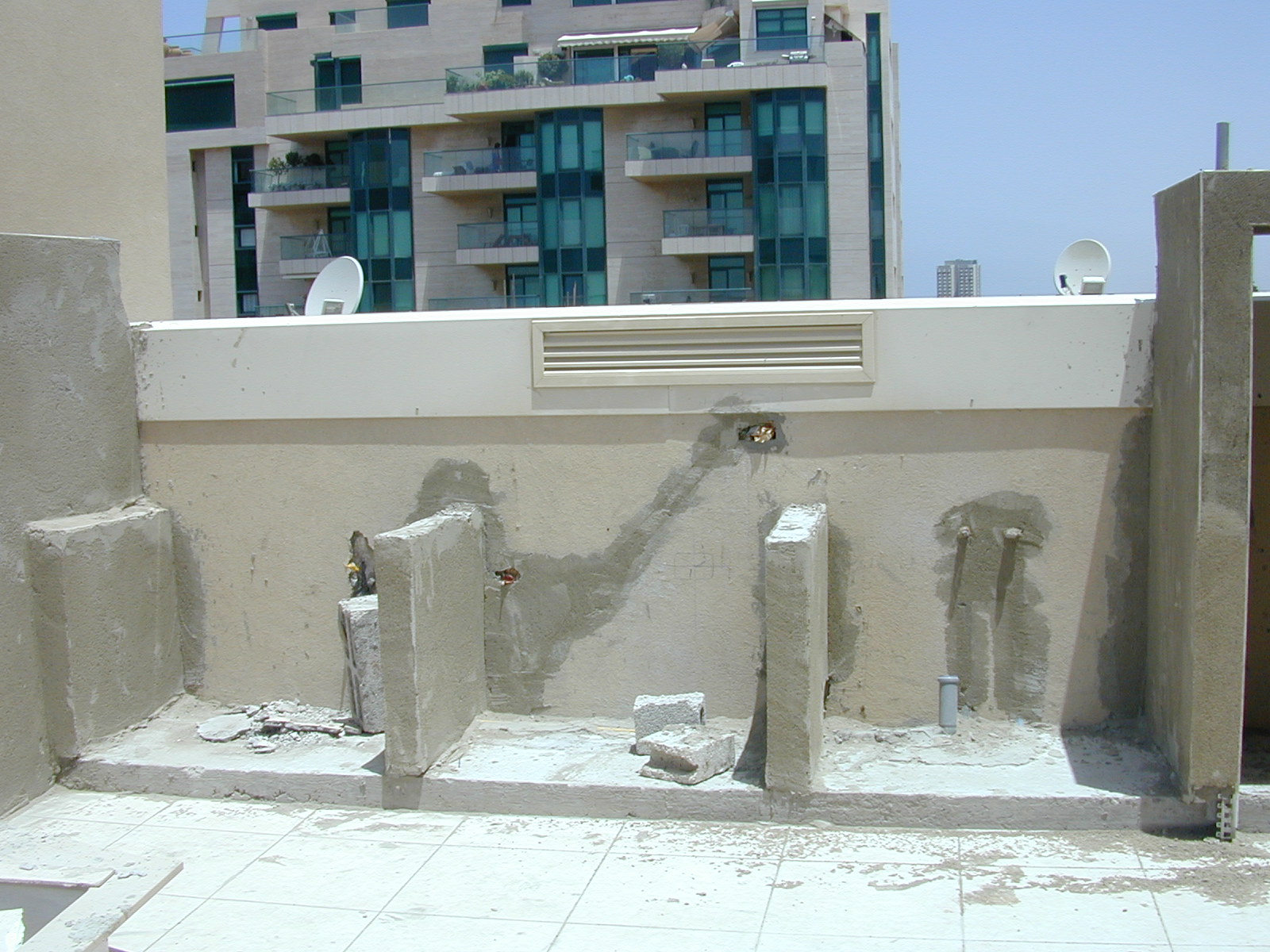
Before
A large opening inviting and guiding the guests was expanded facing the view, thus changing the entire perception of the environment.
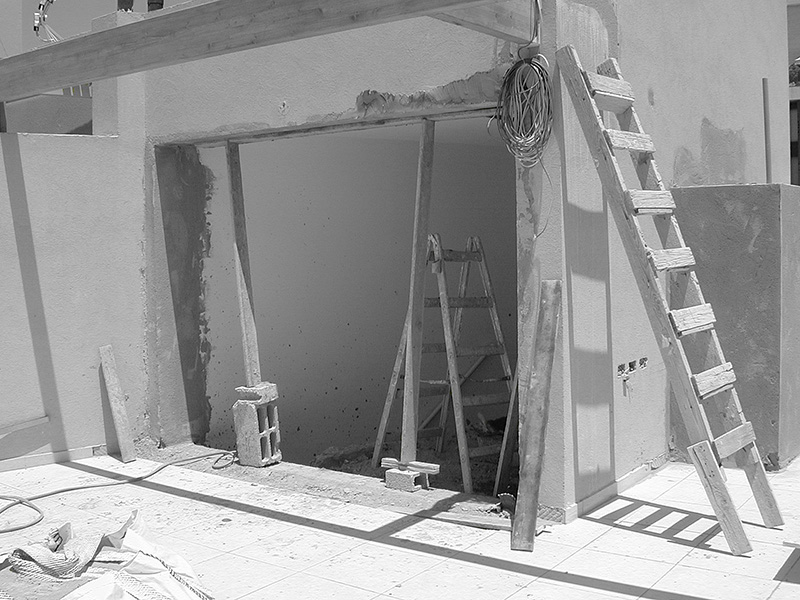
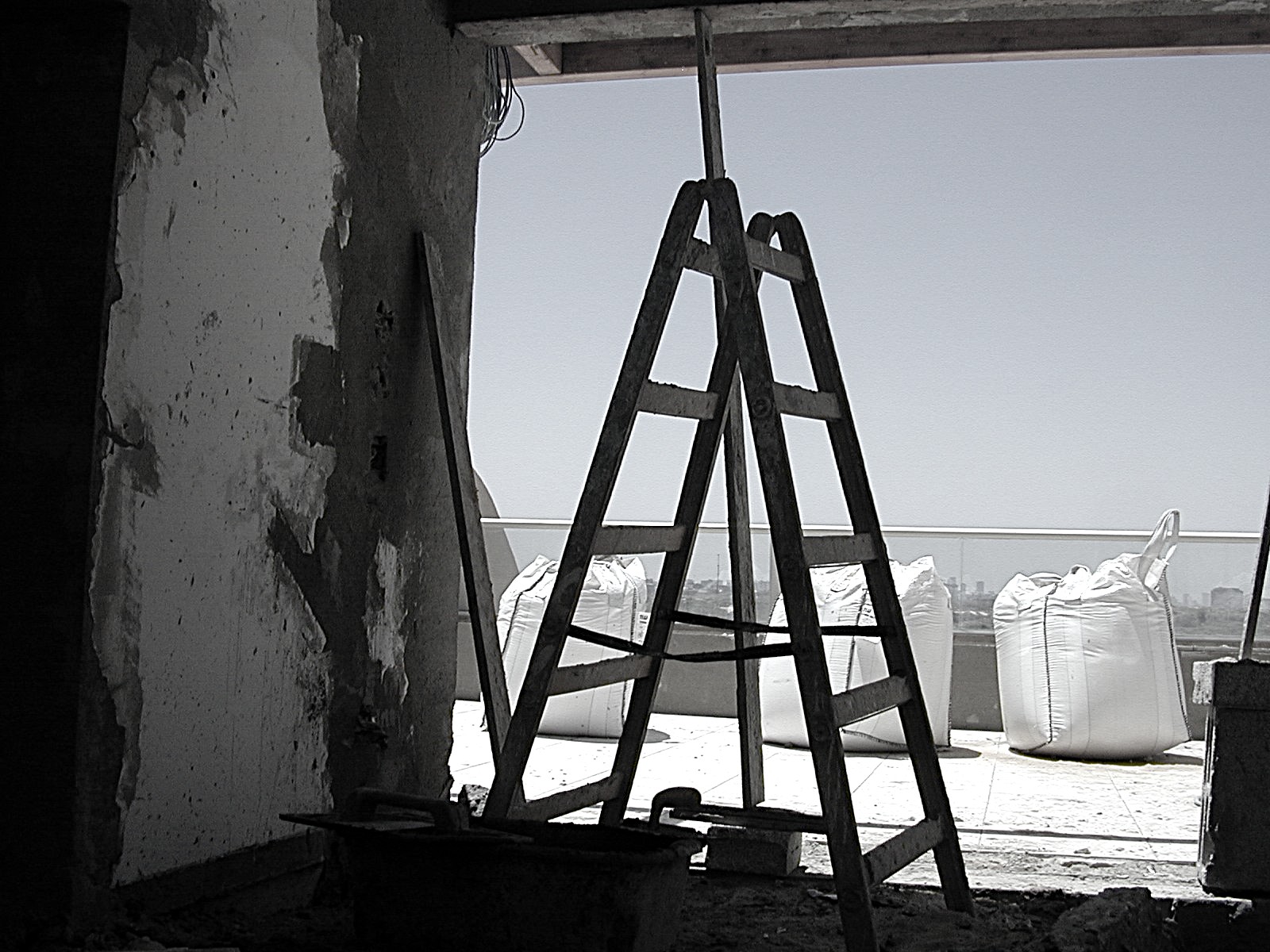
A complete outdoor kitchen for BBQ was specially built.
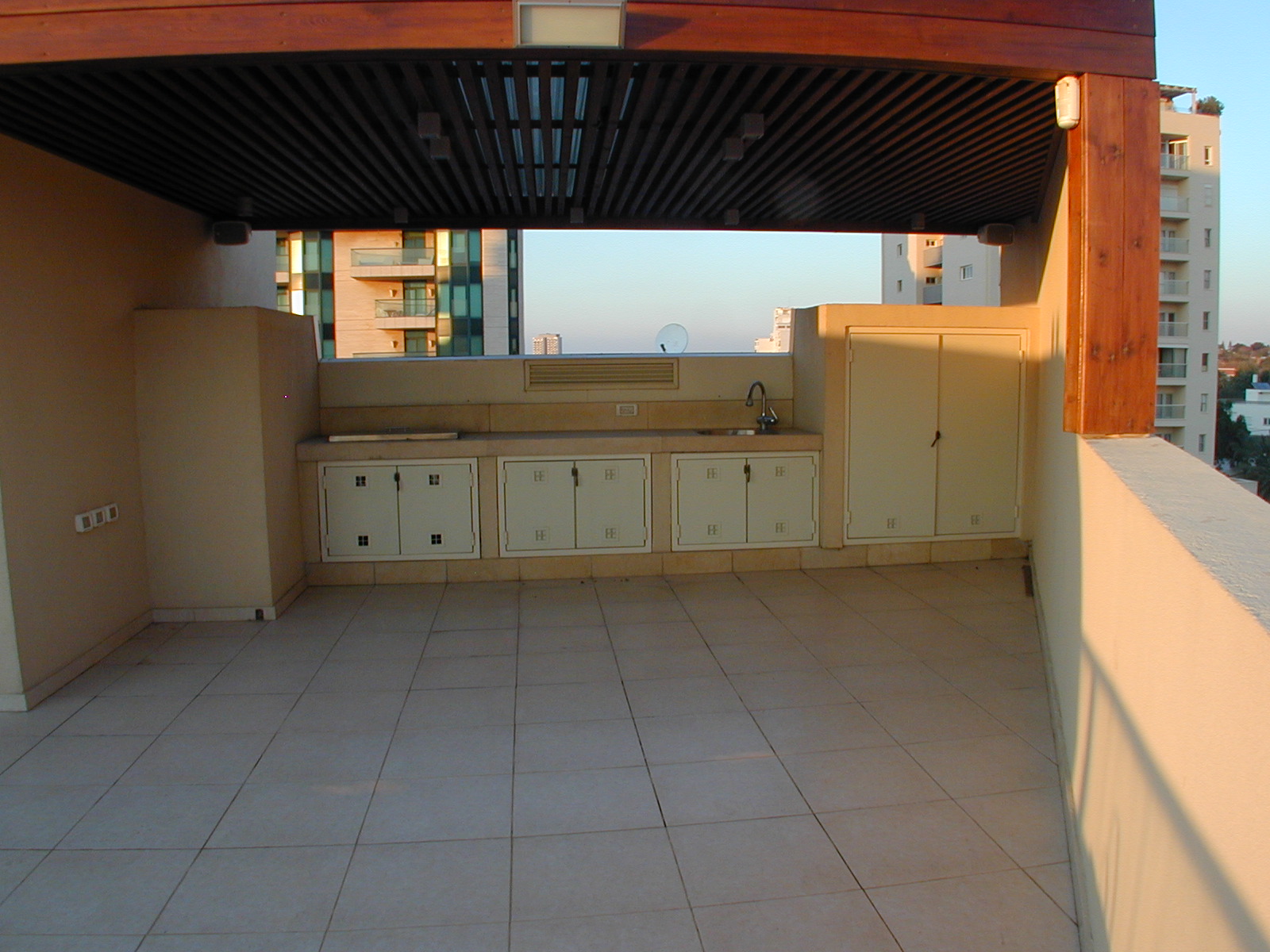
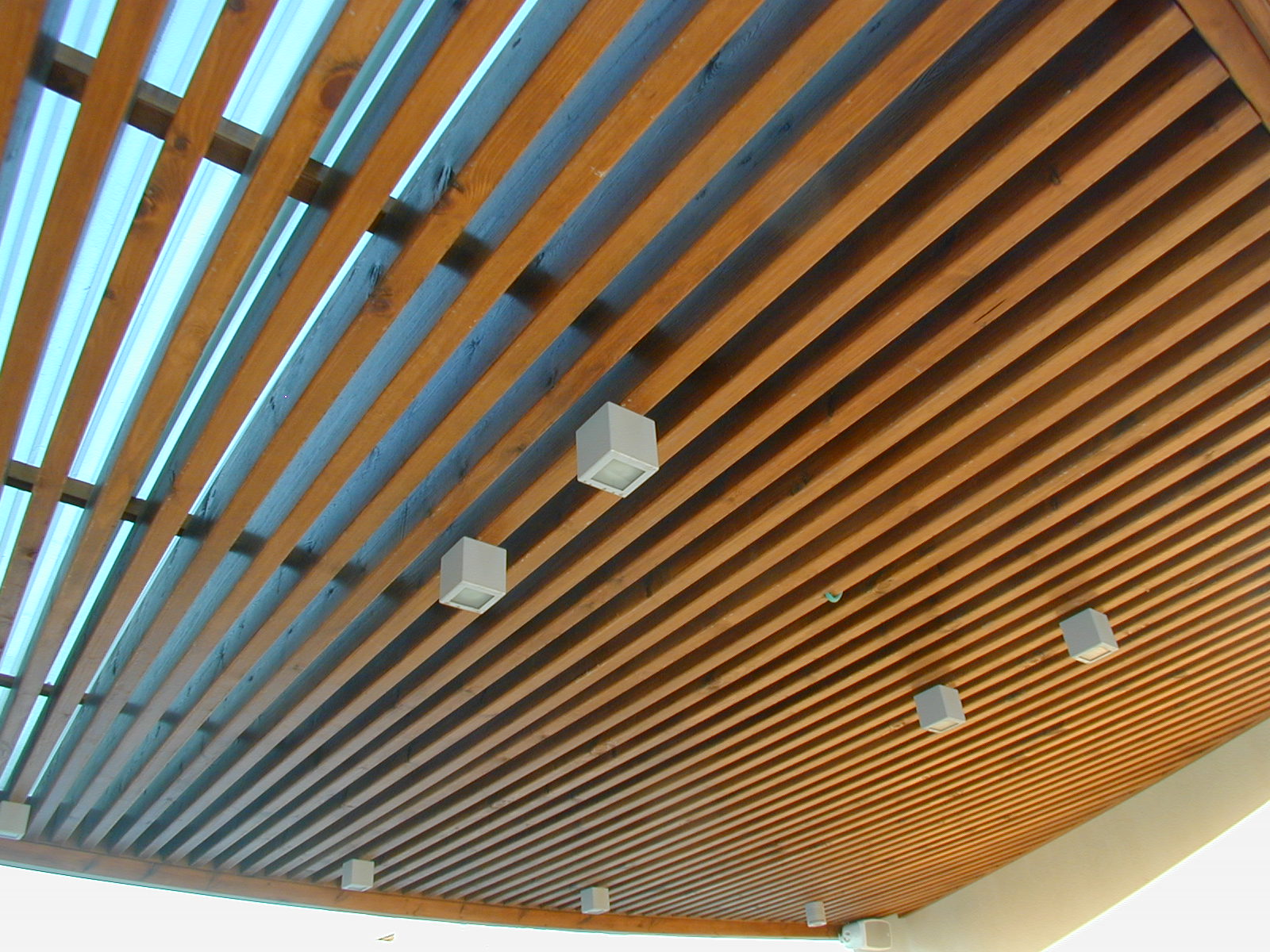
A wood pergola for protection from the sun and inclement weather adds an enclosed outdoor space.
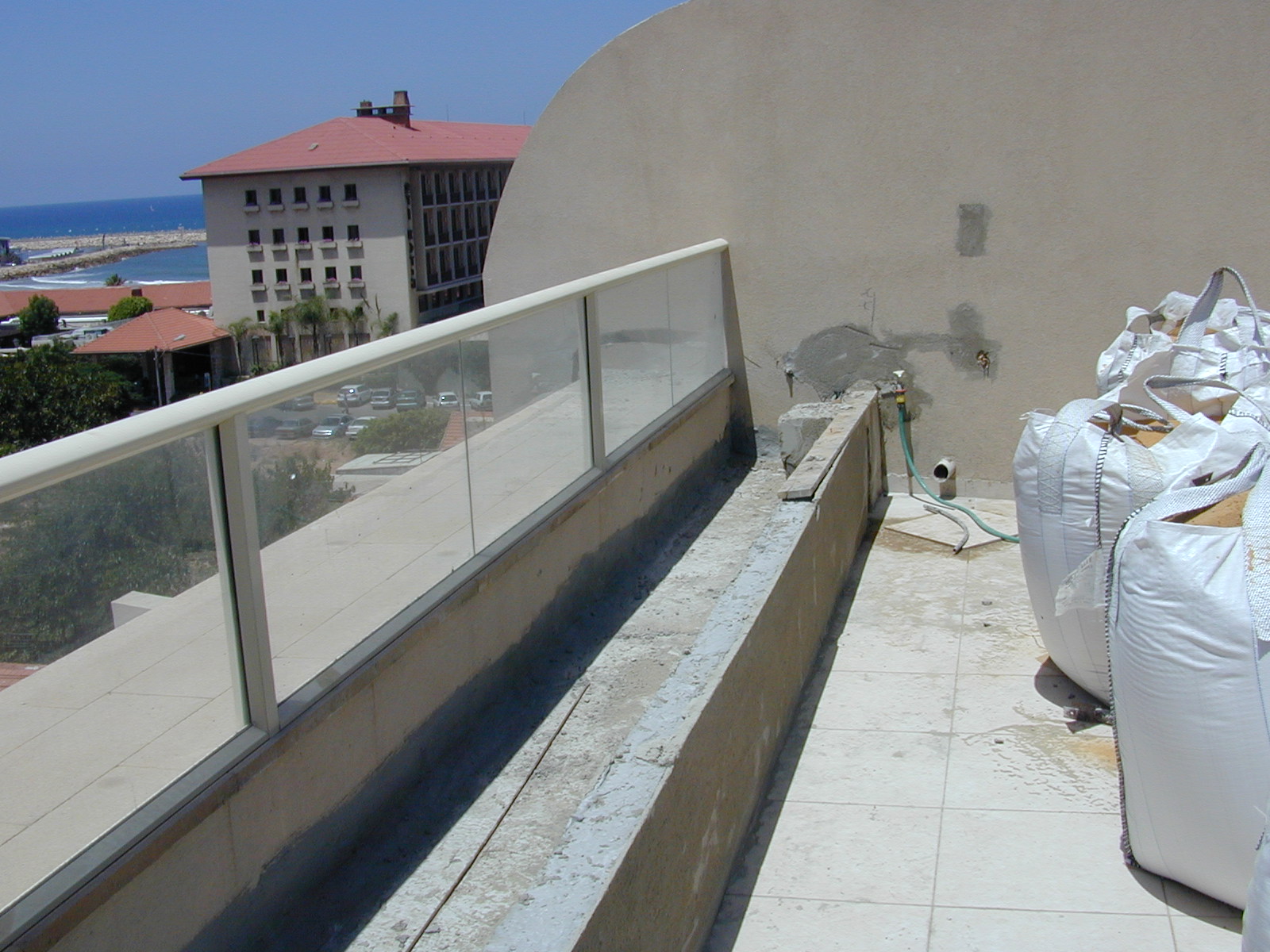
To add liveliness, there is a new planter along the edge. Due to exposure to the salty and sunny weather, porcelain tiles for the outdoor floor were chosen for its resistant properties.
About materiality
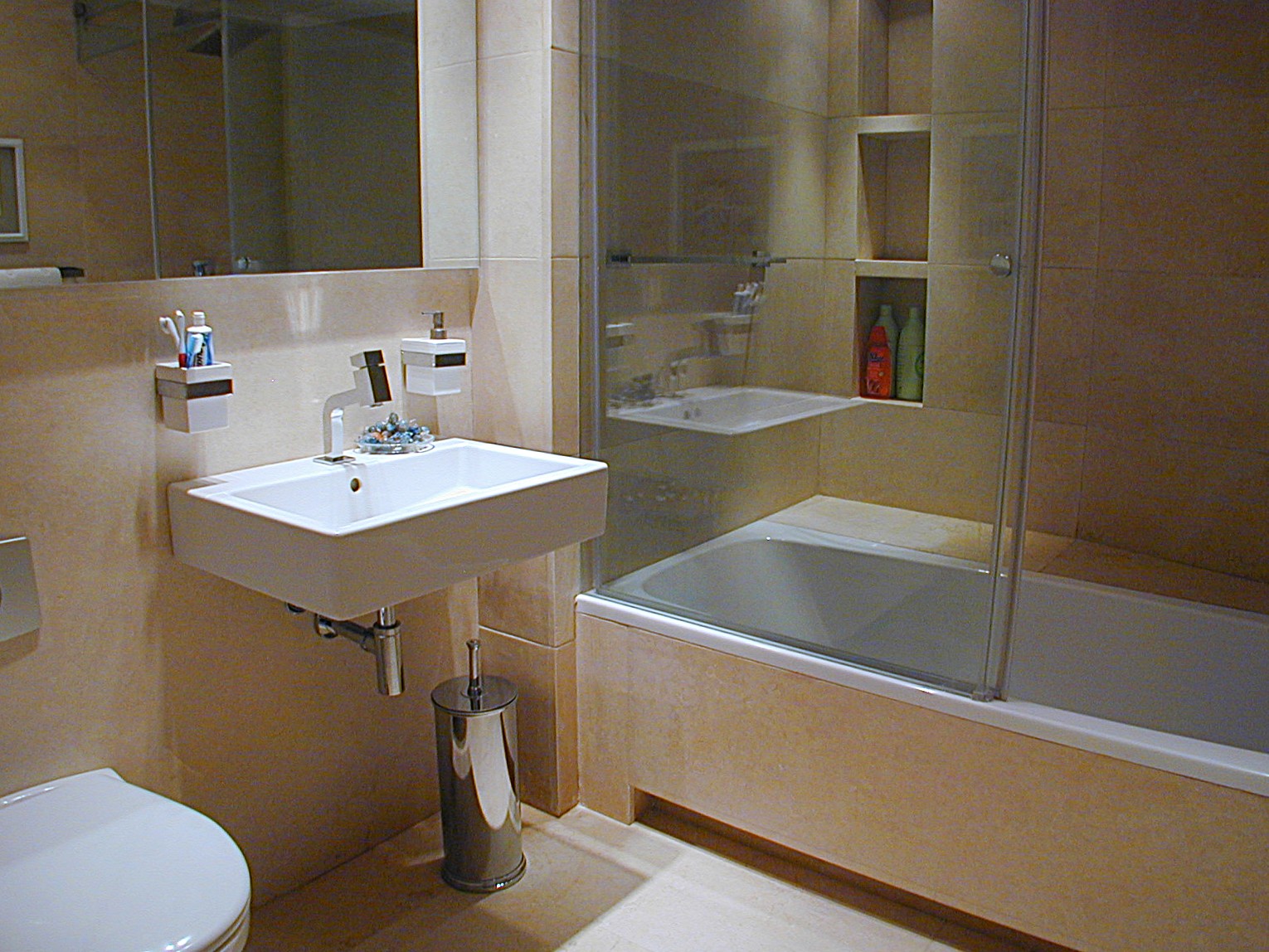
The material found throughout the entire apartment is a local sand stone - Halila. Its versatility allows for it to be cut in different sizes and shapes. The floor is made of 60/60 tiles with the grooves filled with same color stone glue which is then sanded smoothly and polished in a silk finish achieving the final look of one smooth surface.
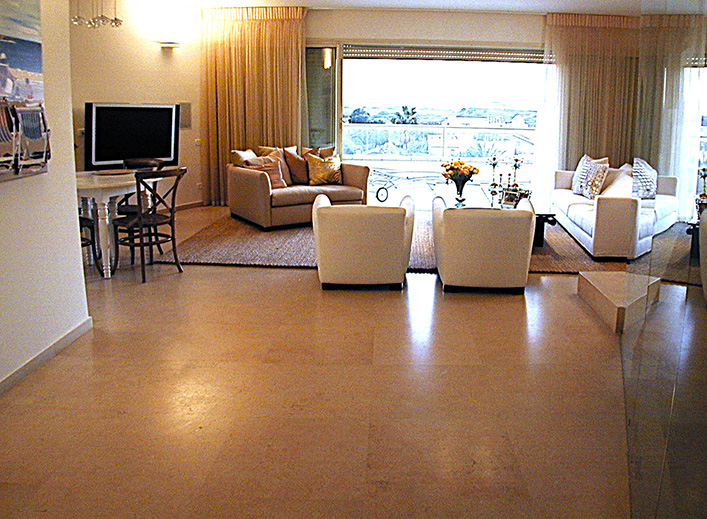
The wall covering in the bathrooms is made of the same stone in “cut to size” slabs, getting the same treatment as the floors and attaining a seamless surface.
The stairs are made of the Halila stone cut in thicker slabs to fit perfectly into shape. Notice the baseboard along the stairs, taking on a straight angle towards the wall.
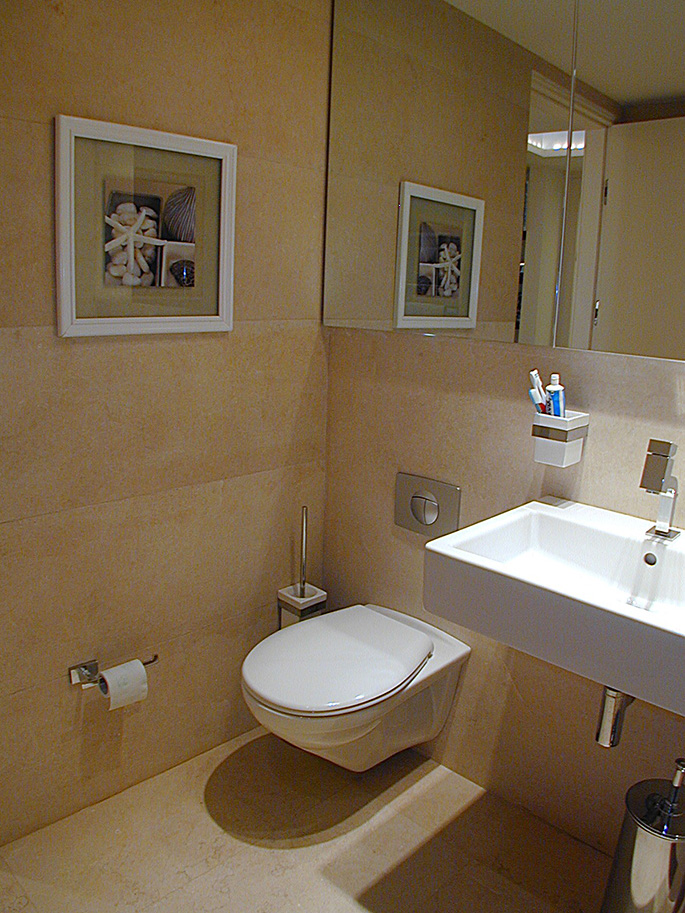
In the guest bathroom the sink is carved out of a solid Halila rock to fit into the space designed for it. Here the walls are hand painted in gold to achieve the lavish-yet-casual look.
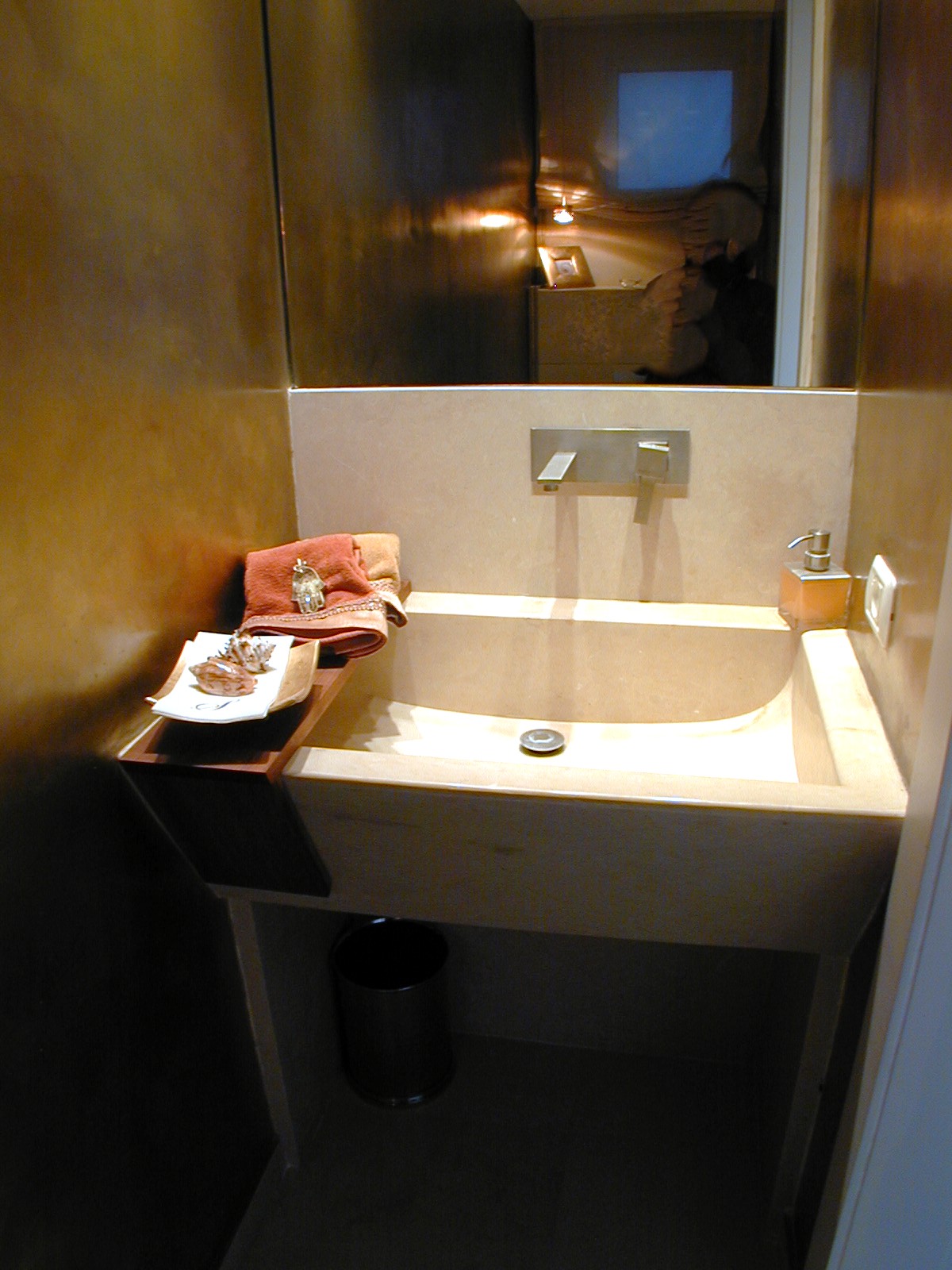
The rest of the materials throughout the spaces, like the built in carpentry closets, are neutral in color blending with the walls.
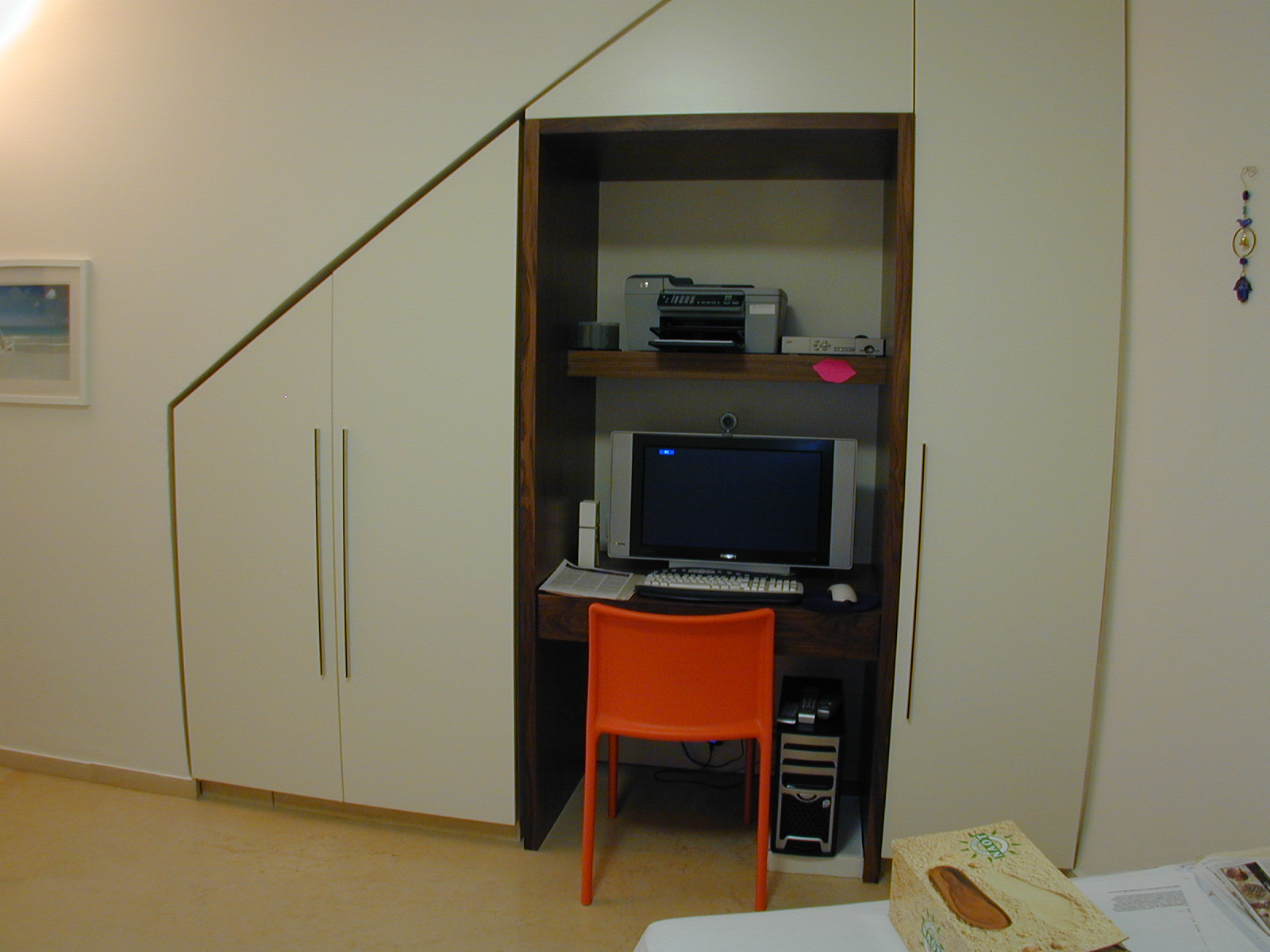
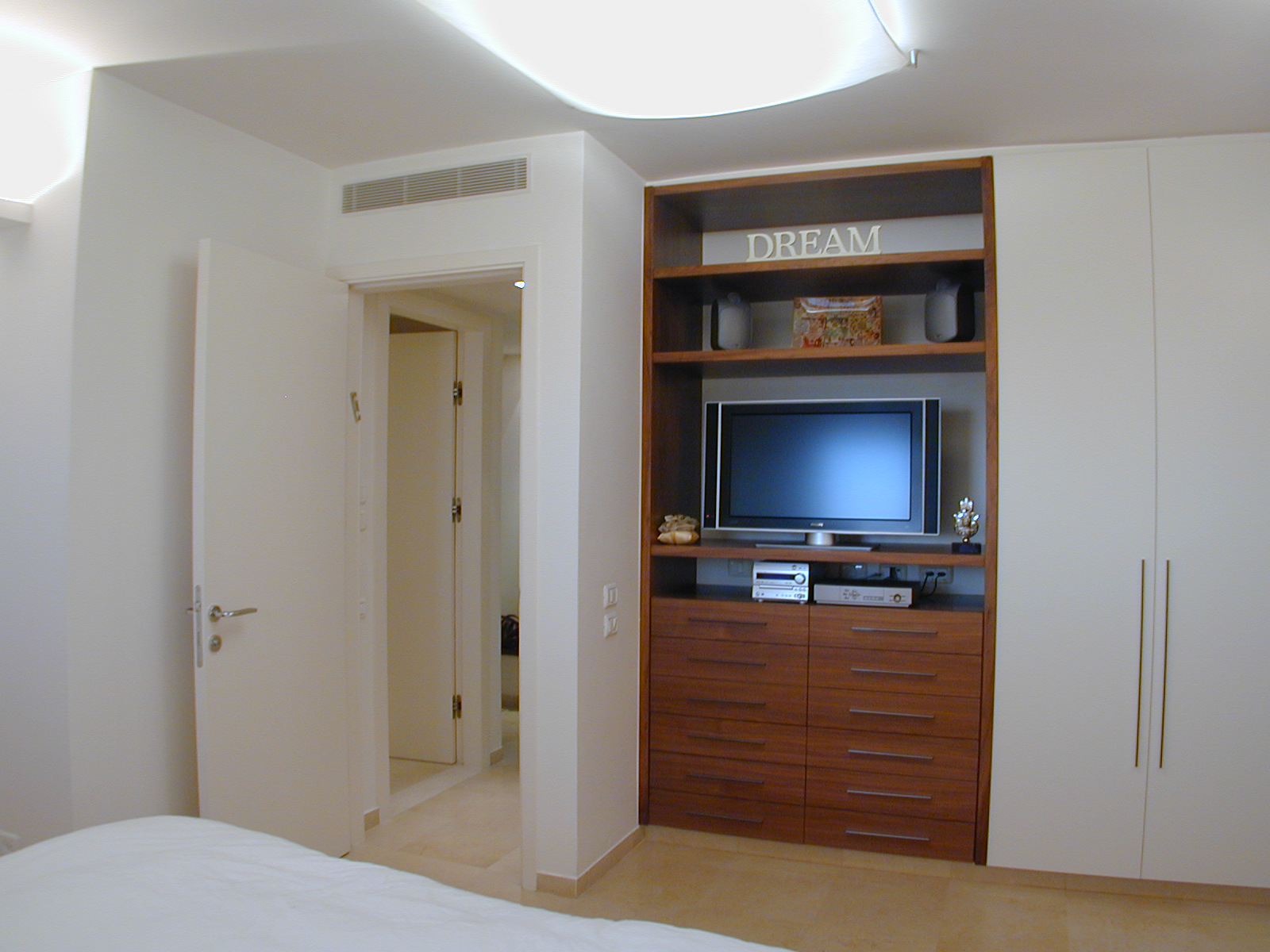
In certain accent features, like in the kitchen top cabinets, or special features of the closets, wood is used.
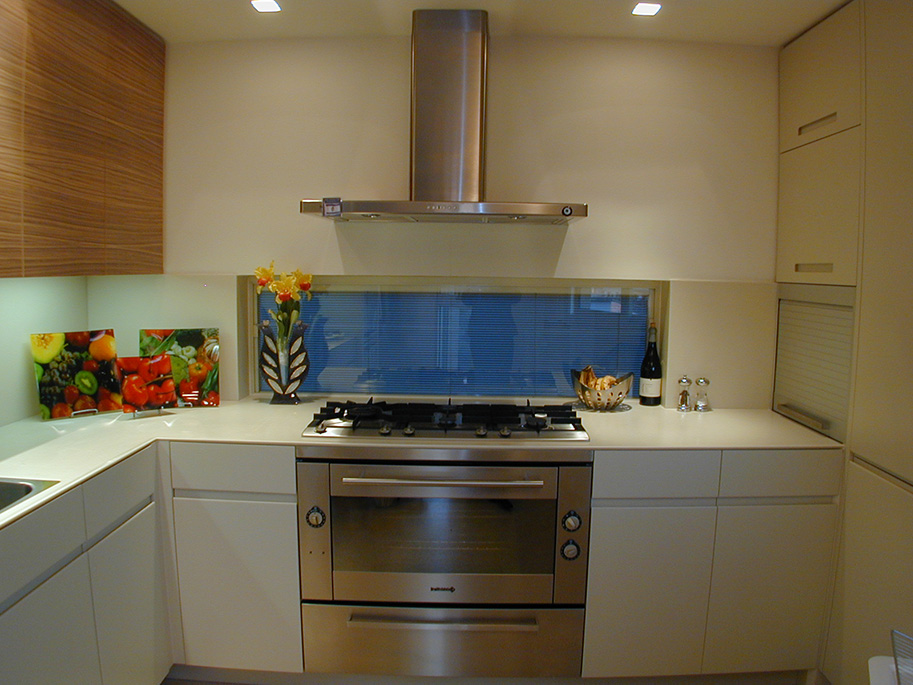
About ambiance
As is customary for Steiner Architecture’s work, the design and choice of materials is carefully curated to accommodate the client’s taste and leaves ample room for the owners to exhibit the arts and crafts of their choice. In this case the ambiance is colorful and lively, fitting for a vacation by the sea.
A wall can do many things
A wall is usually treated as the most passive element in a building — the thing that divides one room from…
A wall is usually treated as the most passive element in a building — the thing that divides one room from another, keeps the weather out, and serves as the backdrop everything else gets hung on. It's easy to stop thinking about walls once they're up. The following examples will show that walls can be an active, generative element and not just the edges of a room.
A Wall Can Become a Ceiling and a Space
O7M The plan of this memorial is a circle broken into six parts, evoking something once whole and now fractured. Built around six concrete seats, the concrete walls curve to create a place to reflect and remember. The walls of the central "space of reflection" curve inward and rise until they meet at the top, forming a hexagonal oculus — the room's main light source.


תוכנית
The wall doesn't end at the ceiling line; it becomes the ceiling. Together with the six triangular seats, the converging planes trace a three-dimensional Star of David.

תוכנית גגות
The walls keep working on the way in, too: the path narrows, the sky gets progressively blocked, and the concrete's texture shifts from smooth to cracked as you descend — echoing a transition from safety into crisis.

סכמת טקסטורת הקיר
כניסה מונומנטלית באמצעות הגדלת הקירות
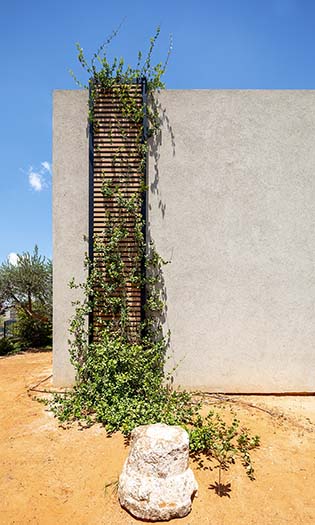
ONT This newly built family home sits in a rural setting, its floor plan kept simple — a spacious layout raised within an elevated garden that separates it from its surroundings while still inviting people in.
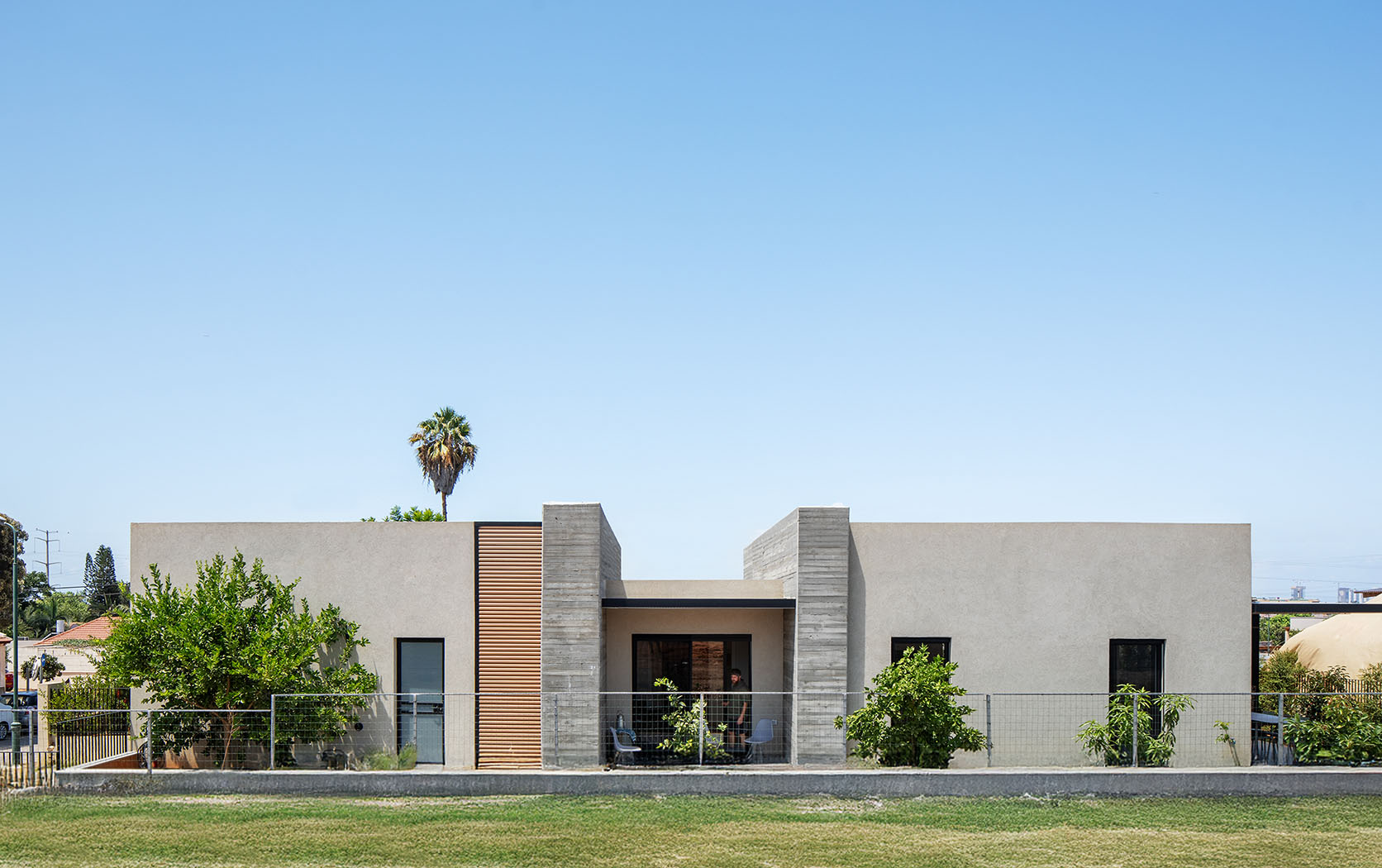
חזית קדמית
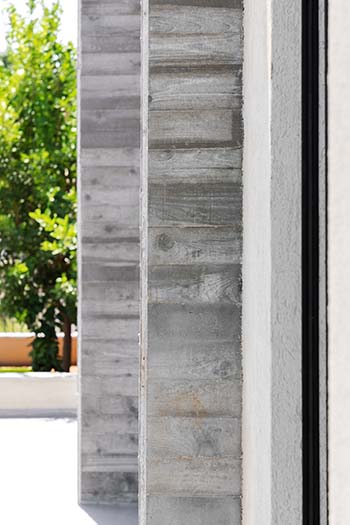
The walls around the entrance are enlarged and extended, creating an iconic silhouette — a threshold with real presence. The wall isn't just an opening with a door in it; it's stretched and shaped to make entering feel significant.
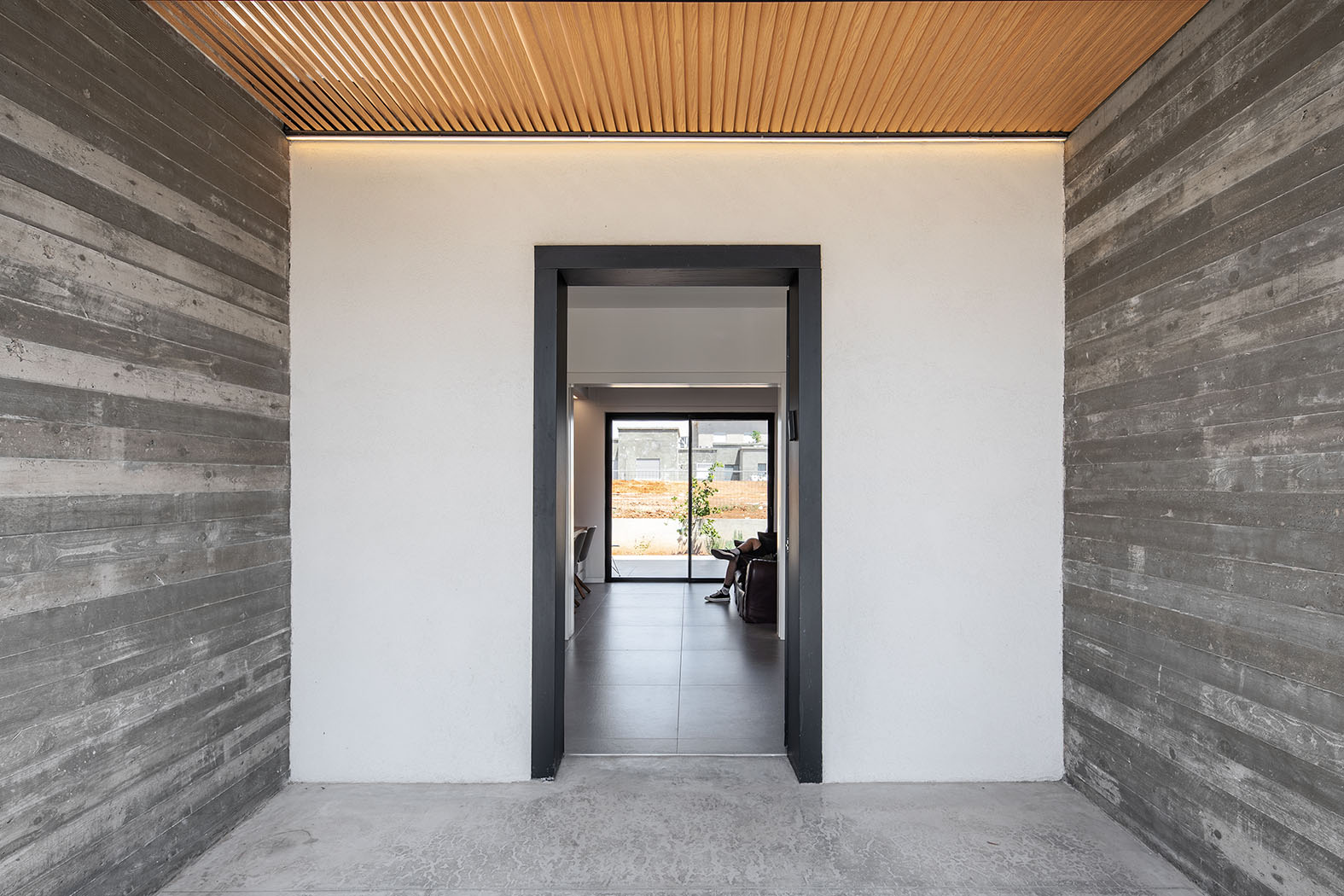
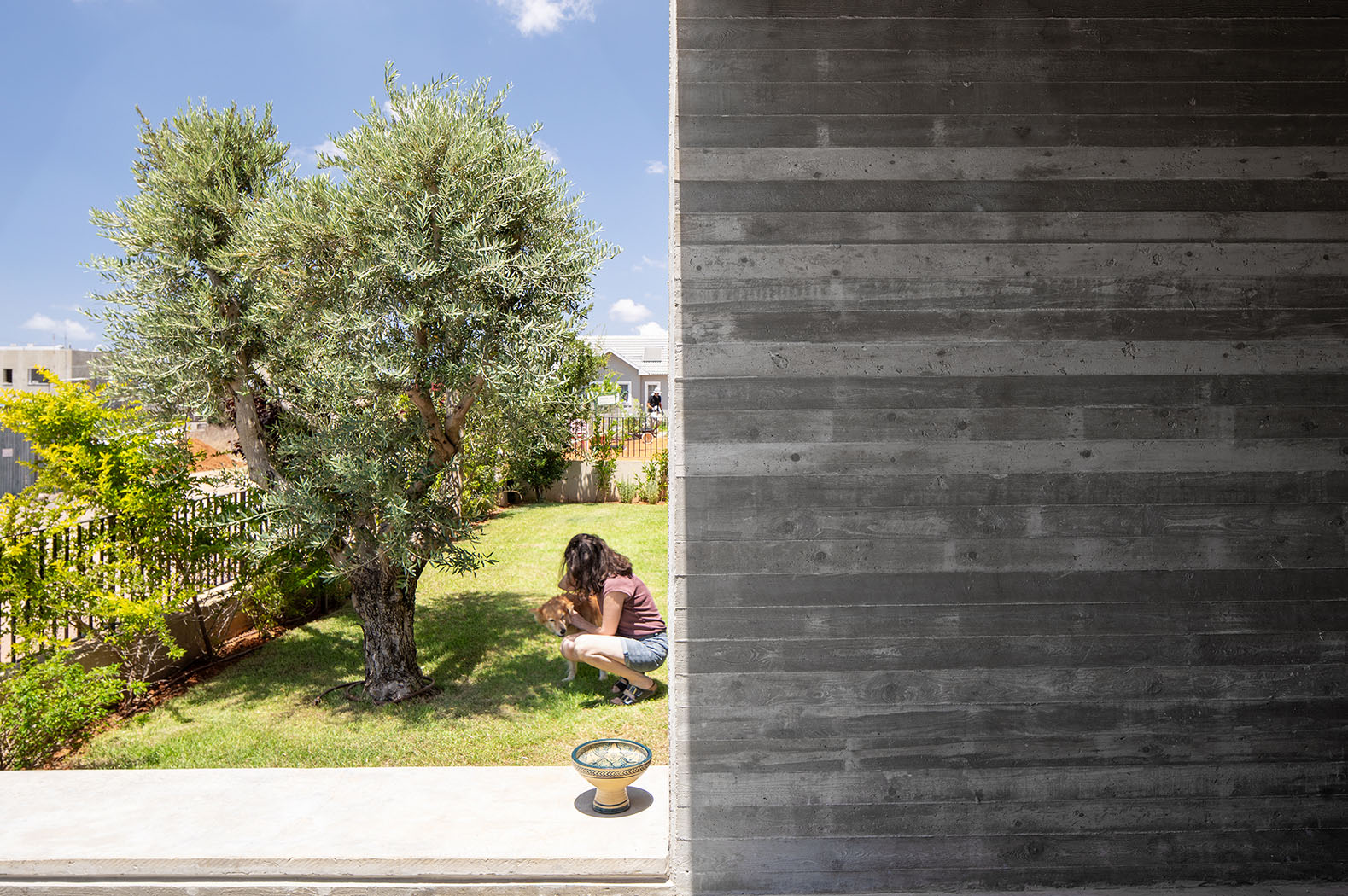
הכניסה מקרוב
Inside, the house divides into two wings, and it's the placement of the walls that makes this division immediately legible — orientation becomes intuitive.

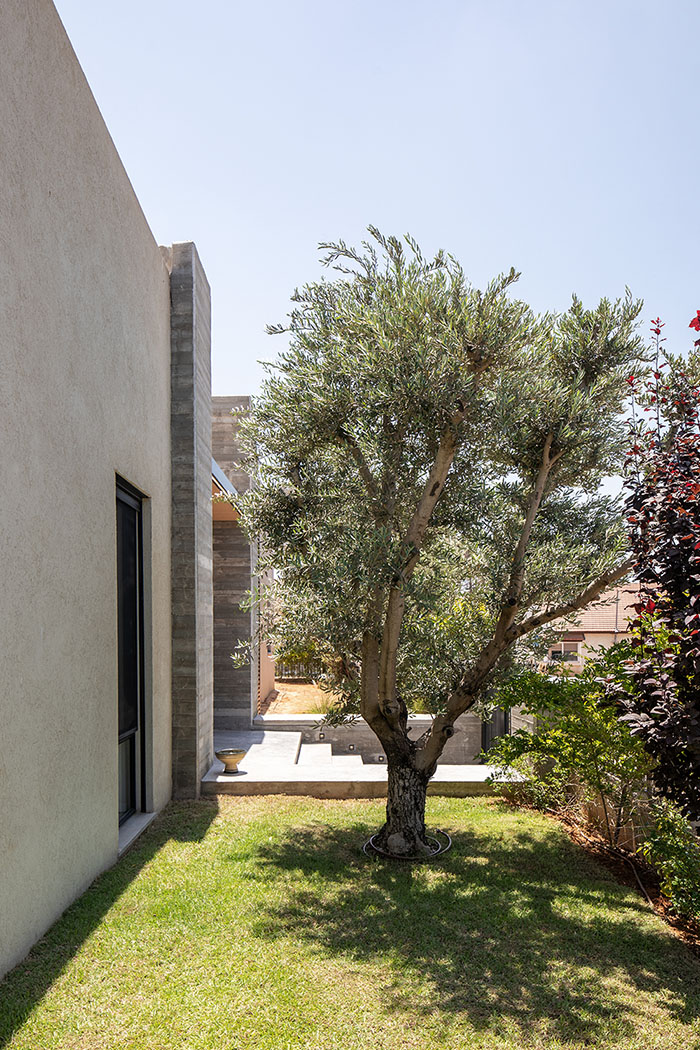
תוכנית
תצוגת נעליים מיניאטוריות
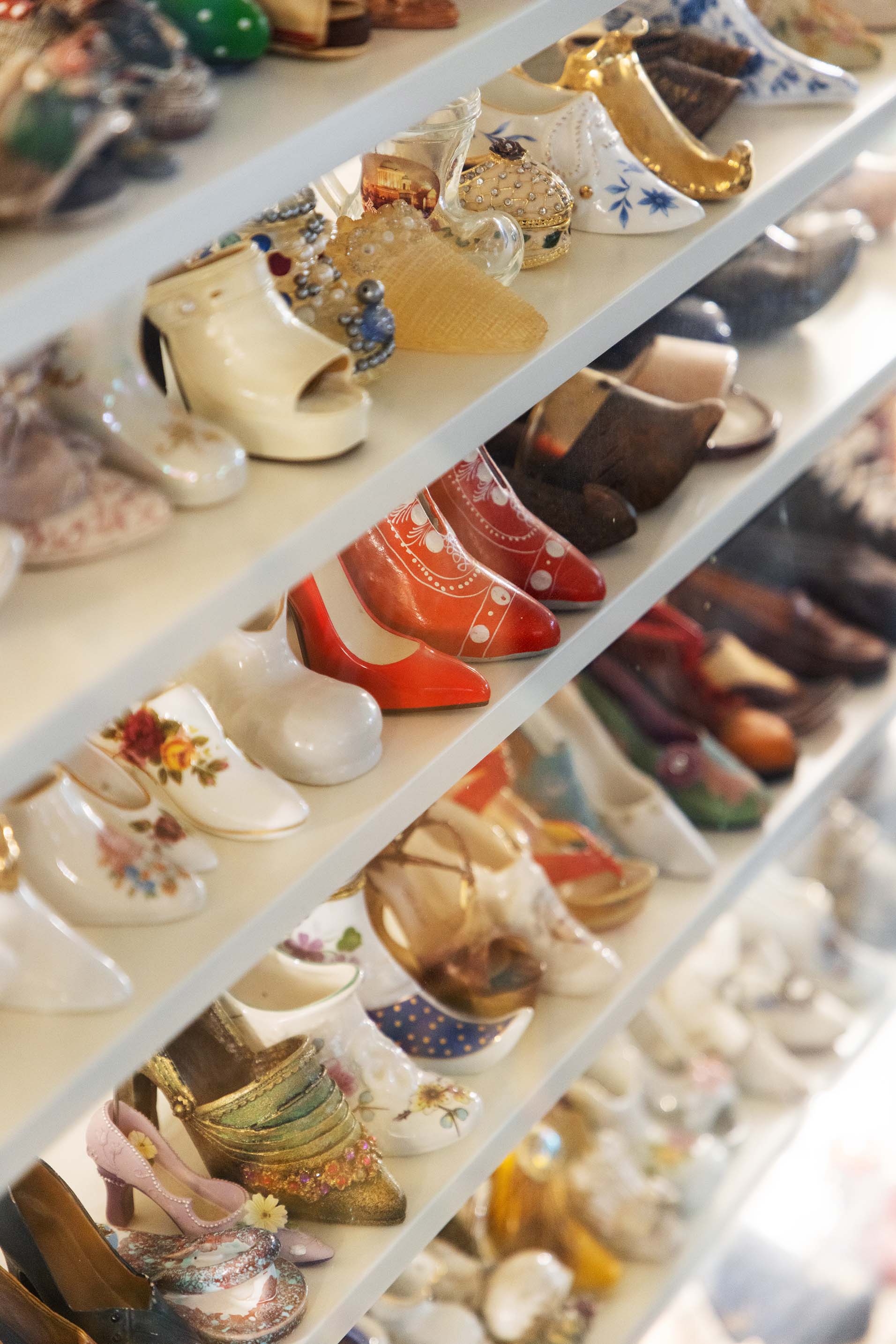
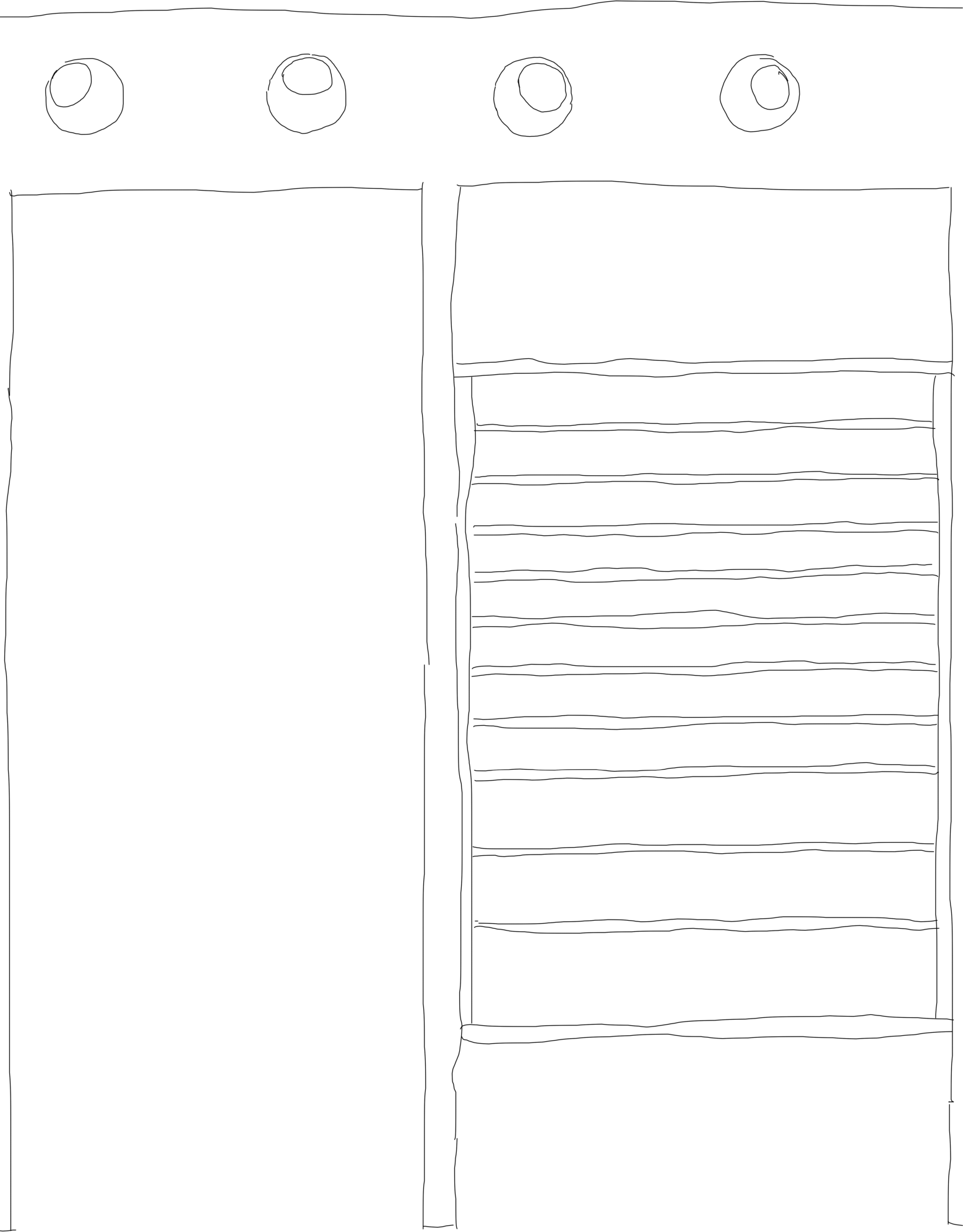
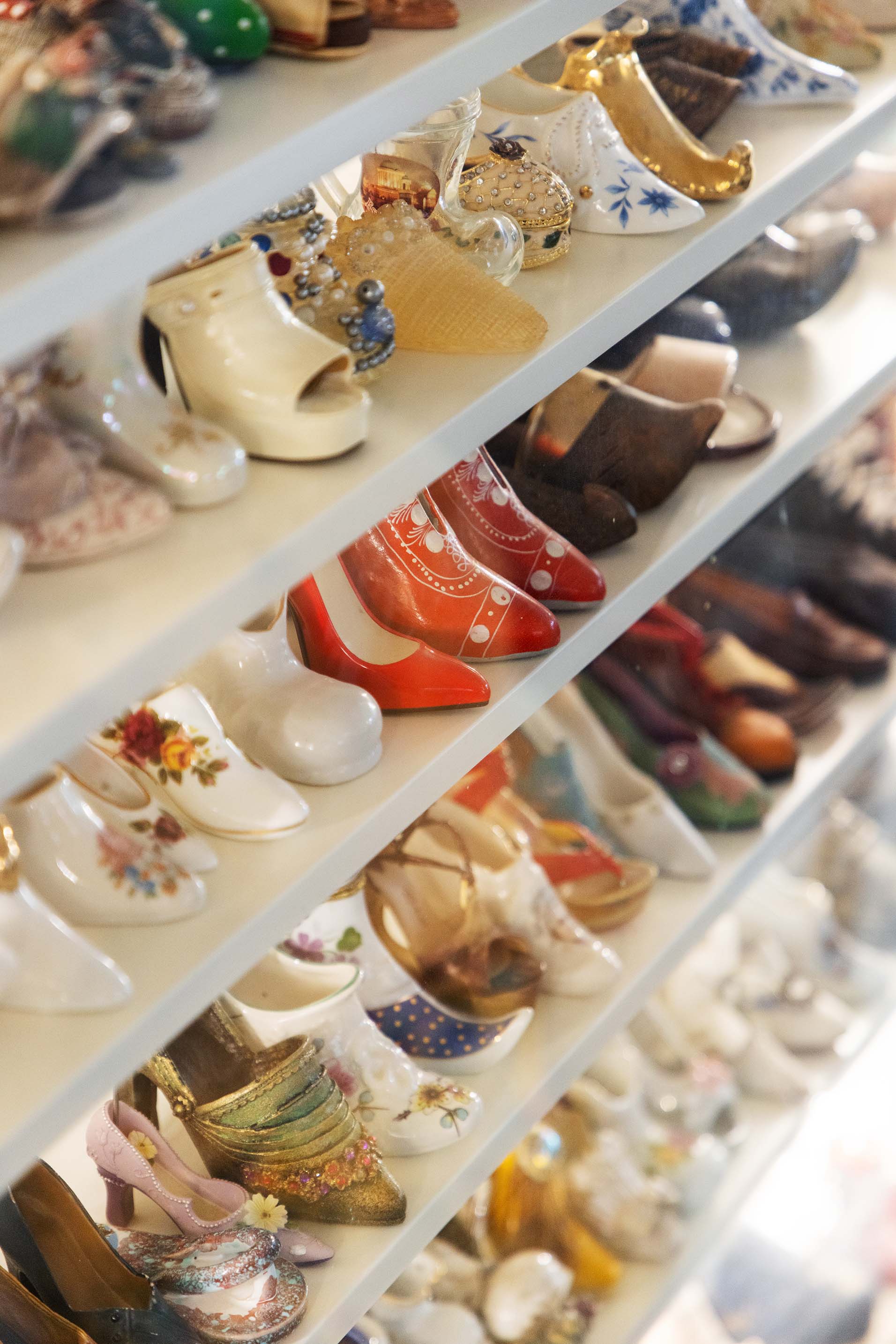
IK This project is renovation of an apartment for someone with a personal collection that needed a place to live within the home, not tucked away but present in daily life. For this purpose a wall was built to hold and present a collection of miniature shoes. Rather than relying on freestanding furniture, the wall becomes a shallow exhibition case, curated like a small gallery installation.
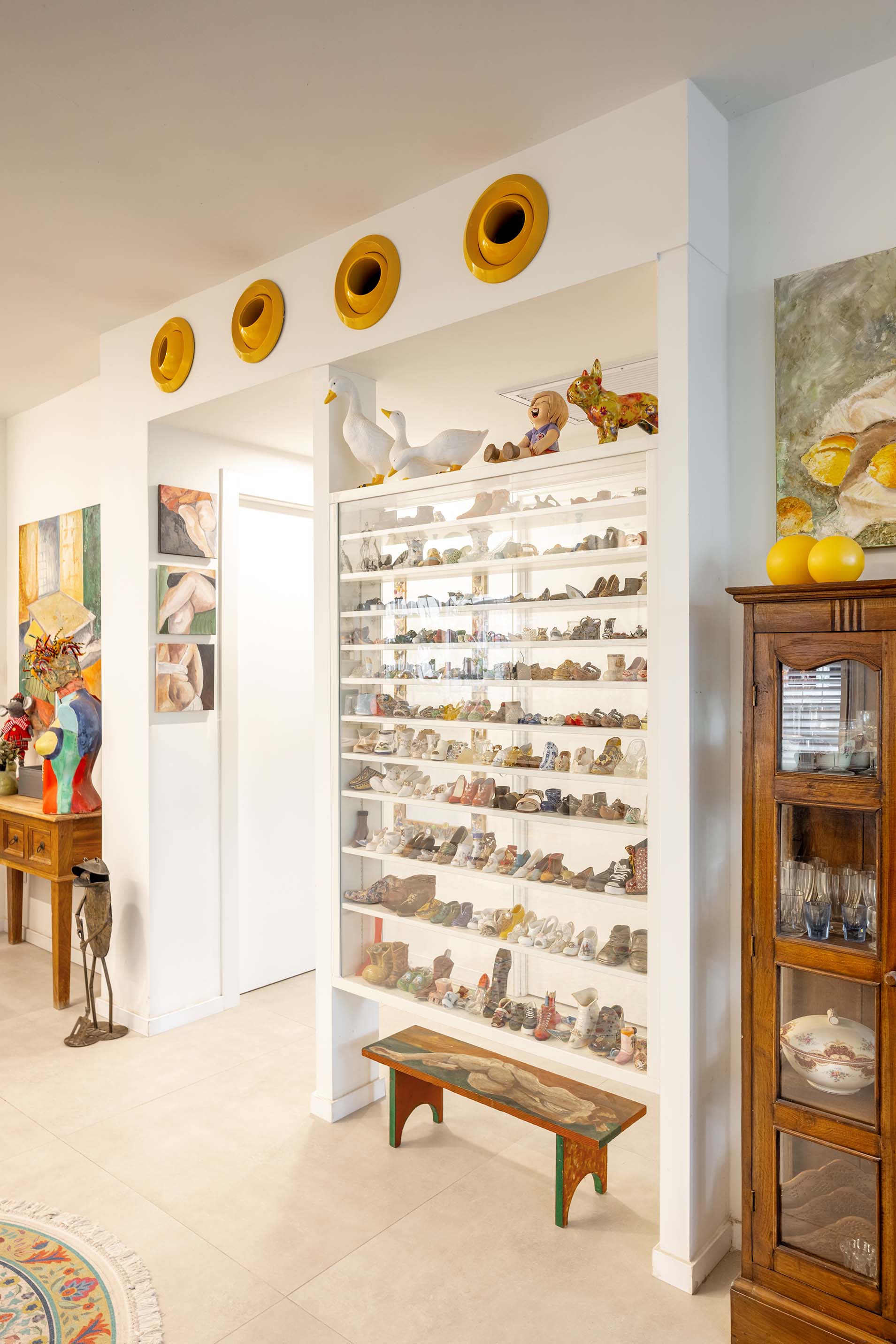
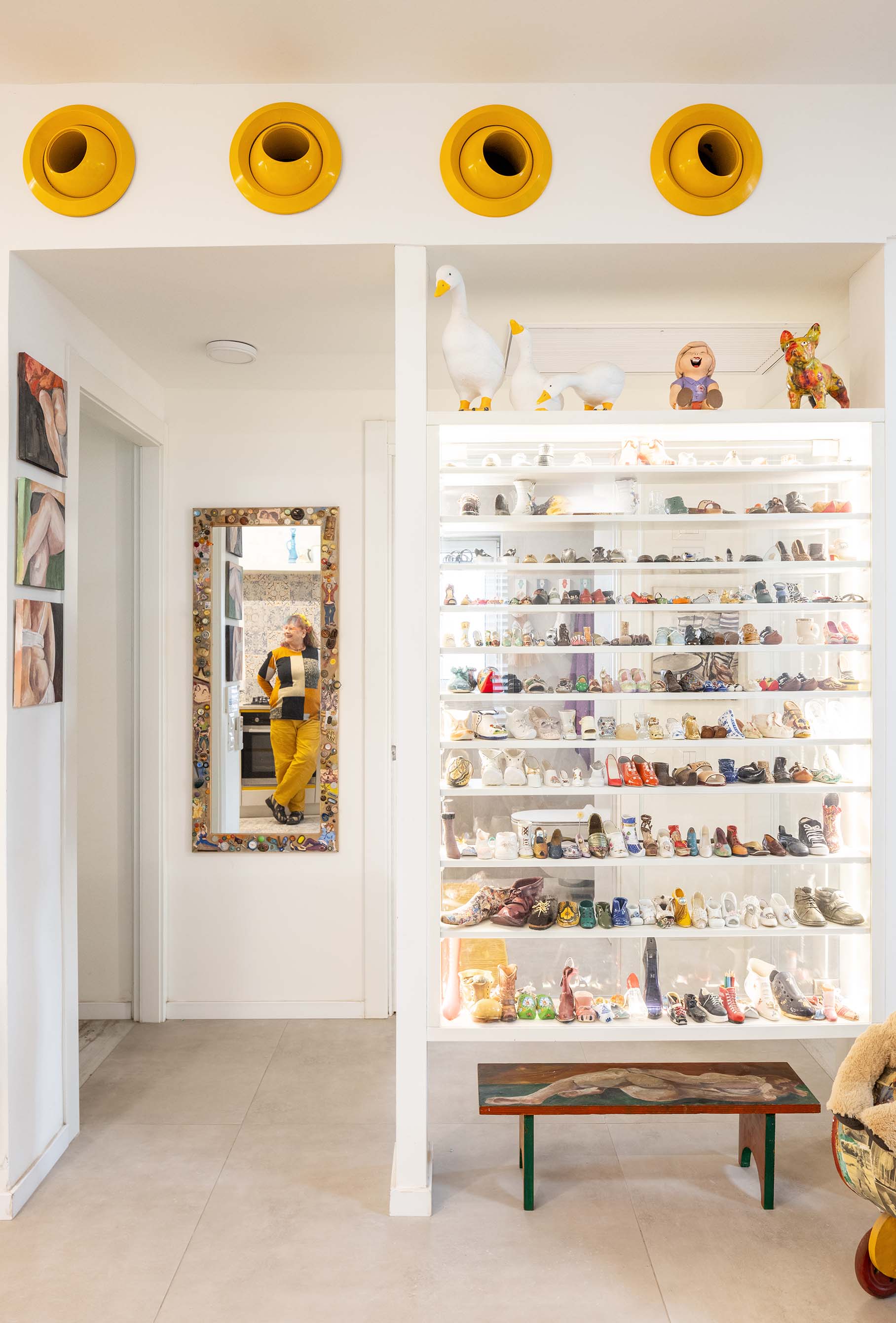
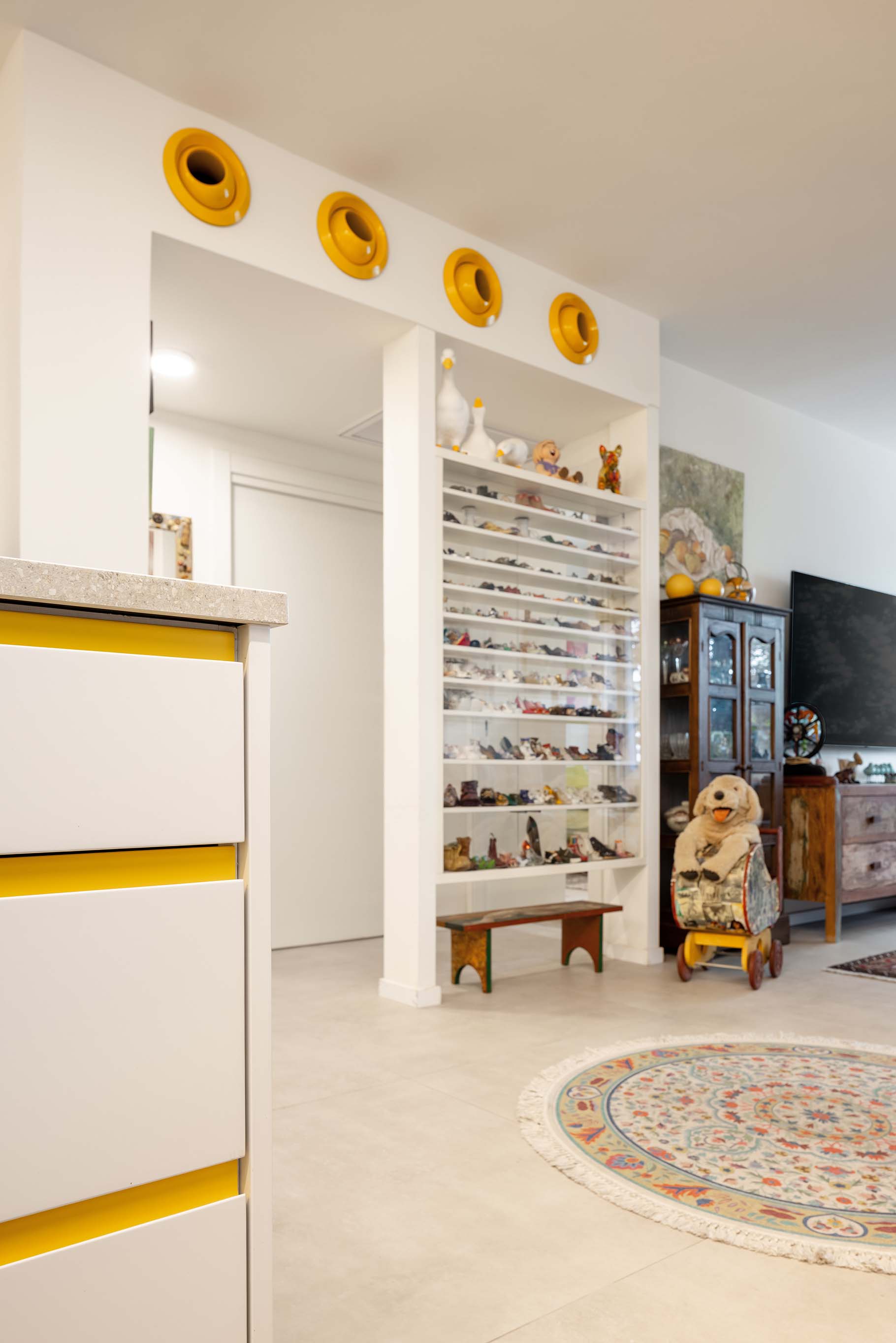
This wall not only divides the space, but adds storage volume and a display option.
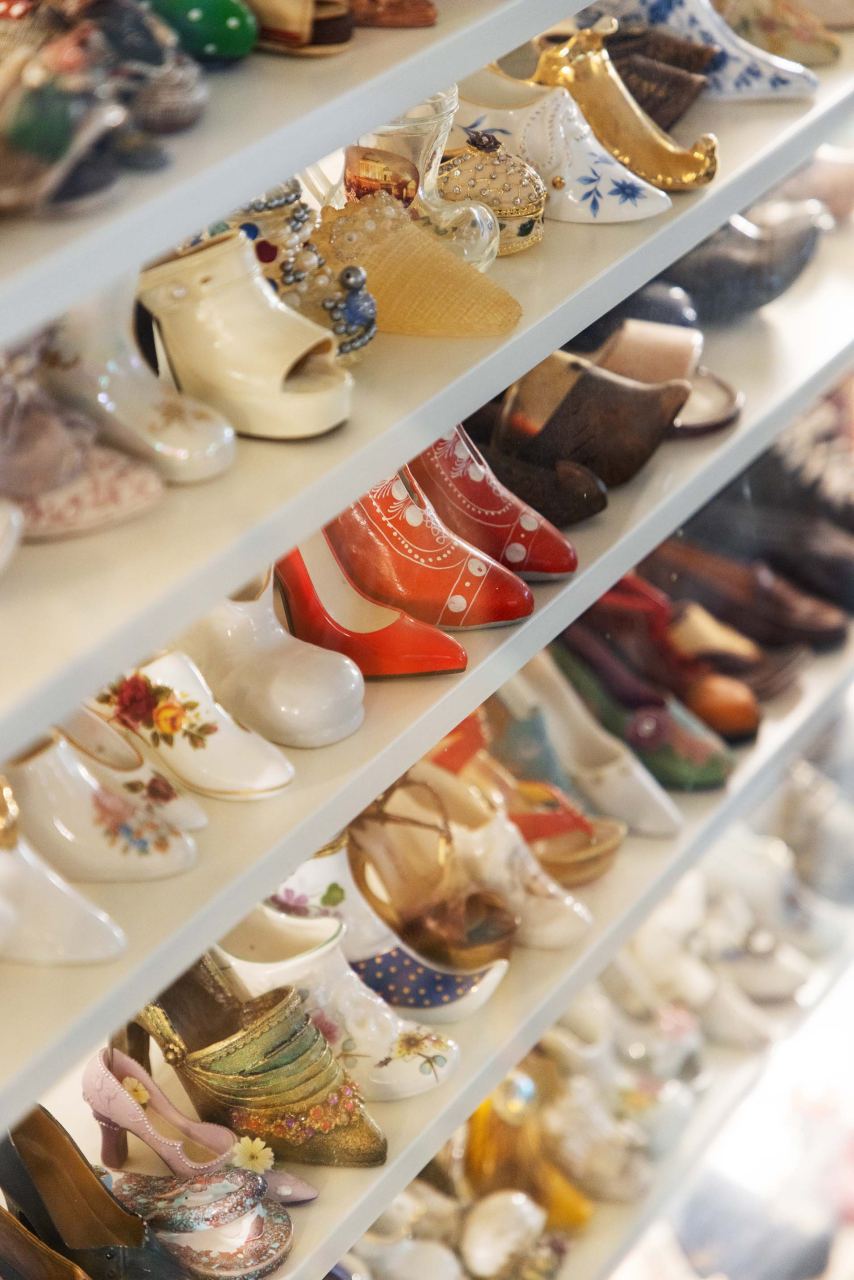
In conclusion, a wall can hold up a roof. It can also curve into a ceiling, stretch into a threshold, or frame objects. Sometimes a wall is a boundary between spaces and sometimes it’s so much more.
------------ Projects in this article: O7M ONT IK


“But Jerry, you know I always wanted to pretend that I was an architect!” George Costanza

“How can we be expected to teach children to learn how to read if they can’t even fit inside the building?” Derek Zoolander
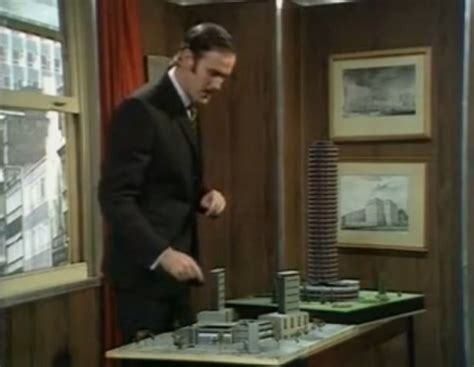
Monty Python The Architects Sketch MR. WIGGIN John Cleese CITY GENT #1 Michael Palin CITY GENT #2 Terry Jones Scene: A large, posh office. Two clients, well-dressed city gents, sit facing a large table. MR. WIGGIN enters towards the table that has an architectural model on it. MR. WIGGIN: Good morning, gentlemen. Uh, this is a twelve-storey block combining classical neo-Georgian features with all the advantages of modern design. Uhh, the tenants arrive in the entrance hall here, are carried along the corridor on a conveyor belt in extreme comfort and past murals depicting Mediterranean scenes, towards the rotating knives. The last twenty feet of the corridor are heavily soundproofed. The blood pours down these chutes and the mangled flesh slurps into these large containers-- CITY GENT #1: Excuse me. MR. WIGGIN: Hmm? CITY GENT #1: Uh, did you say 'knives'? MR. WIGGIN: Uh, rotating knives. Yes. CITY GENT #2: Are you, uh, proposing to slaughter our tenants? MR. WIGGIN: Does that not fit in with your plans? CITY GENT #1: No, it does not. Uh, we-- we wanted a... simple... block of flats. MR. WIGGIN: Ahh, I see. I hadn't, uh, correctly divined your attitude... CITY GENT #: Uh, huh huh. MR. WIGGIN: ...towards your tenants. CITY GENT #: Huh huh. MR. WIGGIN: You see, I mainly design slaughter houses. CITY GENT #1: Yes. Pity. MR. WIGGIN: Mind you, this is a real beaut. I mean, none of your blood caked on the walls and flesh flying out of the windows inconveniencing passers-by with this one. I mean, my life has been building up to this. CITY GENT #2: Yes, and well done, huh, but we did want a block of flats. MR. WIGGIN: Well, may I ask you to reconsider? I mean, you wouldn't regret it. Think of the tourist trade.

“Yo Frank Ghery! Like curvy, linear forms much?” Jimbo Jones

Angine de Poitrine of polka-dots fame